Capacitar and Chi: Simple Healing Tools for Big Life Shifts
How Gentle Touch, Energy Flow, and Daily Rituals Can Help Women Over 45 Reclaim Balance, Joy and Vitality
At Chi Flow with Jo, we know that change isn’t just something that happens in your schedule. It happens in your bones, your breath, your emotions. It shows up as insomnia, aching joints, grief you didn’t know you were carrying, or a sense of losing direction.
For many women over 45, peri-menopause and menopause don’t just bring physical shifts, they stir up deep emotional tides, a change in identity, and the question: Who am I now?
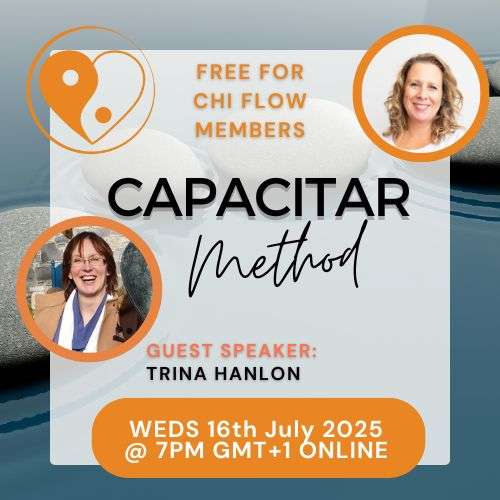
That’s why I was so honoured to sit down with holistic practitioner and long-time Chi Flow member, Trina Hanlon, for a special Energy Update Podcast. Trina will be leading July’s mid-month health talk (free for Chi Flow with Jo members) where she’ll guide us in a full practice of the Capacitar Finger Hold Technique.
But in our podcast, we talked honestly about:
– Overwhelm and the nervous system on constant high alert
– Loss of self-worth and purpose after retirement, caregiving, or job changes
– Hidden grief, anger, fear and shame that turn inward and lead to stagnation
Trina beautifully shared her journey of moving from burnout and busy-ness to a place of embodiment, healing and joy, thanks to simple tools that reconnect us to our life force energy.
What is Capacitar?
Capacitar (from the Spanish “to empower”) is a body-based, global healing practice developed over 30 years ago to help individuals and communities release trauma, reduce stress and restore balance. It shares roots with the same principles that guide Qi Gong and Chinese Medicine: the body holds energy, and that energy can be moved.
One of its most accessible tools is the Finger Hold Practice:
- ✋ Thumb → for grief and loss
- ✋ Index finger → for fear and panic
- ✋ Middle finger → for anger
- ✋ Ring finger → for worry
- ✋ Little finger → for low self-esteem
You simply hold each finger gently for 2–5 minutes, breathing and waiting until you feel a shift. It’s subtle, but powerful. And it’s discreet enough to do in public—on the train, in a meeting, even in bed at night.
It’s also a practice children instinctively know: sucking their thumbs for comfort, twiddling fingers when nervous. This is ancient body wisdom. Capacitar helps us return to it.
How Capacitar Connects with Chinese Medicine
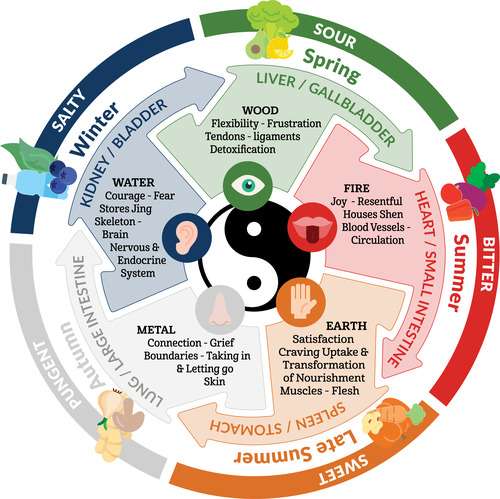
In Traditional Chinese Medicine (TCM), blocked emotions and stagnant energy are root causes of many symptoms experienced during menopause:
- Liver Qi Stagnation → irritability, anger, menstrual irregularities
- Spleen Qi Deficiency → fatigue, worry, digestive issues
- Lung Qi Imbalance → grief, low immunity, shallow breathing
By holding the fingers, we stimulate the meridians that run through the body and out through the fingertips. Just like acupressure and Qi Gong, Capacitar creates flow.
As Trina said in the podcast: “The change we want to see in others must begin with ourselves.”

Reclaiming Your Energy After 45
Trina’s story is one that many women in our Chi Flow community will recognise:
- Giving too much to others and neglecting herself
- Feeling “too busy” to stop, rest, or receive help
- Reconnecting to her joyful, curious 5-year-old self
The Capacitar practice, along with daily Qi Gong, touch, and food medicine, helped her come home to her body.
You can do this too.
Even if:
- – You’re exhausted and not sleeping well
- – You feel like you’ve lost your spark
- – You don’t know where to start
You can begin by pressing a point. Holding a finger. Taking a breath. Stretching before you get out of bed, just like Trina does every morning.
Full Capacitar Practice
This mid-month health talk last July 2025, Petrina will guide us through a full Capacitar practice including:
- The Finger Holds
- The Lao Gong point (Palace of Weariness) for spiritual reconnection
- Gentle self-touch and lymphatic clearing
- Breathwork for balancing the nervous system
This session is FREE for Chi Flow with Jo members.
Over time, this restores the flow of life force energy, allowing you to access joy, creativity, and mobility in the hips.
Not a member yet? 👉 Try a FREE class and experience the magic of Chi Flow for yourself Or sign up now
Remember: Change doesn’t have to be dramatic. It can start with your own two hands.
Let your Chi Flow. Let your spirit rise. Let your energy return to you.
Come move with us. Come soften. Come reclaim your flow. Sign up for the LIVE Free Class at the end of the month and we’ll send you the recording too.


Self-administered acupressure or Chinese Medicine is not a substitute for visits to qualified healthcare practitioners.
Knowing how to treat yourself and your loved ones with complimentary therapies like acupressure can be greatly beneficial and convenient. However, for serious and chronic conditions, you’ll want to visit an Shiatsu therapist / Acupuncturist or other qualified healthcare practitioner who can develop a treatment plan based on your unique medical history and combination of symptoms.
The information provided should not be considered medical advice.