Gentle Weight Loss for Women Over 45 with Qi Gong, Acupressure & Intermittent Fasting

Gentle Weight Loss for Women Over 45 with Qi Gong, Acupressure & Intermittent Fasting

Gentle Weight Loss for Women Over 45 with Qi Gong, Acupressure & Intermittent Fasting

“I Just Want to Feel Like Myself Again…”

One woman wrote to Ask Me Anything and said:

“How can I lose weight that’s been increasing for years?  I’ve never come back to centre post-birth, I have an underactive thyroid, went straight into menopause, and I feel I’ve given up on myself.”

Her story touches so many of us. After years of holding everything together—children, relationships, work—our bodies hold on too.
In Traditional Chinese Medicine (TCM), this “holding” shows up as Liver stagnation and Spleen dampness, the perfect storm for midlife weight gain.
Why Weight Gain After 40 Isn’t Just About Calories

When stress, grief, or over-care stretches and overwhelms us, the Liver can’t move energy smoothly. 

Emotions get stuck; digestion slows. 

The Spleen, our digestive powerhouse, tires from worry and irregular meals, creating an internal climate known as “dampness” in Chinese Medicine, that heavy, foggy feeling, bloating, fatigue, and belly weight.

When we give the Liver time to rest by not eating in the evening, the body can finally process and drain excess dampness, the sticky, heavy internal moisture that leads to puffiness, bloating, joint pain, brain fog, and fatigue.

Instead of constantly digesting food, the Liver can detoxify and mobilise stored fat, while eating at the correct Spleen time can strengthen and transform fluids properly.

Within weeks of gentle intermittent fasting, people notice less swelling in the belly, clearer thinking, better sleep, reduced joint pain, and improved energy.

As dampness clears, inflammation subsides, the metabolism rekindles, and weight begins to drop naturally, without force or punishment.

This is the beauty of fasting with Chi Flow: we rest to restore, not restrict.
Acupressure Point – Liver 13 (Zhang Men)

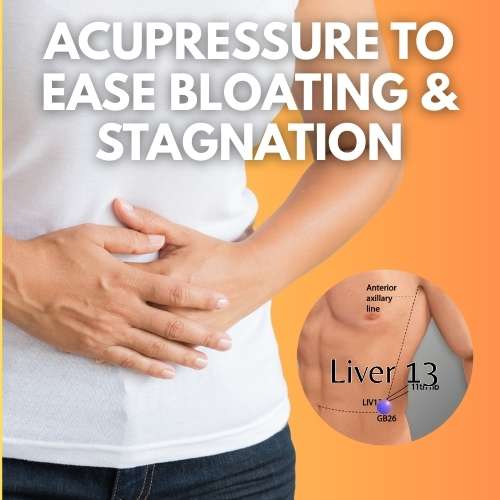
Find the soft point under your right ribs—where the ribcage ends before the waist begins.

This is Liver 13, the “Camphorwood Gate.”

Massage or tap gently here using loose fists 

It connects the Liver and Spleen, clears stagnation, boosts metabolism, and soothes emotional tension. 

If it’s tender, that’s a sign the Liver is stagnant; go gently and breathe warmth into the area. 

Repeat daily and feel digestion and mood begin to flow again.

Intermittent Fasting the Chi Flow with Jo Way

Every January, hundreds join the Chi Flow with Jo Intermittent Fasting programme, a six-week reset rooted in TCM, not restriction.
We follow nature’s rhythm:

Eat during daylight, rest digestion at night.

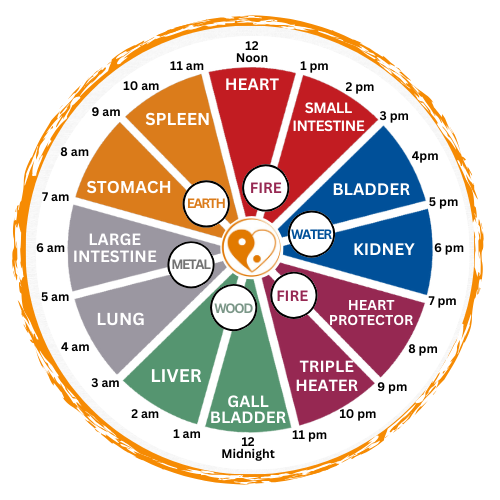
7–9 am Stomach Time / 9–11 am Spleen Time: best window for breakfast and nourishment.

1–3 am Liver Time: when the body detoxes, so avoid eating after dinner especially the late-night snacks.

Start simply: no food after 8 pm, breakfast after 8 am.
Each week we lengthen the fasting window gently, giving the organs time to cleanse and reset.  It’s a lifestyle of rhythm, not willpower, perfect for sensitive thyroids and tired nervous systems.

👉 Find out more and Join the January 2026 Chi Flow with Jo: Intermittent Fasting Programme 

It’s easier when you do it together.
Food as Medicine: Drain Dampness, Fuel Your Fire

Choose foods that support the Liver and Spleen:

For the Liver (flow & fat metabolism):

Sour foods: lemon, lime, apple cider vinegar, sauerkraut, kimchi.
Green & bitter vegetables: kale, watercress, rocket, radish, turnip.

For the Spleen (digestion & sweet cravings):

Warm, cooked meals; porridge, soups, stews.

Avoid cold salads and sugary snacks, especially when stressed.

Traditional TCM Remedy; Adzuki Bean Tea:

Bring soaked Adzuki beans to the boil for 5 minutes and then simmer for 30 minutes, strain, and sip the liquid through the day.
It gently drains dampness, balances blood sugar, and steadies emotions.

👉 Read more on food as medicine and how to make this tea https://joannefaulkner.ie/2022/04/18/clear-cold-damp-fat/

WATCH THE PODCAST

Emotional Healing & Community Support

The weight we carry isn’t just on our hips, it’s in our hearts.
Feeling like you “want to be minded” is your body’s cry for nurture, not discipline.

When you join Chi Flow with Jo, you don’t walk alone.
We move, fast, cook and heal together. That shared energy keeps you accountable and loved through change.

You don’t need to fight your bodyjust listen to her again.
Start with small rhythms: stop eating after 8 pm, massage Liver 13, sip lemon water in the morning, and join our January program to be supported every step of the way.

💗 Ready to Join?

Click here to become a member of Chi Flow with JoCLICK HERE

Or drop in for a class and feel it for yourself (sign up below). Join the Chi Flow with Jo community for live sessions, practice, and support.

Self-administered acupressure or Chinese Medicine is not a substitute for visits to qualified healthcare practitioners.

Knowing how to treat yourself and your loved ones with complimentary therapies like acupressure can be greatly beneficial and convenient. However, for serious and chronic conditions, you’ll want to visit an Shiatsu therapist / Acupuncturist or other qualified healthcare practitioner who can develop a treatment plan based on your unique medical history and combination of symptoms.  The information provided should not be considered medical advice.
.
Fasting over 40 with Traditional Chinese Medicine

Fasting over 40 with Traditional Chinese Medicine

Fasting over 40 with Traditional Chinese Medicine

As we enter our 40s and beyond, the way we approach health practices, including fasting, needs to adapt to our body’s changing needs. For those experiencing menopause, intermittent fasting (IF) can offer powerful benefits when done with care and alignment to the principles of Traditional Chinese Medicine (TCM). TCM emphasizes the importance of nurturing kidney energy—the body’s reserve of vitality—to help regulate hormones, metabolism, and sleep, all of which are sensitive during menopause.

Why Gentle Fasting?


Research supports that when intermittent fasting is done gradually, it can help regulate blood sugar, improve heart health, reduce inflammation, and manage weight. IF triggers ketogenesis, where the body uses fats instead of glucose for fuel, and promotes a balanced insulin level and improved metabolism. However, as women age, particularly through menopause, intense fasting can deplete vital kidney energy, leading to symptoms like brain fog, poor sleep, heart palpitations, and sluggish metabolism. TCM offers a gentle approach to fasting that protects this energy reserve.

The TCM Perspective: Timing and Balance

In TCM, the kidney’s energy is seen as a precious resource that sustains our well-being. Instead of all-day fasting or skipping breakfast, TCM advocates for balance in eating times. 

Eating a substantial breakfast and a lighter dinner aligns with the TCM Meridian Clock, which highlights that digestive organs are most active in the morning (7–11am). TCM wisdom recommends “eating breakfast like a king, lunch like a prince, and dinner like a pauper,” allowing our bodies to fuel up during peak digestion hours while giving the liver and gallbladder a rest at night.

TCM views kidney energy as a reservoir.   

As we age, our reserves naturally decline, and menopause accelerates this process. 

So, while fasting can be beneficial, overdoing it can tax and deplete kidney energy. This is why fasting slowly and gently is so important. 

Whole day fasting is likely to stress the body and any stress produces adrenaline which triggers the flight or fight mechanism depleting kidney energy. In TCM, the kidneys are our energy foundation, supporting hormones, vitality, and sleep. Intense fasting can stress this system, worsening menopause symptoms like sleep disruptions, brain fog, and low energy. Instead, TCM encourages gentle fasting to protect kidney energy. It’s much better to build up your fasting time gradually and preferably overnight. 

Plus eating earlier in the day helps support the liver’s detoxification overnight. 

In Traditional Chinese Medicine (TCM), aligning meal timing with the body’s natural rhythms—such as eating the largest meals earlier in the day—helps clear the liver and optimise metabolism, reducing the risk of Non-Alcoholic Fatty Liver Disease (NAFLD). By avoiding late-night eating, we allow the liver to focus on detoxification overnight rather than digestion, which minimises fat accumulation in the liver. This balanced approach supports natural liver function, stabilises blood sugar, and promotes better metabolic health, making it an effective, gentle practice for weight loss and longevity.

A mindful eating schedule helps the body work with its natural rhythms, allowing us to fast gently overnight without disrupting the flow of energy or taxing the kidneys.

Starting Gentle Fasting with Chi Flow with Jo

In TCM, fasting from 8pm to 8am can allow your digestive organs a break while preserving kidney energy. The digestive organs are most active in the morning. The stomach is strongest from 7–9am, followed by the spleen from 9–11am so it makes no sense to skip breakfast and fast until dinner.  The spleen and stomach  thrive with regular early meal times rather than long, energy-draining fasts. 

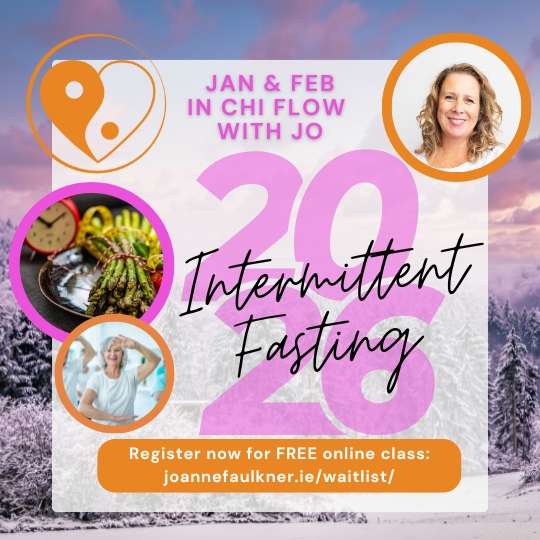
Starting this January, Chi Flow with Jo will kick off a community program to practise intermittent fasting together in a supportive, nourishing way.

Could you commit to not eating after 8pm until 8am?  This is how we begin our gentle fasting cycle? Join our January program and by the end of February you will be experiencing improvements in sleep, energy, weight, and mental clarity with the support of a like-minded community. Together, let’s create lasting health and well-being through mindful, gentle fasting that honours our body’s natural needs.

Ready to transform your health?

Join us this January in Chi Flow with Jo and embrace a harmonious fasting routine that works with your body, not against it!

Until next time, stay balanced and be well.

Self-administered acupressure or Chinese Medicine is not a substitute for visits to qualified healthcare practitioners.

Knowing how to treat yourself and your loved ones with complimentary therapies like acupressure can be greatly beneficial and convenient. However, for serious and chronic conditions, you’ll want to visit an Shiatsu therapist / Acupuncturist or other qualified healthcare practitioner who can develop a treatment plan based on your unique medical history and combination of symptoms.  

The information provided should not be considered medical advice.