
How Acupressure and Qi Gong Can Help Relieve Back Pain and Heal the Trauma of Grief
As women over 40, we often find ourselves navigating unique physical and emotional challenges. Back pain, whether from posture, injuries, or even emotional trauma, can significantly impact our lives. If you’ve been carrying the heavy weight of grief; an emotion intimately tied to the lungs in Traditional Chinese Medicine (TCM), this blog will guide you on how acupressure and Qi Gong can help release that burden while easing your back pain.
Grief, according to TCM, is housed in the lungs, and unprocessed grief can stagnate the flow of Qi (energy) in the body.
As the ancient Chinese saying goes,
“When the Qi flows freely, the body is in balance; when Qi stagnates, disease and discomfort arise.”
This stagnation often manifests as physical tension, particularly in the upper back, neck, shoulders and lower back. Let’s explore how you can use acupressure, Qi Gong, and natural remedies to free up that energy and find relief.
Why Qi Stagnation from Grief Causes Back Pain
In Chinese Medicine, back pain is often rooted in two key imbalances: Qi and Blood Stagnation.
Qi Stagnation: Qi, the vital energy flowing through your body, moves along meridians (energy channels). When this flow is blocked or contracted, discomfort begins as a dull ache but can develop into sharp, fixed pain. Another common culprit is the invasion of cold or dampness into the meridians of the spine, slowing Qi flow.

Blood Stagnation: Trauma, injury, or sedentary habits can lead to poor blood flow. Like a bruise that lingers, blood stagnation can intensify pain.
When grief is not expressed or resolved becoming trapped in the body, it disrupts the smooth flow of Qi, particularly in the lung meridian,
This stagnation creates a kind of energetic “logjam,” similar to how a blocked stream causes water to pool and stagnate. Over time, this buildup can lead to physical discomfort, especially in the neck, shoulders and back,
The tension caused by stagnation restricts movement, reduces circulation, and exacerbates pain, making it vital to address both the emotional and physical aspects of grief to restore balance and alleviate discomfort.
The good news? The treatment can be the same: Get moving, stay warm, stimulate circulation and acupoints.
Acupressure to Release Grief and Open Energy Pathways
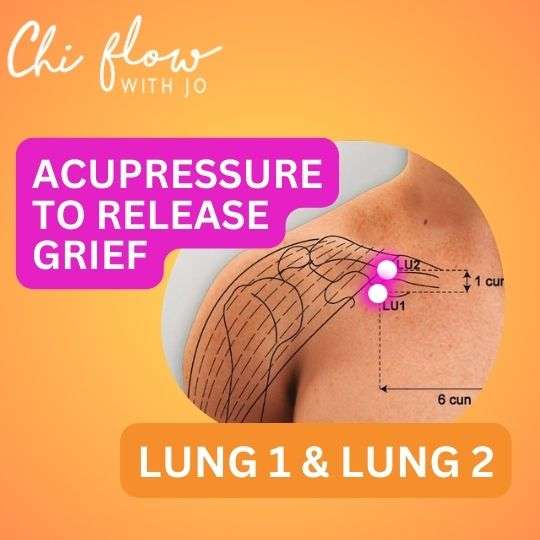
1. Lung 1 (Zhongfu) and Lung 2 (Yunmen)
These acupoints, located just below the collarbone, are instrumental in addressing grief and opening the lung meridian. Here’s how to find and use them:
♥ Locate the bony prominence of your collarbone. From there, move two fingers down to find Lung 1, and slightly above that is Lung 2.
♥ Gently massage these points on both sides of your chest. This helps release stuck grief and tension stored in the lungs and chest area.
2. Lung Meridian Tapping
The lung meridian travels down the inside of your arm to the edge of your thumb. Lightly tapping along this pathway further helps unblock emotional and energetic congestion.
Start at Lung 1, tapping down the inside of your arm to your thumb.
Repeat this on both arms to encourage Qi flow.
Qi Gong Exercises for Neck, Shoulders, and Back Pain
Gentle Neck and Shoulder Stretch
This Qi Gong exercise helps release tension and grief while supporting the upper back.
- Stand or sit comfortably with your hands by your sides.
- Imagine you’re holding small objects (like baguettes or ping pong balls) under your armpits to create space.
- Rotate your hands outward so your thumbs point behind you, opening the lung meridian.
- Slowly drop one ear toward your shoulder, then drop your chin to your chest, and move your other ear to the opposite shoulder. Repeat gently, enjoying the release in your neck and shoulders.
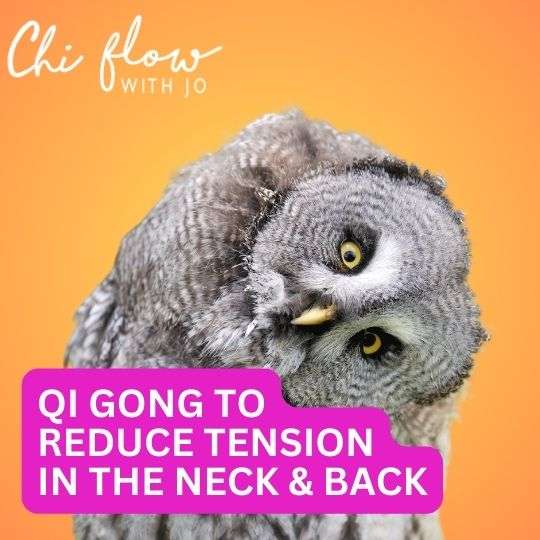
Wise Owl Turns Head to eliminate fatigue
The “Wise Owl Turns Head” Qigong exercise offers profound benefits for spinal health and emotional well-being. By gently rotating the head and neck, this movement stretches and massages the muscles and fascia along the spine, enhancing flexibility and relieving tension.
This action resembles wringing out a cloth, effectively dispersing Qi and blood stagnation, which can alleviate discomfort and promote energy flow.
Additionally, the exercise stimulates the lung meridian, facilitating the release of pent-up grief and sadness. Regular practice can lead to improved posture, reduced fatigue, and a more balanced emotional state. Incorporating this exercise into your daily routine in Chi Flow with Jo, nurtures both physical and emotional health, fostering a harmonious flow of energy throughout the body.
This movement releases tension along the spine and energizes the entire back.
– Step-by-Step Instructions for Wise Owl Turns Head
♥ Stand Tall in a Relaxed Posture
- – Stand with your feet shoulder-width apart.
- – Keep your knees slightly bent and your spine upright but relaxed.
- – Let your arms hang naturally by your sides.
♥ Engage Your Breath
- – Inhale deeply through your nose and let your belly expand.
- – Exhale squeeze the belly slowly, feeling grounded and present.
♥ Begin the Head Rotation
- – Inhale and slowly turn your head to look over one shoulder, as if you’re an owl gazing behind. Rotate your hands outward so your thumbs point behind you, opening the lung meridian as in the previous exercise.
- – Move gently, ensuring there’s no strain on your neck.
- – Imagine plugging your feet firmly into the floor and imagine your spine gently twisting and stretching, as if “wringing out” tension. Exhale. Inhale deeply as you slowly bring your head back to the center.
- – Allow your shoulders to relax into a neutral position.
♥ Repeat on the Other Side
- – Turn your head to look over the opposite shoulder.
- – Again, allow your spine to twist gently while keeping your movements smooth and deliberate.
♥ Complete with Centering Breath
- – After a few repetitions on each side, return to the center.
- – Place your hands over your lower abdomen and take three slow, deep breaths to conclude.
Acupressure for the Lower Back Pain
Bladder 23 (Shenshu) and Bladder 52 (Zhishi)
These points, located in the lower back near the kidneys, are vital for nourishing and warming the area. Rub these points gently to warm and activate them, releasing stagnant Qi.
This movement releases tension along the spine and energizes the entire back.

Kidney and Bladder Points on the Feet
The feet are home to powerful acupoints that can influence the back, including:
- ♥ Kidney 1 (Bubbling Spring): On the sole of the foot.
- ♥ Kidney 3: Between the inner ankle bone and the Achilles tendon.
- ♥ Bladder 60: Between the outer ankle bone and the Achilles tendon.
Massage these points to improve Qi flow and reduce back pain before placing them into the ginger footbath below.
Warmth and Nourishment for Healing
Ginger Compress for the Kidneys
The kidneys are closely tied to the lower back in TCM. Warming them can help ease Qi and blood stagnation, reduce pain and support overall vitality.
♥ Grate fresh ginger and steep it in hot water for 20 minutes.
♥ Dip a towel in the ginger-infused water and apply it to your lower back. For sensitive skin, place a dry towel between the compress and your skin.
♥ Leave the compress on for 15-20 minutes to relax muscles and promote Qi flow.

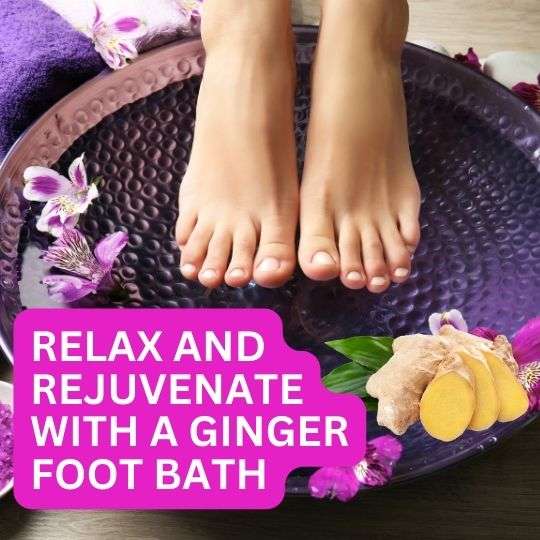
Ginger Foot Bath
Relax and rejuvenate with a ginger foot bath.
♥ Use the leftover but still warm, ginger water from your compress.
♥ Soak your feet for 10-15 minutes before bed to warm your entire system, calm your mind, and ease back pain.
Why It Works
Grief and trauma can cause the body to contract, leading to physical stagnation and pain. Acupressure and Qi Gong work together to:
♥ Release stuck emotions, especially grief stored in the lungs.
♥ Open meridians to restore the natural flow of Qi.
♥ Stretch and strengthen the spine to alleviate tension and pain.
♥ Nourish the body with warmth and relaxation techniques like ginger compresses.
By incorporating these practices into your daily routine, you can transform pain into healing, grief into strength, and stagnation into vitality. Remember, your body has an innate ability to heal, sometimes, it just needs a little support and time to get there.
Join the Chi Flow community
May you be happy, safe, and well, and may your journey to balance and health bring you peace and joy. Let’s embrace the flow of Qi together!
Join us in Chi Flow for a FREE CLASS❤️
With Love and Chi,


Self-administered acupressure or Chinese Medicine is not a substitute for visits to qualified healthcare practitioners.
Knowing how to treat yourself and your loved ones with complimentary therapies like acupressure can be greatly beneficial and convenient. However, for serious and chronic conditions, you’ll want to visit an Shiatsu therapist / Acupuncturist or other qualified healthcare practitioner who can develop a treatment plan based on your unique medical history and combination of symptoms.
The information provided should not be considered medical advice.