Bone Health and Balance with Thérèse Cosgrove

Bone Health and Balance with Thérèse Cosgrove

Bone Health and Balance with
Thérèse Cosgrove

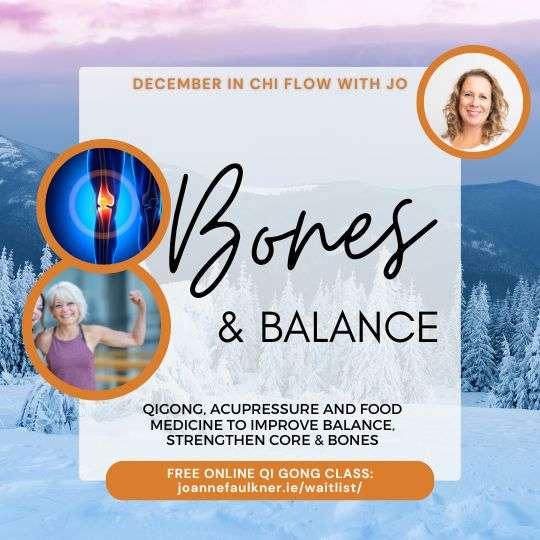
As the year folds into its quietest season, the energy of Bone Health rises to the surface.

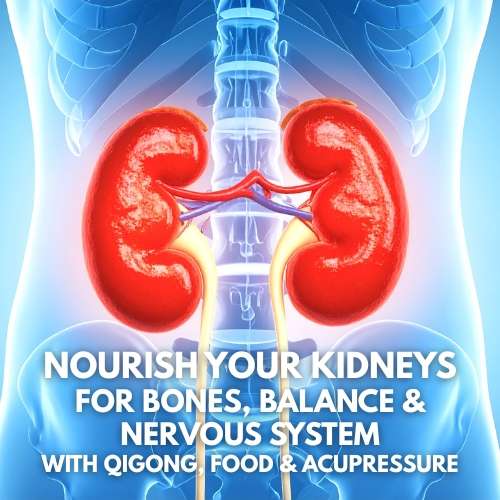
In Traditional Chinese Medicine, winter and the kidneys are linked to our bones, balance, and nervous system.

This is the perfect time to nourish our structure and inner stillness — and that’s exactly what this month’s Energy Update explores with Thérèse Cosgrove, homeopath, nutritional therapist, and Feldenkrais practitioner.
Listening to the Body through Movement

Thérèse describes Feldenkrais as a way of using small, subtle movements to awaken the nervous system’s awareness. Through this awareness, we uncover patterns of tension and rediscover new, more efficient ways of moving.

“Rather than me telling you how to move,” she says, “your nervous system is intelligent enough to find the best way itself.”

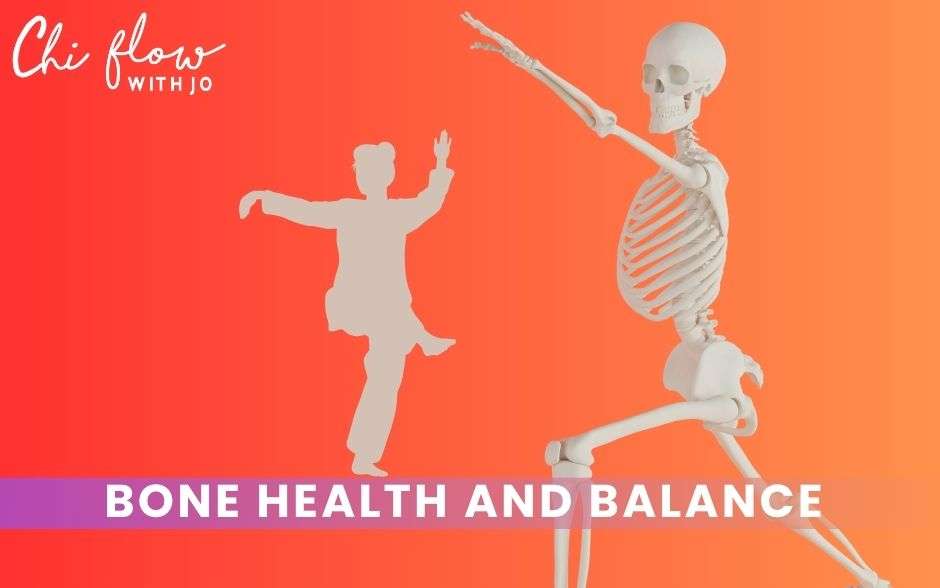
These gentle explorations improve skeletal alignment, balance, and joint integrity, helping us move with ease and confidence — vital for bone health, especially in menopause, post-menopause, and chronic conditions such as Parkinson’s.

Even the pauses between movements matter:

“That’s when the nervous system learns and integrates — the same way we rest between breaths.”
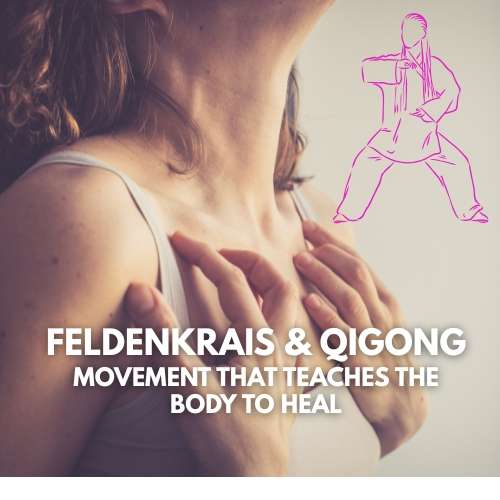
When the brain stops bracing and begins organising the skeleton more efficiently, three bone-loving things happen:

Better load through bone: Bones remodel when they’re loaded. Efficient alignment means forces travel through the skeleton (not just muscles), stimulating bone.

Joint integrity & balance: Micro-adjustments reduce “overwork” in hips, knees, spine and shoulder girdle, improving confidence and decreasing fear of falling.

Down-regulated pain: When the nervous system feels safe, pain signals calm and movement becomes possible again — the virtuous cycle for recovery.

Feldenkrais is exploration, not achievement. Curiosity and playfulness are the fastest way to teach your bones and brain new options.
Yin, Stillness, and the Bone Season

As Joanne points out, the yin energy of winter invites quietness and grounding.

Just as the earth rests before spring, we too can pause, aligning our bones, slowing our breath, and reconnecting to what truly supports us.

Yet, in the rush toward Christmas, that stillness is often lost. Feldenkrais offers a way back into the body, a return to inner listening and calm.

Use the space between Christmas and New Year to be still of mind and quiet movements of body.
The Inner Chemistry of Strength

In her homeopathic and nutritional work, Thérèse looks at bone density not just as a matter of calcium, but of hormonal balance, mineral status, and heavy-metal detoxification.

Using gentle testing and homeopathic supports, she tailors treatment to each person:

“We might look at supporting estrogen, the parathyroid, or trace minerals like boron, all essential for strong, flexible bones.”

Joanne draws the parallel in Chinese Medicine: seaweeds in small amounts can help clear heavy metals and nourish the kidneys — though, as she reminds us, not everyone should take them.

What matters most is listening to your own body and finding what nourishes your unique system.

In Traditional Chinese Medicine, winter belongs to the Kidney system, which governs bones, marrow, ears (balance/vestibular), and the nervous system. Practical Kidney-nourishing ideas:

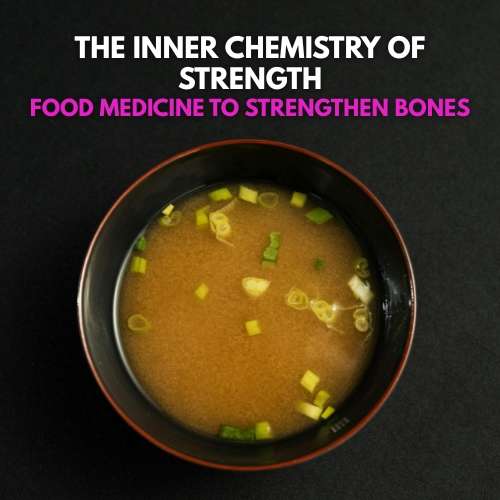
Flavours & foods: the salty flavour in moderation supports Kidney, think miso, mineral broths, black sesame, adzuki/black beans, and small amounts of seaweeds if appropriate.
Caveat: Seaweeds are iodine-rich; avoid or use cautiously if you have thyroid issues or are on certain meds.

Gentle, consistent practice: slow standing, breath-led spirals, and ankle-calf work “pump” fluids and stabilise balance, perfect winter medicine.

Stillness as medicine: quiet, warm, early nights rebuild Yin (think lubrication and reserves), the foundation for hormone balance post-menopause.
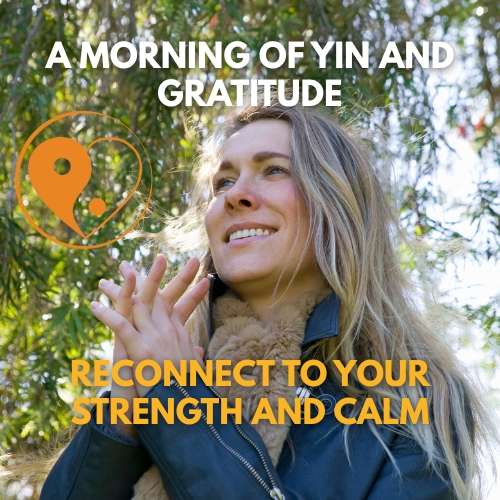
A Morning of Yin and Gratitude

When asked how she begins her day, Thérèse shares a simple ritual that reflects the essence of Chi Flow:

Hydrate with structured, living water to awaken the body. “Structured water”: what we mean (and what to do about it) Thérèse will expand on this in her Mid-Monthly Health Talk, but here’s the practical, controversy-free middle ground: Structured Water inside the body doesn’t behave like plain tap water. Near proteins, fascia, and cell membranes it forms ordered layers that help signaling and flow.

Step outside into morning light, facing east to reset circadian rhythm and hormones. Move gently, perhaps Chi Flow with Jo, Feldenkrais, or a mindful walk. Gentle vibration & movement (walking, bouncing, fascia spirals) appear to improve fluid distribution in connective tissue, exactly what we do in Chi Flow.

“These practices really helped me through difficult times,” she says. “My morning Chi Flow with Jo was one of the things that carried me.”

For Parkinson’s & chronic conditions

Hydration and gentle nervous-system work are especially helpful when autonomic regulation or muscle stiffness makes dehydration and bracing more likely. Short, frequent “micro-moves,” mineral-aware hydration, and morning light can noticeably improve steadiness and energy without fatigue.

WATCH THE PODCAST

In the full podcast, learn more about sound healing and how it affects our hormonal balance below: 

Join us inside Chi Flow (and get Thérèse’s talk free)

Thérèse’s Mid-Monthly Health Talk will go hands-on with Feldenkrais explorations, hydration you can feel, and a deeper look at “structured water” in everyday practice. It’s free for Chi Flow members.

👉 Join Chi Flow with Jo to access:

  • Daily live morning classes (with replays)

  • Seasonal recipes & self-acupressure

  • This month’s Mid-Monthly Health Talk with Thérèse Cosgrove — free for members

Start here: Join Chi Flow with Jo — Build strength, balance, and deep yin this winter.

💗 Ready to Join?

Click here to become a member of Chi Flow with Jo → CLICK HERE

Or drop in for a class and feel it for yourself (sign up below).


Join the Chi Flow with Jo community for live sessions, practice, and support on your journey to an emotionally healthy heart and attend Caroline’s live talk and sound bath for FREE.
To work with Caroline click HERE

Self-administered acupressure or Chinese Medicine is not a substitute for visits to qualified healthcare practitioners.

Knowing how to treat yourself and your loved ones with complimentary therapies like acupressure can be greatly beneficial and convenient. However, for serious and chronic conditions, you’ll want to visit an Shiatsu therapist / Acupuncturist or other qualified healthcare practitioner who can develop a treatment plan based on your unique medical history and combination of symptoms.  The information provided should not be considered medical advice.
.
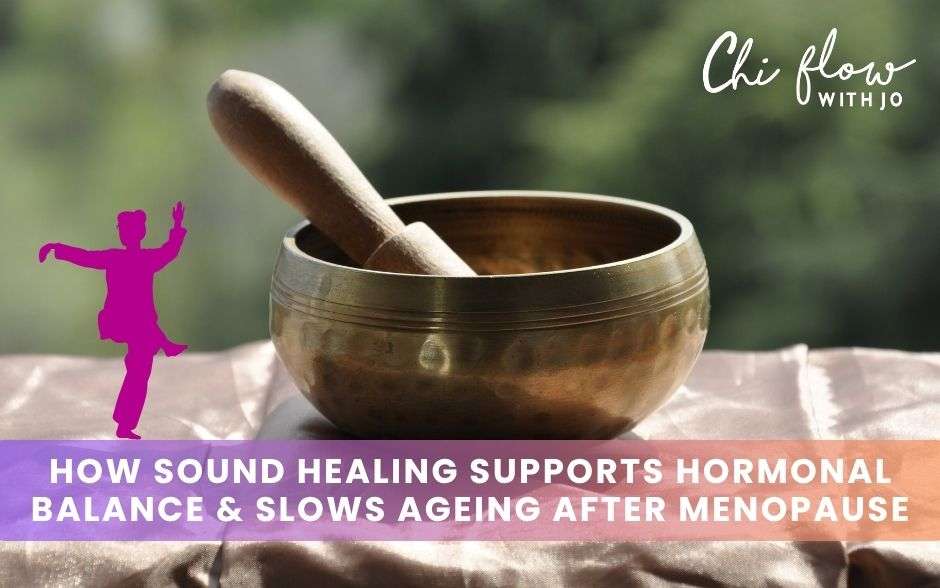
How Sound Healing Supports Hormonal Balance & Slows Ageing After Menopause

How Sound Healing Supports Hormonal Balance & Slows Ageing After Menopause

How Sound Healing Supports Hormonal Balance & Slows Ageing After Menopause

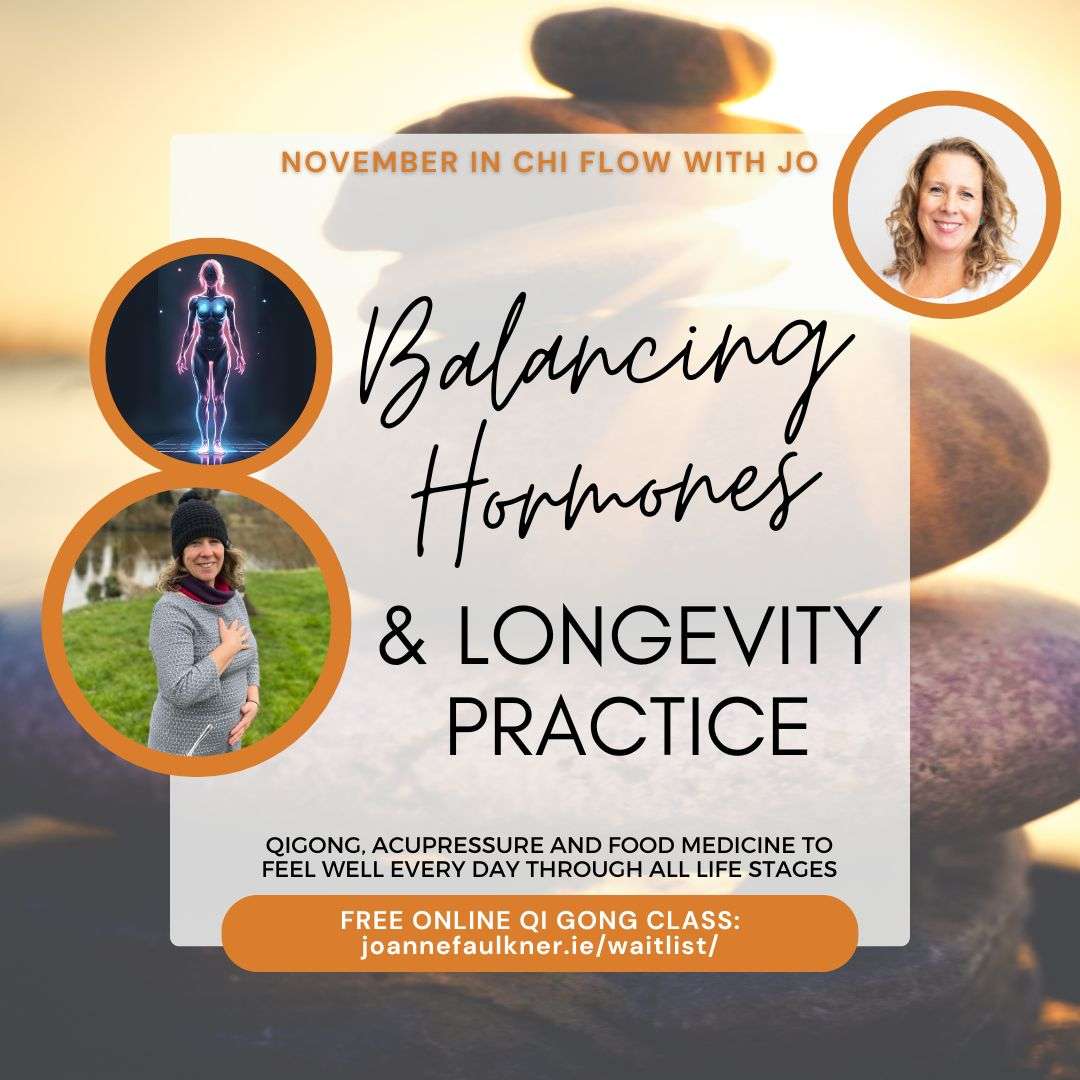
As we step into November in Chi Flow with Jo, our focus turns to hormonal balance and longevity. For many women, especially post-menopause, the question becomes: how can I stay strong, flexible, and emotionally balanced as I age?

One powerful answer lies in sound healing.

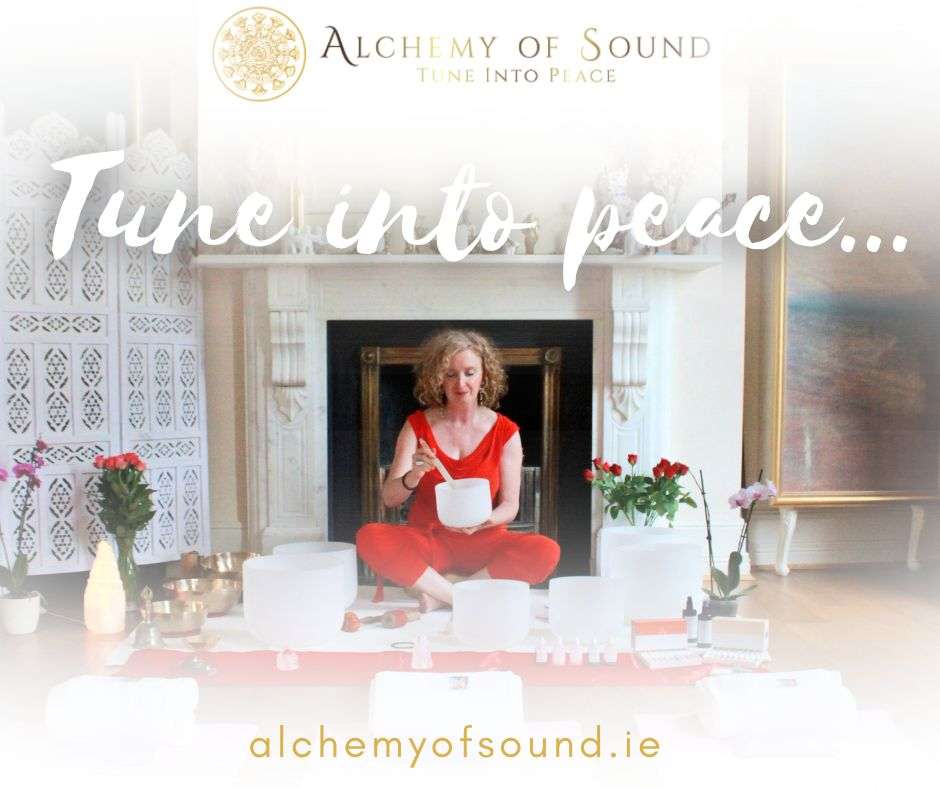
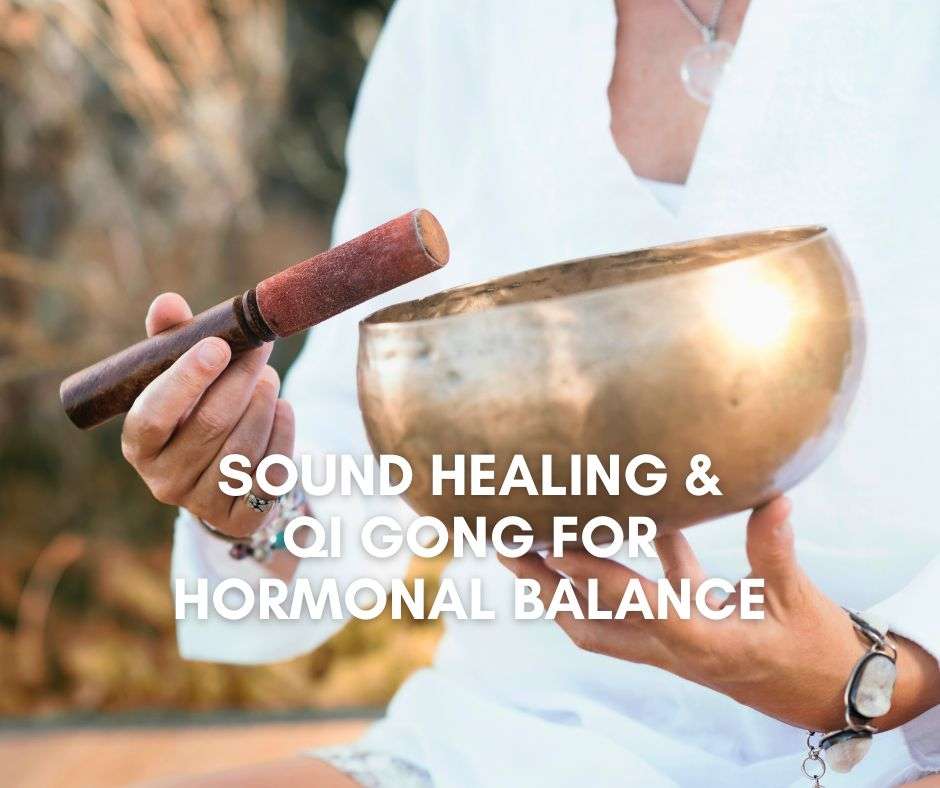
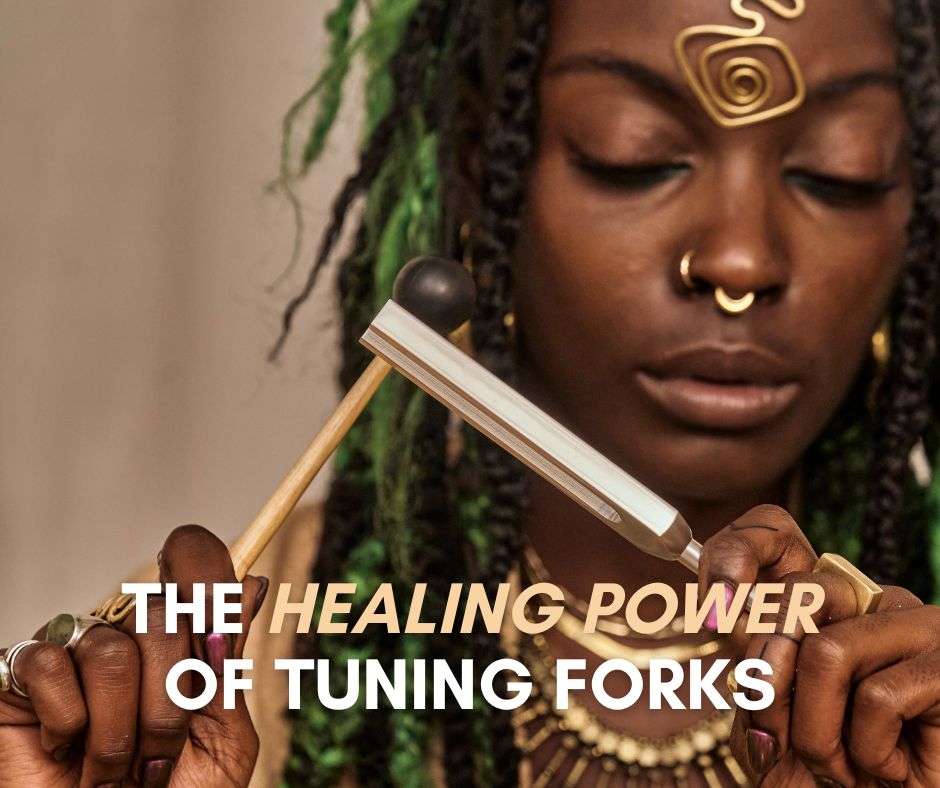
Recently, I spoke with Caroline Flavin of Alchemy of Sound, who has been working with sound and vibration for over 20 years. She shared how crystal bowls, tuning forks, and even simple humming can profoundly support women through hormonal transitions.

Sound Healing & Hormonal Shifts

Menopause and post-menopause often bring stress, anxiety, temperature fluctuations, and disrupted sleep. These challenges are closely linked with elevated cortisol and a nervous system under strain.

Caroline explained that sound baths, through the resonance of crystal bowls, guide the brain into slower wave states, alpha and theta, similar to deep relaxation or meditation.

This shift activates the parasympathetic nervous system, helping the body to lower stress hormones, reduce blood pressure, and find a state where true healing and restoration can occur.

For women navigating hormonal changes, this is more than relaxation, it’s a pathway to balance, calm, and longevity.

Vibration, Energy & Flow

Chi Flow with Jo uses breath and movement to circulate qi, the vital energy of life. Sound works in harmony with this: instead of moving energy with the body, the vibration moves through the waters of the body, blood, lymph, and cellular fluids, carrying resonance deep into our tissues.

Just as we feel music reverberate in our bones at a concert, sound healing allows us to literally vibrate into balance. For women post-menopause, this offers a gentle yet powerful way to stay connected, flexible, and resilient, physically and emotionally.

Tuning Forks & Hormonal Points

Caroline also works with planetary tuning forks, rooted in both ancient and modern traditions.

Applied to specific meridian points, these vibrations can support symptoms of peri- and post-menopause, helping restore balance to the body’s internal rhythms.

It’s a reminder that healing doesn’t always have to come from doing—sometimes, it comes from allowing the body to receive.

Everyday Sound Rituals for Longevity

Caroline suggests simple practices for daily life:

  • Hum or chant “Om” first thing in the morning or before bed to soothe your nervous system.

  • Pay attention to the soundscape around you, swap doom-scrolling and digital noise for birdsong, leaves rustling, or calming music.

  • Try sound baths online or in person, where vibration can ripple through your whole being.

These small rituals, especially when paired with Chi Flow, become longevity practices, keeping you emotionally balanced, physically strong, and connected to life’s natural rhythm.

Experience Sound Healing in November

I’m delighted that Caroline Flavin of Alchemy of Sound will join us for November’s Chi Flow mid-monthly health talk, offering an online sound bath and discussion on hormonal balance and longevity.

✨ This talk is free for all Chi Flow members.


✨Non-members can buy a ticket, and if you later decide to join Chi Flow, we’ll refund your ticket price. https://joannefaulkner.ie/online-talk/

WATCH THE PODCAST

In the full podcast, learn more about sound healing and how it affects our hormonal balance below: 

Join Us This Month in Chi Flow with Jo to balance hormones & boost energy and longevity

Why not join Chi Flow today, so you can experience Caroline’s sound bath, our daily morning Qi Gong practice, and a supportive community of women navigating midlife and beyond?

💗 Ready to Join?

Click here to become a member of Chi Flow with Jo → CLICK HERE

Or drop in for a class and feel it for yourself (sign up below).


Join the Chi Flow with Jo community for live sessions, practice, and support on your journey to an emotionally healthy heart and attend Caroline’s live talk and sound bath for FREE.
To work with Caroline click HERE

Self-administered acupressure or Chinese Medicine is not a substitute for visits to qualified healthcare practitioners.

Knowing how to treat yourself and your loved ones with complimentary therapies like acupressure can be greatly beneficial and convenient. However, for serious and chronic conditions, you’ll want to visit an Shiatsu therapist / Acupuncturist or other qualified healthcare practitioner who can develop a treatment plan based on your unique medical history and combination of symptoms.  The information provided should not be considered medical advice.
.
How Acupressure and Qi Gong Can Help Relieve Back Pain and Heal the Trauma of Grief

How Acupressure and Qi Gong Can Help Relieve Back Pain and Heal the Trauma of Grief

As women over 40, we often find ourselves navigating unique physical and emotional challenges. Back pain, whether from posture, injuries, or even emotional trauma, can significantly impact our lives. If you’ve been carrying the heavy weight of grief; an emotion intimately tied to the lungs in Traditional Chinese Medicine (TCM), this blog will guide you on how acupressure and Qi Gong can help release that burden while easing your back pain.
Grief, according to TCM, is housed in the lungs, and unprocessed grief can stagnate the flow of Qi (energy) in the body.

As the ancient Chinese saying goes,

“When the Qi flows freely, the body is in balance; when Qi stagnates, disease and discomfort arise.”

This stagnation often manifests as physical tension, particularly in the upper back, neck, shoulders and lower back. Let’s explore how you can use acupressure, Qi Gong, and natural remedies to free up that energy and find relief.


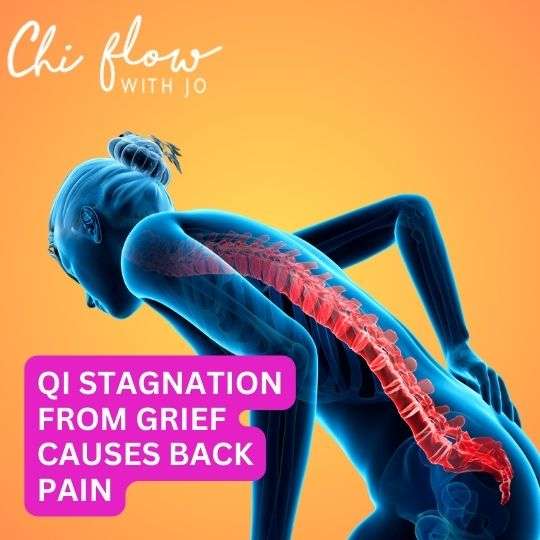
Why Qi Stagnation from Grief Causes Back Pain

In Chinese Medicine, back pain is often rooted in two key imbalances: Qi and Blood Stagnation.

Qi Stagnation: Qi, the vital energy flowing through your body, moves along meridians (energy channels). When this flow is blocked or contracted, discomfort begins as a dull ache but can develop into sharp, fixed pain.  Another common culprit is the invasion of cold or dampness into the meridians of the spine, slowing Qi flow. 

Blood Stagnation: Trauma, injury, or sedentary habits can lead to poor blood flow. Like a bruise that lingers, blood stagnation can intensify pain.

When grief is not expressed or resolved becoming trapped in the body, it disrupts the smooth flow of Qi, particularly in the lung meridian, 

This stagnation creates a kind of energetic “logjam,” similar to how a blocked stream causes water to pool and stagnate. Over time, this buildup can lead to physical discomfort, especially in the neck, shoulders and back, 

The tension caused by stagnation restricts movement, reduces circulation, and exacerbates pain, making it vital to address both the emotional and physical aspects of grief to restore balance and alleviate discomfort.

The good news? The treatment can be the same: Get moving, stay warm, stimulate circulation and acupoints. 

Acupressure to Release Grief and Open Energy Pathways 

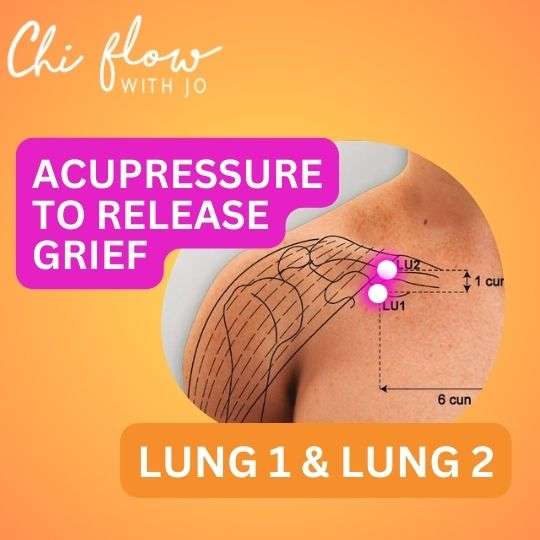
1. Lung 1 (Zhongfu) and Lung 2 (Yunmen)

These acupoints, located just below the collarbone, are instrumental in addressing grief and opening the lung meridian. Here’s how to find and use them:

♥ Locate the bony prominence of your collarbone. From there, move two fingers down to find Lung 1, and slightly above that is Lung 2.

♥ Gently massage these points on both sides of your chest. This helps release stuck grief and tension stored in the lungs and chest area.

2. Lung Meridian Tapping

The lung meridian travels down the inside of your arm to the edge of your thumb. Lightly tapping along this pathway further helps unblock emotional and energetic congestion.
Start at Lung 1, tapping down the inside of your arm to your thumb.
Repeat this on both arms to encourage Qi flow.

Qi Gong Exercises for Neck, Shoulders, and Back Pain

Gentle Neck and Shoulder Stretch

This Qi Gong exercise helps release tension and grief while supporting the upper back.

  1. Stand or sit comfortably with your hands by your sides.
  2. Imagine you’re holding small objects (like baguettes or ping pong balls) under your armpits to create space.
  3. Rotate your hands outward so your thumbs point behind you, opening the lung meridian.
  4. Slowly drop one ear toward your shoulder, then drop your chin to your chest, and move your other ear to the opposite shoulder. Repeat gently, enjoying the release in your neck and shoulders.

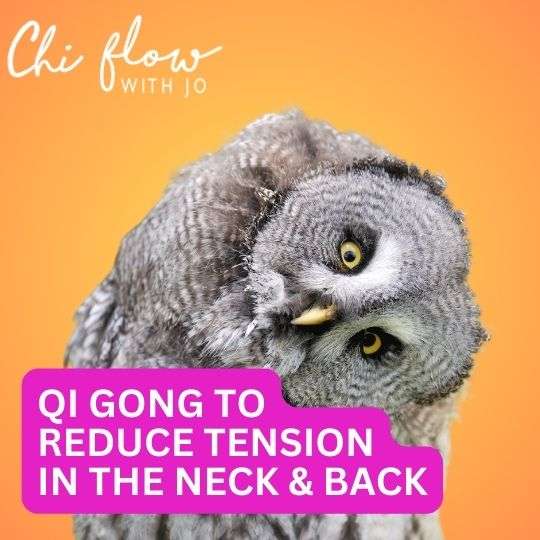
Wise Owl Turns Head to eliminate fatigue

The “Wise Owl Turns Head” Qigong exercise offers profound benefits for spinal health and emotional well-being. By gently rotating the head and neck, this movement stretches and massages the muscles and fascia along the spine, enhancing flexibility and relieving tension.

This action resembles wringing out a cloth, effectively dispersing Qi and blood stagnation, which can alleviate discomfort and promote energy flow.

Additionally, the exercise stimulates the lung meridian, facilitating the release of pent-up grief and sadness. Regular practice can lead to improved posture, reduced fatigue, and a more balanced emotional state.  Incorporating this exercise into your daily routine in Chi Flow with Jo, nurtures both physical and emotional health, fostering a harmonious flow of energy throughout the body.

This movement releases tension along the spine and energizes the entire back.

– Step-by-Step Instructions for Wise Owl Turns Head 

♥ Stand Tall in a Relaxed Posture

  • – Stand with your feet shoulder-width apart.
  • – Keep your knees slightly bent and your spine upright but relaxed.
  • – Let your arms hang naturally by your sides.

♥ Engage Your Breath

  • – Inhale deeply through your nose and let your belly expand.
  • – Exhale squeeze the belly slowly, feeling grounded and present.

♥ Begin the Head Rotation

  • – Inhale and slowly turn your head to look over one shoulder, as if you’re an owl gazing behind. Rotate your hands outward so your thumbs point behind you, opening the lung meridian as in the previous exercise.
  • – Move gently, ensuring there’s no strain on your neck.
  • – Imagine plugging your feet firmly into the floor and imagine your spine gently twisting and stretching, as if “wringing out” tension. Exhale. Inhale deeply as you slowly bring your head back to the center.
  • – Allow your shoulders to relax into a neutral position.

♥ Repeat on the Other Side

    • – Turn your head to look over the opposite shoulder.
    • – Again, allow your spine to twist gently while keeping your movements smooth and deliberate.

♥ Complete with Centering Breath

    • – After a few repetitions on each side, return to the center.
    • – Place your hands over your lower abdomen and take three slow, deep breaths to conclude.

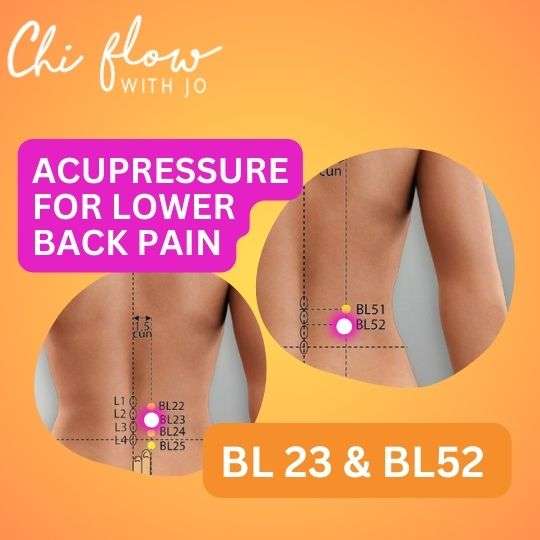
Acupressure for the Lower Back Pain

Bladder 23 (Shenshu) and Bladder 52 (Zhishi)

These points, located in the lower back near the kidneys, are vital for nourishing and warming the area. Rub these points gently to warm and activate them, releasing stagnant Qi.

This movement releases tension along the spine and energizes the entire back.

Kidney and Bladder Points on the Feet

The feet are home to powerful acupoints that can influence the back, including:

  • ♥ Kidney 1 (Bubbling Spring): On the sole of the foot.
  • ♥ Kidney 3: Between the inner ankle bone and the Achilles tendon.
  • ♥ Bladder 60: Between the outer ankle bone and the Achilles tendon.

Massage these points to improve Qi flow and reduce back pain before placing them into the ginger footbath below.

Warmth and Nourishment for Healing

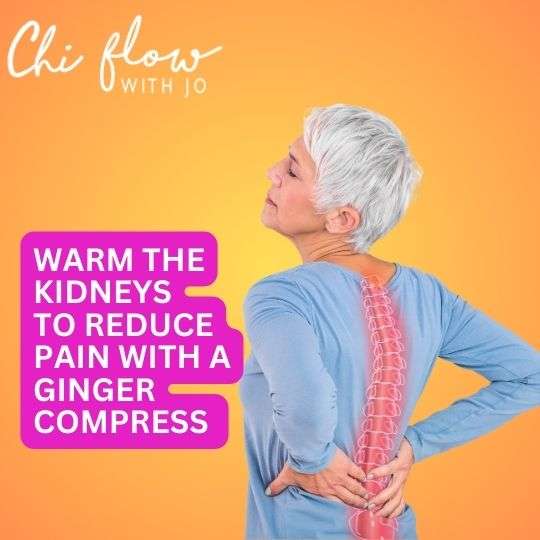
Ginger Compress for the Kidneys

The kidneys are closely tied to the lower back in TCM. Warming them can help ease Qi and blood stagnation, reduce pain and support overall vitality.

♥ Grate fresh ginger and steep it in hot water for 20 minutes.

♥ Dip a towel in the ginger-infused water and apply it to your lower back. For sensitive skin, place a dry towel between the compress and your skin.

♥ Leave the compress on for 15-20 minutes to relax muscles and promote Qi flow.

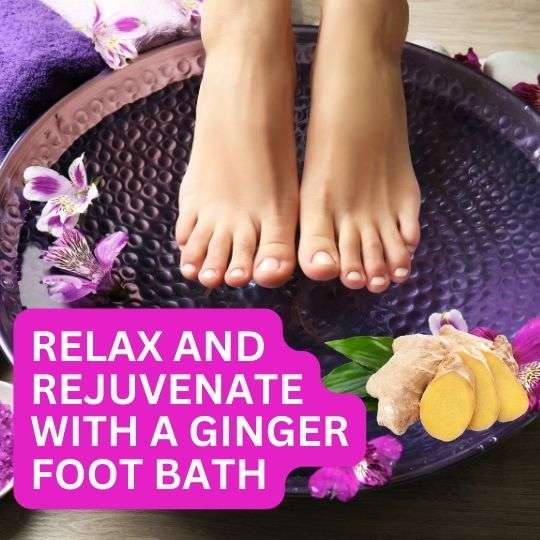
Ginger Foot Bath

Relax and rejuvenate with a ginger foot bath.

♥ Use the leftover but still warm, ginger water from your compress.

♥ Soak your feet for 10-15 minutes before bed to warm your entire system, calm your mind, and ease back pain.

Why It Works

Grief and trauma can cause the body to contract, leading to physical stagnation and pain. Acupressure and Qi Gong work together to:

♥ Release stuck emotions, especially grief stored in the lungs.

♥ Open meridians to restore the natural flow of Qi.

♥ Stretch and strengthen the spine to alleviate tension and pain.

♥ Nourish the body with warmth and relaxation techniques like ginger compresses.

By incorporating these practices into your daily routine, you can transform pain into healing, grief into strength, and stagnation into vitality. Remember, your body has an innate ability to heal, sometimes, it just needs a little support and time to get there.

Join the Chi Flow community

May you be happy, safe, and well, and may your journey to balance and health bring you peace and joy. Let’s embrace the flow of Qi together!

 Join us in Chi Flow for a FREE CLASS❤️

With Love and Chi,

Self-administered acupressure or Chinese Medicine is not a substitute for visits to qualified healthcare practitioners.

Knowing how to treat yourself and your loved ones with complimentary therapies like acupressure can be greatly beneficial and convenient. However, for serious and chronic conditions, you’ll want to visit an Shiatsu therapist / Acupuncturist or other qualified healthcare practitioner who can develop a treatment plan based on your unique medical history and combination of symptoms.  

The information provided should not be considered medical advice.
Bone building exercises

Bone building exercises

In my last post about improving bone health and slowing the effects of ageing, I shared what to eat following the 5 element diet in Chinese Medicine.
In this blog post I will share what we can do to strengthen the whole skeleton and prevent bone thinning,

Bone is living tissue that is constantly being broken down and replaced. Osteoporosis occurs when the creation of new bone doesn’t keep up with the loss of old bone. This affects men and women, but women who are just past menopause, are at highest risk.

Studies show that the right type of activity and movement is critical to maintain bone density and strength. What works best is load bearing exercises such as squats, leg presses and lifting weights. These are standard practices in gym’s, where people use equipment to build body mass, muscle and bone strength. However as a 53 year old menopausal woman, that wouldn’t be my kind of thing at all. I don’t want the fuss and bother of going to gym, working out how to use special equipment and perhaps even injuring myself in the process. So I use my own body weight and gravity as resistance training to improve muscle and bone strength. This can be as effective as training in a gym with weights or weight machine.

Why not try it?

Every morning in Chi Flow with Jo, over 400 of us practice simple, effective exercises, just like the one in the video, to build healthy bones, muscle mass and core strength. All that is required is concentration on coordinated movements and breathing. No special equipment, no special expertise and no previous experience. (sign up for free class at the end of this post)

YouTube player

Tiger what tiger?

The deeply focused and relaxed states we attain in Chi Flow with Jo also help regulate the nervous system. When the body is under stress or fearful situations such as running away from tigers, the body flushes out calcium and magnesium because these chemicals are not needed in the flight of fight response. 

Every so often, this is no problem, as how many tigers do we generally encounter! but if the body is responding to every day events such as project deadlines or dinner on the table as if it were being chased by a tiger, then this is a serious problem.


As I discussed in my last blog about food for strong bones, calcium and magnesium are the two minerals essential for bone strength.
5% of calcium and magnesium is transported around the body in the blood, the rest is stored in the bones. If the flight or fight response is constantly being triggered, and the calcium and magnesium being flushed from our system, eventually the body will have to go looking to the bones for the calcium and magnesium to restore the body to balance.  This is just one of the bone weakening effects stress can have on our body.

To prevent this mineral loss and bone thinning, we must maintain our emotional, mental and physical balance, learn how to self soothe and return to calm after stressful anxious times. Chi Flow with Jo with breath and movement coordination, activates the naturally occurring emotional and physical mechanisms of self-repair and health recovery.

In postmenopausal women, studies show moderate exercise helps preserve bone mass in the spine and prevents fractures, plus it shows increasing physical activity can improve your mood and stop the loss of minerals at times of stress.

Add to this that women who are not physically active are more likely to have heart disease, obesity, high blood pressure, diabetes, and osteoporosis. Sedentary women may also have chronic back pain, insomnia, poor circulation, weak muscles, and depression.


Happy hormones

Endorphins which are morphine-like substances found naturally within the body, account for moods of well-being or euphoria such as we experience after enjoyable workouts or even eating chocolate.  These happy hormones, are released in the brain and this improved mood can last for several hours which in turn helps the body fight stress.  Qi Gong and Chi Flow with Jo will boost these happy hormones to improve your mood and your mental strength. Research conducted by Harvard Medical School indicates that regular Qi/Chi gong practice is a safe and effective way to maintain bone density, relieve pain, improve balance and the ability to do daily activities.

Here’s what some members of Chi Flow had to say

“I can’t recommend this highly enough, a great way to support your body and just in half an hour – go on you deserve it. Best thing I’ve signed up for in years!” Solway Shiatsu

“Totally recommend Chi Flow with Jo. I started the practice last October and my body feels well and flexible.” Maighread

“I do them 3+ times a week and it makes a HUGE difference to my energy levels and general health & coping skills.
Give it a go for a month and see the difference.”  Helen

In Summary

The key to stopping sweet cravings lies in understanding and balancing the stomach and spleen energy through the 5 Element System of TCM. By incorporating the right foods, practising acupressure self-care, gentle Qi Gong exercise, and being mindful of your body’s signals, you can achieve the freedom and balance you’re looking for.

Remember that balance is key. Even healthy foods should be consumed in moderation.

Your journey to health and balance is unique, and embracing the wisdom of TCM can help you achieve lasting freedom from cravings. Be kind to yourself, listen to your body, and enjoy the process of nurturing your health.

Until next time, stay balanced and be well.

Self-administered acupressure or Chinese Medicine is not a substitute for visits to qualified healthcare practitioners.

Knowing how to treat yourself and your loved ones with complimentary therapies like acupressure can be greatly beneficial and convenient. However, for serious and chronic conditions, you’ll want to visit an Shiatsu therapist / Acupuncturist or other qualified healthcare practitioner who can develop a treatment plan based on your unique medical history and combination of symptoms.  

The information provided should not be considered medical advice.
Move your blood to relieve pain and stiffness in the body

Move your blood to relieve pain and stiffness in the body

ARE YOU SUFFERING FROM STIFFNESS & PAIN?

I was recently asked a question by a lady who had been suffering from stiff and sore feet in the mornings. 

“In the morning my feet are very stiff and sore when I’m walking downstairs, and then it quickly goes away after that. No soreness during the day, but if I rub them or massage them during the day they still feel a bit stiff.”

HOW CAN ACUPRESSURE, FOOD AND QI GONG HELP WITH STIFFNESS IN THE BODY?

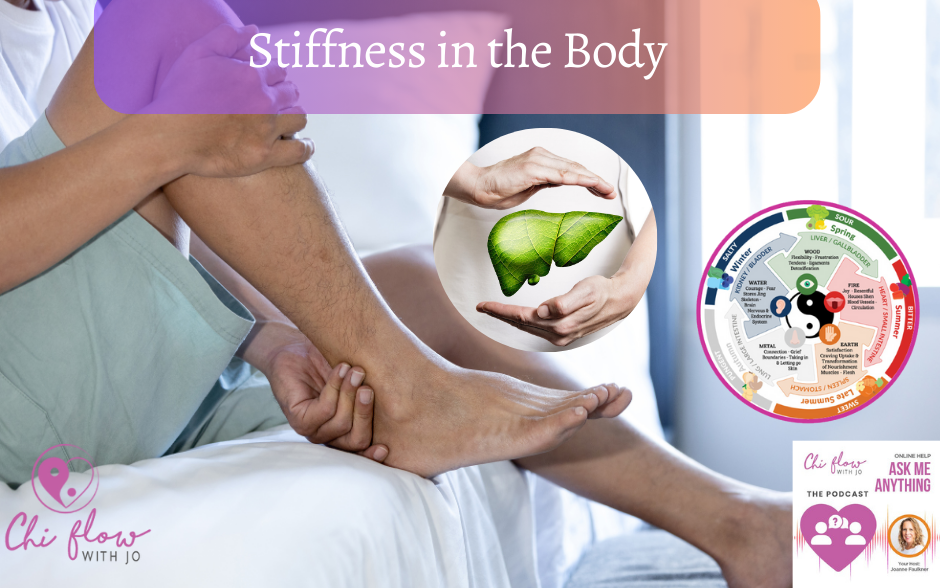
Stiffness in the body can be related to the liver, which is responsible for the smooth flow of blood and emotions through the body. When blood is not flowing smoothly, this can cause pain and stiffness in your hands and feet.

Because the liver is responsible for the smooth flow of blood in the ligaments and tendons, some pulsing qi gong exercisesfor the fingers and the toes can really get your blood flowing smoothly.again!

Take a look at the exercises and different acupressure points that I demonstrate on this episode of Ask Me Anything on my website if you are looking to relieve stiffness and regain smooth blood flow.

WANT TO LEARN MORE?

The Ask Me Anything podcast series has been created to answer your questions using my knowledge of Chinese medicine, Qi Gong, Qi Food therapy and Shiatsu. 

In this episode of Ask Me Anything, I have answered this lady’s question with my knowledge of Traditional Chinese Medicine and have shown her some movements and exercises that could help ease her pain.   Watch and try the exercises yourself to see if it brings you relief from pain and stiffness.

DO YOU HAVE A QUESTION?

The Ask Me Anything podcast series has been created to answer your questions using my knowledge of Chinese medicine, Qi Gong, Qi Food therapy and Shiatsu. 

You can ask a question by clicking on THIS LINK, or you can watch past episodes to see if your question has already been answered.

Join the Chi Flow online community today!

Also, join me in Chi Flow with Jo every weekday morning for live online Qi Gong where we will practise Qi Gong, as well as self-acupressure, delicious healthy recipes, Traditional Chinese Medicine (TCM) tips and Meridian stretches.  

You can sign up for a FREE online qi gong class with the form below.

Hope to see you in the Chi Flow!

Self-administered acupressure or Chinese Medicine is not a substitute for visits to qualified healthcare practitioners.

Knowing how to treat yourself and your loved ones with complimentary therapies like acupressure can be greatly beneficial and convenient. However, for serious and chronic conditions, you’ll want to visit an Shiatsu therapist / Acupuncturist or other qualified healthcare practitioner who can develop a treatment plan based on your unique medical history and combination of symptoms.  

The information provided should not be considered medical advice.