How to Strengthen Your Lungs Naturally
One of the most common questions I receive is this:
“Is there anything I can do to help my lungs and allergies? I think I have high histamine, high eosinophils and chronic asthma.”
It is such an important question.
And often when someone asks about their lungs, they are asking something deeper.
How do I feel safe in my body again?
How do I stop feeling reactive?
How do I build resilience instead of always bracing?
In Chinese Medicine, we keep it simple.
Life force energy must flow. When it flows well, we feel steady. When it tightens or stagnates, the body gives feedback. Asthma, allergies, high histamine responses and elevated eosinophils are signs that the system is on high alert. The chest is guarded. The breath is restricted.
The work is not to fight the body.
It is to gently teach it safety again.
The Lungs in Chinese Medicine, Immunity, Boundaries and Grief
In Traditional Chinese Medicine, the Lung system is connected to the Metal element. It governs:
- Breath and respiration
- Skin and nose, which is why allergies sit here
- Immunity and defensive Qi
- Grief and the ability to let go
- Our sense of boundary
The Lungs work closely with the Large Intestine. One takes in from the world around us, the other releases what is no longer needed.
When breath becomes shallow, often after stress or grief, the system can remain in a subtle protective pattern long after the original event has passed. Think about how we breathe when we cry. Short, tight, restricted. Sometimes the body stays there.
For women over 45, as hormones shift and tissues become drier, the Lungs can feel more sensitive. The chest can subtly tighten. The breath becomes shallower. Allergic patterns can intensify.
If you are searching for how to strengthen your lungs naturally, this is where we begin.
Acupressure for Lung Health, Lung 1 Central Treasury
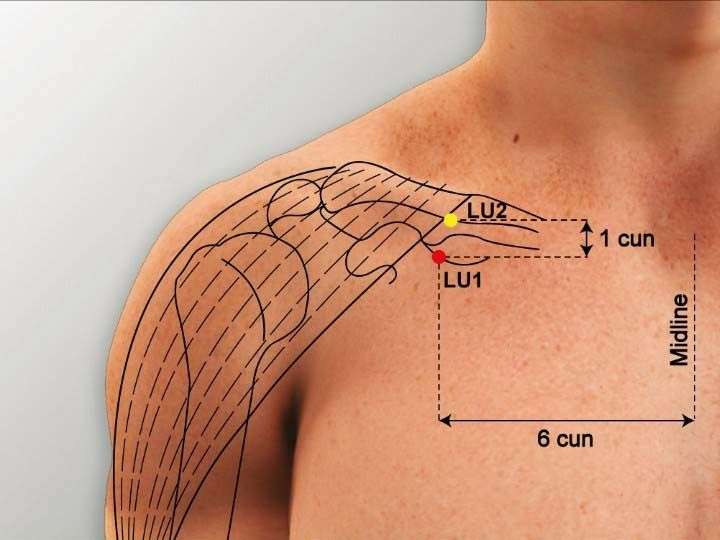
One of my favourite points for the chest is Lung 1, Central Treasury.
It sits just below the outer collarbone, slightly toward the shoulder, in a soft hollow. Slide your fingers along your collarbone until it dips near the front of the shoulder. Move just under the bone into the soft tissue, that’s Lung 2, come two fingers beneath that and you will find Lung 1, an often tender, alive spot.
How to use it:
1) Use two or three fingers
2) Lean in slowly
3) You should feel a gentle ache or fullness, not sharp pain
4) Breathe quietly
5) Stay for one to three minutes
6) Repeat on both sides
This point helps Lung Qi descend. In simple language, it helps the chest soften and the breath drop down rather than rising abruptly.
For asthma and allergies, the inhale can feel tight and the exhale incomplete. Pressing Lung 1 daily, perhaps sitting on the edge of your bed in the morning, becomes a signal to your nervous system that it is safe to open.
Consistency over intensity. Gentle and steady always wins.
Food Medicine for Allergies and High Histamine
When working with histamine and allergic patterns, extremes are not helpful. We want steady, warm, supportive nourishment that strengthens immunity without overstimulating.

1. Warm Water on Waking
Before tea. Before coffee. Before anything. A mug of plain warm water.
The Lungs and Large Intestine work as a pair. Warm water first thing:
- Supports hydration
- Moistens dryness
- Helps clear phlegm
- Encourages gentle bowel movement
- Reduces immune load over time
Boil the kettle. Let it cool slightly. Sip slowly. It is not dramatic. It is rhythmic.
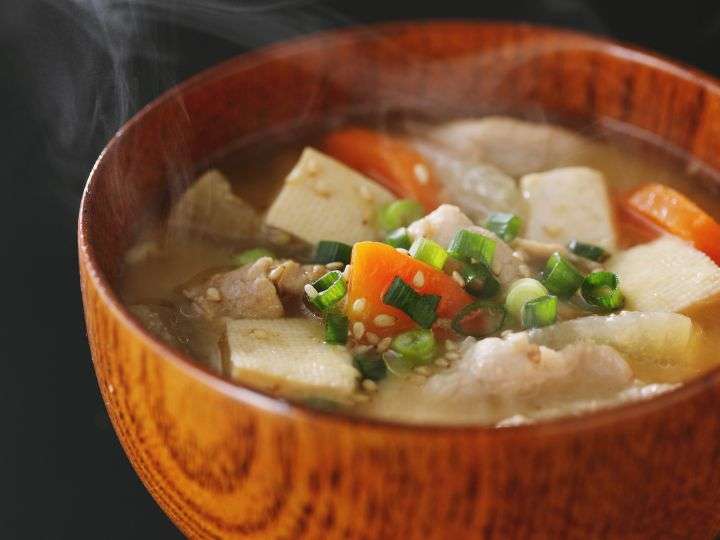
2. Simple Miso Broth
A few times a week, later in the day:
- Stir one teaspoon of miso paste into hot, not boiling water
- Add a little soaked wakame seaweed
Miso supports gut integrity and immune balance. Wakame provides minerals and supports fluids. This is gentle nourishment for the Lung and gut partnership.
When asking how to improve lung health naturally, we must include digestion. The gut, breath and immune system are deeply connected.
Qi Gong for Lung Strength and Resilience
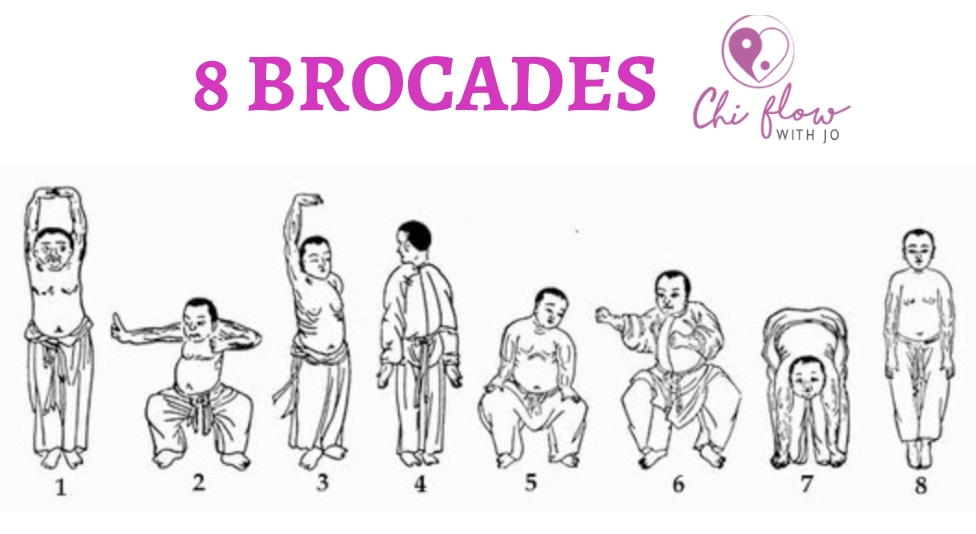
The 8 Brocades and Wise Owl Turns Head
For month of April, we are working with the classical sequence known as the 8 Brocades, Ba Duan Jin.
The fourth movement, Wise Owl Turns Head, is deeply supportive for the Lungs in a subtle but powerful way.
Instead of forcing the chest open, it releases tension at the base of the skull and across the upper back, where so many of us hold guarding that restricts breath.
You can do this seated or standing.
How to practise:
- Sit or stand upright, crown gently rising
- Arms relaxed by your sides
- Inhale through the nose, expand the belly
- Let the expansion spiral upward through your armpits, gently opening the arms exposing the inner arms; thumbs pointing behind.
- Include the spiral through the neck, rotate gently to look over your right shoulder
- Exhale back to centre
- Inhale and turn to the left
- Exhale to centre
Keep the jaw soft.
Tongue resting gently on the roof of the mouth.
Breath slow and even, never strained.
Continue for two to three minutes.
This gentle rotation:
- Releases upper thoracic tension
- Softens the base of the skull
- Calms the nervous system through rhythm
- Creates more space for the breath to descend
Often after a few rounds, the breath deepens spontaneously. That is the body choosing safety.
Slow, repetitive expansion builds resilience.
Chronic Asthma, Eosinophils and Medical Care
When pain wraps and lingers, the body often responds better to rhythm than effort.
If you are living with chronic asthma, high eosinophils or persistent allergic symptoms, these practices are supportive. They do not replace medical care.
If you experience:
- Increased wheezing
- Night waking
- Persistent chest tightness
- Changes in medication response
Please check in with your GP.
We work alongside your care, not instead of it.
Your lungs are not weak.
They are sensitive.
Sensitivity, when supported properly, becomes strength.
A Simple Daily Lung Strengthening Routine
If you want something practical to begin this week:
- Warm water on waking
- Press Lung 1 on both sides for one to three minutes
- Practise Wise Owl Turns Head for two to three minutes
If you would like to learn the full 8 Brocades sequence step by step, I teach it inside Chi Flow with Jo. We move gently, consistently and intelligently, building strength that lasts.
You can also explore more in depth teachings on the Five Element system, Lung health, immunity and emotional resilience inside my books and on the podcast section of this website.
And if you have a question about your own health journey, there is a form in the podcast section where you can submit it.
Let us keep opening the chest and steadying the breath together.
Join us for the free class.
Final Thoughts
Persistent shingles pain doesn’t mean your body has failed. It usually means the system is still protecting itself.
With patience, gentle support, and consistency, the body can continue to heal long after the rash has gone. Listening to the signals rather than fighting them is often what allows real change to happen.
Your body knows how to find its way back to balance, sometimes it just needs the right conditions.
💗 Ready to Join?
Click here to become a member of Chi Flow with Jo → CLICK HERE
Or drop in for a class and feel it for yourself (sign up below). Join the Chi Flow with Jo community for live sessions, practice, and support.


Self-administered acupressure or Chinese Medicine is not a substitute for visits to qualified healthcare practitioners.
Knowing how to treat yourself and your loved ones with complimentary therapies like acupressure can be greatly beneficial and convenient. However, for serious and chronic conditions, you’ll want to visit an Shiatsu therapist / Acupuncturist or other qualified healthcare practitioner who can develop a treatment plan based on your unique medical history and combination of symptoms.
The information provided should not be considered medical advice.