

Chest Tightness, Poor Breathing, and Fatigue: Finding Relief with Acupressure and Breathing Techniques
Chest Tightness, Poor Breathing, and Fatigue: Finding Relief with Acupressure and Breathing Techniques
Do you ever find yourself overwhelmed by chest tightness, shallow breathing, and deep fatigue? You’re not alone—these are common experiences that can be linked to both physical and emotional blockages.
In a recent episode of my Ask Me Anything podcast, I answered Maura’s question; she found herself frequently struggling with tightness in her chest and feeling completely wiped out. She felt so exhausted and breathless that it affected her daily life.
If this resonates with you, let me guide you through a simple acupressure point and breathing exercise to help you regain energy, release tension, and find ease in your body.
Understanding the Breath and Energy Connection
In Traditional Chinese Medicine (TCM), our breath is more than just a source of oxygen—it carries chi, or life force energy, throughout our body. When our breathing becomes shallow or stuck, it disrupts the flow of chi, leading to symptoms like chest tightness, breathlessness, and fatigue.
Emotions like anxiety, grief, and even physical tension in the neck and shoulders can block this flow of energy, trapping it in the chest and head.
To restore balance, we need to descend the energy deep into our core, particularly into the kidneys and lower abdomen, where our life force resides.
Lung 7: The Magic Acupressure Point for Breath and Energy
One powerful way to get your breath and energy flowing again is through a specific acupressure point called Lung 7. This point has the remarkable ability to “grasp” the chi and pull it down into the kidneys, allowing for deeper, more nourishing breaths.
Here’s how to find Lung 7:
- Place your fingers along the edge of your thumb, where the light and dark skin meet. This is the lung meridian.
- Move down to the crease of your wrist and place two fingers just below it. This is where Lung 7 is located.
- A technical location for Lung 7 is proximal (closer to the torso) to the styloid process of the radius bone (the bone in your forearm which ends closest to your thumb);
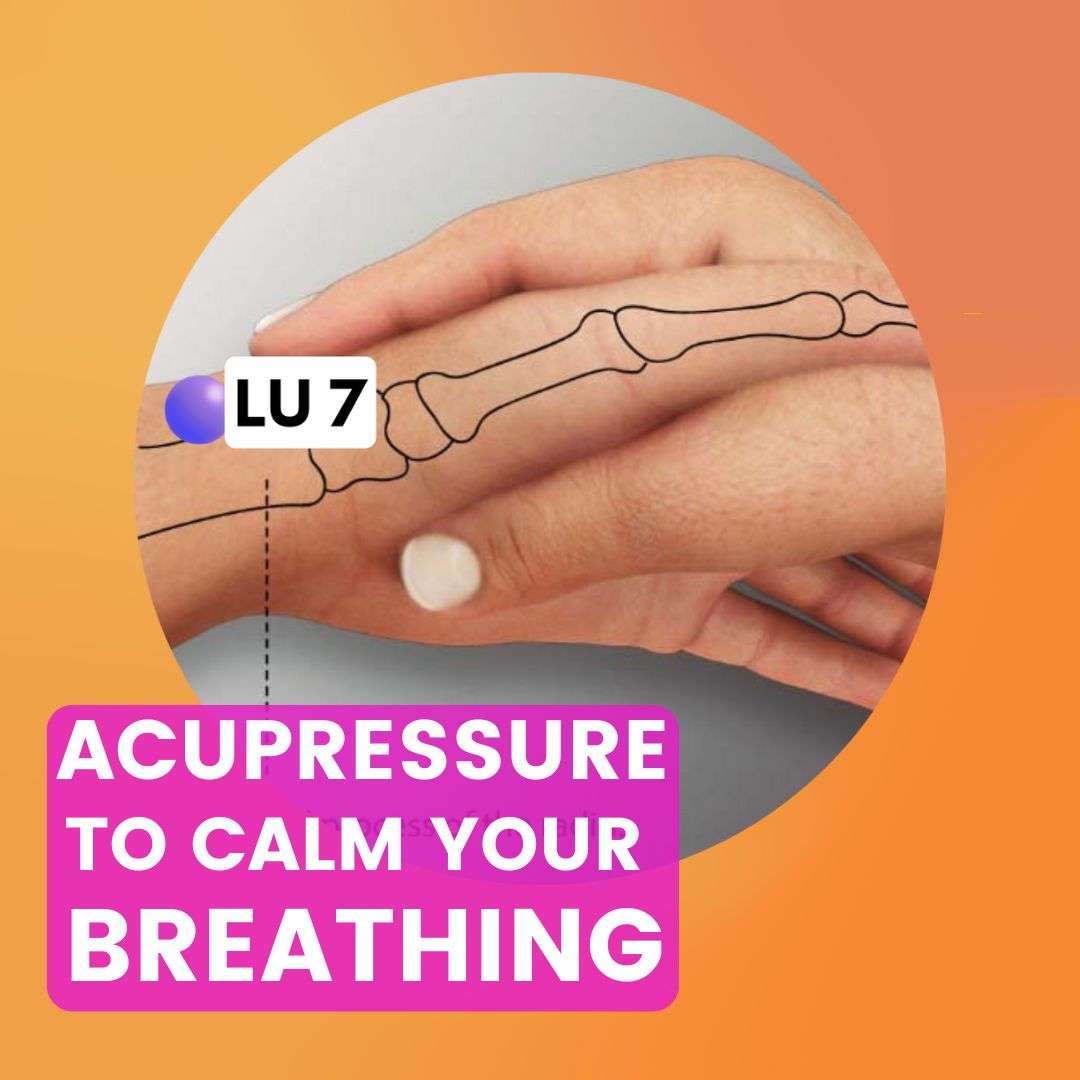
A simple way to find it is by joining your hands between the thumb and forefinger.. Your index finger should be resting along the radius bone. The tip of your index finger will come to rest in a small notch between two tendons which lie on top of the styloid process.
Once you’ve located the point, gently press into it. Imagine that you’re holding someone’s hand—there’s a warmth and softness to the pressure. Hold the point for 30 seconds to 3 minutes, feeling for a shift or a pulse that signals the energy is beginning to move.
Lung 7 isn’t just for breathing—it also helps with neck tension, headaches, and even strengthens your immune system.
The Power of Breathing with Intention
Now that you’ve activated Lung 7, let’s deepen the benefits with a simple breathing exercise.
By consciously working with your breath, you’ll not only alleviate chest tightness and fatigue but also nurture a sense of calm and relaxation.
Here’s a step-by-step guide to a healing breathwork practice:
- Exhale completely through your mouth, imagining you’re blowing out through a straw. As you do this, visualise contracting and compressing the front of your body.
- Relax the inhale. Let the breath come naturally through your nose, drawing the air deep into your body. Imagine the breath expanding and flowing all the way down the back of your body, from the back of your head to your spine and kidneys.
- Exhale again, focusing on fully contracting and squeezing out the air from the front of your body.
- Relax to the back. As you breathe in, take your attention to the back of your head, spine, and kidneys, allowing the breath to nourish these areas.
Repeat this cycle, compressing the front on the exhale and relaxing the back on the inhale. Over time, this practice will help shift energy from your upper chest, allowing you to breathe more fully and deeply. This is a simple way to enter the parasympathetic state where the body can rest, relax and restore.
Why This Practice Works
In TCM, we believe that where there is pain or blockage, chi is not flowing as it should. This is similar to how blood flows through arteries and veins—when energy is blocked, it causes discomfort. By working with acupressure points and mindful breathing, you’re encouraging the flow of chi, which releases tension, relieves fatigue, and helps you find peace in your body.
Using Lung 7, in combination with deep breathing, not only addresses chest tightness and poor breathing but also strengthens your Wei Qi, or immune defense. This is especially important as we move through autumn and winter, when our bodies are more vulnerable to external pathogens.
Bringing It All Together
Try adding this practice into your daily routine, especially if you’re dealing with breathlessness, tightness in your chest, or feeling overwhelmed. Press into Lung 7, breathe deeply, and allow your body to relax and receive the healing benefits of your breath. As you exhale, release all the stress and tension you’ve been holding onto. As you inhale, let the energy flow through your body, replenishing and revitalising you.
May you feel the peace and ease that comes with restoring your breath and energy. If you have any questions or want to dive deeper into these practices, feel free to ask! Let’s keep the conversation going—be happy, be well, and keep flowing.
With Love and Light,

Ready to Start?
Join Chi Flow with Jo and begin restoring your energy, and feeling more like yourself again.



Go Deeper with Our Books
For those wanting to understand how movement, breath, and Chinese Medicine principles, Jo’s books provide practical guidance rooted in lived experience and clinical wisdom.
👉 Buy Five Element Wisdom cookbooks
Explore how to Find Your Flow and Live Well with Parkinson’s.
Movement does not need to be extreme to be powerful.
Small daily expansion reshapes the body.
Steady breath reshapes the nervous system.
Gentle repetition rebuilds confidence.
Every human body carries extraordinary capacity for renewal when given the right rhythm.
If you want to soften into strength, come and practice with us.
Self-administered acupressure or Chinese Medicine is not a substitute for visits to qualified healthcare practitioners.
Knowing how to treat yourself and your loved ones with complimentary therapies like acupressure can be greatly beneficial and convenient. However, for serious and chronic conditions, you’ll want to visit an Shiatsu therapist / Acupuncturist or other qualified healthcare practitioner who can develop a treatment plan based on your unique medical history and combination of symptoms.
The information provided should not be considered medical advice.