Frozen Shoulder Relief: Acupressure, Tendon Breathing & Food Medicine

Frozen Shoulder Relief: Acupressure, Tendon Breathing & Food Medicine

Frozen Shoulder Relief: Acupressure (LI14 & LI15), Tendon Breathing & Food Medicine

Why this matters

If your shoulder feels painful, tight, and stubborn, like it’s glued in place, or there is pain when your hand reaches out to open a window or put something on a shelf, you’re not alone. Frozen shoulder can take months (sometimes longer) to ease.

The good news? With gentle, consistent practice you can reduce pain, restore mobility, and feel more like yourself again.

Why daily Qi Gong helps (big picture):

Think of it as compound interest for your joints. Slow, breath-led movement:

♥ calms the nervous system so pain perception drops,
♥ nourishes fascia and tendons with circulation and warmth,
♥ retrains your body to move without bracing, it’s how we “age-proof” shoulders.

When you join Chi Flow with Jo, you don’t just get classes, you get the power of the group live every weekday morning plus a daily chat with me right after class to ask questions, celebrate wins, and keep momentum. It’s such a supportive way to heal.

Safety first

If you’ve had a recent fall, can’t lift the arm at all, have fever, redness, severe night pain that doesn’t change with position, numbness in the hand, or sudden swelling—please see a clinician. Everything here is gentle; keep pain at 2–3/10. Choose ease over force.

Acupressure You Can Do Today: LI15 & LI14

We’ll open two shoulder “gates” on the Large Intestine channel to move stagnation through the arm and shoulder.

LI15 — Jianyu / Shoulder Bone

Benefits:

♥ Eases pain and stiffness,
♥ Supports abduction (lifting the arm to the side),
♥ Warms the joint capsule.

Find it:

♥ Feel the acromion (bony shoulder tip) at the top of the shoulder, find the front groove of the deltoid muscle.
♥ Slide a fingertip just in front and slightly below into a soft hollow often tender.

Work it:

♥ Rest the arm by your side.
♥ With the opposite thumb or middle finger, press and melt into the hollow for 8 slow breaths.
♥ Make tiny circles—like polishing a pearl—for 30–45 seconds.
♥ Repeat 3 rounds; switch sides.

LI14 — Binao / Upper Arm

Benefits:

releases upper-arm/shoulder tension; helps lifting and reaching—perfect for that “stuck sleeve” feeling.

Find it:

From the outer elbow crease (LI11), draw an imaginary line toward LI15. LI14 sits about 7 finger-widths above the elbow on that line, at/just above the deltoid slope, usually a ropey, tender spot.

Work it:

♥ Pin the point with your thumb; wrap the other fingers around the arm.
♥ Breathe 4 in / 6 out—soften on the inhale, sink slightly on the exhale.
♥ Hold 60–90 seconds, up to 3 passes; switch sides.

Food Medicine for Stiff Neck & Shoulders

From a TCM lens we want to move Blood, dispel Wind-Cold, transform Damp, and nourish Liver & Kidney (Liver governs sinews; Kidney governs bones).

Add more of (little, daily amounts):

♥ Warming pungents: fresh ginger, spring onion (white part), garlic, a pinch of white pepper
♥ Sinew-friendly foods: dark leafy greens, black sesame, walnuts, goji berries, bone broth/gelatin (or mineral-rich seaweed broth if plant-based)
♥ Oils for glide: extra-virgin olive oil, small oily fish (if eaten)
♥ Hydration: warm water or ginger-lemon sips through the day

Dial down for many people: cold raw salads, excess sugar/dairy, heavy fried foods.

Damp-forming foods can worsen stiffness.

A quick word on Dampness

Dampness is like a heavy, sticky fog settling in the body, slowing everything and making tissues feel puffy and waterlogged. Imagine moving in wet, clinging clothes: range shrinks, effort rises, glide disappears. In shoulders, that fog can thicken fluids around tendons and the capsule, impairing Qi & Blood flow, so repair and lubrication lag. Result: stiffness, dull ache, and a “stuck” feel, often worse with cold, humidity, or rich foods.
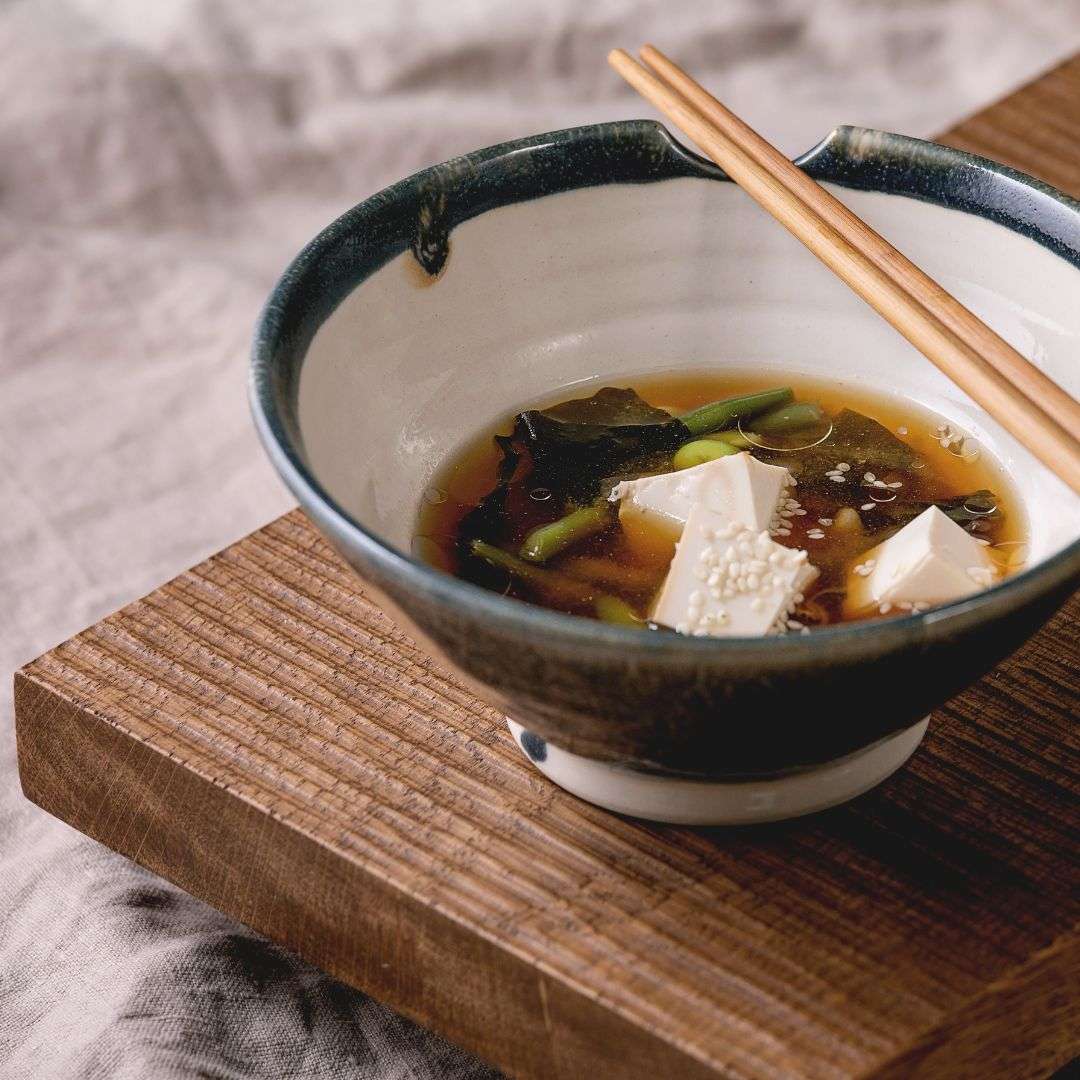
Shoulder-Soother Broth (serves 2)

♥ 1 thumb fresh ginger (sliced)
♥ 2 spring onions (white parts)
♥ handful greens (spinach or pak choi)
♥ 1 tsp black sesame
♥ 1 tsp miso (stir in off the boil)

Optional: 1 cup bone broth or a strip of kombu simmered then removed

Method:

♥ Simmer ginger & spring onion 10 min.
♥ Add greens 2 min.
♥ Remove from heat,
♥ whisk in miso,
♥ sprinkle sesame.
Sip warm.

Qi Gong: Tendon Nei Gong (gentle & joint-saving)

In Tendon Nei Gong we breathe into the joint space, then expand softly as if the shoulder, elbow, and wrist were balloons inflating in all directions. This pumps fluids, clears metabolic stagnation, poetically called “poisonous acids” and lets fresh Qi & Blood bathe the tissues. No strain, no pinching.

Set-up: Stand hip-width or sit tall. Feet grounded, crown lifting, jaw soft.

1) Shake & Melt — 1 min
Arms hang; micro-shake wrists → elbows → shoulders, like dust falling off your tendons.

2) Tendon Breathing — 2–3 min
Align & breathe: Tongue to palate. Inhale 4 / Exhale 6 through the nose.

Tensile reach: With elbows low, imagine micro-lines of length sternum → shoulders → elbows → wrists → fingertips (no visible stretch).

Inhale: feel the joint expand front/back/sides; keep traps soft.
Exhale: condense and melt—like wringing a sponge.
Optional tiny spirals: 3–5 breaths, a whisper of outward rotation on inhale, return on exhale.

3) Finish: Shake Out — 30 sec
Wrists → elbows → shoulders.

Why it works: low load, nervous-system down-regulating, improves joint space and tendon hydration—ideal for frozen shoulder because it avoids impingement while boosting circulation.
Common pitfalls: shrugging/over-bracing, breath-holding (Valsalva), forcing range. If anything pinches, shrink the movement and keep the elbow below shoulder height.

Frozen-shoulder tips:

♥ If pain >3/10, reduce imagined expansion; shorten breath to 3–4.
♥ Try a pendulum assist first (arm dangling, tiny circles), then tendon breathing.
♥ Pair with LI14 & LI15 beforehand to open the shoulder gates, then breathe into that new space.
♥ Quick self-check (what “good” feels like):
♥ Breath smooth, jaw soft, no shrugging.
♥ Warmth or spreading into the deltoid/upper arm within 3–6 breaths.

After 1–2 minutes, the arm often lifts a few centimeters easier and the neck feels looser, not tighter.


WATCH THE PODCAST

Your next step (with support)

Frozen shoulder responds to kindness + consistency. We don’t force change, we invite it. If you’d love support, join Chi Flow with Jo: we meet live every weekday morning, and we always have a chat together after class so you can ask questions in real time, get tweaks for your body, and feel the momentum of a community that cares. I’m cheering for your first easy reach to the top shelf again. Until then, move gently, breathe deeply, and keep your Chi flowing.

💗 Ready to Join?

Click here to become a member of Chi Flow with Jo → CLICK HERE

Or drop in for a class and feel it for yourself (sign up below). Join the Chi Flow with Jo community for live sessions, practice, and support.

Self-administered acupressure or Chinese Medicine is not a substitute for visits to qualified healthcare practitioners.

Knowing how to treat yourself and your loved ones with complimentary therapies like acupressure can be greatly beneficial and convenient. However, for serious and chronic conditions, you’ll want to visit an Shiatsu therapist / Acupuncturist or other qualified healthcare practitioner who can develop a treatment plan based on your unique medical history and combination of symptoms.  The information provided should not be considered medical advice.
.
How Sound Healing Supports Hormonal Balance & Slows Ageing After Menopause

How Sound Healing Supports Hormonal Balance & Slows Ageing After Menopause

How Sound Healing Supports Hormonal Balance & Slows Ageing After Menopause

As we step into November in Chi Flow with Jo, our focus turns to hormonal balance and longevity. For many women, especially post-menopause, the question becomes: how can I stay strong, flexible, and emotionally balanced as I age?

One powerful answer lies in sound healing.

Recently, I spoke with Caroline Flavin of Alchemy of Sound, who has been working with sound and vibration for over 20 years. She shared how crystal bowls, tuning forks, and even simple humming can profoundly support women through hormonal transitions.

Sound Healing & Hormonal Shifts

Menopause and post-menopause often bring stress, anxiety, temperature fluctuations, and disrupted sleep. These challenges are closely linked with elevated cortisol and a nervous system under strain.

Caroline explained that sound baths, through the resonance of crystal bowls, guide the brain into slower wave states, alpha and theta, similar to deep relaxation or meditation.

This shift activates the parasympathetic nervous system, helping the body to lower stress hormones, reduce blood pressure, and find a state where true healing and restoration can occur.

For women navigating hormonal changes, this is more than relaxation, it’s a pathway to balance, calm, and longevity.

Vibration, Energy & Flow

Chi Flow with Jo uses breath and movement to circulate qi, the vital energy of life. Sound works in harmony with this: instead of moving energy with the body, the vibration moves through the waters of the body, blood, lymph, and cellular fluids, carrying resonance deep into our tissues.

Just as we feel music reverberate in our bones at a concert, sound healing allows us to literally vibrate into balance. For women post-menopause, this offers a gentle yet powerful way to stay connected, flexible, and resilient, physically and emotionally.

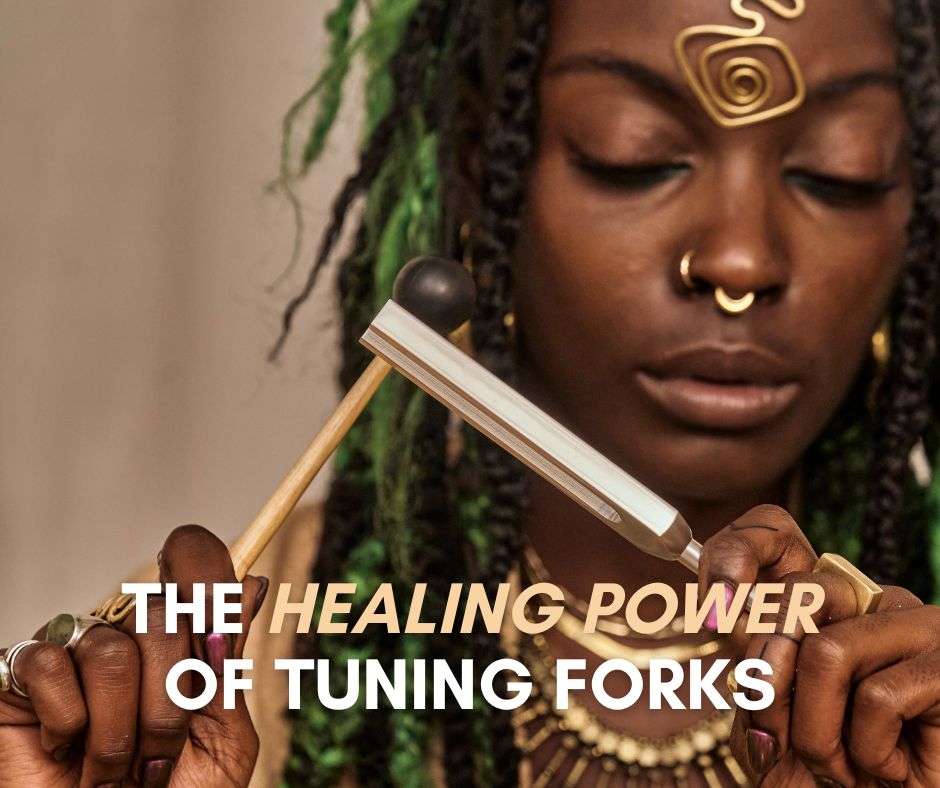
Tuning Forks & Hormonal Points

Caroline also works with planetary tuning forks, rooted in both ancient and modern traditions.

Applied to specific meridian points, these vibrations can support symptoms of peri- and post-menopause, helping restore balance to the body’s internal rhythms.

It’s a reminder that healing doesn’t always have to come from doing—sometimes, it comes from allowing the body to receive.

Everyday Sound Rituals for Longevity

Caroline suggests simple practices for daily life:

  • Hum or chant “Om” first thing in the morning or before bed to soothe your nervous system.

  • Pay attention to the soundscape around you, swap doom-scrolling and digital noise for birdsong, leaves rustling, or calming music.

  • Try sound baths online or in person, where vibration can ripple through your whole being.

These small rituals, especially when paired with Chi Flow, become longevity practices, keeping you emotionally balanced, physically strong, and connected to life’s natural rhythm.

Experience Sound Healing in November

I’m delighted that Caroline Flavin of Alchemy of Sound will join us for November’s Chi Flow mid-monthly health talk, offering an online sound bath and discussion on hormonal balance and longevity.

✨ This talk is free for all Chi Flow members.


✨Non-members can buy a ticket, and if you later decide to join Chi Flow, we’ll refund your ticket price. https://joannefaulkner.ie/online-talk/

WATCH THE PODCAST

In the full podcast, learn more about sound healing and how it affects our hormonal balance below: 

Join Us This Month in Chi Flow with Jo to balance hormones & boost energy and longevity

Why not join Chi Flow today, so you can experience Caroline’s sound bath, our daily morning Qi Gong practice, and a supportive community of women navigating midlife and beyond?

💗 Ready to Join?

Click here to become a member of Chi Flow with Jo → CLICK HERE

Or drop in for a class and feel it for yourself (sign up below).


Join the Chi Flow with Jo community for live sessions, practice, and support on your journey to an emotionally healthy heart and attend Caroline’s live talk and sound bath for FREE.
To work with Caroline click HERE

Self-administered acupressure or Chinese Medicine is not a substitute for visits to qualified healthcare practitioners.

Knowing how to treat yourself and your loved ones with complimentary therapies like acupressure can be greatly beneficial and convenient. However, for serious and chronic conditions, you’ll want to visit an Shiatsu therapist / Acupuncturist or other qualified healthcare practitioner who can develop a treatment plan based on your unique medical history and combination of symptoms.  The information provided should not be considered medical advice.
.
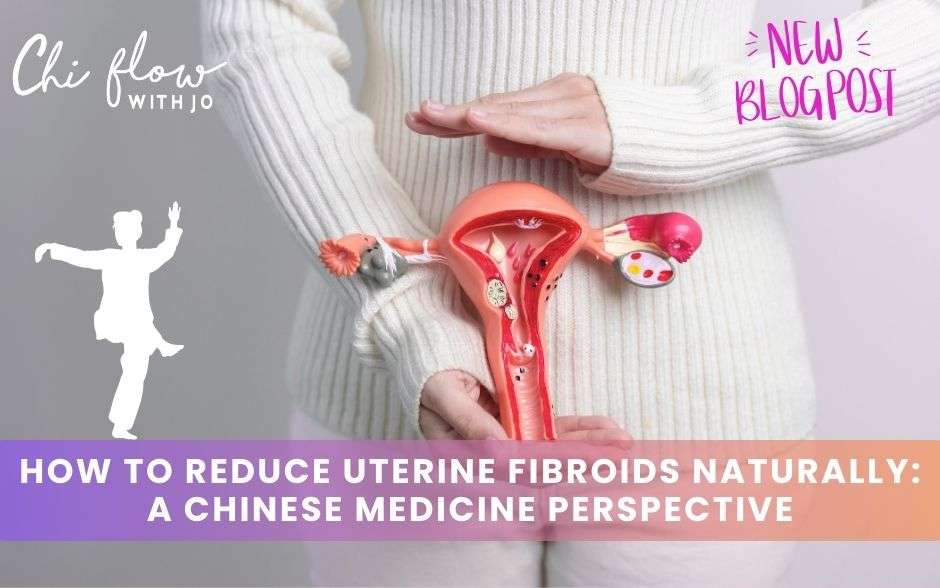
How to Reduce Uterine Fibroids Naturally: A Chinese Medicine Perspective

How to Reduce Uterine Fibroids Naturally: A Chinese Medicine Perspective

How to Reduce Uterine Fibroids Naturally: A Chinese Medicine Perspective

Uterine fibroids are a common concern for many women, often causing discomfort, heavy periods, and lower abdominal pain. 

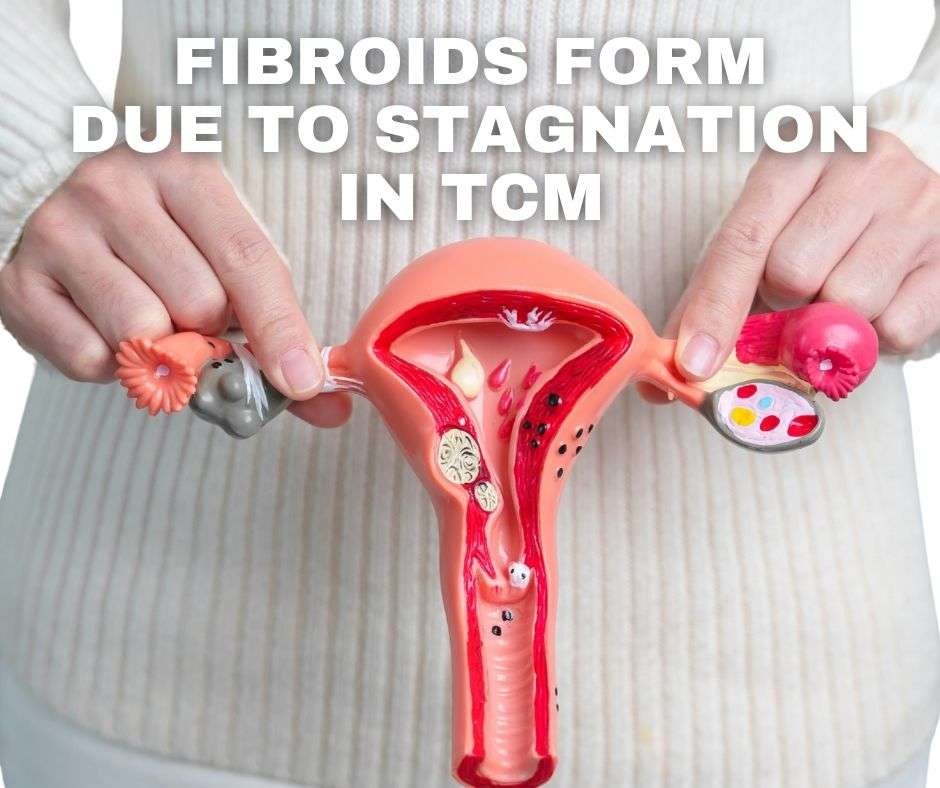
From a Traditional Chinese Medicine (TCM) perspective, these benign growths are linked to stagnation, whether of Qi (energy), blood, or dampness accumulation. 

In this blog, you’ll discover how to reduce fibroid symptoms naturally using Qi Gong, food medicine, acupressure, and womb connection, from a TCM perspective that treats the whole woman, not just her symptoms.

Understanding Uterine Fibroids in Chinese Medicine

In TCM, health is about the smooth flow of Qi and blood. When this natural flow becomes obstructed, due to stress, trauma, or lifestyle factors, it can lead to stagnation. Over time, stagnation can contribute to conditions such as uterine fibroids, menstrual pain, lower back stiffness, and even recurrent urinary tract infections.

TCM identifies three primary causes of stagnation in the lower belly:

  1. Physical Trauma – Surgery, childbirth, or injury can disrupt the circulation of blood and Qi.
  2. Emotional Trauma – Stress, grief, or unresolved emotions can create blockages in the body.
  3. Lack of Movement – A sedentary lifestyle can slow circulation and contribute to dampness accumulation.

By addressing these root causes, we can begin to dissolve stagnation and restore harmony to the womb space.

Qi Gong for Uterine Fibroid Relief

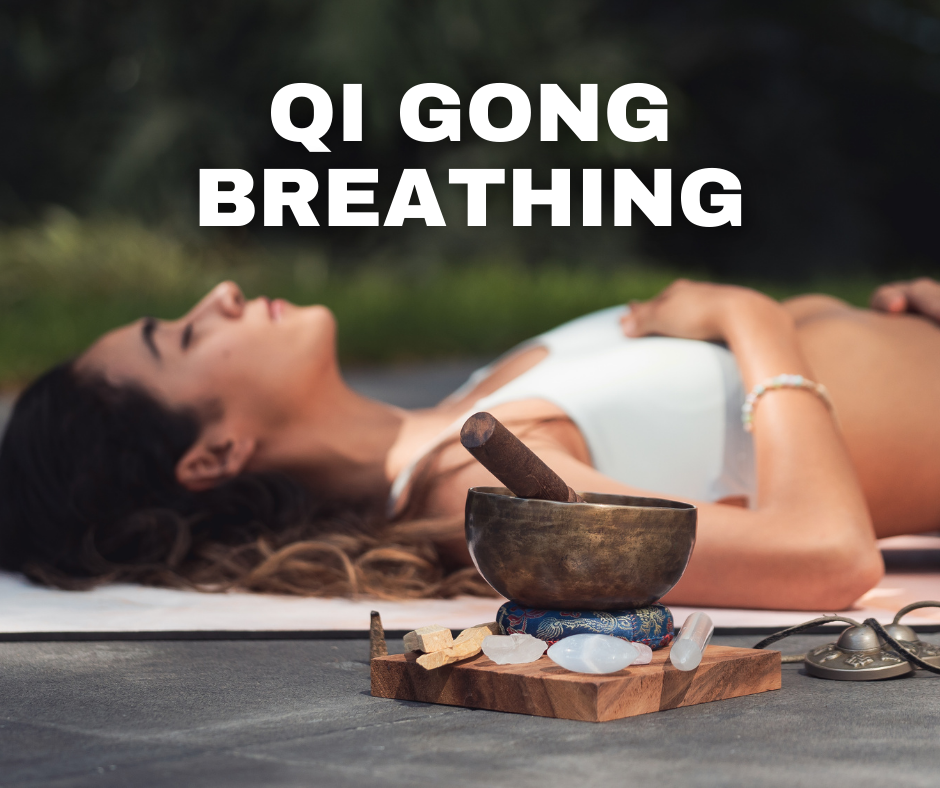
Qi Gong, an ancient practice that combines breathwork, movement, and meditation, is a powerful tool for unblocking stagnant energy. One particularly beneficial exercise is Rabbit Springs Qi Gong, which involves deep belly breathing and gentle massage to stimulate circulation in the lower abdomen.

Try This Qi Gong Breathing Exercise:

  1. Place your hands on your lower belly, just below the navel.
  2. Inhale deeply through your nose, imagine you are smelling a rose,, expanding your belly like a balloon.
  3. Exhale fully, drawing your belly button back toward your spine.
  4. Repeat for three minutes, allowing warmth and energy to flow into the uterus.

Practicing this exercise during the day, while making tea, doing laundry, or in moments of stillness, can increase Qi energy to the area, and gives an internal massage reducing pain and improving blood flow.

Emotional Healing: Connecting with Your Womb

In Western culture, we often avoid focusing on the lower belly and the sexual organs, but in TCM, this area is the foundation of vitality and creativity. Taking time to connect with your womb can bring profound insights and healing.

Many people are comfortable engaging with their thoughts and emotions, residing predominantly in the realms of the mind and heart. However, the lower belly and sexual organs often become repositories of shame and discomfort, leading to disconnection from this vital area. 

In Traditional Chinese Medicine (TCM), this region is recognized as a powerful energy center, essential for creativity, vitality, and overall well-being. By acknowledging and releasing any shame associated with our sexual center, we can unlock profound healing and restore the harmonious flow of energy throughout the body. Embracing this aspect of ourselves not only enhances personal health but also deepens our connection to our inherent life force.

Practice Womb Meditation:

  • Find a quiet space and sit comfortably.
  • Close your eyes and take slow, deep breaths.
  • Bring your awareness to your uterus—what does it feel like? What messages does it hold?
  • Approach this connection with kindness and curiosity, releasing any stored emotions or fears.

When we acknowledge and nurture our womb space, we open the door to profound healing and transformation.

Foods to Reduce Fibroid Growth

In Traditional Chinese Medicine (TCM), the flavors of foods are deeply connected to specific organs, energy systems, and corresponding emotions. In my book, Good Food: Better Sex, I explore how these flavor profiles can influence our physical and emotional well-being.

By understanding and incorporating these flavor-organ-emotion relationships into our diet, we can create meals that not only satisfy our taste buds but also support our holistic health and emotional well-being.

Food is medicine. The following foods work with the Kidney and Liver energetic system and can help move stagnant blood and support liver health, which is key for hormone balance.

Top Fibroid-Fighting Foods:

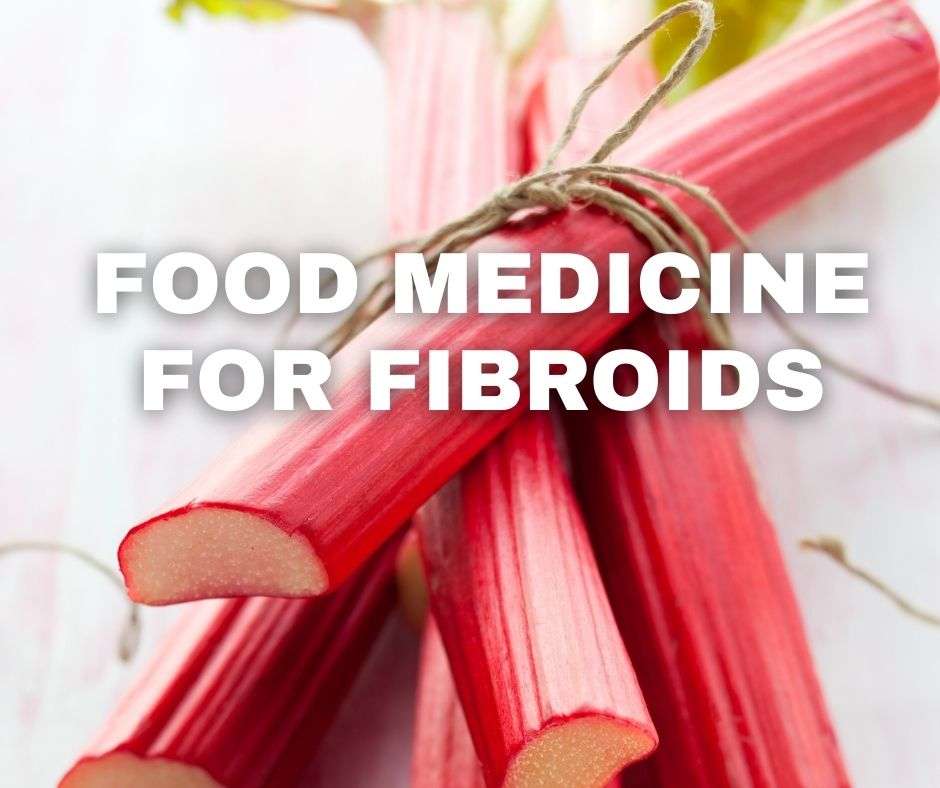
  • Rhubarb & Aubergine – These ‘slippery’ foods promote blood circulation and ease stagnation.
  • Kidney Beans & Black Beans – Strengthen kidney Qi, supporting reproductive health.
  • Ginger – A warming spice that enhances digestion and circulation.
  • Dark Leafy Greens – Help cleanse the liver and regulate oestrogen levels.
  • Chia Seeds – moisten the intestines, ease dryness and support hormone flow

Incorporating these foods into your diet can help create an internal environment that discourages fibroid growth.

Want more food medicine? Find healing recipes in Good Food: Better Sex.

Acupressure for Uterine Health

Many gynecological issues, including uterine fibroids and endometriosis, stem from Qi stagnation and blood stasis in the lower abdomen. 

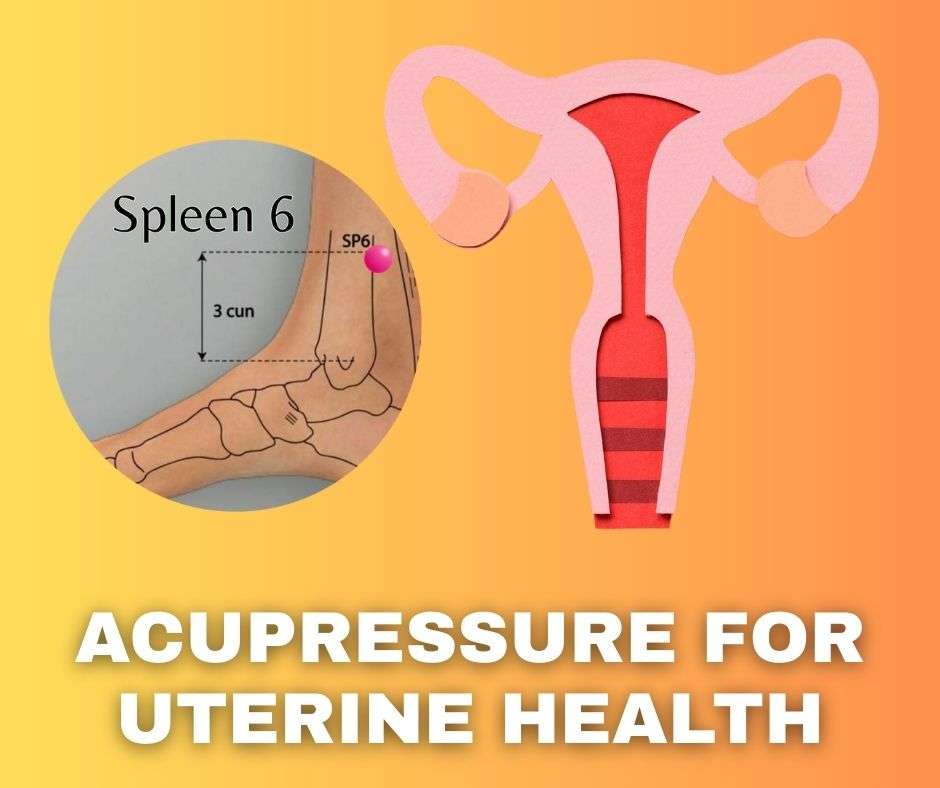
This stagnation can lead to the formation of masses, painful cramps, and irregular cycles. Spleen 6 helps to invigorate blood circulation, breaking up congestion in the uterus and promoting a smoother, pain-free menstrual flow.

Acupressure is a simple yet effective way to move stagnant Qi and blood in the uterus.

Spleen 6 (Three Yin Crossing) Acupressure Point:

Locate this point by placing four fingers above the inner ankle bone.
Apply gentle pressure with your thumb and massage in small circles.
This point supports uterine health, but avoid during pregnancy as it strongly moves blood.

By encouraging the free flow of Qi and blood, Spleen 6 soothes uterine spasms, helping to relieve dysmenorrhea (painful periods) and endometriosis-related discomfort. Women with PMS symptoms, bloating, or lower back pain often find significant relief through regular acupressure on this point.

Massaging this point daily can help ease fibroid symptoms and improve overall reproductive health.

WATCH THE PODCAST

In the full podcast, Joanne shares her tips in Qi Gong, Food Medicine and Acupressure to help relieve the symptoms of uterine fibroids, from a Chinese medicine viewpoint.

Final Thoughts: Embrace Your Womb Wisdom

Your womb is more than just a physical organ, it holds deep wisdom, creativity, and power. 

Try meditating and give your lower belly a voice, allowing your womb to speak.  Develop a loving relationship with this part of your body.  By practicing Qi Gong, nourishing your body with healing foods, and fostering a loving connection with your womb, you can create an environment that is relaxed and healthy.

May you be healthy, vibrant, and deeply connected to your body. 💖

💗 Ready to Join?

Click here to become a member of Chi Flow with Jo → CLICK HERE

Or drop in for a class and feel it for yourself (sign up below). Join the Chi Flow with Jo community for live sessions, practice, and support.

Self-administered acupressure or Chinese Medicine is not a substitute for visits to qualified healthcare practitioners.

Knowing how to treat yourself and your loved ones with complimentary therapies like acupressure can be greatly beneficial and convenient. However, for serious and chronic conditions, you’ll want to visit an Shiatsu therapist / Acupuncturist or other qualified healthcare practitioner who can develop a treatment plan based on your unique medical history and combination of symptoms.  The information provided should not be considered medical advice.
.
Ageing with Shame: 3 Practices to keep you Juicy, Strong & Joyful

Ageing with Shame: 3 Practices to keep you Juicy, Strong & Joyful

Let’s talk about something that every single one of us will go through, aging.

And let’s talk about it without shame.

This month in Chi Flow with Jo, we’re embracing our core, our curves, our changing hormones, and even that taboo topic… Incontinence. 

Because the truth is: we’re not broken, we are not failing. We’re evolving.

And we don’t have to do it alone.

That’s why I invited the incredible Dr. Karen Ward, psychotherapist, Irish Celtic shaman, energy therapist, Holder of Moon Mna, sea swimmer, and author of many books including, Secrets of Ageless Aging, to join us for a heart-opening chat about vitality, menopause, sensuality, and core strength.

She’s also giving a free mid-month talk as part of Chi Flow with Jo, and believe me, you don’t want to miss it.

Before then, here are 3 daily practices you can start right now to reclaim strength, prevent leakage, and feel juicy, joyful, and fully alive, whatever your age.

1. Strengthen Your Core… and Your Confidence

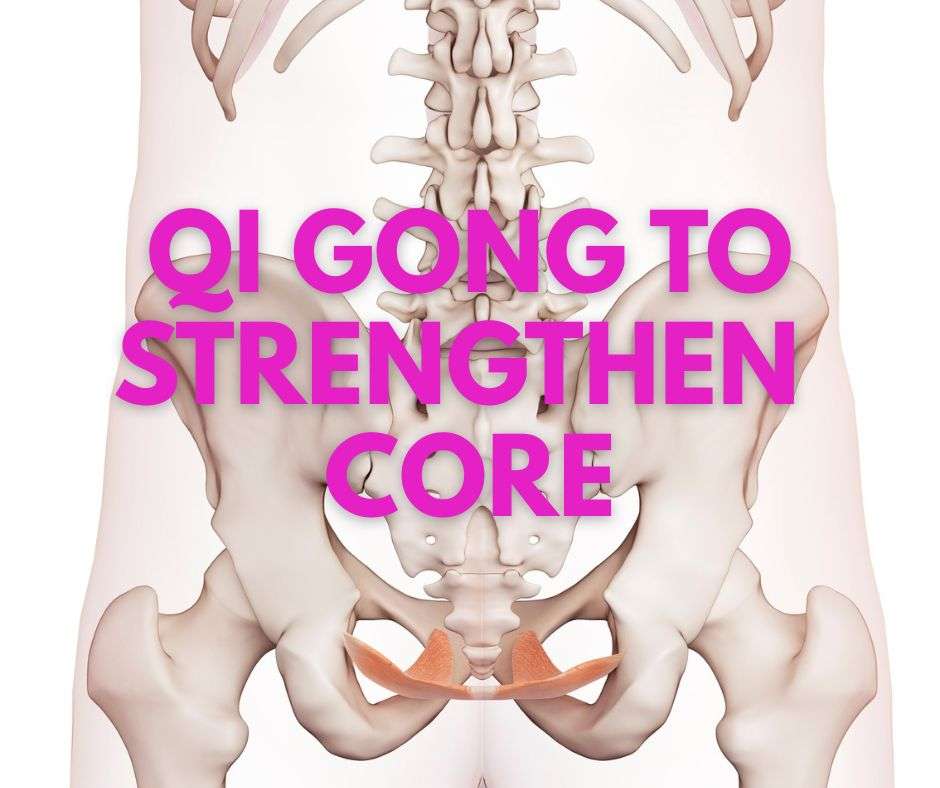
Core strength isn’t just about abs,it’s about dignity, energy, and grounding. Karen swears by daily pelvic floor exercises (also known as Kegels or ana bandha in yoga) to keep her pelvic floor strong, her breath deep, and her body juicy.  These muscles are deeply connected to how we stand, how we breathe, and even how we express our sexuality.

💡 Practice:

Right now, take a deep breath and gently draw up your pelvic floor, imagine sipping a smoothie through a straw placed in your vagina and up to your womb.
Hold for 3–5 seconds, then release. Repeat 5 times.
Do it daily. Do it while brushing your teeth. Do it while waiting for the kettle to boil. Just do it.

And if you feel any shame around this topic, know this: your body is wise, not broken. 

2. Make Your Practice Your Superpower

When life falls apart,and it does, your daily practice will hold you together.

Karen says, “The real secret of ageless aging is what you do every day,what you eat, drink, think, and how you move.”

Whether it’s Qigong in Chi Flow with Jo, yoga, a sea swim, or a simple walk in nature,what matters most is consistency.

Practice: Connecting Heaven and Earth Qigong

This gentle yet powerful Qigong movement connects you with yin energy from the Earth and yang energy from the Heavens. It stretches the spine, clears emotional tension, and resets your whole system, body, breath, and mind.

How to Do It:

  1. Stand tall and soft.
    Find a peaceful space. Stand with your feet shoulder-width apart and your knees slightly bent. Let your arms hang naturally.


  2. Inhale – draw up yin energy from the Earth.
    Slowly raise your arms out to the sides, palms facing downward toward the ground. As your arms float up, inhale deeply and imagine drawing nourishing yin energy from the Earth through the palms of your hands.


  3. Turn palms upward – gather yang from the sky.
    When your hands reach shoulder height, gently rotate your palms to face up. Continue lifting your arms above your head. As you do, visualise inhaling the vibrant yang energy from Heaven into your body.


  4. Exhale – release through the central channel.
    Begin lowering your hands down in front of you, palms now facing the body. Exhale slowly. Imagine the breath flowing down your central channel, from the crown of your head (Bai Hui) through your torso, down to your perineum (Hui Yin), and out through the soles of your feet.


  5. Let go.
    With each exhale, allow any emotional tension, physical toxins, or stuck thoughts to release downward. Feel yourself becoming lighter and more grounded.


  6. Repeat for 6–8 rounds.
    Move slowly, with breath and focus. Let your intention guide the movement, this is not just exercise, it’s a moving meditation.

🌿 Why it works:

In Qigong, we don’t just move the body, we move Qi (life force). When breath, focus, and movement align, we plug into something much bigger than ourselves. We connect, we clear, and we come home to the body.

This is one of the gentle yet transformational practices we do together every morning in Chi Flow with Jo.

“Human is a bridge between Heaven and Earth” ; Chinese Proverb

Talk to Your Body Like a Beloved Friend

Instead of battling your body, start listening.

Karen swims in the sea every day and describes it as a conversation with her body, her community, and the earth. The cold water, the movement, the wind, all reminding her that she’s alive, vibrant, and connected.

Practice:

Go outside. Breathe in.


Ask: Body, how are you today?


Then listen. You might feel an ache, a whisper, a craving for rest or movement. That’s your body talking.


Respond with kindness.

This kind of loving attention is not just healing, it’s revolutionary.

Honour Your Season: From Maiden to Crone

Aging isn’t a decline, it’s an unfolding.
In Celtic shamanism, women journey through three sacred rites of passage: Maiden, Mother, and Crone. Each phase brings its own wisdom, power, and purpose.

Yet for many women, entering the Crone stage, the post-menopause years, can be met with silence, shame, or the false belief that we are “past our prime.”

But in truth, the Crone is the Queen of the Flames, a woman who’s no longer driven by external demands, but who burns with her own inner fire. Her sexuality doesn’t vanish; it transforms. It becomes sovereign, expressive, and self-sourced.

Instead of battling your body, start listening.

In Chinese Medicine, the Huang Di Nei Jing maps out a woman’s energetic changes every seven years:

  • Age 7: baby teeth fall, the first cycle of change.
  • Age 14: fertility awakens, the first period.
  • Age 21–28: peak of reproductive energy.
  • Age 35: the Jing (essence) begins to subtly shift.
  • Age 42: perimenopause begins for many.
  • Age 49: menopause. The Crone arrives, not as an ending, but as a spiritual homecoming.

Practice: Express Your Light Without Shame

So much of our sexual and creative energy gets trapped in the pelvis, especially when society tells us to shrink, to dim, or to “act our age.” But your body is not shameful. It is shining.

  1. Place your hands gently on your lower belly, just below the navel,this is your Dan Tian, the wellspring of your creative and sexual energy.
  2. Breathe into this space. Feel it warm, soften, expand.
  3. Let your hips sway, roll your pelvis in gentle circles, allow movement, breath, expression.

Say aloud or silently: “I honour this body. I express my light. I release all shame.”

Your sensuality is not about sex. It’s about life-force, how you speak, move, create, and connect.

Karen reminded us beautifully in our conversation: “You don’t have to be in a relationship to be sensual. Solo pleasure is powerful. And post-menopause, you might just find your desire for life and pleasure skyrocket.”

Let’s not hide our fire. Let’s stop shrinking.
Let’s stop whispering about menopause and instead stand up and sing.

This is your season to shine, not in spite of your years, but because of them.

Find out more in my books GOOD FOOD BETTER SEX.


WATCH THE FULL PODCAST EPISODE WITH KAREN BELOW

🌕 Join Us This Month in Chi Flow with Jo

Whether you’re navigating menopause, rebuilding strength after illness, or simply wanting to feel more at home in your body, Chi Flow with Jo is here for you.

This month, our theme is Core Strength & Incontinence, but really, it’s about reclaiming our power and joy as we age.

And the best part?

🌀 Dr. Karen Ward is joining us for a FREE mid-month talk to share her secrets of ageless aging, Celtic wisdom, and how to stay juicy, strong, and sassy at any age.

You’ll love her energy. You’ll love the practices. And you’ll love the way you feel after just one class.

💗 Ready to Join?

Click here to become a member of Chi Flow with Jo → CLICK HERE
Or drop in for a class and feel it for yourself (sign up below).

Let’s age without shame.
Let’s stay strong together.
Let’s keep our Chi flowing.

Self-administered acupressure or Chinese Medicine is not a substitute for visits to qualified healthcare practitioners.

Knowing how to treat yourself and your loved ones with complimentary therapies like acupressure can be greatly beneficial and convenient. However, for serious and chronic conditions, you’ll want to visit an Shiatsu therapist / Acupuncturist or other qualified healthcare practitioner who can develop a treatment plan based on your unique medical history and combination of symptoms.  

The information provided should not be considered medical advice.