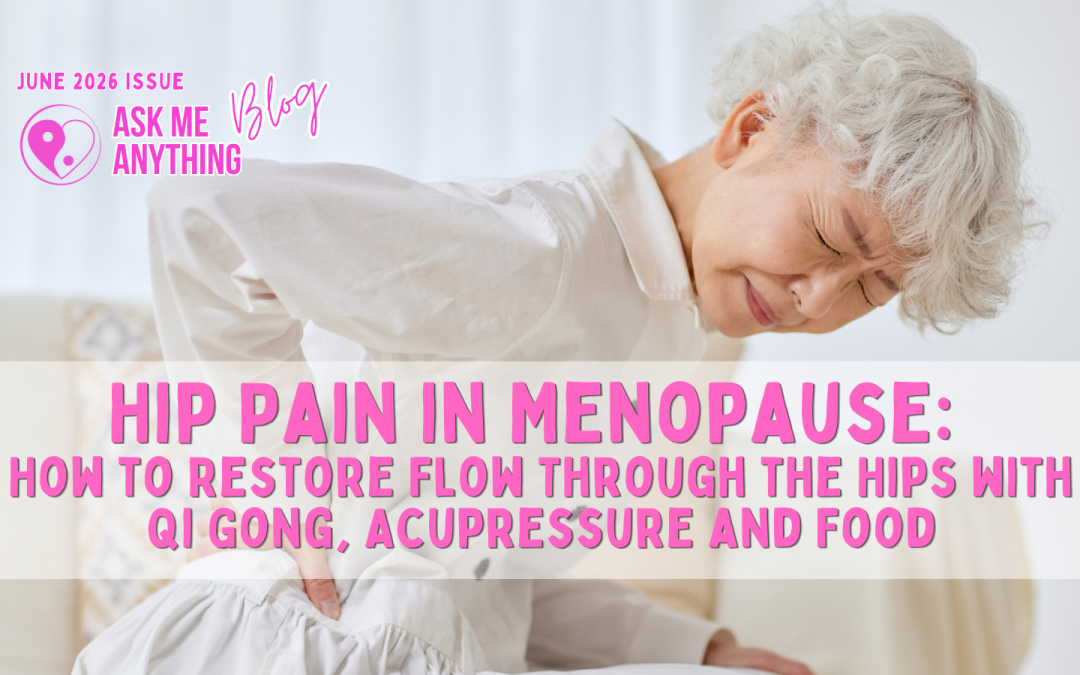
HIP PAIN IN MENOPAUSE

HIP PAIN IN MENOPAUSE

How to Restore Flow Through the Hips with Qi Gong, Acupressure and Food:

Hip pain is often the body whispering that something in the centre of us has stopped moving.

Many women notice new aches appearing around the hips during midlife. Sometimes it begins after lifting something heavy or caring for children. Other times it appears gradually and doesn’t seem to go away.

In this article we explore:

  • Why hip pain can increase during menopause
  • The connection between hormones, the liver and joint health
  • How fascia and the nervous system affect hip tightness
  • Two powerful acupressure points for restoring flow
  • A simple Qi Gong movement to open the hips
  • A food that supports liver function and circulation

These approaches combine Chinese medicine, modern fascia science, and gentle Qi Gong movement to help the body return to balance.

Why Hip Pain Often Appears During Menopause

In Western medicine we are increasingly hearing about the relationship between hormonal changes and connective tissue health.

During menopause, oestrogen levels decline. Oestrogen helps regulate collagen production and tissue elasticity, so when levels drop the body can experience:

  • tendon stiffness
  • joint pain
  • reduced tissue repair
  • inflammation

At the same time, the liver plays a key role in metabolising hormones. If liver function becomes sluggish, hormones may not be processed efficiently, which can influence circulation, inflammation and tissue health.

The result can be stiffness and discomfort in areas such as the hips, shoulders and lower back.

The Chinese Medicine View: The Liver Controls the Tendons

Chinese medicine has described this connection for thousands of years.

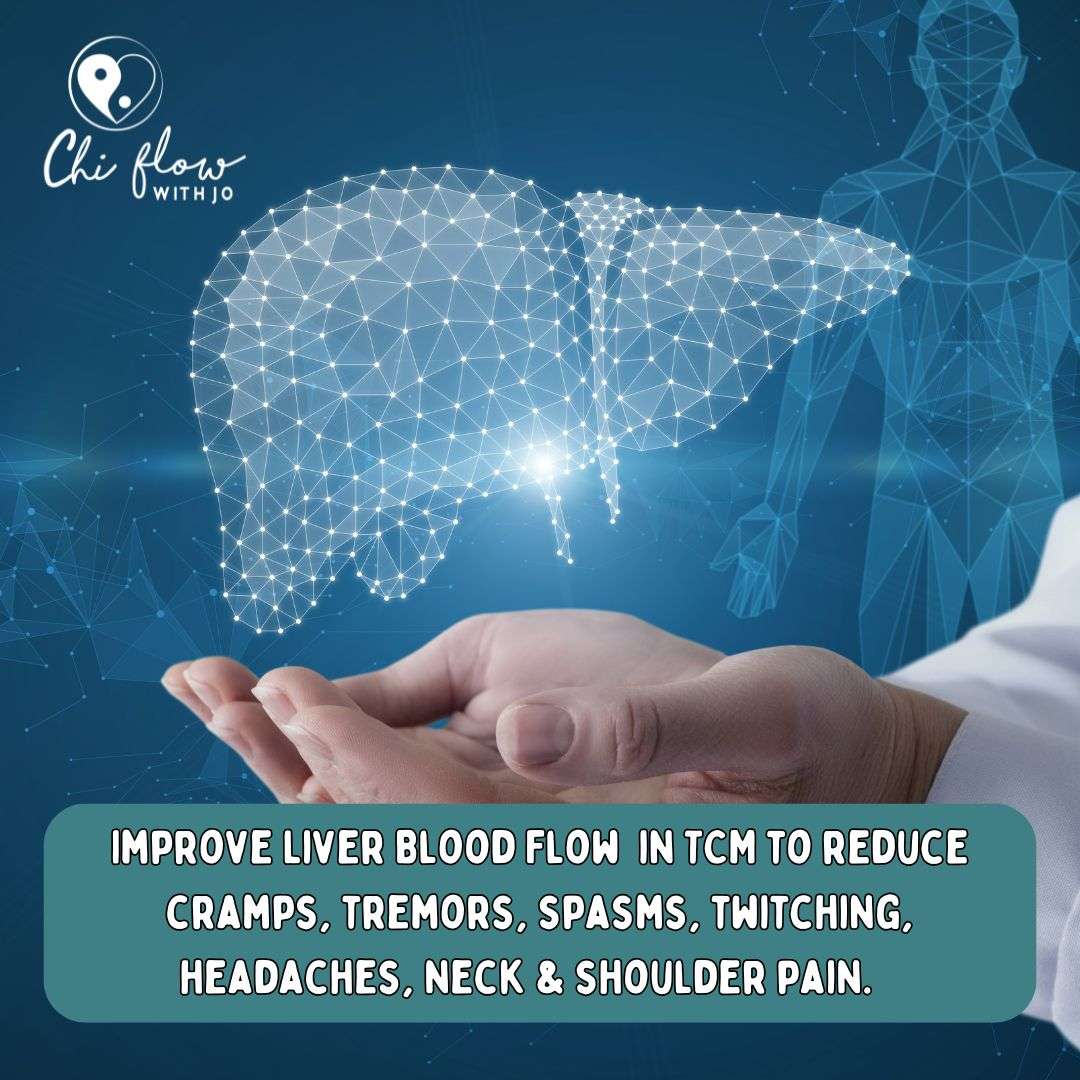
In Traditional Chinese Medicine, the Liver system governs the smooth flow of Qi (energy) and Blood throughout the body, particularly through the tendons and joints.

When Liver energy flows smoothly:

  • joints feel flexible

  • muscles move freely

  • circulation is strong

But when Liver Qi becomes stagnant:

  • muscles tighten

  • tendons lose elasticity

  • pain and stiffness appear

The hips are especially important because several major energy pathways pass through them. When the Liver system becomes sluggish, the hips often become one of the first places we feel restriction.
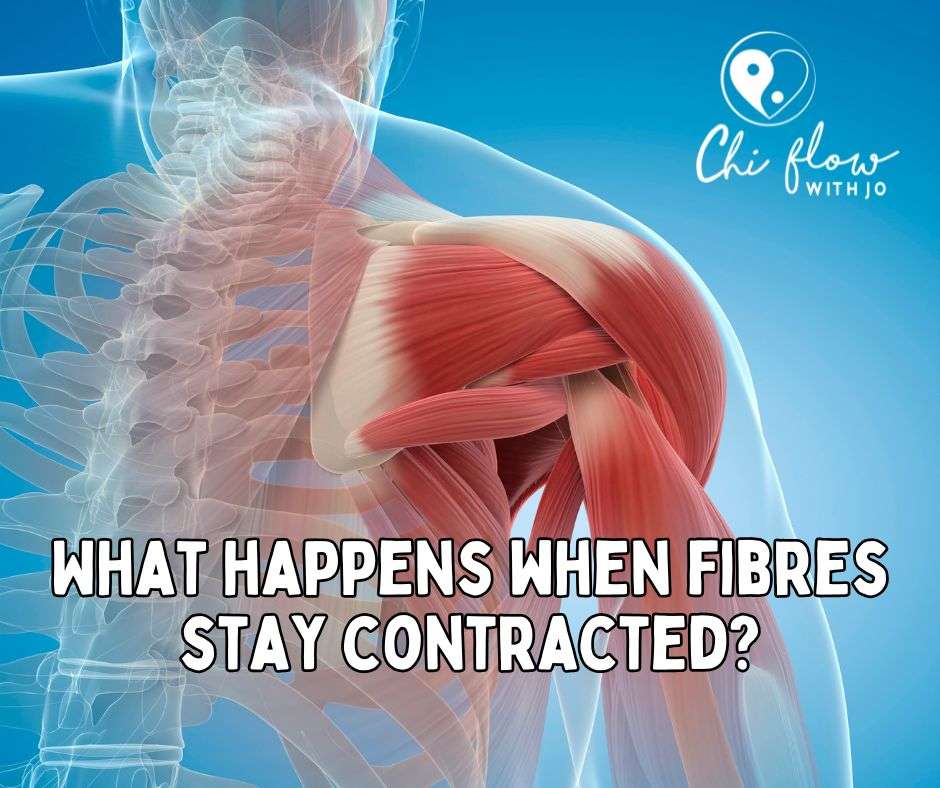
Fascia, Stress and Why Tight Hips Need Safety to Release

Modern research into fascia is beginning to confirm something Chinese medicine has long understood.

Fascia is the connective tissue web that wraps around muscles and organs throughout the body. When fascia is weak, overstretched or overloaded, it tightens as a protective response.

This can happen when:

  • lifting or carrying heavy loads
  • repetitive movements
  • long periods of fear or stress
  • Lack of movement


  • But fascia does not release when stretched or forced, as ligaments, tendons and muscles can.

    It releases when the nervous system feels safe.

    This is why gentle practices like Qi Gong are so effective. Slow, rhythmic movement combined with relaxed breathing sends signals of safety to the nervous system. Once the body feels safe, the fascia can soften and lengthen again.

Acupressure Point: Liver 3 for Hip Pain and Stagnation

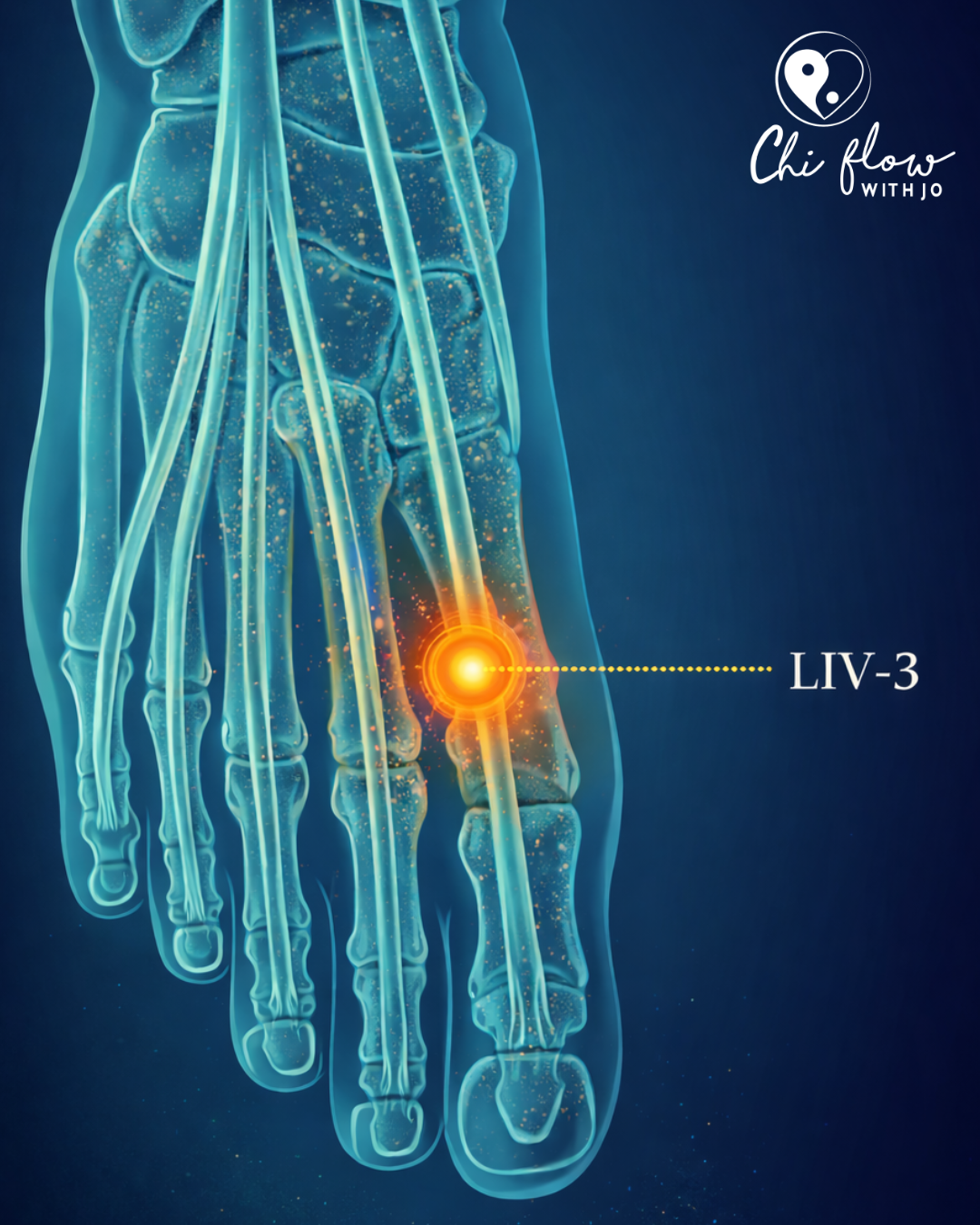
One of the most effective acupressure points for releasing stagnation in the hips is Liver 3 (Taichong).

How to find Liver 3

  1. Look at the top of the foot.
  2. Find the space between the big toe and second toe.
  3. Slide your finger up about an inch from the webbing until you feel a small dip between the bones.

How to use it

Press gently with your thumb until you feel a mild dull ache.

Hold the point while breathing slowly for 1–3 minutes.

This point is widely used in Chinese medicine to:

  • move stagnant Liver Qi

  • improve circulation to the legs and hips

  • reduce tension in the tendons

When this pathway begins to flow again, tightness through the hips often eases.
Acupressure Point: Spleen 6 to Increase Blood Flow in the Lower Abdomen

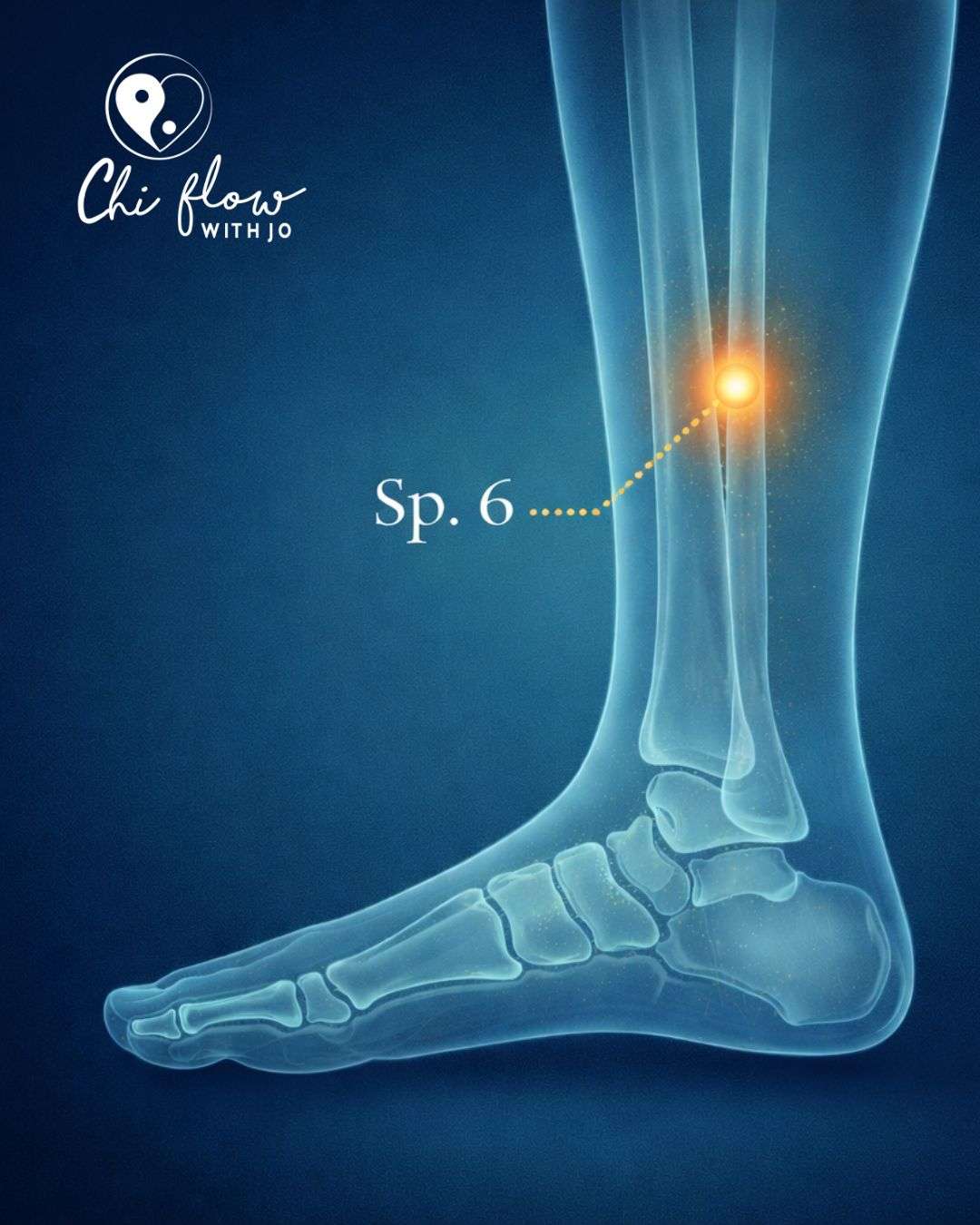
Another powerful point is Spleen 6 (Sanyinjiao).

How to find Spleen 6
Locate the inner ankle bone. 
Measure four finger widths up the leg.
Just behind the shin bone you will find a tender point.

How to use it:
Press gently for about one minute while breathing slowly.
Spleen 6 influences three major energy systems:

  • Liver
  • Spleen
  • Kidney

This point helps increase the movement of blood and energy through the lower abdomen and pelvis, nourishing the hips and lower body.

Because it strongly activates blood flow in the lower abdomen, Spleen 6 should not be used during pregnancy.

A Seasonal Food That Supports Liver Function: Rhubarb

Food can also help restore flow in the body.

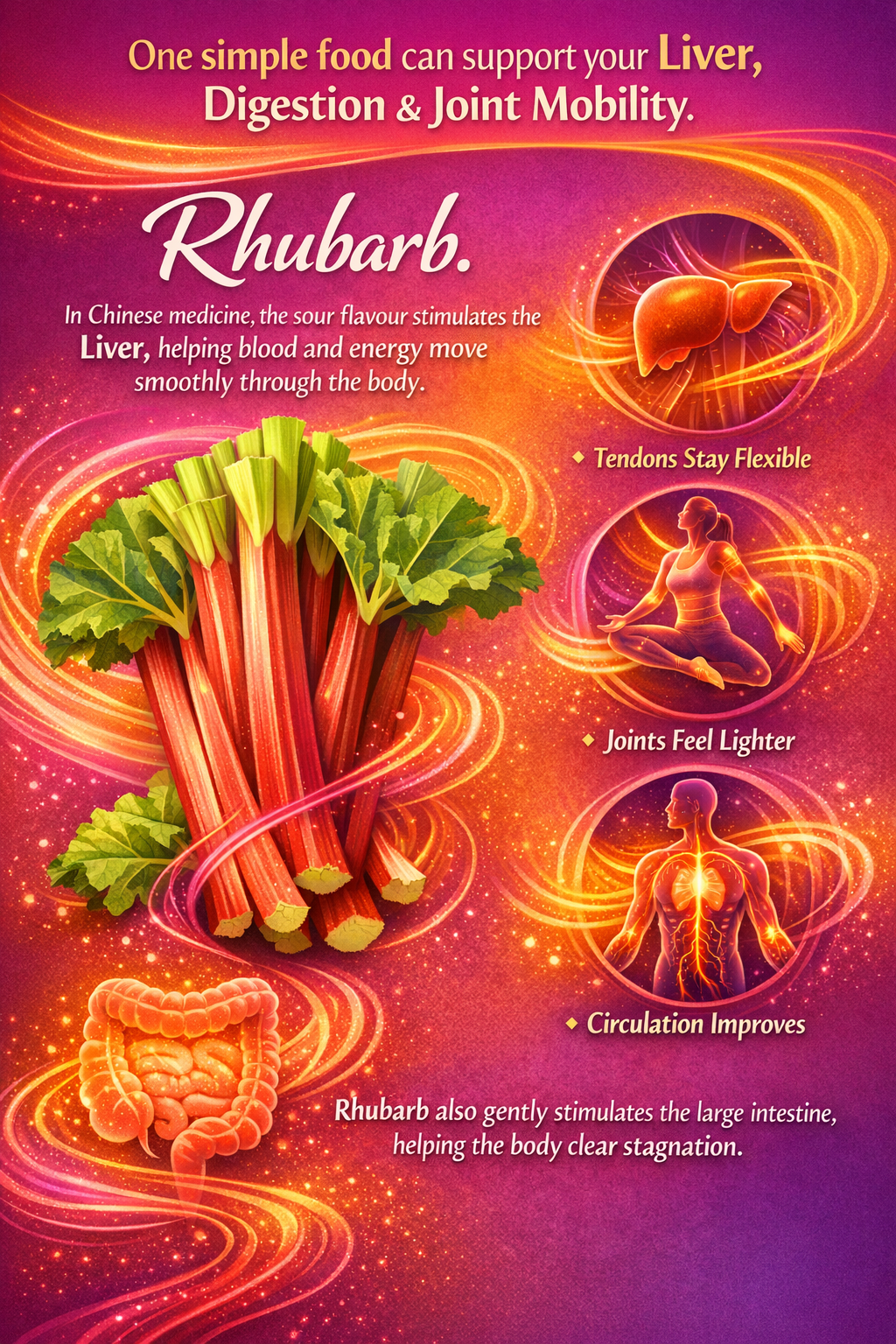
In Chinese medicine the sour flavour stimulates the Liver, encouraging blood and energy to move more smoothly.

Rhubarb is a wonderful seasonal food for this purpose.

Benefits of rhubarb include:

  • supporting liver function
  • encouraging healthy elimination through the large intestine
  • reducing stagnation in the body

Simple Stewed Rhubarb Recipe

  1. Chop several stalks of rhubarb.
  2. Place in a saucepan with a small amount of water.
  3. Simmer gently until soft.
  4. Add a slice of apple if you like a little sweetness.

A small bowl a few times per week can gently support the Liver and digestion.

When digestion flows well, joints often feel lighter and more flexible.
Qi Gong for Hip Mobility: Opening the Kua

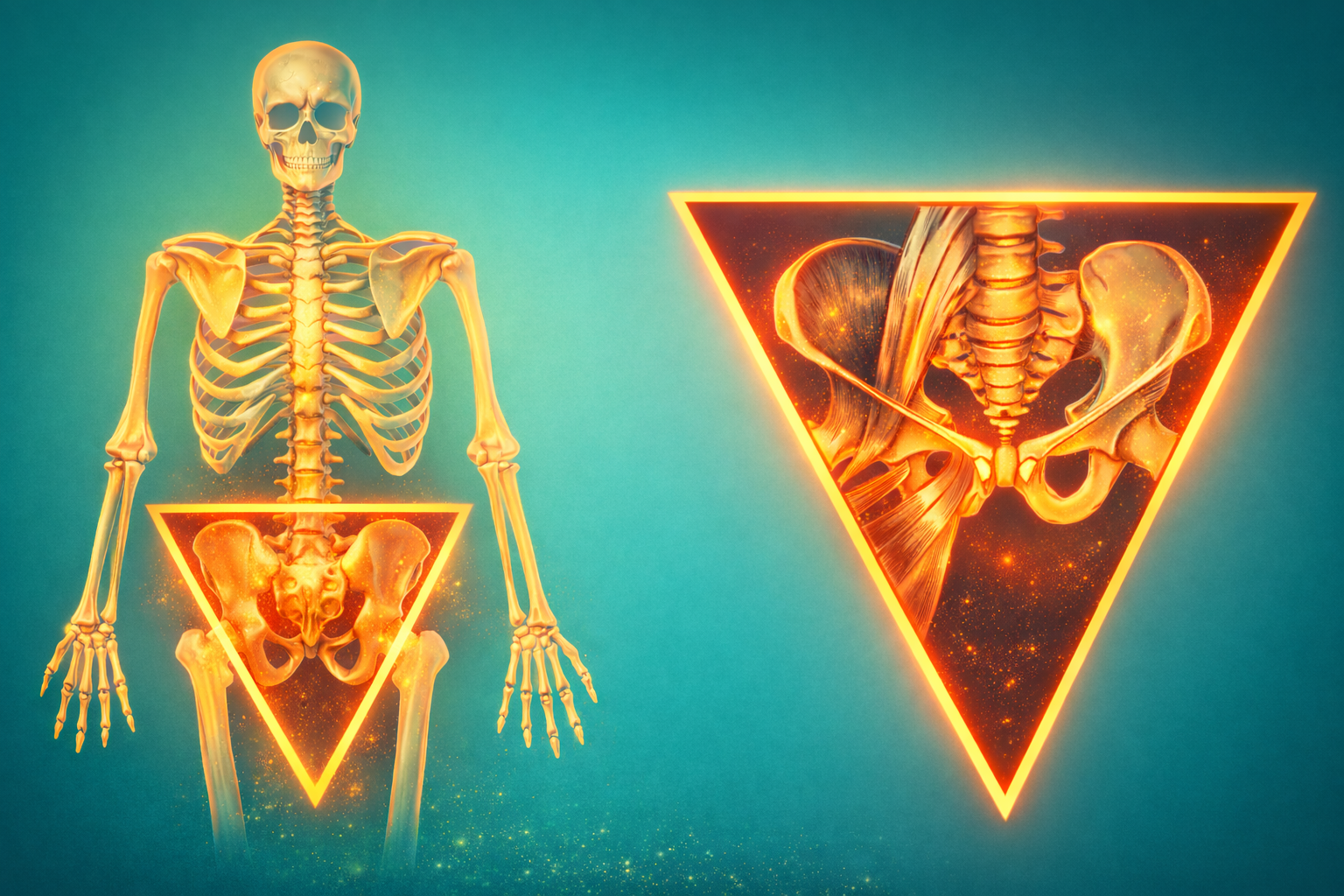
In Qi Gong we often talk about opening the kua.

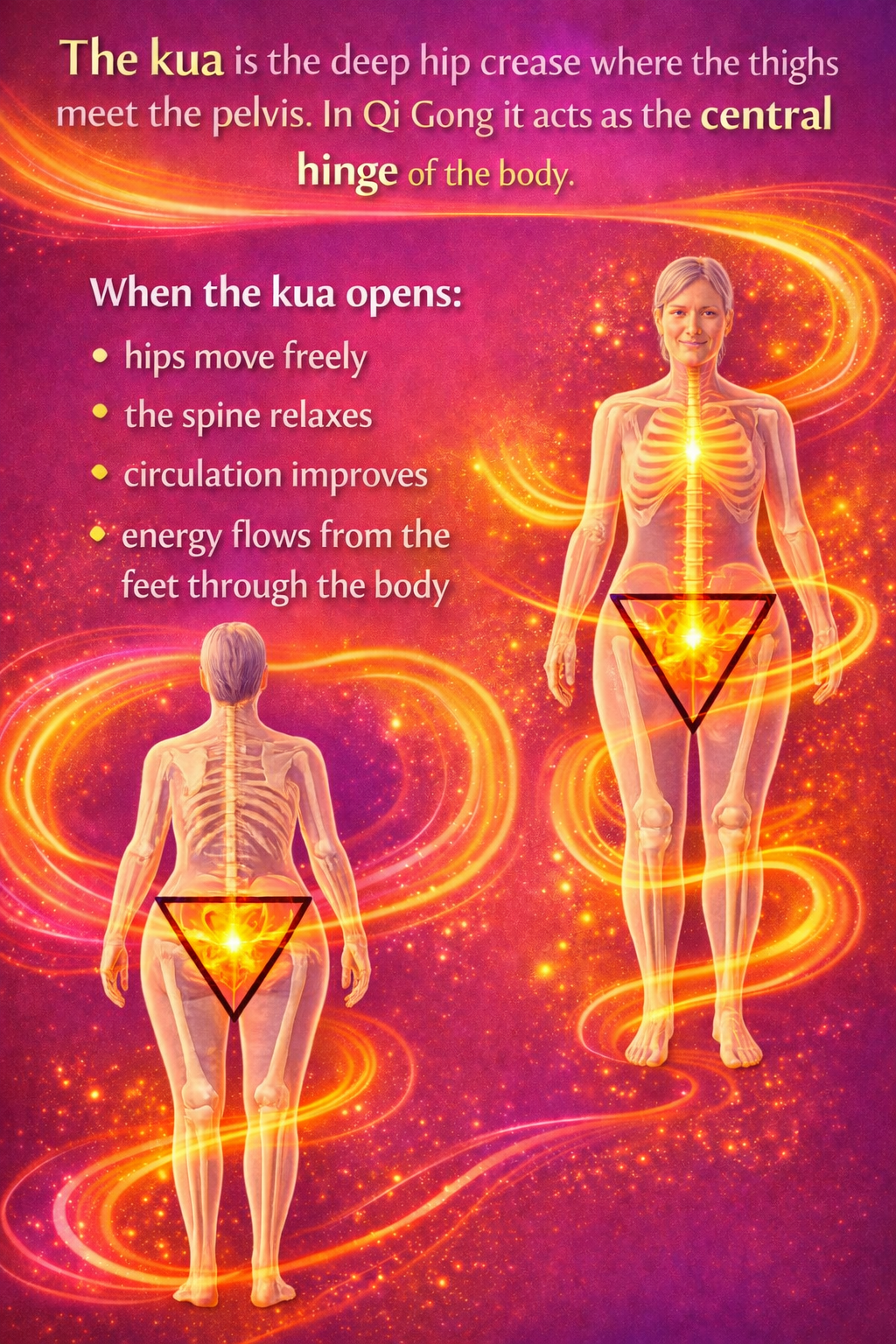
The kua refers to the deep hip crease where the thighs meet the pelvis. It encompasses the surrounding musculature, including the iliopsoas (hip flexors), adductor muscles (inner thigh), and the pelvic floor. It acts as the central hinge of the body, allowing movement to travel between the upper and lower body.

When the kua moves freely:

  • the hips open naturally 
  • walking becomes smoother 
  • the spine and legs coordinate better
  • Qi flows from the feet into the body

Interestingly, the inguinal crease also contains one of the highest concentrations of lymph nodes in the body, so opening the kua can help support lymphatic circulation.
How to Practise the Kua Opening Movement

  1. Stand with your feet wider than shoulder width.
  2. Bend the knees gently and settle into a relaxed horse stance.
  3. Keep the spine upright and the crown of the head lifting lightly upward.
  4. Allow the shoulders to relax.

Now bring awareness to the hip crease.
Turn one foot slightly outward.

As the foot turns outward, allow the waist and hips to rotate gently in the opposite direction.

This creates a spiral through the hips.
You may feel one hip crease opening while the other softly closes.
Return to centre and repeat on the other side.
Continue slowly from side to side.

Three key cues

  • Keep the knees soft so the hips can release.
  • Let the waist guide the movement rather than the shoulders.
  • Move slowly enough to feel the hip crease opening and closing.

Just one or two minutes of this gentle turning can release significant tension through the hips and pelvis.

Over time it helps:

  • soften fascia
  • improve pelvic circulation
  • increase Qi flow in the lower dantien

When Movement Isn’t Enough: Releasing Tension Through Safe Touch

Sometimes hips feel extremely tight or guarded.

This can happen because the pelvis often stores emotional memory and protective tension.

In these cases, gentle physical touch can help the nervous system relax.

Some people find practices such as yoni massage or pelvic self-massage helpful. This involves bringing respectful, loving touch to the lower abdomen and pelvic area.

Safe physical touch can:

  • reduce shame held in the pelvis
  • calm the nervous system
  • release stored tension or trauma

The goal is not forcing change but allowing the body to feel safe enough to soften.

A Simple Weekly Routine for Hip Pain Relief

Try this gentle routine for one week:

  • Press Liver 3 once daily on each foot
  • Press Spleen 6 for one minute on each leg
  • Eat stewed rhubarb a few times during the week
  • Practise kua opening Qi Gong for a few minutes daily

Small daily signals like these can gradually restore circulation and ease hip stiffness.
When to Seek Medical Advice

If hip pain:

  • worsens significantly
  • spreads down the leg
  • wakes you at night
  • causes difficulty walking

you should consult your GP or physiotherapist to rule out structural issues.

Restore Flow and Ease Through the Hips

Many cases of hip pain are not simply mechanical problems. They reflect stagnation in circulation, fascia tension, and nervous system protection.

When we nourish the liver, move gently, and help the body feel safe, the hips often begin to soften naturally.

As I often say:

When the liver flows, the hips follow.

If you’d like to learn more gentle practices like this, you can join the Chi Flow membership, where we practise Qi Gong movements for mobility, energy and longevity together each week.

Sometimes the biggest healing begins when the body finally feels safe enough to soften.

Join the Free Class

If you are curious about Qi Gong for Parkinson’s, chronic illness, fatigue, or healthy ageing, you are warmly invited to try a free class.

You do not need experience. You do not need flexibility. You simply begin where you are.

👉 Join the Free Class and experience the Eight Brocades for yourself.

Continue the Journey

If you would like ongoing support, Chi Flow with Jo offers:

  • Weekday live classes
  • Full Eight Brocades training
  • Acupressure guidance
  • Food medicine insights
  • Monthly health talks
  • Community gatherings

It is €39 per month, reducing to €20 per month after three months. Just €1 per class.

👉 Join Chi Flow with Jo HERE.

Self-administered acupressure or Chinese Medicine is not a substitute for visits to qualified healthcare practitioners.

Knowing how to treat yourself and your loved ones with complimentary therapies like acupressure can be greatly beneficial and convenient. However, for serious and chronic conditions, you’ll want to visit an Shiatsu therapist / Acupuncturist or other qualified healthcare practitioner who can develop a treatment plan based on your unique medical history and combination of symptoms.  

The information provided should not be considered medical advice.

Qi Gong for Parkinson’s & Chronic Illness

Qi Gong for Parkinson’s & Chronic Illness

8 Brocades, Draw the Bow Explained

If you live with Parkinson’s, chronic illness, fatigue, stiffness, or simply feel that your body needs kind reconditioning, this is where the Eight Brocades Qi Gong practice becomes powerful.

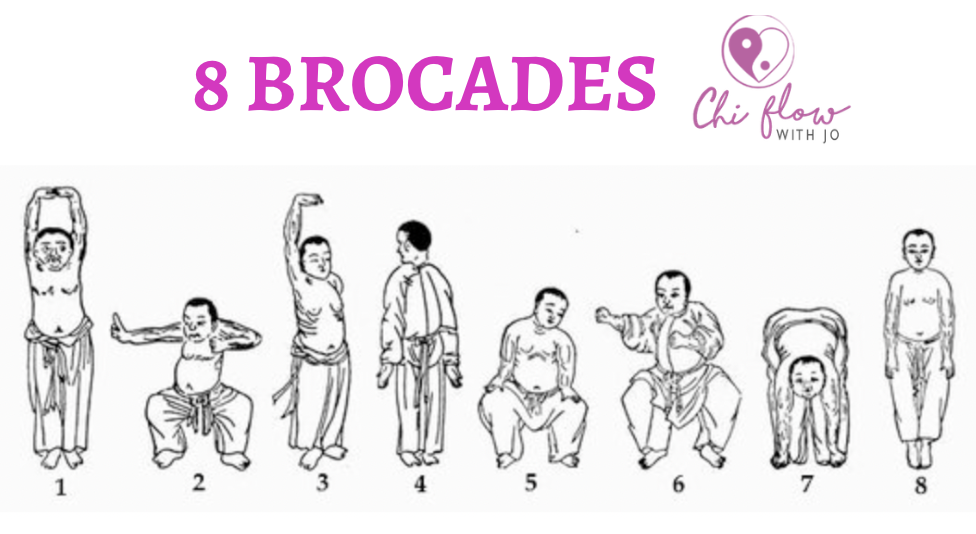
Inside Chi Flow with Jo, April is dedicated to the classical practice known as Ba Duan Jin, the Eight Brocades, a sequence believed to be over 1000 years old

These movements are simple, accessible, and deeply restorative.

If you have ever thought, “I know I should move more, but I don’t want to exhaust myself,” you are in the right place.

Why the 8 Brocades Are Ideal for Parkinson’s and Chronic Illness

The Eight Brocades act like a daily system check for the body.

They support:

  • Circulation and joint mobility
  • Upright posture and spinal strength
  • Nervous system regulation
  • Gentle, sustainable muscle activation
  • Mental clarity and emotional steadiness

For people living with Parkinson’s, consistency is more important than intensity. Small, repeated movements retrain coordination and rebuild confidence. For those managing chronic fatigue, autoimmune conditions, or recovery phases, this practice strengthens without draining.

Over time, this shows up as:

  • Easier mornings
  • Less tension in shoulders and neck
  • Greater steadiness when standing
  • Calmer evenings
  • Feeling present in your body again

One of our members of Chi Flow with Jo recently shared that after a few weeks of steady practice, she stopped bracing herself every time she stood up. Her shoulders softened. Her breath deepened. She noticed she was less reactive at home.

That is the real medicine.

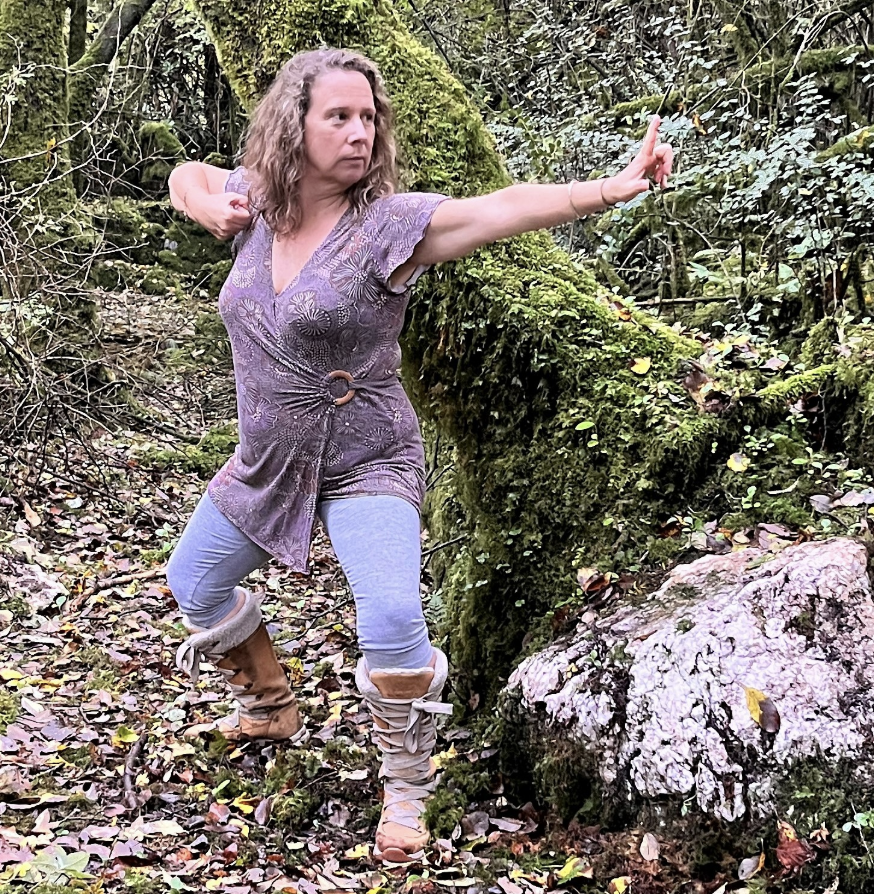
The Anchor Movement, Draw the Bow, Fire the Arrow

One of the most empowering movements from the Eight Brocades is called Draw the Bow.

It is simple, grounding, and deeply regulating.

You stand with feet steady and rooted.
One hand draws back as though holding a bow.
The other extends forward as if gently aiming an arrow.

You inhale as you draw back.
You exhale as you release.

It is not about range.
It is about direction.

Benefits of Draw the Bow

  • Opens the chest and shoulders
  • Improves posture
  • Strengthens upper back muscles
  • Encourages coordinated breath and movement
  • Builds focus and quiet confidence
  • Supports emotional resilience

For those feeling collapsed, protective, or mentally foggy, this movement reminds the body,
I am here. I have direction.

In Parkinson’s, posture can gradually become flexed forward. Movements that open the chest and activate the back body are essential for maintaining upright presence. In chronic stress states, the chest often tightens. This movement restores expansion without force.

For Davy, living with Parkinson’s for over a decade, the Eight Brocades have become an anchor. On low energy days, he returns to simple repetition. Familiar rhythm. Breath. One movement at a time.

Some days are small. Some days are strong. Both count.

That mindset is powerful medicine.

Why Daily Live Practice Makes the Difference

The movement itself is important. The consistency is transformational.

Inside Chi Flow with Jo, members join:

  • Weekday live Qi Gong classes

  • Replays for flexible practice

  • Monthly health talks

  • Acupressure guidance

  • Food medicine support

  • Community reflection gatherings

When you know there is a space to show up, something shifts. Structure creates energy. Connection creates purpose.

And if you miss a day, there is no guilt. Just an open door.

Can Qi Gong Help Parkinson’s Symptoms?

Research and lived experience suggest that regular Qi Gong practice may support:

  • Balance and coordination
  • Reduced rigidity
  • Improved posture
  • Nervous system regulation
  • Better sleep
  • Emotional steadiness

The key is consistency. Not intensity.


The Eight Brocades are particularly effective because they combine:

  • Breath regulation
  • Bilateral movement
  • Gentle resistance
  • Coordinated focus

This integrated approach supports both physical and neurological resilience.

Join the Free Class

If you are curious about Qi Gong for Parkinson’s, chronic illness, fatigue, or healthy ageing, you are warmly invited to try a free class.

You do not need experience. You do not need flexibility. You simply begin where you are.

👉 Join the Free Class and experience the Eight Brocades for yourself.

Continue the Journey

If you would like ongoing support, Chi Flow with Jo offers:

  • Weekday live classes
  • Full Eight Brocades training
  • Acupressure guidance
  • Food medicine insights
  • Monthly health talks
  • Community gatherings

It is €39 per month, reducing to €20 per month after three months. Just €1 per class.

👉 Join Chi Flow with Jo HERE.

Go Deeper with Our Books

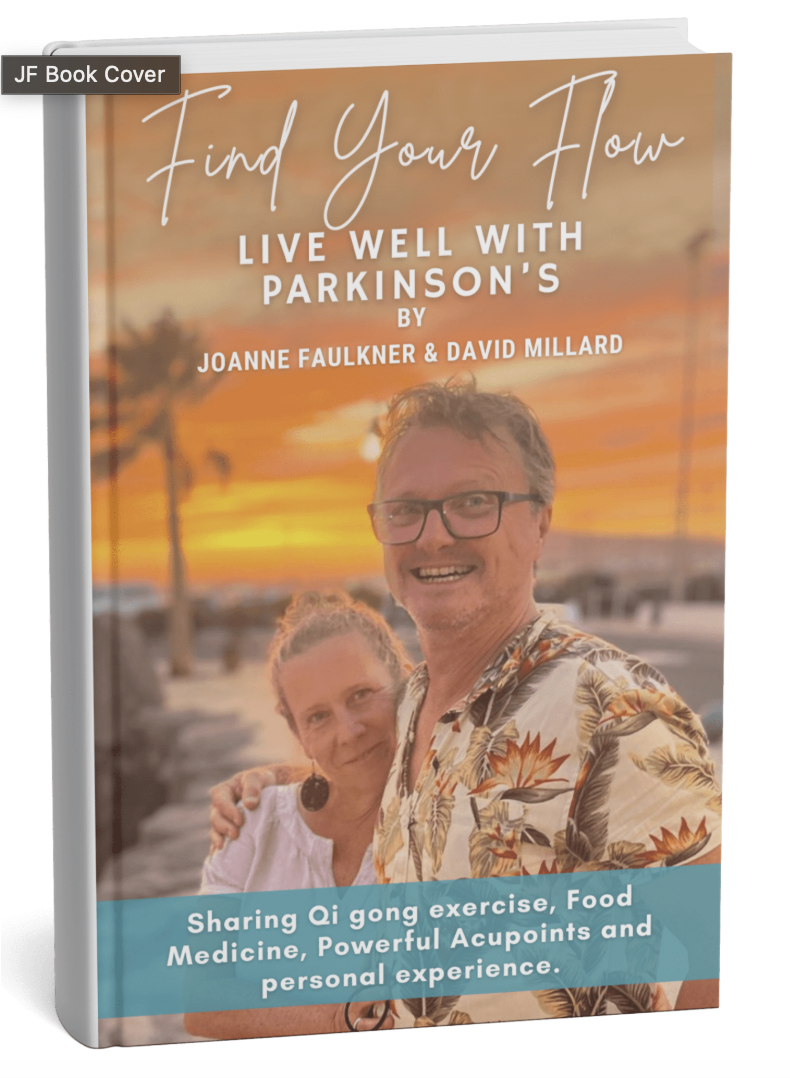
For those wanting to understand how movement, breath, and Chinese Medicine principles support living well with Parkinson’s, our books provide practical guidance rooted in lived experience and clinical wisdom.

👉 Buy the books and explore how to Find Your Flow and Live Well with Parkinson’s.

Movement does not need to be extreme to be powerful.
Small daily expansion reshapes the body.
Steady breath reshapes the nervous system.
Gentle repetition rebuilds confidence.

Every human body carries extraordinary capacity for renewal when given the right rhythm.

If April is asking you to soften into strength, come and practice with us.

Self-administered acupressure or Chinese Medicine is not a substitute for visits to qualified healthcare practitioners.

Knowing how to treat yourself and your loved ones with complimentary therapies like acupressure can be greatly beneficial and convenient. However, for serious and chronic conditions, you’ll want to visit an Shiatsu therapist / Acupuncturist or other qualified healthcare practitioner who can develop a treatment plan based on your unique medical history and combination of symptoms.

The information provided should not be considered medical advice.
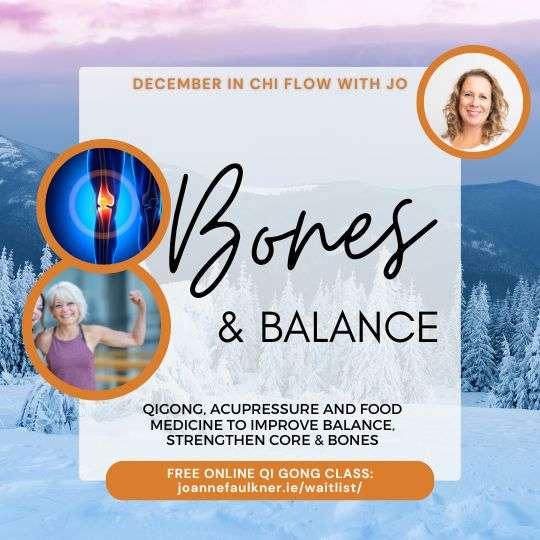
Bone Health and Balance with Thérèse Cosgrove

Bone Health and Balance with Thérèse Cosgrove

Bone Health and Balance with
Thérèse Cosgrove

As the year folds into its quietest season, the energy of Bone Health rises to the surface.

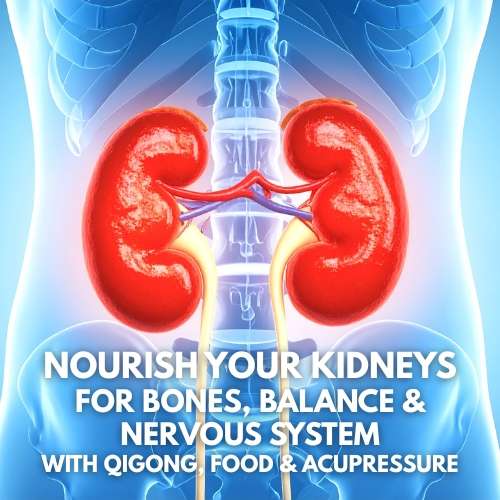
In Traditional Chinese Medicine, winter and the kidneys are linked to our bones, balance, and nervous system.

This is the perfect time to nourish our structure and inner stillness — and that’s exactly what this month’s Energy Update explores with Thérèse Cosgrove, homeopath, nutritional therapist, and Feldenkrais practitioner.

Listening to the Body through Movement

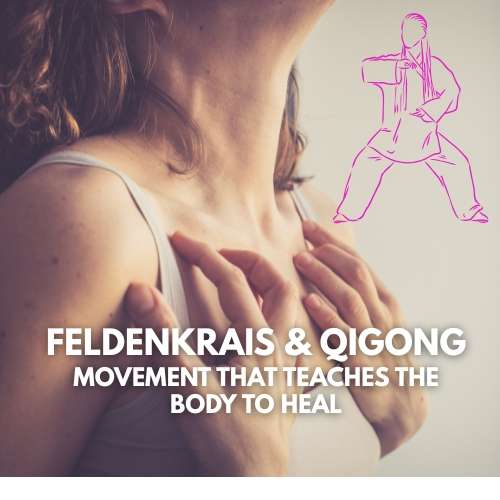
Thérèse describes Feldenkrais as a way of using small, subtle movements to awaken the nervous system’s awareness. Through this awareness, we uncover patterns of tension and rediscover new, more efficient ways of moving.

“Rather than me telling you how to move,” she says, “your nervous system is intelligent enough to find the best way itself.”

These gentle explorations improve skeletal alignment, balance, and joint integrity, helping us move with ease and confidence — vital for bone health, especially in menopause, post-menopause, and chronic conditions such as Parkinson’s.

Even the pauses between movements matter:

“That’s when the nervous system learns and integrates — the same way we rest between breaths.”

When the brain stops bracing and begins organising the skeleton more efficiently, three bone-loving things happen:

Better load through bone: Bones remodel when they’re loaded. Efficient alignment means forces travel through the skeleton (not just muscles), stimulating bone.

Joint integrity & balance: Micro-adjustments reduce “overwork” in hips, knees, spine and shoulder girdle, improving confidence and decreasing fear of falling.

Down-regulated pain: When the nervous system feels safe, pain signals calm and movement becomes possible again — the virtuous cycle for recovery.

Feldenkrais is exploration, not achievement. Curiosity and playfulness are the fastest way to teach your bones and brain new options.

Yin, Stillness, and the Bone Season

As Joanne points out, the yin energy of winter invites quietness and grounding.

Just as the earth rests before spring, we too can pause, aligning our bones, slowing our breath, and reconnecting to what truly supports us.

Yet, in the rush toward Christmas, that stillness is often lost. Feldenkrais offers a way back into the body, a return to inner listening and calm.

Use the space between Christmas and New Year to be still of mind and quiet movements of body.

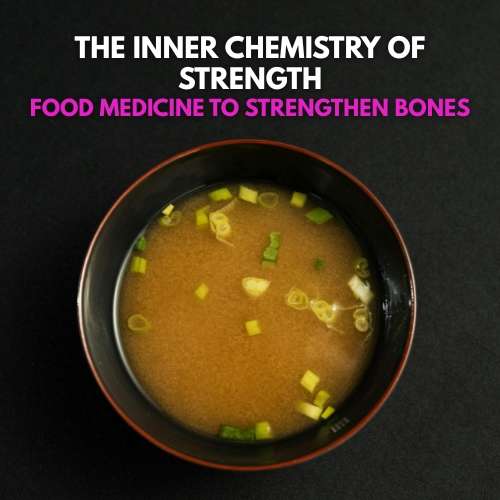
The Inner Chemistry of Strength

In her homeopathic and nutritional work, Thérèse looks at bone density not just as a matter of calcium, but of hormonal balance, mineral status, and heavy-metal detoxification.

Using gentle testing and homeopathic supports, she tailors treatment to each person:

“We might look at supporting estrogen, the parathyroid, or trace minerals like boron, all essential for strong, flexible bones.”

Joanne draws the parallel in Chinese Medicine: seaweeds in small amounts can help clear heavy metals and nourish the kidneys — though, as she reminds us, not everyone should take them.

What matters most is listening to your own body and finding what nourishes your unique system.

In Traditional Chinese Medicine, winter belongs to the Kidney system, which governs bones, marrow, ears (balance/vestibular), and the nervous system. Practical Kidney-nourishing ideas:

Flavours & foods: the salty flavour in moderation supports Kidney, think miso, mineral broths, black sesame, adzuki/black beans, and small amounts of seaweeds if appropriate.
Caveat: Seaweeds are iodine-rich; avoid or use cautiously if you have thyroid issues or are on certain meds.

Gentle, consistent practice: slow standing, breath-led spirals, and ankle-calf work “pump” fluids and stabilise balance, perfect winter medicine.

Stillness as medicine: quiet, warm, early nights rebuild Yin (think lubrication and reserves), the foundation for hormone balance post-menopause.

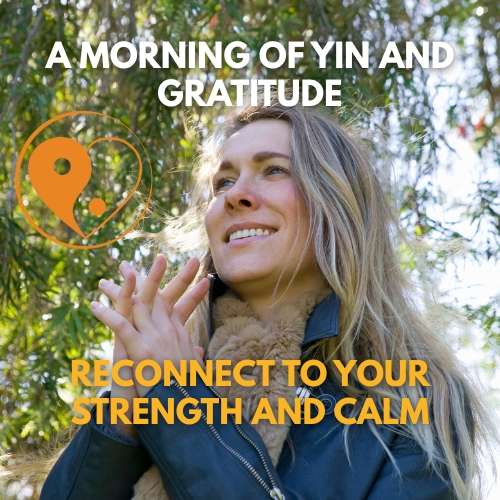
A Morning of Yin and Gratitude

When asked how she begins her day, Thérèse shares a simple ritual that reflects the essence of Chi Flow:

Hydrate with structured, living water to awaken the body. “Structured water”: what we mean (and what to do about it) Thérèse will expand on this in her Mid-Monthly Health Talk, but here’s the practical, controversy-free middle ground: Structured Water inside the body doesn’t behave like plain tap water. Near proteins, fascia, and cell membranes it forms ordered layers that help signaling and flow.

Step outside into morning light, facing east to reset circadian rhythm and hormones. Move gently, perhaps Chi Flow with Jo, Feldenkrais, or a mindful walk. Gentle vibration & movement (walking, bouncing, fascia spirals) appear to improve fluid distribution in connective tissue, exactly what we do in Chi Flow.

“These practices really helped me through difficult times,” she says. “My morning Chi Flow with Jo was one of the things that carried me.”

For Parkinson’s & chronic conditions

Hydration and gentle nervous-system work are especially helpful when autonomic regulation or muscle stiffness makes dehydration and bracing more likely. Short, frequent “micro-moves,” mineral-aware hydration, and morning light can noticeably improve steadiness and energy without fatigue.

WATCH THE PODCAST

In the full podcast, learn more about sound healing and how it affects our hormonal balance below: 

Join us inside Chi Flow (and get Thérèse’s talk free)

Thérèse’s Mid-Monthly Health Talk will go hands-on with Feldenkrais explorations, hydration you can feel, and a deeper look at “structured water” in everyday practice. It’s free for Chi Flow members.

👉 Join Chi Flow with Jo to access:

  • Daily live morning classes (with replays)

  • Seasonal recipes & self-acupressure

  • This month’s Mid-Monthly Health Talk with Thérèse Cosgrove — free for members

Start here: Join Chi Flow with Jo — Build strength, balance, and deep yin this winter.

💗 Ready to Join?

Click here to become a member of Chi Flow with Jo → CLICK HERE

Or drop in for a class and feel it for yourself (sign up below).


Join the Chi Flow with Jo community for live sessions, practice, and support on your journey to an emotionally healthy heart and attend Caroline’s live talk and sound bath for FREE.
To work with Caroline click HERE

Self-administered acupressure or Chinese Medicine is not a substitute for visits to qualified healthcare practitioners.

Knowing how to treat yourself and your loved ones with complimentary therapies like acupressure can be greatly beneficial and convenient. However, for serious and chronic conditions, you’ll want to visit an Shiatsu therapist / Acupuncturist or other qualified healthcare practitioner who can develop a treatment plan based on your unique medical history and combination of symptoms.  The information provided should not be considered medical advice.
.
Move your blood to relieve pain and stiffness in the body

Move your blood to relieve pain and stiffness in the body

ARE YOU SUFFERING FROM STIFFNESS & PAIN?

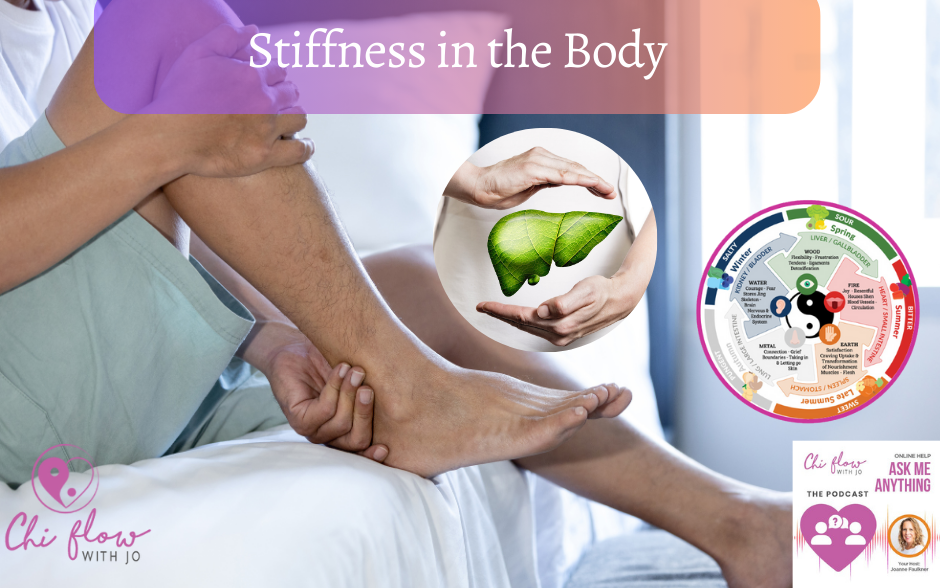
I was recently asked a question by a lady who had been suffering from stiff and sore feet in the mornings. 

“In the morning my feet are very stiff and sore when I’m walking downstairs, and then it quickly goes away after that. No soreness during the day, but if I rub them or massage them during the day they still feel a bit stiff.”

HOW CAN ACUPRESSURE, FOOD AND QI GONG HELP WITH STIFFNESS IN THE BODY?

Stiffness in the body can be related to the liver, which is responsible for the smooth flow of blood and emotions through the body. When blood is not flowing smoothly, this can cause pain and stiffness in your hands and feet.

Because the liver is responsible for the smooth flow of blood in the ligaments and tendons, some pulsing qi gong exercisesfor the fingers and the toes can really get your blood flowing smoothly.again!

Take a look at the exercises and different acupressure points that I demonstrate on this episode of Ask Me Anything on my website if you are looking to relieve stiffness and regain smooth blood flow.

WANT TO LEARN MORE?

The Ask Me Anything podcast series has been created to answer your questions using my knowledge of Chinese medicine, Qi Gong, Qi Food therapy and Shiatsu. 

In this episode of Ask Me Anything, I have answered this lady’s question with my knowledge of Traditional Chinese Medicine and have shown her some movements and exercises that could help ease her pain.   Watch and try the exercises yourself to see if it brings you relief from pain and stiffness.

DO YOU HAVE A QUESTION?

The Ask Me Anything podcast series has been created to answer your questions using my knowledge of Chinese medicine, Qi Gong, Qi Food therapy and Shiatsu. 

You can ask a question by clicking on THIS LINK, or you can watch past episodes to see if your question has already been answered.

Join the Chi Flow online community today!

Also, join me in Chi Flow with Jo every weekday morning for live online Qi Gong where we will practise Qi Gong, as well as self-acupressure, delicious healthy recipes, Traditional Chinese Medicine (TCM) tips and Meridian stretches.  

You can sign up for a FREE online qi gong class with the form below.

Hope to see you in the Chi Flow!

Self-administered acupressure or Chinese Medicine is not a substitute for visits to qualified healthcare practitioners.

Knowing how to treat yourself and your loved ones with complimentary therapies like acupressure can be greatly beneficial and convenient. However, for serious and chronic conditions, you’ll want to visit an Shiatsu therapist / Acupuncturist or other qualified healthcare practitioner who can develop a treatment plan based on your unique medical history and combination of symptoms.  

The information provided should not be considered medical advice.