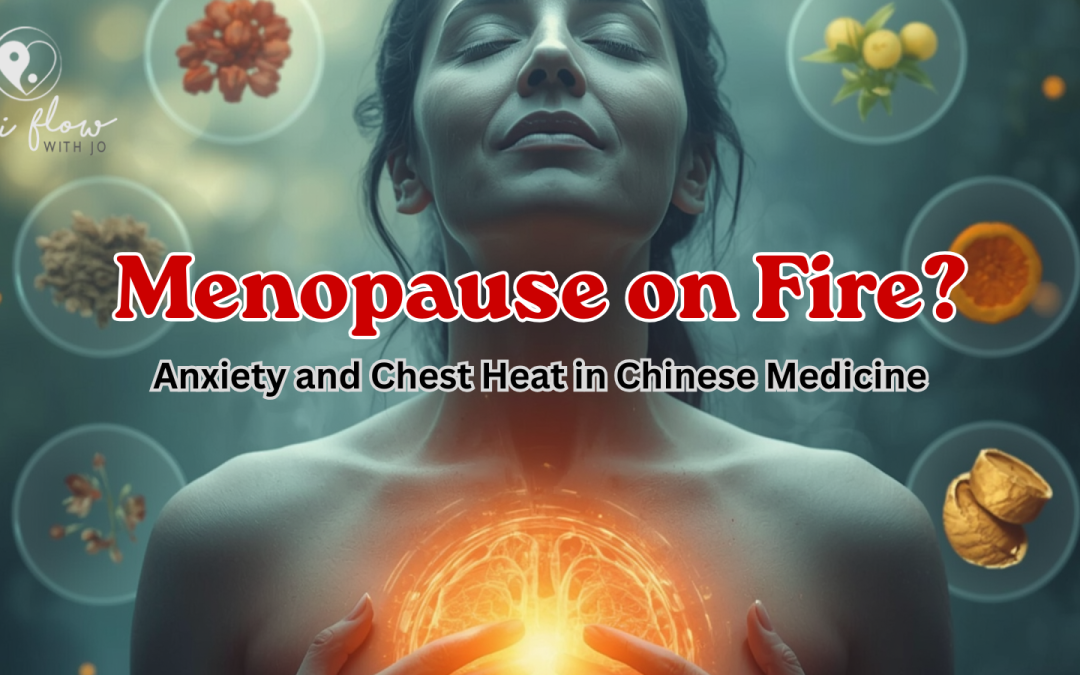
Menopause on Fire? Anxiety and Chest Heat in Chinese Medicine
There is a very particular kind of heat a woman can feel in midlife.
It rises into the chest and head. It can make the heart race, the mind spin, the sleep thin, and the skin feel itchy, dry or irritated no matter how much water we drink.
A client recently asked:
“I suffer from anxiety, heat in the chest and head, and lichen sclerosus. I am post menopause. I’d like acupressure, food medicine for the autoimmune aspect and anxiety, plus a breathing exercise.”
This is such an important question because many women will recognise some version of it.
It may not be lichen sclerosus for you. It may be hot flushes, burning feet, night sweats, tightness in the chest, palpitations, itchy ears, dry skin, vaginal dryness, bladder sensitivity, brain fog, fear that comes from nowhere, or that awful feeling of being tired and wired at the same time.
This blog is for women in peri-menopause, menopause and post-menopause who feel as though the body has suddenly become louder than it used to be.
The Chinese medicine view: heat, anxiety and menopause
In Chinese medicine, the simple picture is this: energy has to flow.
Qi has to flow. Blood has to flow. Fluids have to flow. Warmth has to move through the body without getting trapped at the top.
Yin and Yang also have to keep talking to each other.
Yin is the cooling, moistening, holding quality. Yang is the warming, moving, active quality. We need both. We do not want a cold, flat life, and we do not want a blazing, restless one.
Symptoms are feedback. They are not moral failures. They are not proof that you have done something wrong. They are the body’s way of saying, “Something in here needs rebalancing.”
When a woman says, “I have heat in my chest and head,” I listen for Fire rising.
When she says, “I am anxious,” I listen for the Heart being unsettled.
When she says, “I am menopausal or post-menopausal,” I listen for Yin and fluids needing more care, especially the Kidney foundation. In Chinese medicine, the Kidneys are not only the two physical kidneys. They are the deep battery, the stored essence, the roots of water in the body.
Menopause can bring all Five Elements into one body
The Five Elements help us understand why menopause can feel so confusing.
In spring, we talk about Wood and the Liver: movement, flexibility and letting things flow.
In summer, we talk about Fire and the Heart: joy, connection, heat and sleep.
In late summer, we talk about Earth and digestion: the centre that helps us digest food and life.
In autumn, we talk about Metal, the Lung and Large Intestine: grief, boundaries, skin and letting go.
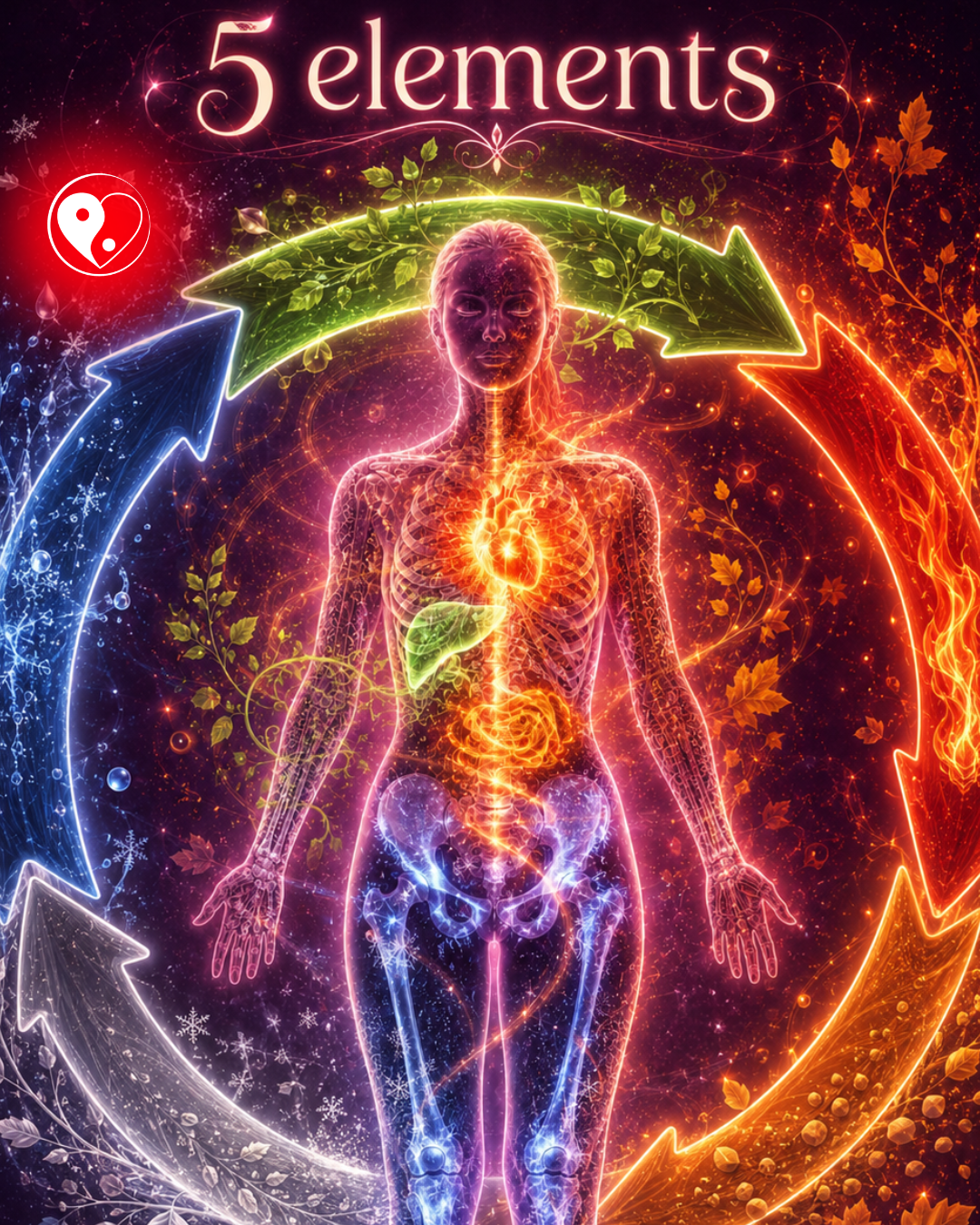
In winter, we talk about Water and the Kidneys: rest, bones, fear, deep reserves and the wisdom of not spending ourselves empty.
Menopause can bring all of these seasons into one body.
You can have summer heat in the chest, winter depletion in the bones, spring frustration in the Liver, autumn dryness in the skin, and late-summer worry in the belly.
This is why rhythm matters so much. We do not fix the whole woman by attacking one symptom. We help the whole system flow again.
See my books for full food medicine and acupressure for the complete five elements.
What is Bao Mai?
This is where Chinese medicine offers something very special.
There is a beautiful pathway in women’s health called the Bao Mai. Bao Mai means the Uterus Vessel, or more simply, the Heart and womb connection.
It is not one of the everyday meridians we talk about, like Liver or Kidney. It belongs to the deeper map of the extraordinary vessels, especially the Chong Mai, known as the Sea of Blood.
The Bao Mai is the communication line between the Heart and the uterus. It allows Heart Qi, Heart Blood and Shen, the spirit or mind, to descend and nourish the reproductive organs.
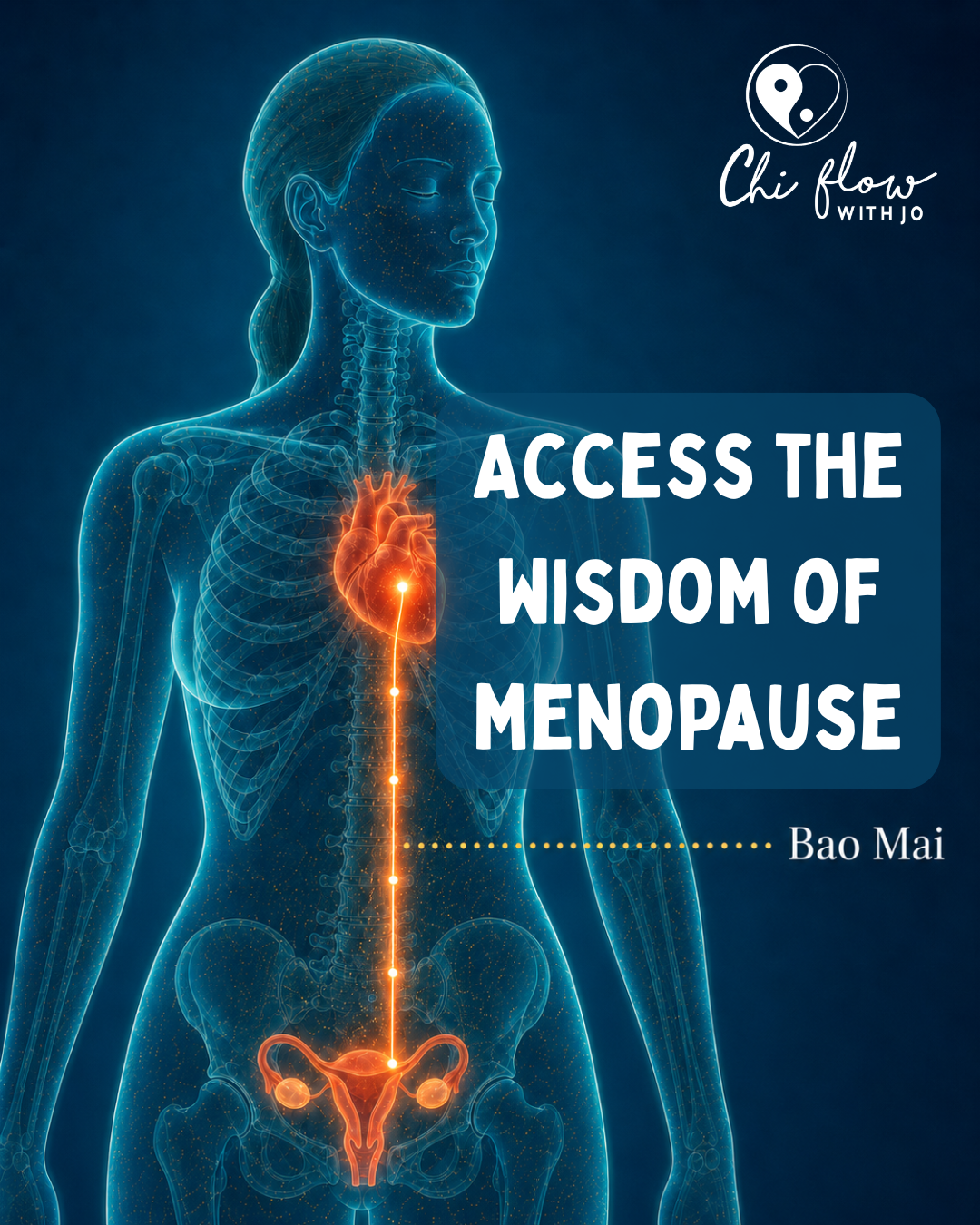
In Chinese medicine practice, the Bao Mai is used to understand ovulation, menstruation, fertility, pregnancy, PMS, irregular cycles, scanty bleeding, and the way stress and emotion can disturb hormonal rhythm.
In the fertile years, Blood and Qi move down from the Heart toward the womb. The monthly cycle opens and closes, and the body has a visible rhythm.
In peri-menopause and menopause, that rhythm begins to change.
The movement starts to return upward toward the Heart and brain. When that upward movement is smooth, it can become clarity, intuition and wisdom. It can become the woman who says, “I know what matters now, and I am not wasting my life putting others first.”
But when that upward movement is too hot, too rushed, or blocked by overwhelm, we may feel heat in the chest, pressure in the head, palpitations, anxiety, irritation, poor sleep or a sense that we cannot come down into ourselves.
Women’s seven-year cycles in Chinese medicine
Chinese medicine also describes women’s lives in seven-year cycles.
Around fourteen, the Conception Vessel, or Ren Mai, begins to flow and menstruation starts.
Around twenty-one, Kidney Qi matures.
Around twenty-eight, Qi and Blood are at their fullest.
Around thirty-five and forty-two, the Yang Ming channels begin to weaken, which may show in skin, hair and vitality.
Around forty-nine, the Conception Vessel weakens, reproductive energy declines, and menstruation begins to stop.
These ages are not rigid rules. They are broad brush strokes. But they give us a beautiful way to understand menopause.
Menopause is not a sudden failure of the body. It is a change in direction.
One acupressure point for anxiety and chest heat: CV17
The acupressure point I would use here is Conception Vessel 17, also called CV17.
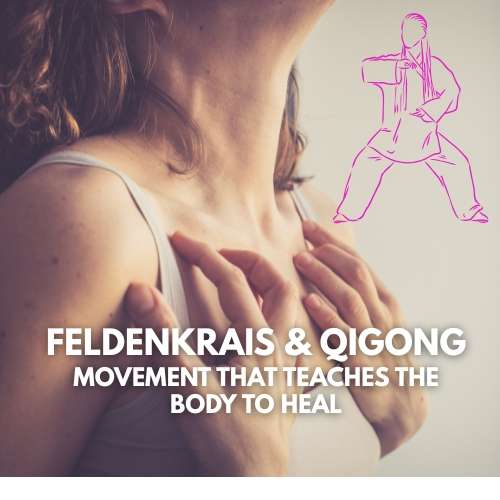
It is in the centre of the chest, on the breastbone, roughly level with the nipples. Do not press breast tissue. Come to the centre line of the sternum, the flat bone in the middle of the chest.
Use two fingertips or the soft pads of your fingers.
For anxiety, heat, tightness and emotional pressure, CV17 can be a lovely place to make contact. It should not feel sharp. It should not feel like you are bruising yourself. It may feel tender, warm, achy, or as if the breath suddenly notices the space under your hand.
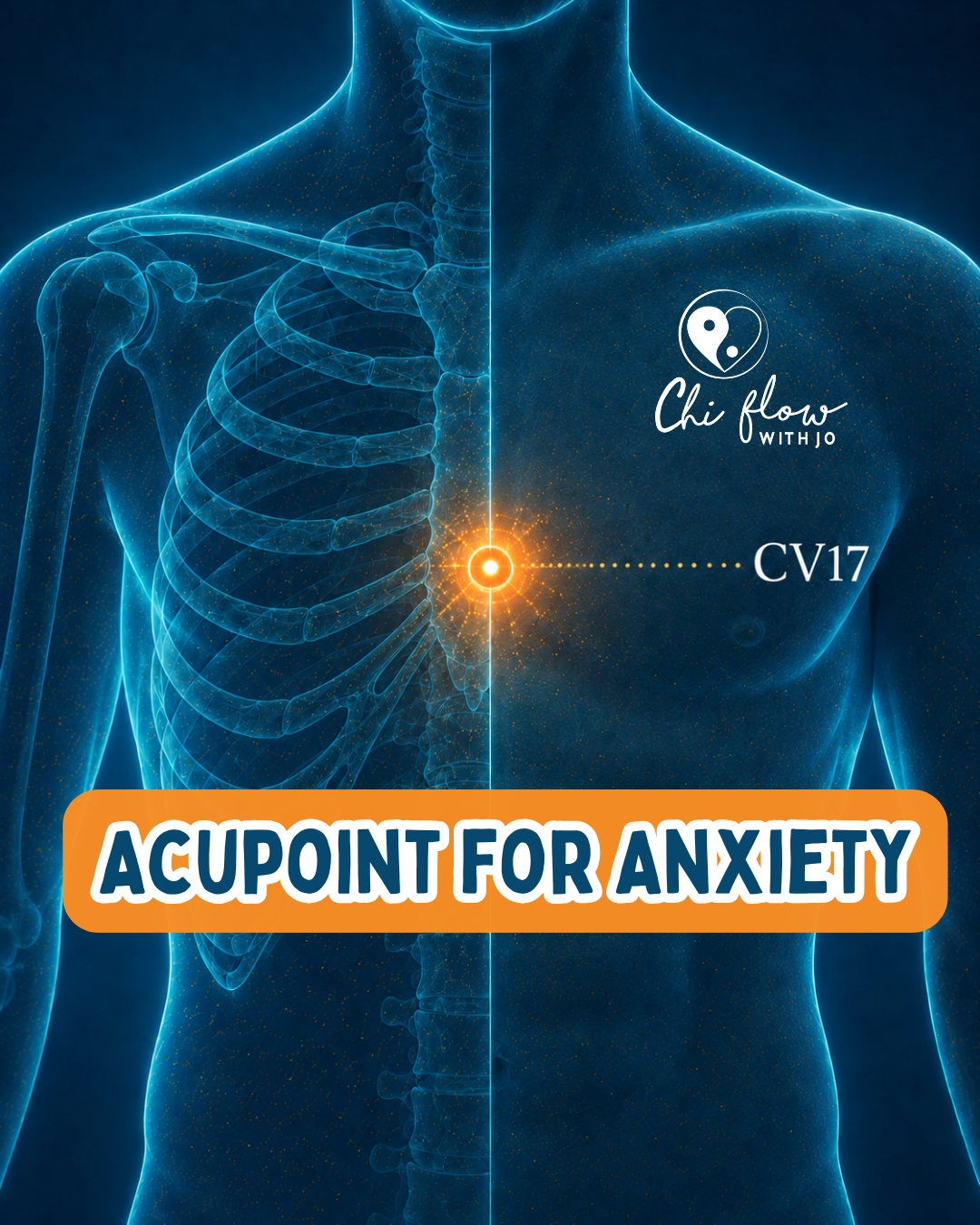
Place two fingers on the centre of the breastbone. Let your shoulders drop. Press gently and steadily. You are not digging. You are saying hello.
Stay for thirty seconds to three minutes. If you are very anxious, start with thirty seconds. Breathe slowly while you hold it. Let the exhale be a little longer than the inhale.
When you finish, smooth the hand down the centre of the chest to the upper belly, as if reminding the heat that there is a whole body below the neck.A simple daily cue is the kettle. Every time you boil the kettle, touch CV17. Tea, coffee, hot water, soup, whatever it is, let the kettle become your reminder.
Consistency matters more than intensity.
A breathing practice: Heart-Womb Breath
The breathing practice I recommend is Heart-Womb Breath.
If you have had a hysterectomy, if you do not have a uterus, or if the word womb does not feel right for you, use “lower belly” or “pelvic bowl.” The body still has a centre.
Think of anxiety as a house with all the lights on upstairs. The energy is in the head, eyes, jaw, temples, throat, chest and heart. The lower floor feels empty.
This breath helps you come downstairs again.
Place one hand on the centre of the chest, around CV17.
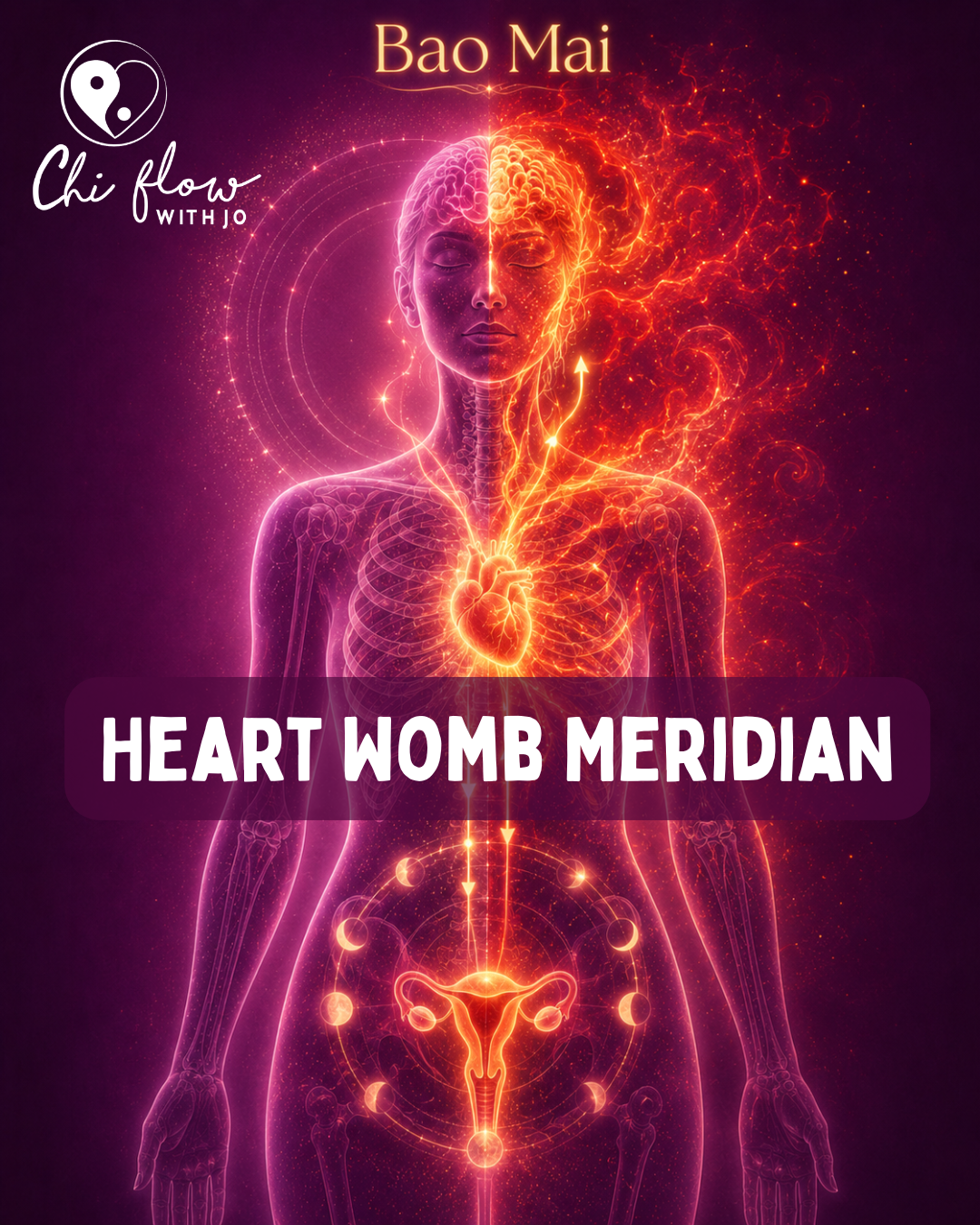
Place the other hand on the lower belly, below the navel, over the womb space or pelvic bowl.
Soften the jaw. Breathe in through the nose and out through the mouth. As you exhale, imagine warmth travelling from the chest down into the lower belly, like honey moving slowly down a spoon.
Then gently inhale and imagine Qi flowing from the womb space up to the Heart. On the exhale, let it flow back down to the perineum and pelvic bowl. Do this for three minutes.
The aim is not to create a mystical experience. The aim is to give your nervous system proof that it is safe to come down.
The felt result may be simple: the chest a little softer, the head a little cooler, the belly a little more present, and the breath less trapped.
Food medicine for anxiety, heat and immune over-alertness
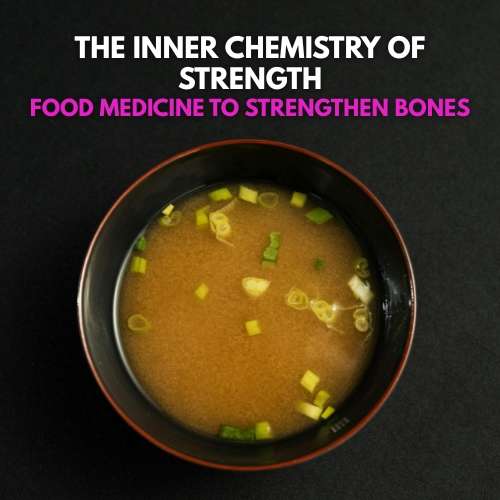
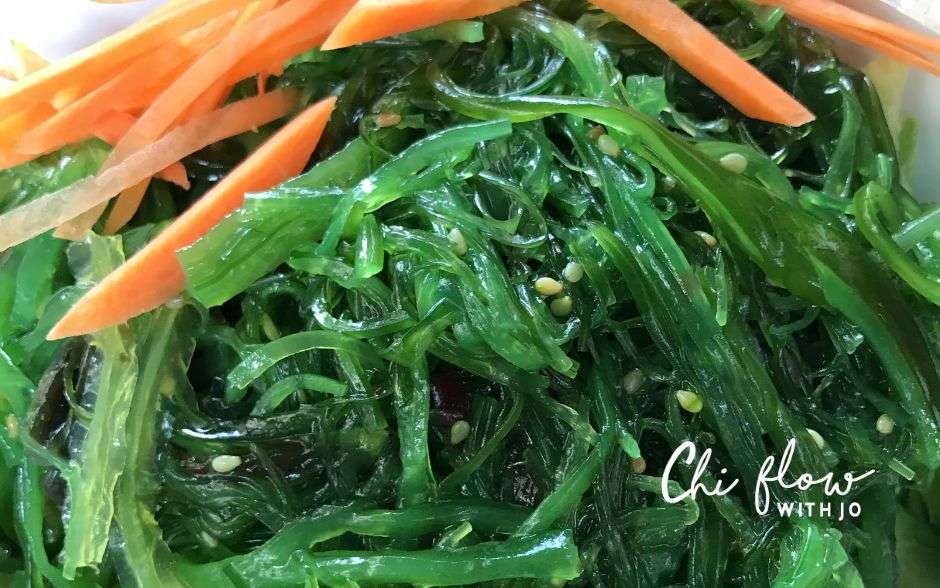
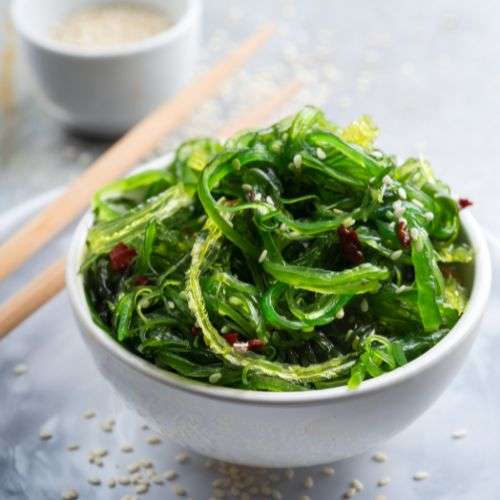
The food medicine I would choose is warm miso with wakame.
Not a complicated protocol. Not a war against the immune system.
For autoimmune patterns, I do not love the phrase “boost the immune system,” because the immune system is not always weak. Sometimes it is confused, over-alert, inflamed, reactive or exhausted from being on guard.
The intention is not to whip it harder. The intention is to steady the terrain.
Miso is fermented and supports the gut environment. Wakame brings a mineral-rich seaweed quality. The warm salty bowl can help the nervous system feel fed, held and less frantic.
The simplest recipe is this:
Boil water, then let it cool for a minute. Put one teaspoon of miso paste in a mug or small bowl. Add a small pinch of wakame. Pour the hot water over, stir, let it sit for a few minutes, and sip slowly.
You can add spring onion or a few cubes of tofu if you want to make it more like a snack, but the basic medicine is miso, wakame, warm water and a pause.
Do not boil the miso hard. Warm is enough.
Warm tells the belly, “You are safe.” Scalding tells the body, “More heat is coming.”
If you are sensitive to soy, choose a miso that suits you or skip this. If you have been told to restrict salt, if you have thyroid issues, or if seaweed has been restricted for you, check with your clinician and keep the wakame tiny.
Lichen sclerosus and the whole-body view
As with many issues around sexual organs, conditions of the vulva can carry so much silence.
Women put up with itching, burning, pain, fear around intimacy, embarrassment around examination, confusion about creams, and sometimes worry that they will not be believed.
Please do not carry that alone.
Good care matters. Clear diagnosis matters. Follow-up matters. Your comfort matters.
You are allowed to ask questions. You are allowed to ask how to use your prescribed ointment properly. You are allowed to say that sex hurts. You are allowed to say that anxiety is part of the picture. You are allowed to want both medical care and whole-body support.
In Chinese medicine, we never separate the local from the whole.
A vulval skin condition needs local medical care. Absolutely. And the whole body can still be supported through fluids, digestion, sleep, breath, stress rhythm and gentle movement of Qi.
This is not either-or. It is both-and. See my book Good Food Better Sex for explorations of sexual conditions and MENOPAUSE through the lens of Chinese medicine
Final thought
To every woman in peri-menopause, menopause or post-menopause: your body is giving you feedback about flow, cooling, nourishment, boundaries, rest and rhythm. You do not have to decode it perfectly. You only have to begin responding more kindly.
And if you would like to practise this kind of work with me in a steady, supported way, come into the Chi Flow membership. It is €39 a month, and after the three-month trial it becomes €20 a month, so you can keep building these small rhythms through the seasons with guidance, community and practice.
Ready to Start?
Join Chi Flow with Jo and begin restoring your energy, and feeling more like yourself again.

Frequently Asked Questions
What does heat in the chest and head mean in Chinese medicine?
In Chinese medicine, heat rising into the chest and head can suggest that warmth, Qi or emotional pressure is not moving smoothly through the body. In menopause, this may be linked with Yin and fluids needing support, the Heart being unsettled, and the body needing a calmer rhythm.
What is the Bao Mai?
The Bao Mai is the Heart-womb connection in Chinese medicine. It is linked with the extraordinary vessels, especially the Chong Mai, the Sea of Blood. It helps explain the relationship between emotions, the Heart, the uterus, menstruation, fertility, menopause, hot flushes and anxiety.
Why can menopause cause anxiety and hot flushes in Chinese medicine?
Chinese medicine sees menopause as a change in direction. In the fertile years, Blood and Qi move down toward the womb. In peri-menopause and post-menopause, this movement begins to return upward toward the Heart and brain. If the transition is too hot, rushed or blocked, symptoms may include anxiety, palpitations, poor sleep, heat in the chest and head, or hot flushes.
What acupressure point helps menopause anxiety?
CV17, or Conception Vessel 17, is a useful acupressure point for anxiety, chest tightness and emotional pressure. It is found in the centre of the breastbone. Press gently for thirty seconds to three minutes while breathing slowly.
What food medicine supports menopause anxiety and immune over-alertness?
Warm miso with wakame is a simple food medicine option. Miso is fermented and supports the gut environment. Wakame brings a mineral-rich seaweed quality. Together, they make a warm, steadying bowl that supports the body without overstimulating it.
Can Chinese medicine cure lichen sclerosus?
No. Lichen sclerosus needs medical diagnosis and care from a GP, gynaecologist, dermatologist or vulval clinic. Chinese medicine practices such as acupressure, breathwork, food medicine and Qi Gong may support the whole body alongside medical treatment, but they do not replace it.

Go Deeper with Our Books
For those wanting to understand how movement, breath, and Chinese Medicine principles, Jo’s books provide practical guidance rooted in lived experience and clinical wisdom.
👉 Buy Five Element Wisdom cookbooks
Explore how to Find Your Flow and Live Well with Parkinson’s.
Movement does not need to be extreme to be powerful.
Small daily expansion reshapes the body.
Steady breath reshapes the nervous system.
Gentle repetition rebuilds confidence.
Every human body carries extraordinary capacity for renewal when given the right rhythm.
If you want to soften into strength, come and practice with us.
When to seek medical help
Please speak to your GP or specialist if symptoms worsen or spread, if pain, itching, heat or anxiety starts waking you at night, if you notice new skin changes, lumps, thickening, ulceration or bleeding, if your prescribed treatment is not helping, or if there is any change in medication.
And if you ever have chest pain that feels severe, crushing, unusual, or comes with breathlessness, sweating, faintness, jaw pain or arm pain, seek urgent medical help.
Chinese medicine and home practices can support the terrain of the body, but they do not replace diagnosis or medical treatment.
Self-administered acupressure or Chinese Medicine is not a substitute for visits to qualified healthcare practitioners.
Knowing how to treat yourself and your loved ones with complimentary therapies like acupressure can be greatly beneficial and convenient. However, for serious and chronic conditions, you’ll want to visit an Shiatsu therapist / Acupuncturist or other qualified healthcare practitioner who can develop a treatment plan based on your unique medical history and combination of symptoms.
The information provided should not be considered medical advice.
Topics: Breathwork, Parkinson’s support, sleep practices, Qi Gong, acupressure.