Menopause on Fire? Anxiety and Chest Heat in Chinese Medicine

Menopause on Fire? Anxiety and Chest Heat in Chinese Medicine

There is a very particular kind of heat a woman can feel in midlife.

It rises into the chest and head. It can make the heart race, the mind spin, the sleep thin, and the skin feel itchy, dry or irritated no matter how much water we drink.

A client recently asked:

“I suffer from anxiety, heat in the chest and head, and lichen sclerosus. I am post menopause. I’d like acupressure, food medicine for the autoimmune aspect and anxiety, plus a breathing exercise.”

This is such an important question because many women will recognise some version of it.

It may not be lichen sclerosus for you. It may be hot flushes, burning feet, night sweats, tightness in the chest, palpitations, itchy ears, dry skin, vaginal dryness, bladder sensitivity, brain fog, fear that comes from nowhere, or that awful feeling of being tired and wired at the same time.

This blog is for women in peri-menopause, menopause and post-menopause who feel as though the body has suddenly become louder than it used to be.

The Chinese medicine view: heat, anxiety and menopause

In Chinese medicine, the simple picture is this: energy has to flow.

Qi has to flow. Blood has to flow. Fluids have to flow. Warmth has to move through the body without getting trapped at the top.

Yin and Yang also have to keep talking to each other.

Yin is the cooling, moistening, holding quality. Yang is the warming, moving, active quality. We need both. We do not want a cold, flat life, and we do not want a blazing, restless one.

Symptoms are feedback. They are not moral failures. They are not proof that you have done something wrong. They are the body’s way of saying, “Something in here needs rebalancing.”

When a woman says, “I have heat in my chest and head,” I listen for Fire rising.

When she says, “I am anxious,” I listen for the Heart being unsettled.

When she says, “I am menopausal or post-menopausal,” I listen for Yin and fluids needing more care, especially the Kidney foundation. In Chinese medicine, the Kidneys are not only the two physical kidneys. They are the deep battery, the stored essence, the roots of water in the body.

Menopause can bring all Five Elements into one body

The Five Elements help us understand why menopause can feel so confusing.

In spring, we talk about Wood and the Liver: movement, flexibility and letting things flow.

In summer, we talk about Fire and the Heart: joy, connection, heat and sleep.

In late summer, we talk about Earth and digestion: the centre that helps us digest food and life.

In autumn, we talk about Metal, the Lung and Large Intestine: grief, boundaries, skin and letting go.
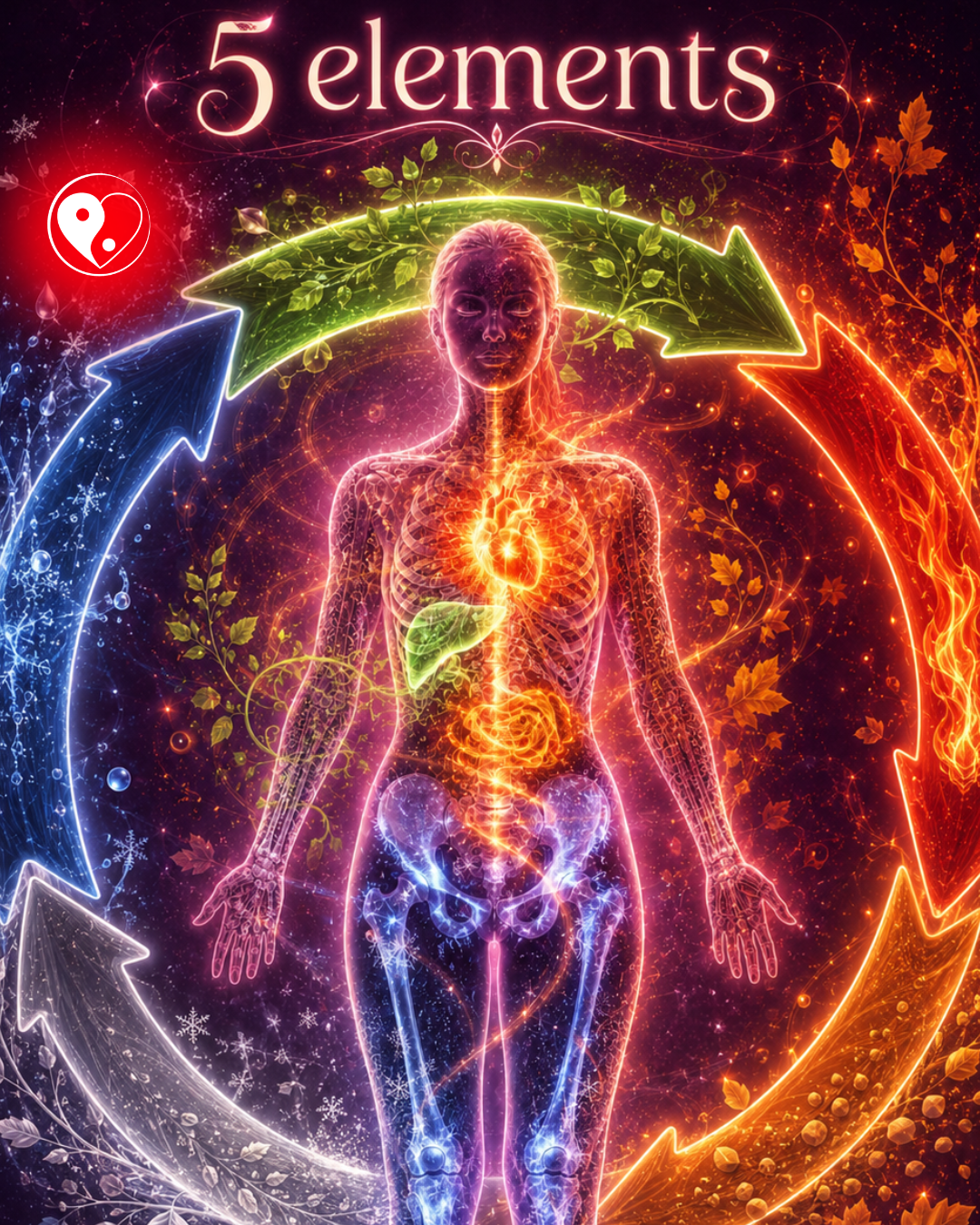
In winter, we talk about Water and the Kidneys: rest, bones, fear, deep reserves and the wisdom of not spending ourselves empty.

Menopause can bring all of these seasons into one body.

You can have summer heat in the chest, winter depletion in the bones, spring frustration in the Liver, autumn dryness in the skin, and late-summer worry in the belly.

This is why rhythm matters so much. We do not fix the whole woman by attacking one symptom. We help the whole system flow again.

See my books for full food medicine and acupressure for the complete five elements.

What is Bao Mai?

This is where Chinese medicine offers something very special.

There is a beautiful pathway in women’s health called the Bao Mai. Bao Mai means the Uterus Vessel, or more simply, the Heart and womb connection.

It is not one of the everyday meridians we talk about, like Liver or Kidney. It belongs to the deeper map of the extraordinary vessels, especially the Chong Mai, known as the Sea of Blood.

The Bao Mai is the communication line between the Heart and the uterus. It allows Heart Qi, Heart Blood and Shen, the spirit or mind, to descend and nourish the reproductive organs.
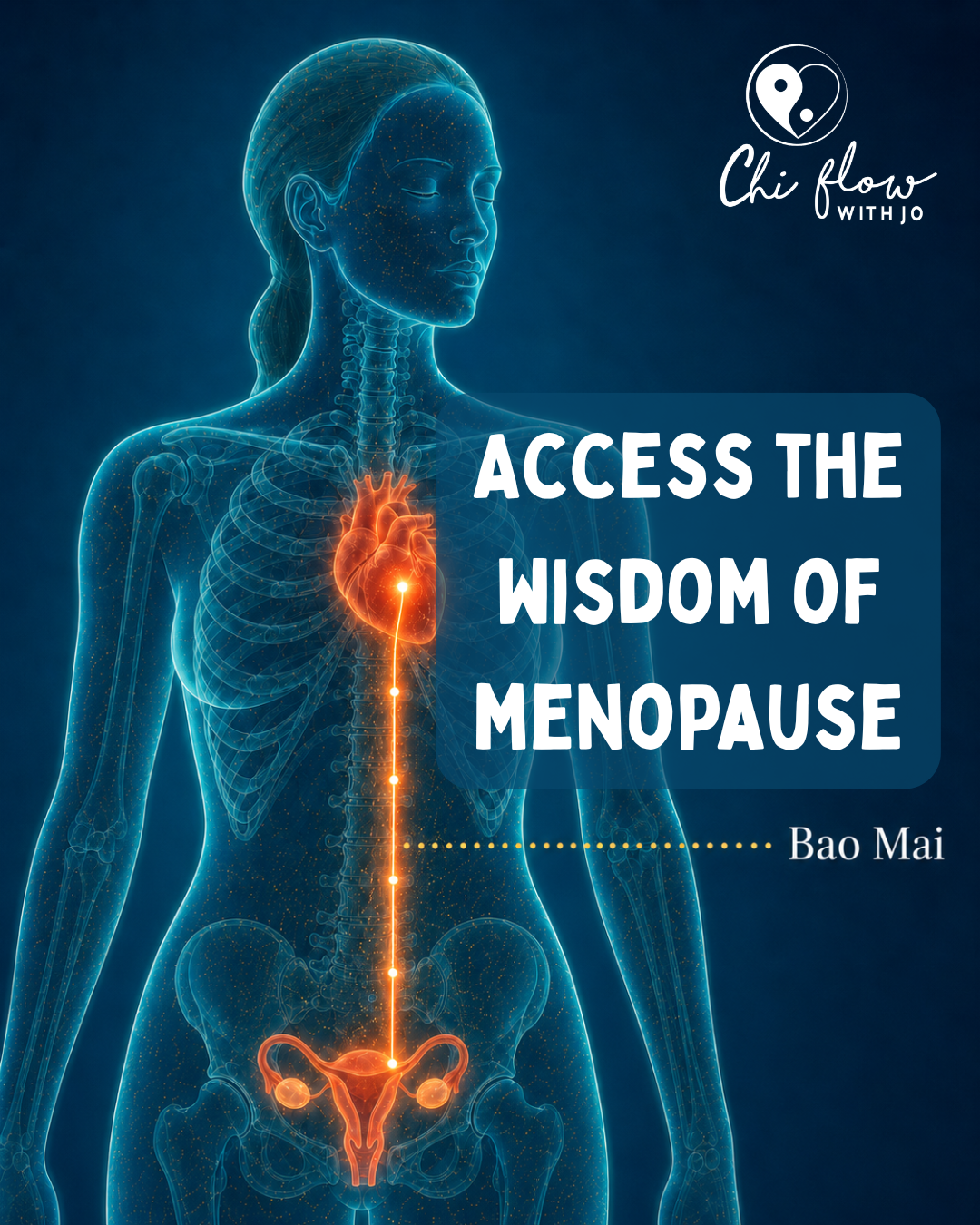
In Chinese medicine practice, the Bao Mai is used to understand ovulation, menstruation, fertility, pregnancy, PMS, irregular cycles, scanty bleeding, and the way stress and emotion can disturb hormonal rhythm.

In the fertile years, Blood and Qi move down from the Heart toward the womb. The monthly cycle opens and closes, and the body has a visible rhythm.

In peri-menopause and menopause, that rhythm begins to change.

The movement starts to return upward toward the Heart and brain. When that upward movement is smooth, it can become clarity, intuition and wisdom. It can become the woman who says, “I know what matters now, and I am not wasting my life putting others first.”

But when that upward movement is too hot, too rushed, or blocked by overwhelm, we may feel heat in the chest, pressure in the head, palpitations, anxiety, irritation, poor sleep or a sense that we cannot come down into ourselves.

Women’s seven-year cycles in Chinese medicine

Chinese medicine also describes women’s lives in seven-year cycles.

Around fourteen, the Conception Vessel, or Ren Mai, begins to flow and menstruation starts.

Around twenty-one, Kidney Qi matures.

Around twenty-eight, Qi and Blood are at their fullest.

Around thirty-five and forty-two, the Yang Ming channels begin to weaken, which may show in skin, hair and vitality.

Around forty-nine, the Conception Vessel weakens, reproductive energy declines, and menstruation begins to stop.

These ages are not rigid rules. They are broad brush strokes. But they give us a beautiful way to understand menopause.

Menopause is not a sudden failure of the body. It is a change in direction.

One acupressure point for anxiety and chest heat: CV17

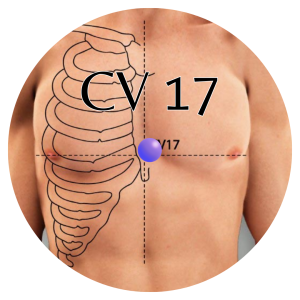
The acupressure point I would use here is Conception Vessel 17, also called CV17.

It is in the centre of the chest, on the breastbone, roughly level with the nipples. Do not press breast tissue. Come to the centre line of the sternum, the flat bone in the middle of the chest.

Use two fingertips or the soft pads of your fingers.

For anxiety, heat, tightness and emotional pressure, CV17 can be a lovely place to make contact. It should not feel sharp. It should not feel like you are bruising yourself. It may feel tender, warm, achy, or as if the breath suddenly notices the space under your hand.
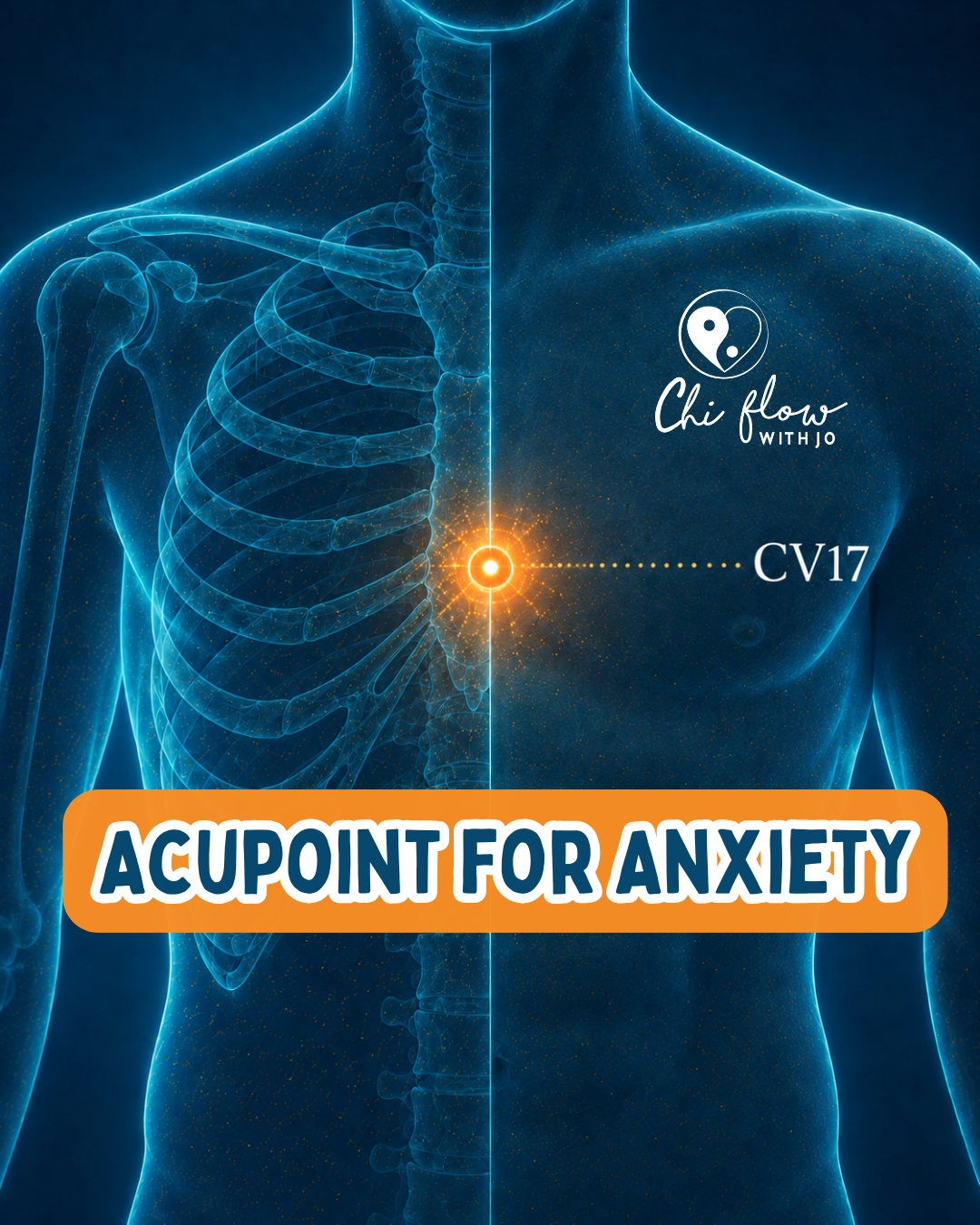
Place two fingers on the centre of the breastbone. Let your shoulders drop. Press gently and steadily. You are not digging. You are saying hello.

Stay for thirty seconds to three minutes. If you are very anxious, start with thirty seconds. Breathe slowly while you hold it. Let the exhale be a little longer than the inhale.

When you finish, smooth the hand down the centre of the chest to the upper belly, as if reminding the heat that there is a whole body below the neck.A simple daily cue is the kettle. Every time you boil the kettle, touch CV17. Tea, coffee, hot water, soup, whatever it is, let the kettle become your reminder.

Consistency matters more than intensity.

A breathing practice: Heart-Womb Breath

The breathing practice I recommend is Heart-Womb Breath.

If you have had a hysterectomy, if you do not have a uterus, or if the word womb does not feel right for you, use “lower belly” or “pelvic bowl.” The body still has a centre.

Think of anxiety as a house with all the lights on upstairs. The energy is in the head, eyes, jaw, temples, throat, chest and heart. The lower floor feels empty.

This breath helps you come downstairs again.

Place one hand on the centre of the chest, around CV17.
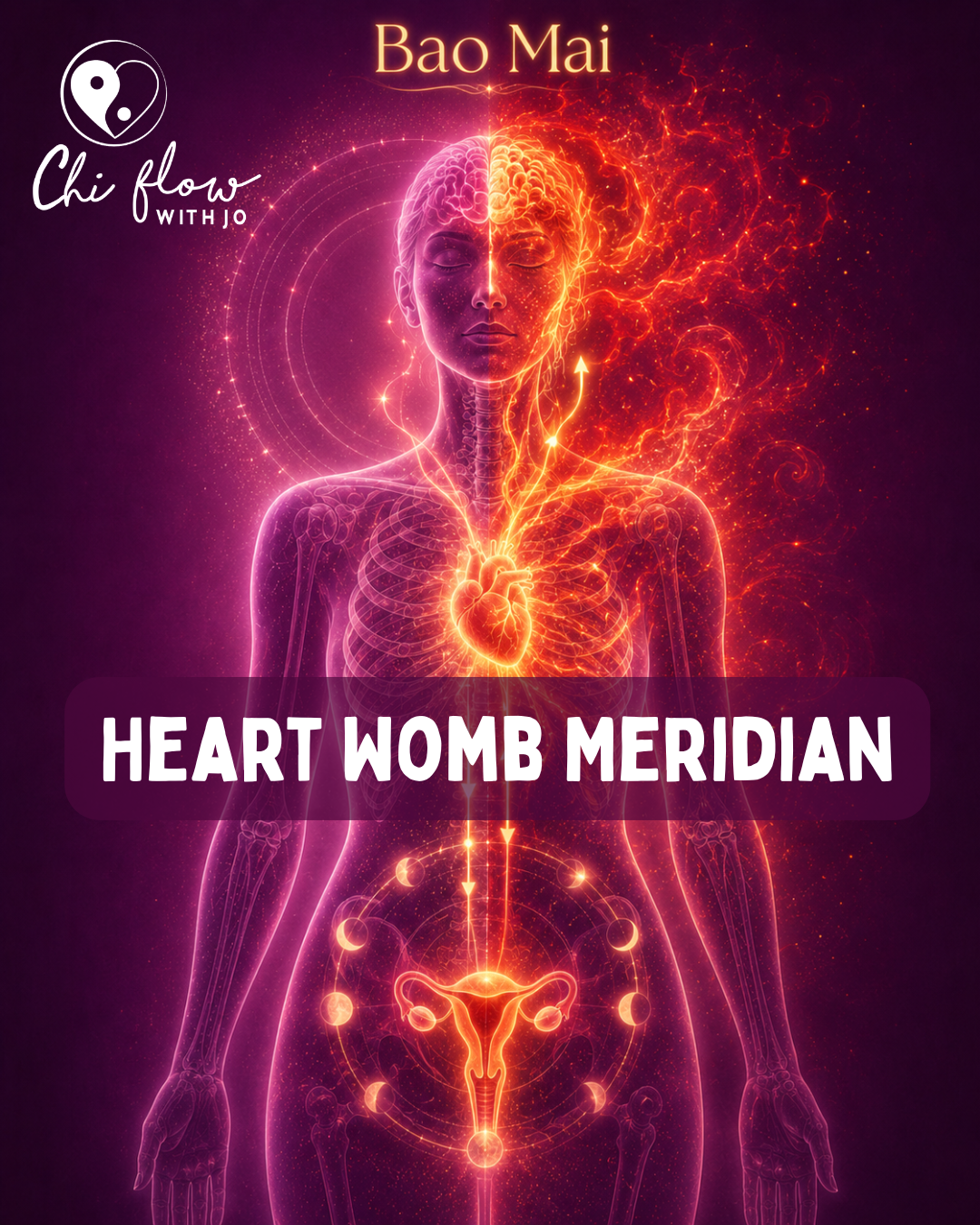
Place the other hand on the lower belly, below the navel, over the womb space or pelvic bowl.

Soften the jaw. Breathe in through the nose and out through the mouth. As you exhale, imagine warmth travelling from the chest down into the lower belly, like honey moving slowly down a spoon.

Then gently inhale and imagine Qi flowing from the womb space up to the Heart. On the exhale, let it flow back down to the perineum and pelvic bowl.  Do this for three minutes.

The aim is not to create a mystical experience. The aim is to give your nervous system proof that it is safe to come down.

The felt result may be simple: the chest a little softer, the head a little cooler, the belly a little more present, and the breath less trapped.

Food medicine for anxiety, heat and immune over-alertness

The food medicine I would choose is warm miso with wakame.

Not a complicated protocol. Not a war against the immune system.

For autoimmune patterns, I do not love the phrase “boost the immune system,” because the immune system is not always weak. Sometimes it is confused, over-alert, inflamed, reactive or exhausted from being on guard.

The intention is not to whip it harder. The intention is to steady the terrain.

Miso is fermented and supports the gut environment. Wakame brings a mineral-rich seaweed quality. The warm salty bowl can help the nervous system feel fed, held and less frantic.

The simplest recipe is this:

Boil water, then let it cool for a minute. Put one teaspoon of miso paste in a mug or small bowl. Add a small pinch of wakame. Pour the hot water over, stir, let it sit for a few minutes, and sip slowly.

You can add spring onion or a few cubes of tofu if you want to make it more like a snack, but the basic medicine is miso, wakame, warm water and a pause.

Do not boil the miso hard. Warm is enough.

Warm tells the belly, “You are safe.” Scalding tells the body, “More heat is coming.”

If you are sensitive to soy, choose a miso that suits you or skip this. If you have been told to restrict salt, if you have thyroid issues, or if seaweed has been restricted for you, check with your clinician and keep the wakame tiny.

Lichen sclerosus and the whole-body view

As with many issues around sexual organs, conditions of the vulva can carry so much silence.

Women put up with itching, burning, pain, fear around intimacy, embarrassment around examination, confusion about creams, and sometimes worry that they will not be believed.

Please do not carry that alone.

Good care matters. Clear diagnosis matters. Follow-up matters. Your comfort matters.

You are allowed to ask questions. You are allowed to ask how to use your prescribed ointment properly. You are allowed to say that sex hurts. You are allowed to say that anxiety is part of the picture. You are allowed to want both medical care and whole-body support.

In Chinese medicine, we never separate the local from the whole.

A vulval skin condition needs local medical care. Absolutely. And the whole body can still be supported through fluids, digestion, sleep, breath, stress rhythm and gentle movement of Qi.

This is not either-or. It is both-and.  See my book Good Food Better Sex for explorations of sexual conditions and MENOPAUSE through the lens of Chinese medicine

Final thought

To every woman in peri-menopause, menopause or post-menopause: your body is giving you feedback about flow, cooling, nourishment, boundaries, rest and rhythm. You do not have to decode it perfectly. You only have to begin responding more kindly.

And if you would like to practise this kind of work with me in a steady, supported way, come into the Chi Flow membership. It is €39 a month, and after the three-month trial it becomes €20 a month, so you can keep building these small rhythms through the seasons with guidance, community and practice.

Ready to Start?

Join Chi Flow with Jo and begin restoring your energy, and feeling more like yourself again.

Frequently Asked Questions 

What does heat in the chest and head mean in Chinese medicine?

In Chinese medicine, heat rising into the chest and head can suggest that warmth, Qi or emotional pressure is not moving smoothly through the body. In menopause, this may be linked with Yin and fluids needing support, the Heart being unsettled, and the body needing a calmer rhythm.

What is the Bao Mai?

The Bao Mai is the Heart-womb connection in Chinese medicine. It is linked with the extraordinary vessels, especially the Chong Mai, the Sea of Blood. It helps explain the relationship between emotions, the Heart, the uterus, menstruation, fertility, menopause, hot flushes and anxiety.

Why can menopause cause anxiety and hot flushes in Chinese medicine?

Chinese medicine sees menopause as a change in direction. In the fertile years, Blood and Qi move down toward the womb. In peri-menopause and post-menopause, this movement begins to return upward toward the Heart and brain. If the transition is too hot, rushed or blocked, symptoms may include anxiety, palpitations, poor sleep, heat in the chest and head, or hot flushes.

What acupressure point helps menopause anxiety?

CV17, or Conception Vessel 17, is a useful acupressure point for anxiety, chest tightness and emotional pressure. It is found in the centre of the breastbone. Press gently for thirty seconds to three minutes while breathing slowly.

What food medicine supports menopause anxiety and immune over-alertness?

Warm miso with wakame is a simple food medicine option. Miso is fermented and supports the gut environment. Wakame brings a mineral-rich seaweed quality. Together, they make a warm, steadying bowl that supports the body without overstimulating it.

Can Chinese medicine cure lichen sclerosus?

No. Lichen sclerosus needs medical diagnosis and care from a GP, gynaecologist, dermatologist or vulval clinic. Chinese medicine practices such as acupressure, breathwork, food medicine and Qi Gong may support the whole body alongside medical treatment, but they do not replace it.

Go Deeper with Our Books

For those wanting to understand how movement, breath, and Chinese Medicine principles, Jo’s books provide practical guidance rooted in lived experience and clinical wisdom.

👉 Buy Five Element Wisdom cookbooks

Explore how to Find Your Flow and Live Well with Parkinson’s.

Movement does not need to be extreme to be powerful.
Small daily expansion reshapes the body.
Steady breath reshapes the nervous system.
Gentle repetition rebuilds confidence.

Every human body carries extraordinary capacity for renewal when given the right rhythm.

If you want to soften into strength, come and practice with us.

When to seek medical help

Please speak to your GP or specialist if symptoms worsen or spread, if pain, itching, heat or anxiety starts waking you at night, if you notice new skin changes, lumps, thickening, ulceration or bleeding, if your prescribed treatment is not helping, or if there is any change in medication.

And if you ever have chest pain that feels severe, crushing, unusual, or comes with breathlessness, sweating, faintness, jaw pain or arm pain, seek urgent medical help.

Chinese medicine and home practices can support the terrain of the body, but they do not replace diagnosis or medical treatment.

Self-administered acupressure or Chinese Medicine is not a substitute for visits to qualified healthcare practitioners.

Knowing how to treat yourself and your loved ones with complimentary therapies like acupressure can be greatly beneficial and convenient. However, for serious and chronic conditions, you’ll want to visit an Shiatsu therapist / Acupuncturist or other qualified healthcare practitioner who can develop a treatment plan based on your unique medical history and combination of symptoms.

The information provided should not be considered medical advice.

Topics: Breathwork, Parkinson’s support, sleep practices, Qi Gong, acupressure.
Bone Health Without the Gym: What Actually Works in Post, Mid and Perimenopause

Bone Health Without the Gym: What Actually Works in Post, Mid and Perimenopause

If you’ve ever found yourself wondering “am I doing enough for my bone health?” you are not alone.

This question comes up again and again for women in their 40s and beyond. You might be active, eating well, doing your Qi Gong, listening to your body… and yet there’s that quiet voice in the background:

Should I be doing more?
Do I need weights?
Is gentle exercise enough?
Am I risking my bone health by not going to the gym?

Let’s unpack this in a way that actually makes sense for your body.

The Real Question Behind Bone Health Anxiety

Most women aren’t just asking about bones.

They’re asking:
Can I trust what I’m doing?

Especially in perimenopause, when hormones shift and the body starts giving new signals, it’s easy to lose confidence. What used to work might not feel right anymore. High-impact exercise might irritate your knees. The gym might feel overwhelming or simply not appealing.

And yet, everywhere you look, the message is the same:

“You need weight-bearing exercise for bone health.”

This is true… but incomplete.

What Does “Weight-Bearing Exercise” Actually Mean?

This is one of the most searched questions:

What is the best exercise for bone health?

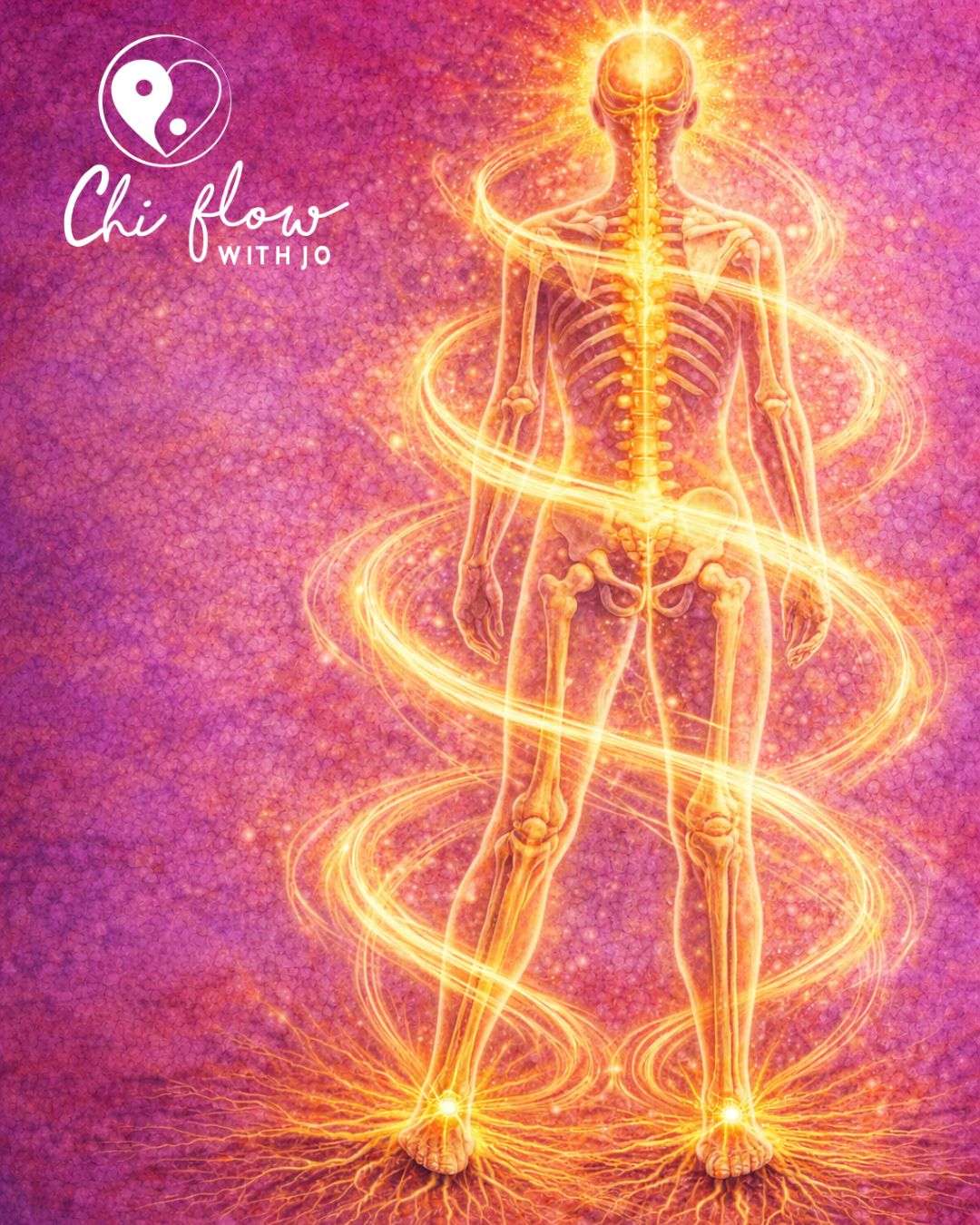
Bones respond to load. They need pressure, use, and stimulation to stay strong.

But load doesn’t only come from lifting heavy weights.

Load also comes from:

  • Standing and holding your body weight
  • Slow, controlled movement
  • Balance and stability work
  • Time spent on your feet
  • Proper alignment through the joints

This is where Qi Gong becomes incredibly valuable.


Is Qi Gong Enough for Bone Health and Bone Density?

Qi Gong, when practised well, is not just “gentle waving of the arms.”

It is weight-bearing, structured, and deeply organising for the body.

When you stand, shift your weight, and move slowly with awareness:

  • Your bones receive consistent, low-level load
  • Your joints align more efficiently
  • Your muscles support the skeleton properly
  • Your nervous system relaxes, allowing better repair

And here’s the key:

Consistency beats intensity when it comes to long-term bone health.

Why Alignment Matters More Than Force

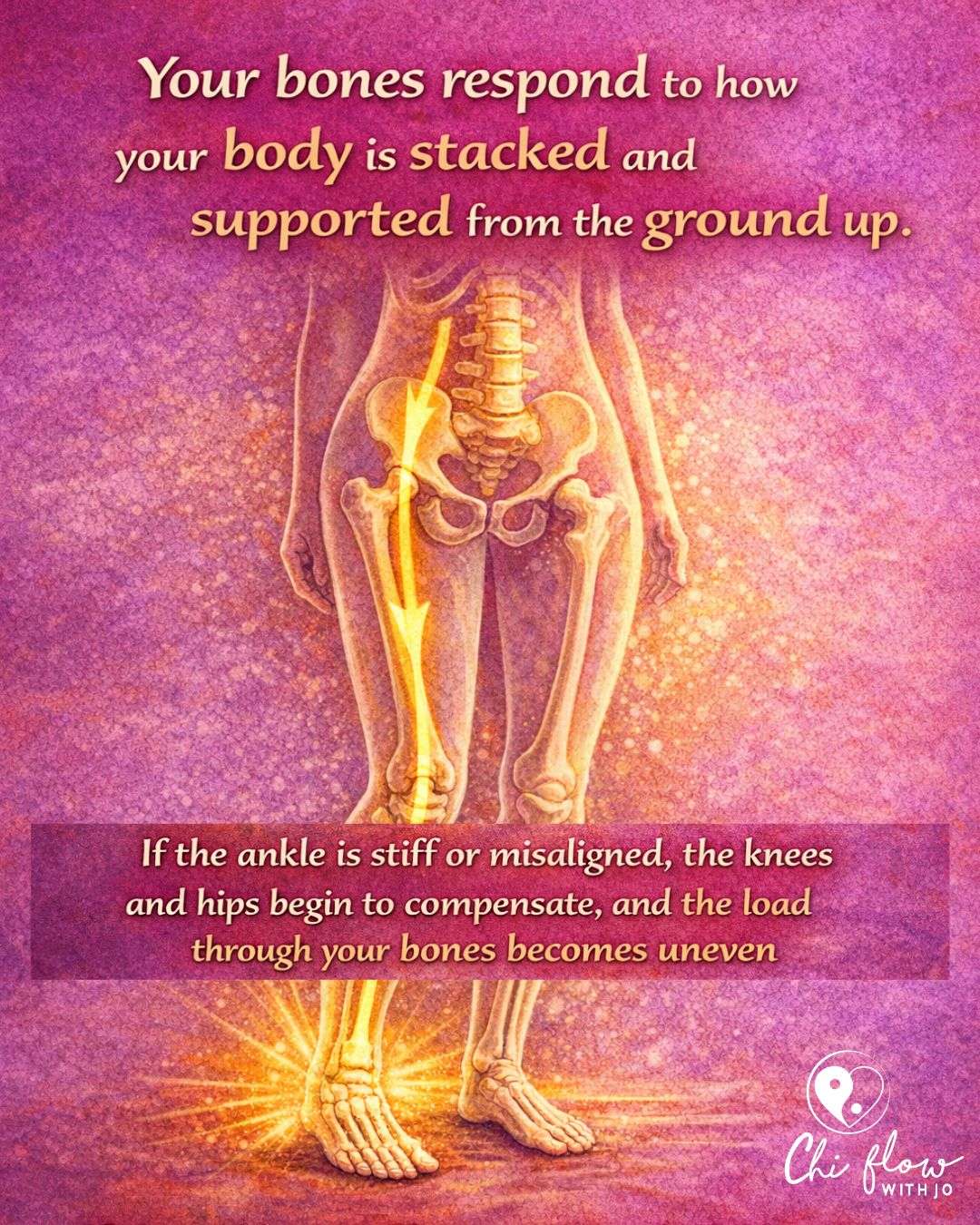
The ankle is the root of the kinetic tree. When it becomes stiff or dehydrated through the fascia, every joint above begins to compensate.

The knees and hips start to rotate inward.
The lower back loses support.
The tension travels upward into the shoulders and neck.

Over time, this creates misalignment.

And misalignment matters because:

Poor posture weakens bones.

Not because bones suddenly become fragile, but because:

  • Weight is no longer evenly distributed
  • Some areas become compressed
  • Others are underused
  • The body loses its natural strength pathways

So instead of healthy, balanced load through the skeleton, you get strain.

A Simple Daily Practice to Support Bone Strength

If you’re asking:“What is the best daily routine for bone health?”

Start here.

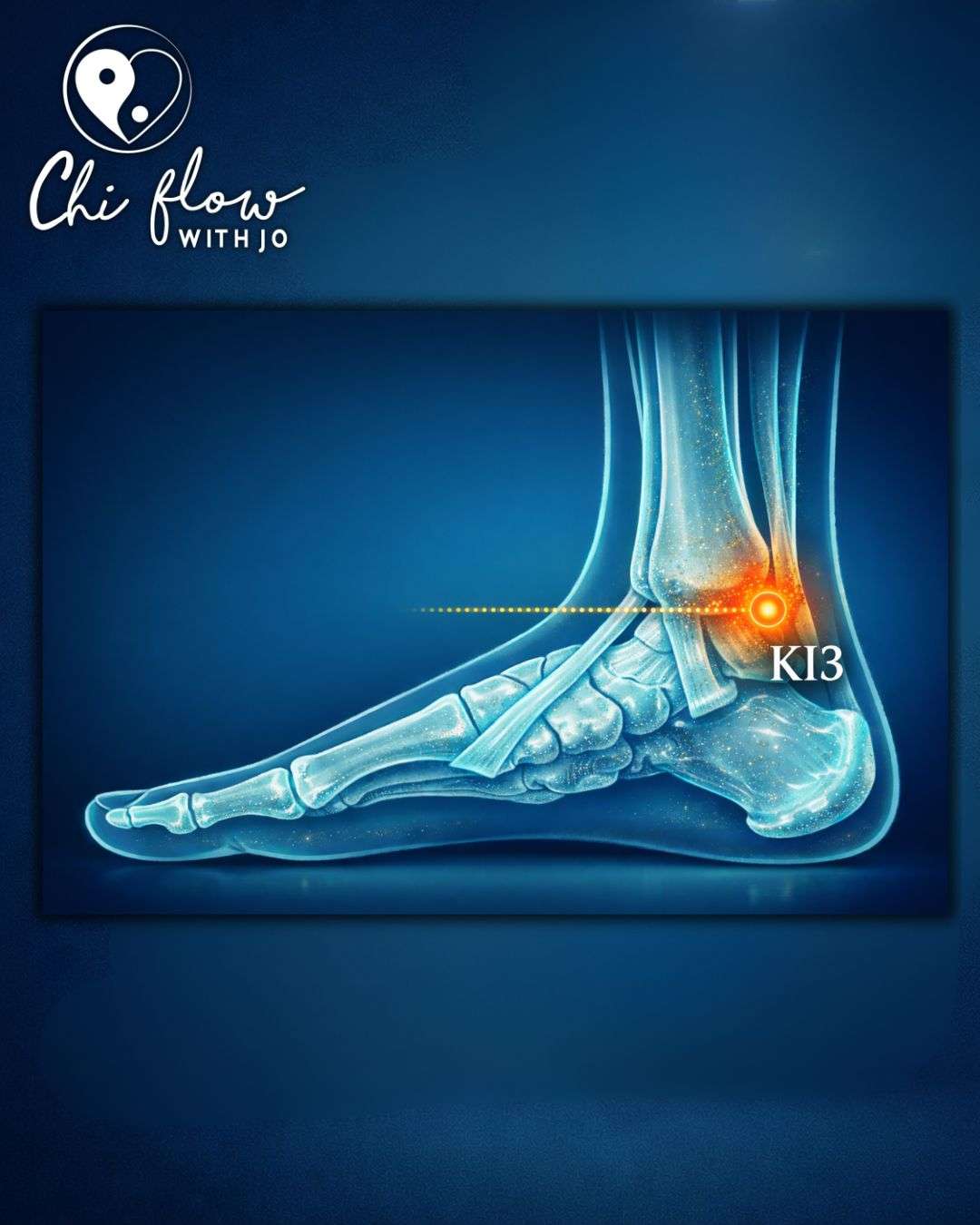
Acupressure for Foundation: Kidney 3

This point sits on the inside of the ankle, between the ankle bone and Achilles tendon.

  • Press gently until you feel a dull, comfortable ache
  • Hold for 1–3 minutes each side
  • Breathe slowly

This helps the body reconnect with its base and improves how force travels through the skeleton.

After massaging and connecting with the acupoint, rotate the ankles, drawing circles and figure 8’s with the toes

Food for Bone Nourishment (Beyond Calcium)

What foods strengthen bones naturally?

While calcium is important, bone health is about absorption, minerals, and overall nourishment.

Miso and bone broth remain foundational for Kidney energy and bone support, and you can revisit those recipes in my books and blogs.

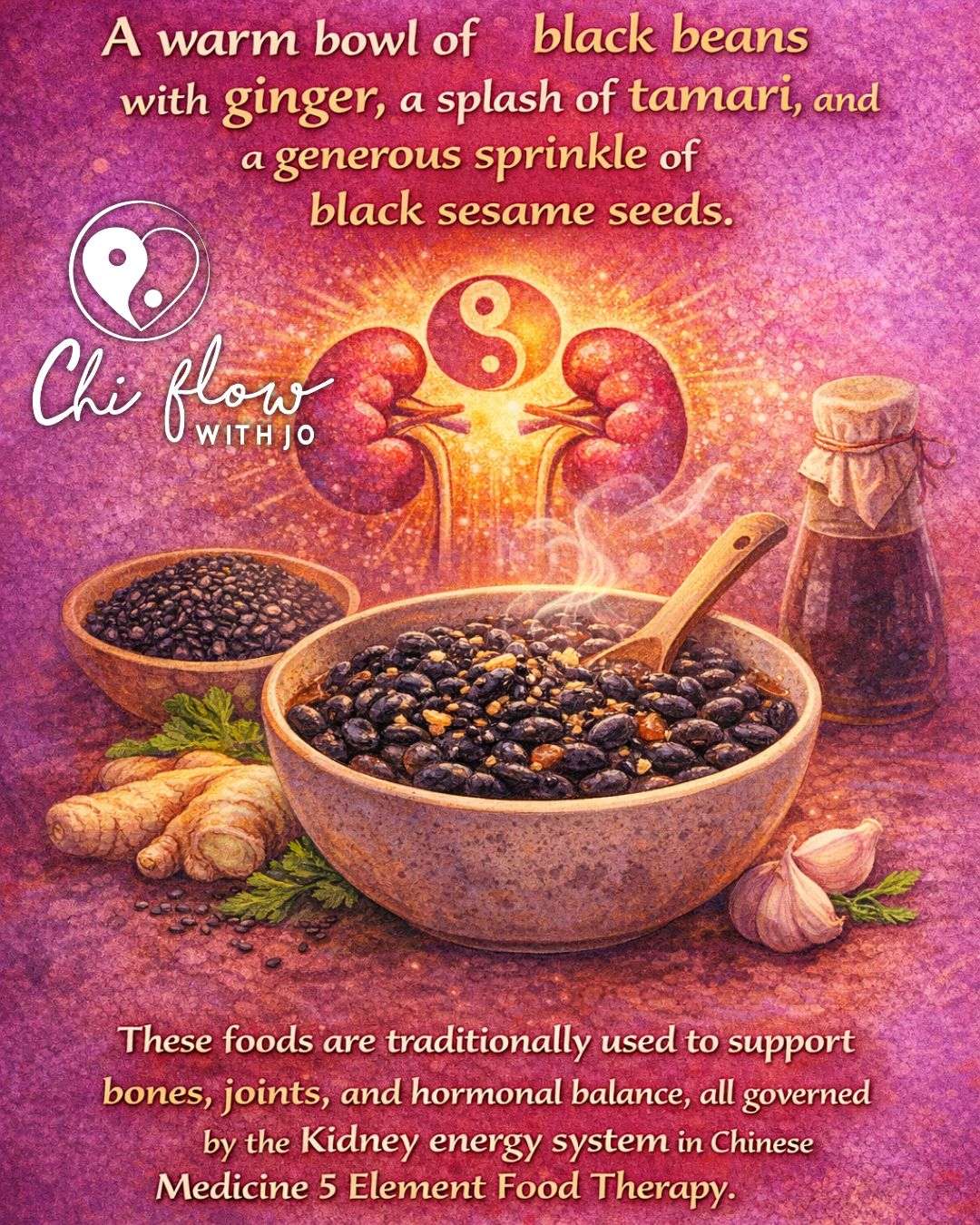
For something different, try a black bean and sesame bowl:

  • Cook your black beans or open a tin of organic black beans
  • Warm black beans with grated ginger and tamari to taste
  • Add toasted black sesame seeds
  • Finish with a drizzle of sesame oil

Why this works:

    • Black foods support the Kidney system
    • Sesame seeds are traditionally used for bones and joints in Chinese Medicine
    • Warm, savoury meals reduce cravings and support digestion

The Missing Piece: Horse Stance for Bone Strength

One of the most important questions:

Do I need weights for strong bones?

Not necessarily.

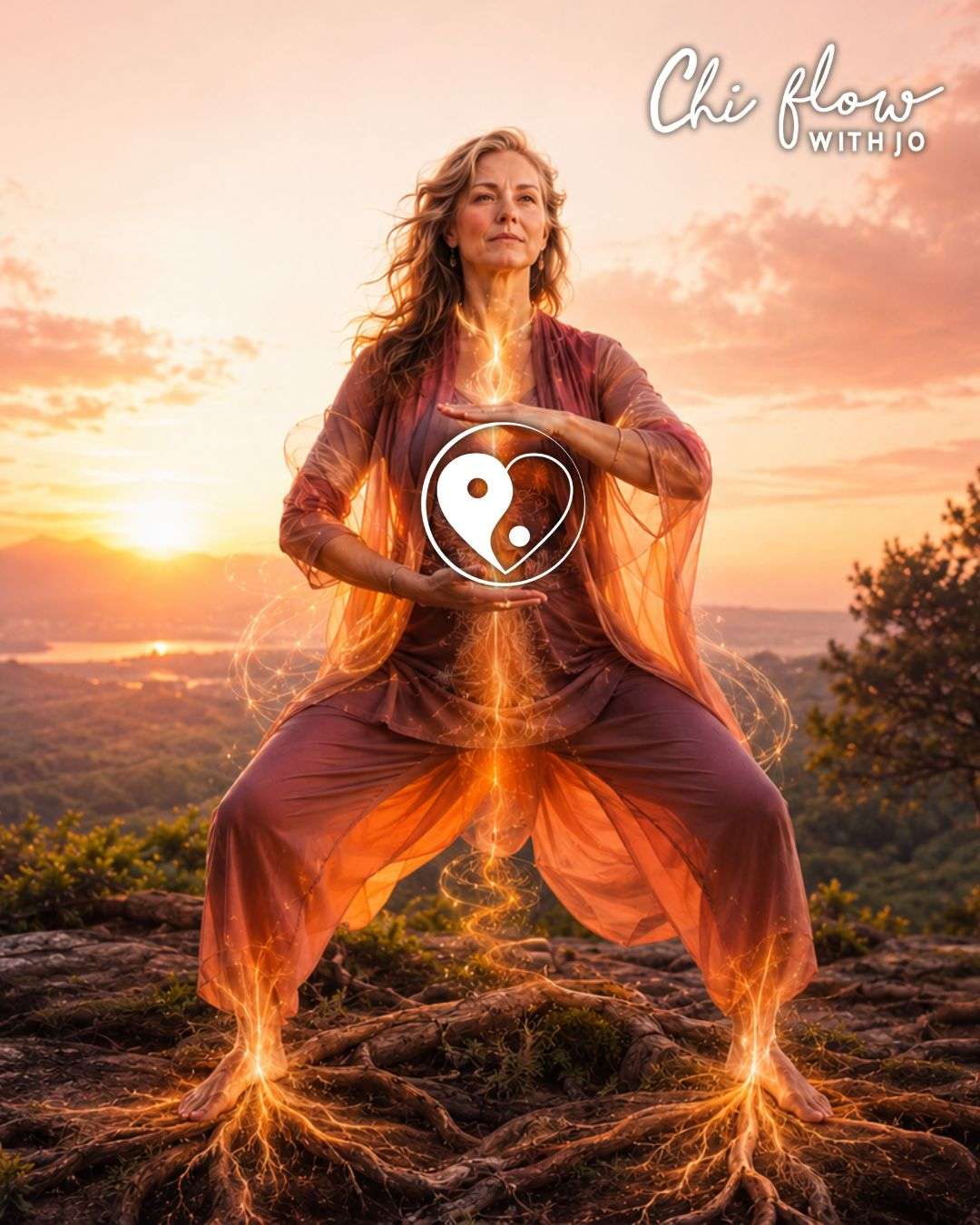
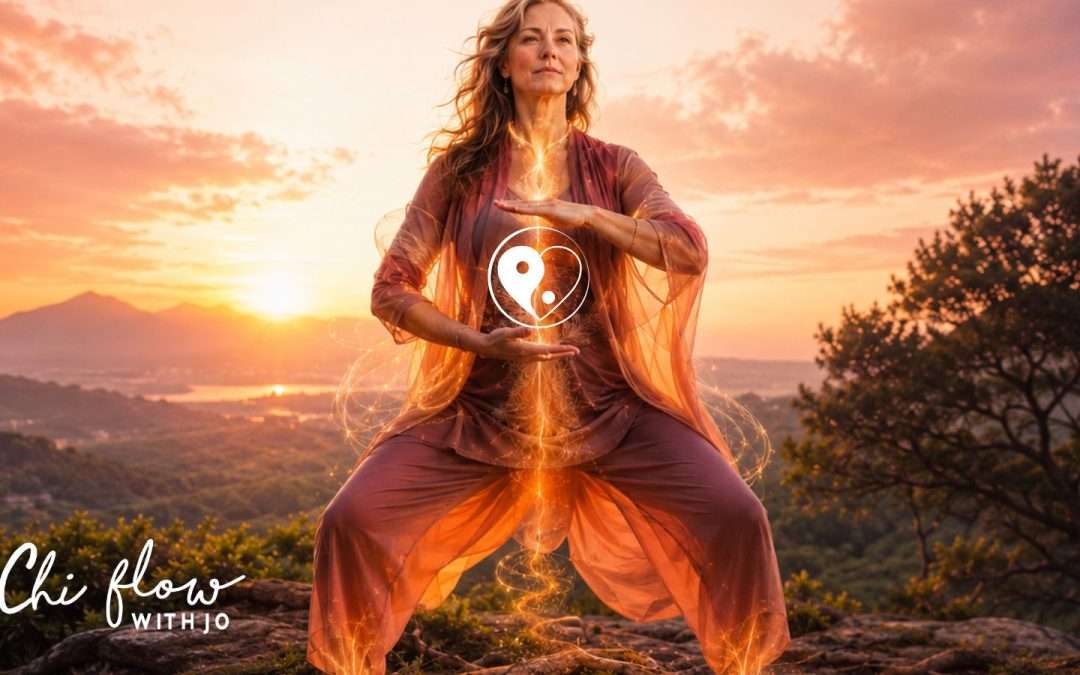
Horse stance is a powerful, often overlooked, bodyweight strength practice.

When you stand with feet wide and knees softly bent:

  • Your legs carry your full body weight
  • Your bones receive direct, steady load
  • Your joints align and stabilise together

This is true weight-bearing exercise.


Prayer Wings in Horse Stance

Now we add the upper body.

As you move through Prayer Wings:

  • The chest opens
  • The neck lengthens
  • The throat softens

This matters more than people realise.

Fascial tightness in the chest and neck:

  • Restricts breathing
  • Compresses the cervical spine
  • Pulls the head forward
  • Creates rounding and hunching

This posture reduces how effectively your skeleton carries weight.

So this movement does two things at once:

  • Strengthens the lower body and bones through load
  • Restores posture so the whole skeleton can function properly

Better posture = better bone loading = better long-term strength

So… Are You Doing Enough?

If you’re still asking:

“Am I doing enough for my bone health?” Here’s your answer.

If you are:

  • Practising regularly
  • Spending time weight-bearing (standing, not just sitting or cycling)
  • Supporting your body with nourishing food
  • Improving alignment and posture
  • Listening when your body asks for change

Then yes, you are doing enough and more importantly:

You are doing what your body can actually use.

Keep it simple. Keep it consistent.

Bone health is not built through fear or pressure.  It is built through steady, repeatable signals your body understands.

If symptoms worsen, spread, disturb sleep, or if anything changes in your health or medication, always check in with your GP.

Otherwise, stay curious. Stay consistent. And trust that strength does not always have to look intense to be effective.

If you’d like support building a simple, consistent routine with every day qi gong like this, the membership is designed to guide you month by month with practices that match your body’s needs.

Join the Free Class

If you are curious about Qi Gong for Parkinson’s, chronic illness, fatigue, or healthy ageing, you are warmly invited to try a free class.

You do not need experience. You do not need flexibility. You simply begin where you are.

👉 Join the Free Class and experience the Eight Brocades for yourself.

Continue the Journey

If you would like ongoing support, Chi Flow with Jo offers:

  • Weekday live classes
  • Full Eight Brocades training
  • Acupressure guidance
  • Food medicine insights
  • Monthly health talks
  • Community gatherings

It is €39 per month, reducing to €20 per month after three months. Just €1 per class.

👉 Join Chi Flow with Jo HERE.

Self-administered acupressure or Chinese Medicine is not a substitute for visits to qualified healthcare practitioners.

Knowing how to treat yourself and your loved ones with complimentary therapies like acupressure can be greatly beneficial and convenient. However, for serious and chronic conditions, you’ll want to visit an Shiatsu therapist / Acupuncturist or other qualified healthcare practitioner who can develop a treatment plan based on your unique medical history and combination of symptoms.  

The information provided should not be considered medical advice.

 Joanne Faulkner is a Qi Gong teacher – Chi Flow with Jo – teaching live daily online Qi Gong classes to hundreds of people; a Shiatsu practitioner specializing in the energy of food in Traditional Chinese Medicine and a published Author. Her residential and day Wellness Retreats focus on Chi Gong, self-Shiatsu & Conscious Cooking Demonstrations, and are extremely popular.

Until recently, Joanne was the Irish representative to the European Shiatsu Federation and is the former Chairperson of the Shiatsu Society Ireland.

 “Good Food: Better Sex” and “Shiatsu & the Art of Conscious Cooking” , both written and published by Joanne, are modern cookbooks full of delicious recipes, Traditional Chinese Medicine plus acupressure points for health and wellbeing.

INTERACTIVE

APP NOW LIVE!

Answer 2 questions to see what foods suit you today

COMPANION TO
“SHIATSU & THE ART OF
CONSCIOUS COOKING”
COOK BOOK

BUY THE BOOK!

Finding Balance: Easing Anxiety and other Menopause Symptoms with Qi Gong, Acupoints and Food Medicine

Finding Balance: Easing Anxiety and other Menopause Symptoms with Qi Gong, Acupoints and Food Medicine

Finding Balance: Easing Anxiety and other Menopause Symptoms with Qi Gong, Acupoints and Food Medicine

Menopause often brings anxiety, palpitations, sleepless nights, and even panic attacks, which can feel overwhelming. I know this firsthand from my own experience. There was a time when I stood in the supermarket, gripped by hot flushes, shortness of breath, and a wave of sheer terror. Sound familiar? You’re not alone.

But there’s good news—Chinese Medicine offers solutions. Through Qi Gong, acupressure, and food medicine, you can ease those intense symptoms and find balance again. Let’s explore how.

Anxiety and Panic Attacks: What’s Happening?

Anxiety and panic attacks during menopause are often felt in the chest—tightness, racing heart, and shortness of breath. In Chinese Medicine, these symptoms suggest that too much energy is rising to the heart, leaving us feeling agitated and ungrounded. To find relief, it’s crucial to bring that energy down.

I’ve been there, and I’ve learned how to work with my body’s natural energy to calm my system.

Acupressure point to reduce anxiety

By tapping into the Conception Vessel 17 (CV17) point on the chest and practicing specific Qi Gong movements, you can help move energy from the heart to the lower body, grounding your emotions and calming your anxiety.

Try this: Place your middle fingers on your sternum, near the heart, and gently massage. This helps relax the muscles around your chest and brings the energy down to your lower abdomen, where your body feels more centered.

The Root Cause: Kidney Energy Imbalances

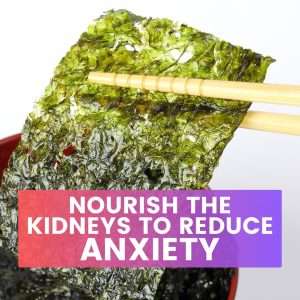
In Chinese Medicine, the heart is seen as the emperor, but it’s the kidneys that fuel its function. When your Kidney energy is depleted—especially during menopause, when hormones are fluctuating—the heart can go into overdrive, resulting in those feelings of panic, palpitations, and even insomnia.

Strengthening your Kidney energy can bring a sense of calm and stability back into your life. How do we do this? By incorporating foods that nourish the Kidneys, like seaweed, walnuts, and black beans, and practicing Qi Gong exercises that balance the Kidney and Heart energies.

The Power of Yin: Cooling and Restoring Balance

Kidney energy is associated with Yin—the cooling, restorative energy that calms the heat of Yang activity.

If you’re dealing with hot flashes, anxiety, or exhaustion, it could mean your Kidney Yin is depleted.

Strengthening your Yin energy helps balance out the heat and restore your body’s internal harmony.

Simple practices like Qi Gong, acupressure, and adding salty, Yin-nourishing foods to your diet (think miso, seaweed, or bone broth) can help you cool down, both physically and emotionally.

Taking Care of You

Ultimately, all the information in the world won’t help unless you care—care for yourself and listen to your body. Practicing Qi Gong isn’t just about exercises; it’s about connecting with your inner energy, calming your mind, and creating space for healing.

Are you ready to find your flow?

If you’re ready to reduce anxiety, ground your energy, and ease those uncomfortable menopause symptoms, join me in Chi Flow with Jo. Together, we’ll explore Qi Gong, food medicine, and acupressure in a way that supports your unique journey through menopause.

Sign up today  (scroll down) and take the first step toward feeling more balanced, calm, and connected to your body.

Until next time, stay balanced and be well.

Self-administered acupressure or Chinese Medicine is not a substitute for visits to qualified healthcare practitioners.

Knowing how to treat yourself and your loved ones with complimentary therapies like acupressure can be greatly beneficial and convenient. However, for serious and chronic conditions, you’ll want to visit an Shiatsu therapist / Acupuncturist or other qualified healthcare practitioner who can develop a treatment plan based on your unique medical history and combination of symptoms.  

The information provided should not be considered medical advice.

My Menopause Story

My Menopause Story

At 34, I had a rough birth with my twin boys.  That’s me in the photo.  It’s taken just after putting up the Christmas tree so I know I had another 3 weeks and a kidney infection before I gave birth to them on January 5th 2003.  They weighed 6.7 and 6.3 lbs – that’s a lot of baby for a 5-foot woman to carry.  So when they were delivered via emergency C-section at 40 weeks after 2 days labour, I had nothing else to give.

My body didn’t even have the energy to contract my uterus so I haemorrhaged and almost died. Yes I saw the white light and someone had a chat with me.  It was an amazing experience and being so knackered I wasn’t sure I wanted to come back.

But back I came to look after my twin boys and run the environmental empowerment organisation I owned,  The company worked with the regeneration of Ballymun, well known for its high levels of unemployment, drug usage and high-rise tower blocks. It could be a dangerous and stressful area of Dublin to work in. I over identified with the success of the projects and worked way too much. I had qualified as a shiatsu practitioner in 2002 but this job was where the money was.

When the twins were 2, I found out my partner was having an affair within the company. I was just too exhausted to carry on. I turned the business into a community development. I left him and my business.

That’s when my Peri-Menopause symptoms started. I would get so dizzy I thought I was going to black out.  The first one happened on a busy motor way which triggered panic attacks leaving me feeling anxious all the time. My sleep pattern was disrupted and I was so exhausted I would forget my children’s names. I felt so isolated and alone, I often thought I wasn’t going to make it. My whole body hurt. I was only 5ft tall and weighed 14 stone because I comfort ate all the wrong food.

Luckily I had my background of Chinese Medicine and Shiatsu to guide me.  I started to improve my diet following Traditional Chinese Medicine Guidelines.  I began to practice a Chi Gong and receive regular shiatsu. I started with baby steps, little by little. I’m 55 now with no panic attacks, and no anxiety. I sleep well, and can remember what I walked into a room for. My skin is glowing and I have no grey hairs. Keeping the weight off can be tricky but I know what to do when the pounds start climbing on and if I have the odd bad nights sleep I know which points to press, which foods to eat and which Chi Gong exercises to do to ensure that things come back to balance naturally. My life is good, I have a sense of purpose, I wake up feeling rested, and I am happy.

The problem for me is that I was suffering Adrenal exhaustion. My kidneys, had nothing left in the tank to balance my hormones naturally, which meant I was either on overdrive with my heart bouncing out of my chest or too exhausted to move of the sofa.  For you it might be your liver making you feel bloated or gaining weight around your middle or your spleen out of balance, craving sweet food to give you energy but with a brain fog to see nothing clearly.

There are no two people the same / there are no two menopause is the same / there are not two solutions the same.

Which is why I created Chi Flow with Jo Intermittent fasting programme.

  • A fasting schedule that increases gently and slowly – not eating from 8pm to 8am – could you do that?
  • 30 min Daily Qi Gong exercises working on the Spleen and Liver (recordings also sent daily)
  • Daily Live Check in – for Q&A and support
  • Daily nutrition advice and recipes
  • Free access to Live Boost metabolism Talk
  • Join me LIVE in my kitchen for easy simple healthy recipes including Castor oil pack to clear a fatty liver
  • Closed Facebook group for sharing and support

We are often told we need to endure or just wait for the menopause to pass, but that can take years.

Don’t regret getting older – this is your time to shine.


So if you are

  • The queen of stripping: taking off layer after layer, with skill and speed when a hot flush hits?
  • Too exhausted to do anything, but when your head hits the pillow, you find it impossible to sleep?
  • A supplement junkie, trying everything to thicken hair, reduce hot flushes, help you sleep, stop your joint pain but nothing works long term?
  • Too nervous to go out because anxiety and heart palpitations appear out of nowhere?
  • Slowly gaining weight around your middle but your arms and legs are staying skinny?

It’s never too early and it’s never too late to make changes so you can be more confident, less anxious, get fitter and stronger, find your purpose, say goodbye to self limiting beliefs and negative emotions.

YOU CAN DO IT ! 

Your best life experiences are still to come

“The journey of a thousand miles begins with one step”

Lao Tzu – Chinese Medicine Philosopher.

At the end of the month I will be giving a FREE fasting and the menopause Qi Gong class – to receive the live link and the recording sent to your email – simply CLICK HERE or enter your email into the form below.

Your journey to health and balance is unique, and embracing the wisdom of TCM can help you achieve lasting freedom from cravings. Be kind to yourself, listen to your body, and enjoy the process of nurturing your health.

Until next time, stay balanced and be well.

Self-administered acupressure or Chinese Medicine is not a substitute for visits to qualified healthcare practitioners.

Knowing how to treat yourself and your loved ones with complimentary therapies like acupressure can be greatly beneficial and convenient. However, for serious and chronic conditions, you’ll want to visit an Shiatsu therapist / Acupuncturist or other qualified healthcare practitioner who can develop a treatment plan based on your unique medical history and combination of symptoms.  

The information provided should not be considered medical advice.