
Back Pain Doesn’t Have to Hold You Back
Back pain is an all-too-common struggle. Did you know it’s one of the leading reasons people miss work and the second most common reason for visiting the doctor? Shockingly, 80% of us will experience back pain at some point in our lives.
Whether it’s hours spent hunched over a desk, long drives, sports injuries, or simply the wear and tear of daily life, back pain can seem inevitable. But it doesn’t have to be. With the powerful tools of Qi Gong, Food Medicine, and Acupressure, you can take charge of your health and alleviate back pain—naturally and effectively.
Instead of accepting back pain as part of life, imagine addressing it head-on, restoring balance, and preventing it from progressing into a more debilitating issue.
Understanding Back Pain Through the Lens of Chinese Medicine
In Chinese Medicine, back pain is often rooted in Qi and Blood Stagnation.
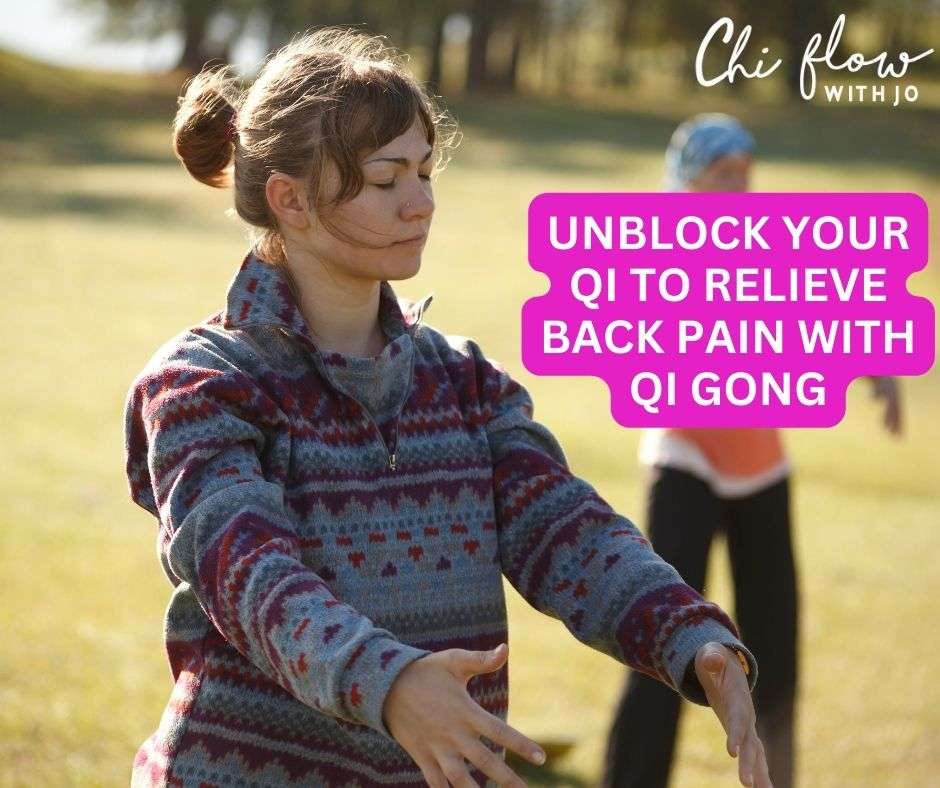
Qi Stagnation:
Qi, the vital energy flowing through your body, moves along meridians (energy channels). When this flow is blocked, discomfort begins as a dull ache but can develop into sharp, fixed pain.
For example, women with painful periods often experience lower back pain due to stagnation of Qi, which prevents blood from circulating freely.
Another common culprit is the invasion of cold or dampness into the bladder meridians of the spine.
Think of Qi like water flowing through a river. When temperatures drop, water slows, thickens, and may even freeze, unable to move freely. Qi behaves the same way—cold or stagnation can stop its smooth flow, leading to pain and discomfort.
Moving the body with gentle exercise such as Qi Gong can create heat in the body, warming the meridians, the muscles and the fascia which in turn helps the Qi and blood to flow.
Blood Stagnation:
Trauma, injury, or sedentary habits can lead to poor blood flow. Like a bruise that lingers, blood stagnation can intensify pain.
A sedentary lifestyle without physical activity plus slouching or sitting slumped on your office chair or couch, hunching forward while weeding your garden or standing washing dishes for a long time, can cause Qi stagnation.
The good news? The treatment is the same: Get moving, stay warm, and stimulate circulation.
In Chi Flow with Jo, you’ll learn targeted exercises like spinal cord breathing and massage techniques for acupoints BL23 and BL52, which support back health and relieve pain.
Bladder 23 (Shenshu) and Bladder 52 (Zhishi) are pivotal acupoints along the Bladder meridian, renowned in Traditional Chinese Medicine (TCM) for alleviating back pain by enhancing Qi and blood circulation.
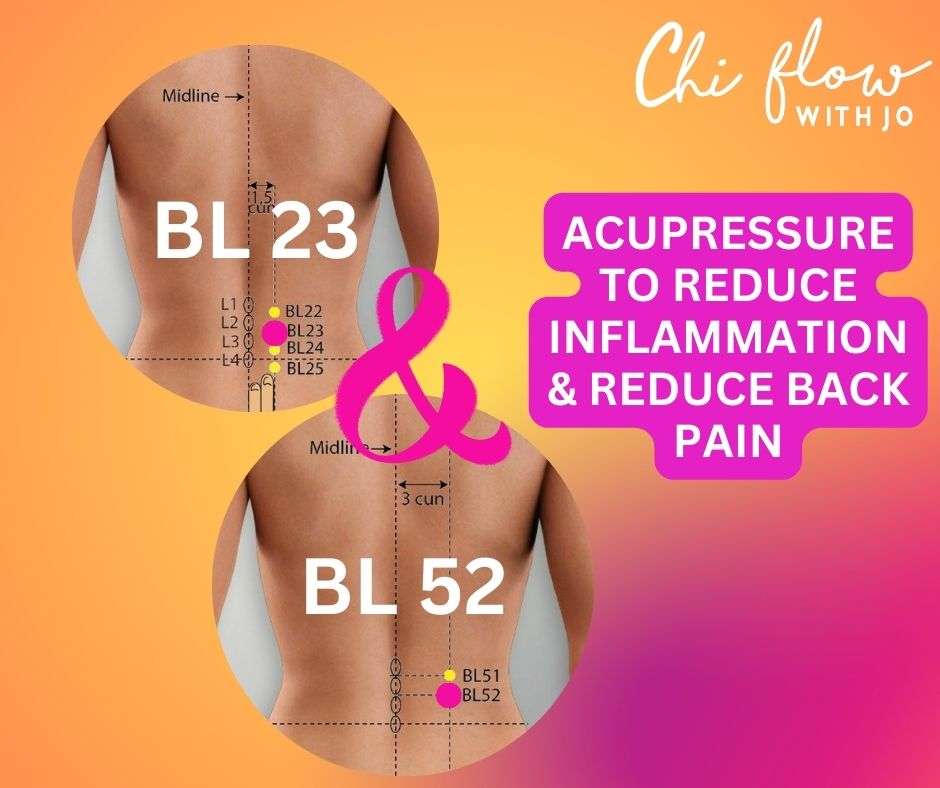
Locating Bladder 23 (Shenshu) Kidney Transporter: This point is situated on the lower back, level with the space between the second and third lumbar vertebrae, approximately two finger-widths (1.5 cun) lateral to the spine.
Locating Bladder 52 (Zhishi) Willpower room: Found at the same lumbar level as Bladder 23, Bladder 52 is positioned further outward, about four finger-widths (3 cun) lateral to the spine.
Benefits of Massaging and Warming These Points:
Enhancing Qi and Blood Flow: Gentle massage stimulates these acupoints, promoting the smooth flow of Qi and blood along the Bladder meridian, which can alleviate stagnation and reduce back pain.
Kidney Support: Bladder 23 is closely associated with kidney health. Massaging this point can strengthen the kidneys, which, in TCM, are vital for maintaining overall vitality and back strength. (See below)

Therapeutic Warmth: Applying warmth to these areas, such as using a warm compress or engaging in practices like ginger foot soaks, can further enhance circulation and provide relief from discomfort. (see the latest Ask Me Anything for further information) Grief & Back Pain
Supporting the Kidneys Through Food Medicine
In Chinese Medicine, the kidneys are the foundation of lower back health. When the kidney system is deficient, back pain and other symptoms, like fatigue, sweating, dizziness, or insomnia can arise.
Whenever there is back pain the Kidney system will be treated in Chinese medicine.
‘The Yellow Emperor’s Classic of Internal Medicine’ (206 BCE–220 CE) states;
If there is free flow, there is no pain;
If there is no free flow, there is pain.
We have already discussed the Qi and/or blood stagnation in the channel(s), if specifically through the region of the low back, there will be pain.
The kidneys relate to the water element so again return to the image or a river flowing unimpeded and suddenly a tree falls across the river, we see in our imagination the water no longer flowing freely, but getting blocked by the log, pushing into the banks of the river.
The basic concept of exercising the meridians in Qi Gong is to re-open the river, create a circulation so that the log lifts and normal flow is restored.
As I discussed. We can do this with Qi Gong and acupressure but within the five element system of Chinese medicine which I lay out clearly in my books we can also do this with food.

To nourish your kidneys enhancing the river flow of Qi, incorporate blue/black-colored foods, such as:
♥ Black sesame seeds
♥ Black beans/Adzuki Beans
♥ Seaweed
♥ Blueberries
♥ Black rice
These foods are rich in minerals and nutrients that support kidney health and overall vitality.
The salty flavour is associated with the kidneys so make sure you keep hydrated and take good quality salt, seaweed, walnuts, cashew nuts, chestnuts and goji berries which are packed full of minerals such as calcium, magnesium, manganese and zinc which are all brilliant to help muscles, ligaments and tendons relax, letting Qi flow.
In my books, I dive deeper into the 5 Element system and provide delicious recipes like Red Date and Goji Berry Tea, which strengthens the kidneys and spleen while enhancing your immune system.
The Connection Between Digestive Health and Back Pain
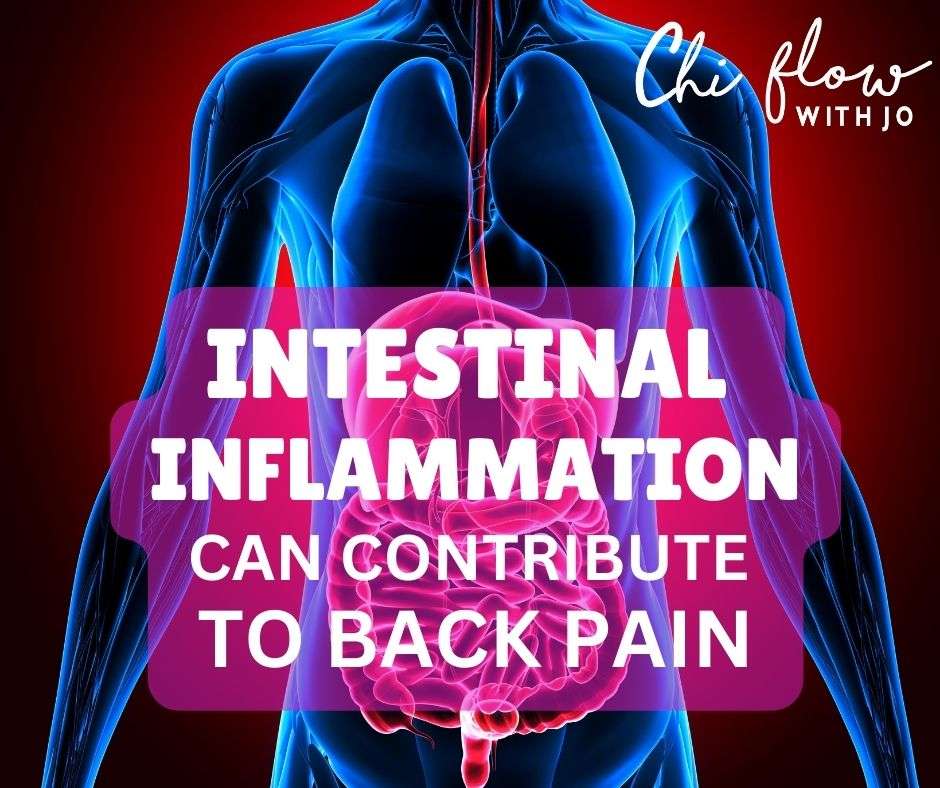
Did you know that intestinal inflammation can contribute to back pain? The nerves of your digestive system run through your lower spine, meaning bloating, period pain, or other abdominal issues can trigger discomfort in the back.
Fascia plays a crucial role here. This connective tissue surrounds your organs and muscles, and when it becomes tight, it can restrict movement and cause pain.
Qi Gong works to release these tensions, improve blood flow, and restore flexibility, creating a ripple effect of healing throughout the body.
Join us in Chi Flow with Jo as we focus on Dragon Qi Gong, a practice rooted in the Water Element of the 5 Element system. This ancient movement targets the Kidney Meridian, a key player in lower back health.
Benefits of Dragon Qi Gong:
♥ Fascia Health: Lengthens and softens fascia in the lower back, improving flexibility and reducing pain.
♥ Kidney Meridian Activation: Boosts Qi flow, essential for relieving back pain and promoting kidney health.
♥ Spinal Twist & Stretch: Counter-rotation combined with internal pressure from breath has an effect akin to wringing out a towel.

Simple Practices for Daily Kidney Care
♥ Stay Warm: Keep your back and feet cozy, especially during colder months.
♥ Hydrate & Nourish: Drink mineral-rich teas like Barley Water and Kukicha Tea to support digestion and kidney health.
♥ Try Ginger Soaks: Before bed, soak your feet in warm ginger-infused water to relax your body and promote warmth.
♥ Move Your Body: Gentle stretches, twists, and Qi Gong exercises prevent stagnation and enhance flexibility.
Empower Yourself with Chi Flow
You don’t have to suffer in silence or rely solely on conventional methods. Take responsibility for your health with Chi Flow with Jo—a holistic approach that integrates movement, acupressure, and food medicine.
Let’s get moving, healing, and flowing—together, every day in Chi flow with Jo.


Self-administered acupressure or Chinese Medicine is not a substitute for visits to qualified healthcare practitioners.
Knowing how to treat yourself and your loved ones with complimentary therapies like acupressure can be greatly beneficial and convenient. However, for serious and chronic conditions, you’ll want to visit an Shiatsu therapist / Acupuncturist or other qualified healthcare practitioner who can develop a treatment plan based on your unique medical history and combination of symptoms.
The information provided should not be considered medical advice.
WATCH & LISTEN TO THE
ENERGY UPDATE PODCAST