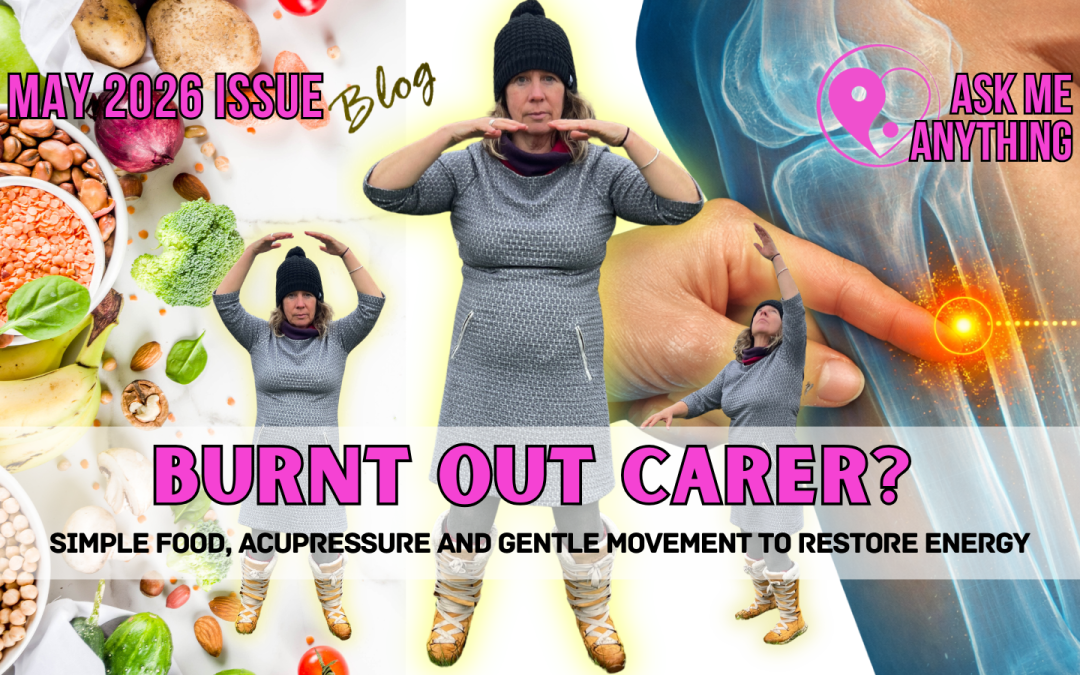
Burnt Out Carer? Simple Food, Acupressure and Gentle Movement to Restore Energy
Caring for someone you love can be one of the most meaningful roles in life. It can also be one of the most exhausting.
Many carers quietly carry physical pain, emotional stress and constant responsibility while trying to support a partner, parent or family member. Over time this can lead to caregiver burnout, where the body and mind simply run out of energy.
Recently I received a deeply moving question on the Ask Me Anything podcast.
“I have a fused spine, cervicogenic headaches, neuropathy and mild cauda equina syndrome and PTSD. But I’m living with my 91 year old Dad who has an inoperable gallstone, vascular dementia and now his prostate cancer has spread. So I’m looking for dietary advice for us both and exercise advice primarily for me but him too. Please help a burnt out carer.”
This question will resonate with many people caring for elderly parents or loved ones with chronic illness. When you are constantly caring for someone else, your own health can quietly move to the bottom of the list.
In Chinese medicine we look at this through the lens of energy flow.
When life becomes overwhelming the body’s energy slows down. Muscles tighten. Sleep becomes lighter. Pain becomes more noticeable. Over time the deeper reserves that support resilience become depleted.
The goal is not to fix everything at once. The goal is to gently restore movement, nourishment and calm to the body so energy can begin flowing again.
Below are three simple practices that can help support carers who are feeling exhausted or overwhelmed.
A Gentle Acupressure Point for Stiffness and Tension
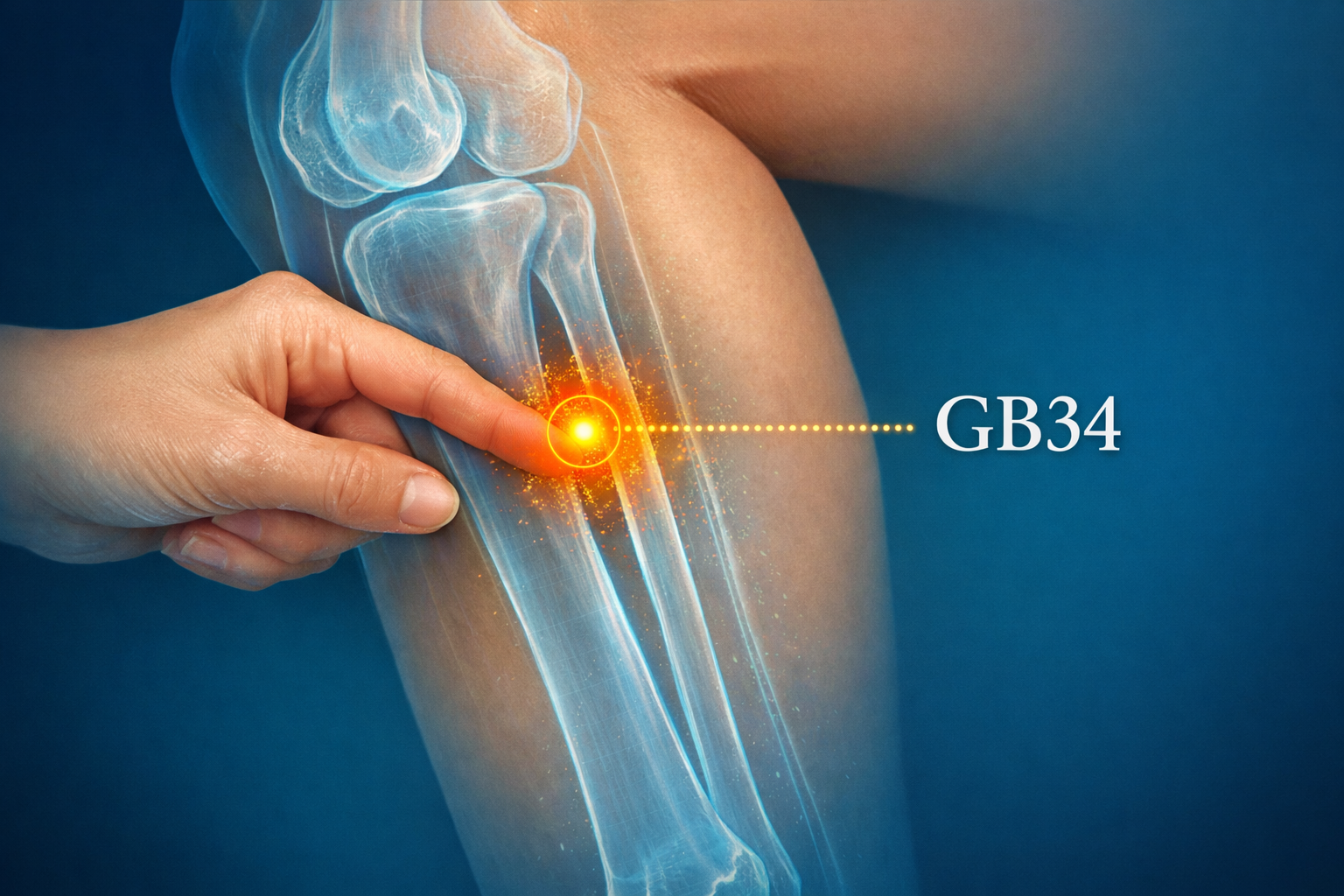
One helpful point is Gall Bladder 34 (GB34).
This acupressure point is traditionally used to support the muscles and tendons of the body and can help when stiffness builds up from stress or overwork.
You will find it on the outside of the lower leg just below the knee.
Run your hand down the outside of your thigh and stop just below the knee joint. Slightly forward of the small bone on the outside of the leg you will feel a soft dip. This is GB34.
Using your thumb, apply gentle steady pressure until you feel a comfortable ache. Hold for about one to two minutes on each side while breathing slowly.
The pressure should feel soothing rather than painful.
Doing this once a day can help the body soften and restore circulation through the muscles and joints.
Many people notice their legs, hips and back begin to feel slightly freer over time.
A Simple Nourishing Food For Enery and Nerves
When someone is exhausted from caring responsibilities, food should be warm, simple and nourishing.
One of the most supportive foods in this situation is bone broth.
In traditional Chinese medicine the bones and nervous system are linked to the Kidney system, which supports deep reserves of energy and resilience.
Bone broth provides minerals and nutrients that support the joints, nerves and immune system. It is also gentle on digestion, which is important when someone is under long term stress.
A simple way to make it is to simmer chicken bones or beef bones in water with a slice of ginger and a splash of apple cider vinegar for several hours.
The broth can then be stored in the fridge and enjoyed as a warm drink or used as the base for soups.
Even one small cup a day can provide nourishing support for both carers and elderly family members.

A Gentle Qi Gong Movement To Release Tension
When the body feels overwhelmed, the best exercise is often simple rhythmic movement rather than intense workouts.
A traditional Qi Gong practice called arm swinging (Ping Shuai) is particularly helpful for restoring circulation and relaxing the nervous system.
Stand with your feet about shoulder width apart.
Let your knees soften slightly and allow your arms to hang loosely by your sides.
Begin gently swinging your arms forward and back like pendulums.
Keep three things in mind:
Relax your jaw
Let your shoulders stay loose
Keep your knees soft
Start with two minutes and gradually increase to five minutes if it feels comfortable.
This gentle movement helps circulate energy through the body, warm the hands and relax the neck and shoulders.
For elderly people or those with limited mobility, a gentle seated version can also be calming.
Small Daily Practices for Burnt Out Carers
Caregiver burnout often develops slowly. The body adapts to long periods of stress until eventually it feels depleted.
Small daily practices can help restore balance over time.
Try creating a simple daily rhythm:
Press the GB34 acupressure point for a minute on each leg
Enjoy a warm cup of bone broth or nourishing soup
Spend two to five minutes doing gentle arm swinging
These small actions send a powerful signal to the nervous system that it is safe to soften and recover.
Support for Carers
If symptoms worsen, spread, begin waking you at night, or if medications change, it is always important to check in with your GP.
Supportive practices like acupressure, nourishing food and gentle movement work best alongside professional medical care.
If you are caring for a loved one while trying to maintain your own health, you are very welcome inside our Chi Flow community, where we practise gentle Qi Gong, breathwork and acupressure together each month.
Sometimes the smallest practices can make the biggest difference when energy begins to return.
What helps caregiver burnout naturally?
Gentle movement, nourishing warm foods, stress reduction and simple acupressure techniques can help support energy levels and reduce tension in the body. You can check acupressure resources in our new book Find Your Flow: Live Well With Parkinson’s.
What exercise is best for carers with chronic pain?
Low impact movements such as Qi Gong, walking and gentle stretching are often more supportive than intense exercise when the body is under long term stress.
What foods help restore energy when exhausted?
Warm nourishing foods such as soups, bone broth, stews and mineral rich vegetables can help support the body when energy is depleted.
Join the Free Class
If you are curious about Qi Gong for Parkinson’s, chronic illness, fatigue, or healthy ageing, you are warmly invited to try a free class.
You do not need experience. You do not need flexibility. You simply begin where you are.
👉 Join the Free Class and experience the Eight Brocades for yourself.
Continue the Journey
If you would like ongoing support, Chi Flow with Jo offers:
- Weekday live classes
- Full Eight Brocades training
- Acupressure guidance
- Food medicine insights
- Monthly health talks
- Community gatherings
It is €39 per month, reducing to €20 per month after three months. Just €1 per class.
👉 Join Chi Flow with Jo HERE.


Self-administered acupressure or Chinese Medicine is not a substitute for visits to qualified healthcare practitioners.
Knowing how to treat yourself and your loved ones with complimentary therapies like acupressure can be greatly beneficial and convenient. However, for serious and chronic conditions, you’ll want to visit an Shiatsu therapist / Acupuncturist or other qualified healthcare practitioner who can develop a treatment plan based on your unique medical history and combination of symptoms.
The information provided should not be considered medical advice.