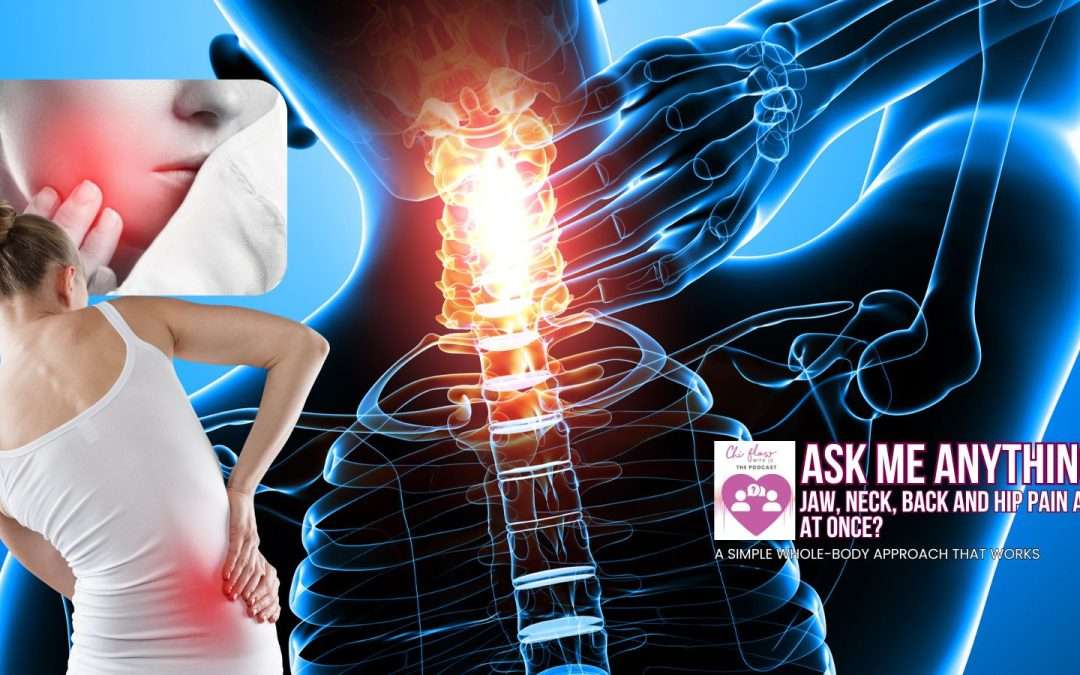
Jaw, Neck, Back and Hip Pain All at Once?
A Simple Whole-Body Approach That Works
When the jaw, neck, back, and hips all start calling for attention at the same time, it can feel confusing and overwhelming.
It is not just one area.
It is everything, tight yet weak, tired yet wired, with tension that keeps returning no matter what you try.
This pattern and combination is something I see often, especially in people dealing with fatigue, nerve sensitivity, or conditions like TMJ, back pain, or Parkinson’s.
And the truth is, this is not four separate problems. It is one connected system asking for support.
Why Everything Feels Tight and Weak at the Same Time
In Traditional Chinese Medicine, everything comes back to one question.
Is energy flowing, or is it stuck?
When the body is under pressure, it begins to brace.
- The jaw clenches
- The neck tightens
- The shoulders lift
- The back locks
- The hips grip
Underneath all of that, the body feels weak because energy is being used to guard, not support.
So instead of chasing each area separately, we look at the whole chain.
Very often, the jaw and base of the skull act like a “top gate.”
If this area is tight, everything below starts compensating.
A Simple Acupressure Practice to Release Tension
Rather than doing more and more, start with less, done consistently.
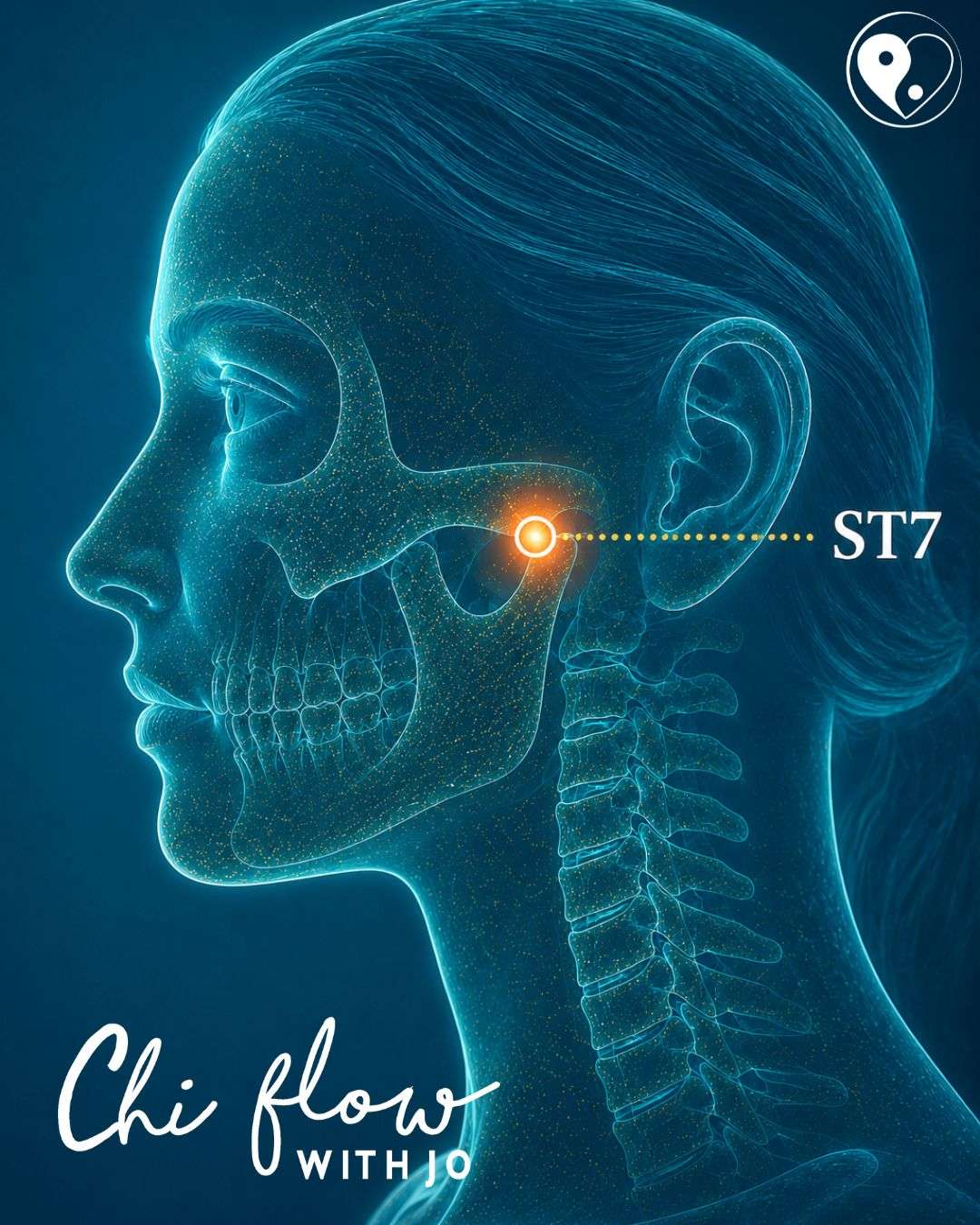
Stomach 7 (Jaw Point)
- Located just in front of the ear where the jaw moves
- Gently press into the hollow while relaxing the mouth
Stomach 7 is one of my favourite points because its effects often extend far beyond the jaw itself. While it is commonly used for TMJ discomfort, clenching, grinding, and facial tension, it also helps address the compensation patterns that develop throughout the body when the jaw becomes chronically tight.
The jaw is closely linked to the muscles of the neck, shoulders, and upper back. When we clench, we rarely do it in isolation. We tend to lift the shoulders, tighten the neck, hold the breath, and brace through the spine. By gently releasing Stomach 7, many people notice not only a softer jaw but also less tension around the temples, improved comfort around the ears, freer neck movement, deeper breathing, and a greater sense of relaxation through the shoulders.
In Chinese Medicine, the Stomach channel travels through the face and head, making this point particularly useful for reducing the feeling of being “held tight” through the entire upper body. I often find that when the jaw begins to let go, the neck follows, and when the neck softens, the rest of the body has an opportunity to reorganise itself with less effort.
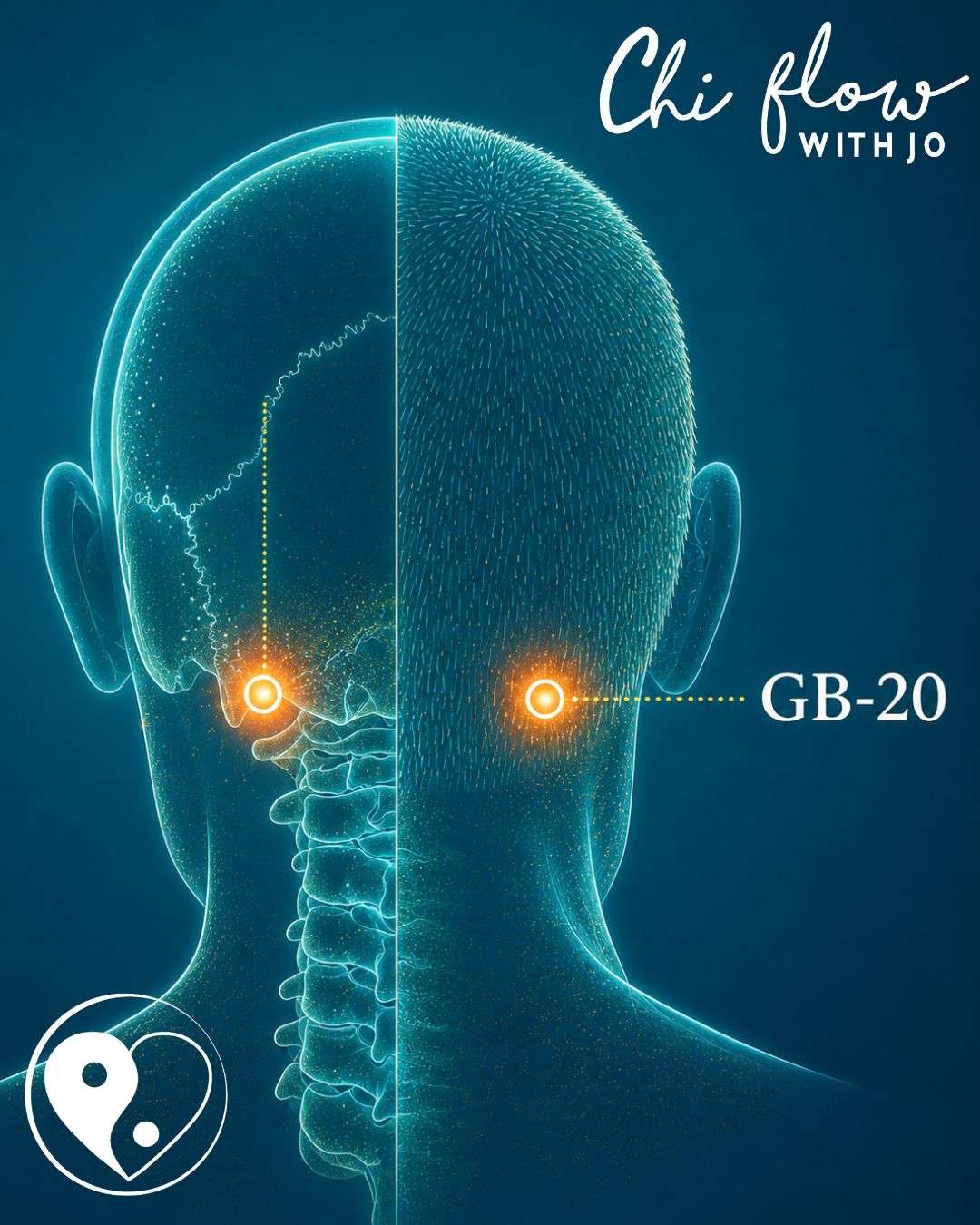
Gall Bladder 20 (Base of Skull)
- Found at the base of the skull, in two soft hollows either side
- Apply steady, gentle pressure with the thumbs
Gall Bladder 20 is one of the most important points for people who carry tension in the neck, jaw, shoulders, and head. Located in the two hollows at the base of the skull, it sits at a key meeting point between the head and the rest of the body. When this area becomes tight, it can create a feeling of pressure, pulling, heaviness, or congestion that radiates into the jaw, temples, neck, and upper back.
In Chinese Medicine, Gall Bladder 20 is traditionally used to encourage the smooth flow of energy through the head and neck, helping to release stagnation and restore movement where things have become stuck. Many people notice reduced head pressure, less neck stiffness, easier head movement, and a greater sense of mental clarity after working this point gently.
Because so many muscles attach around the base of the skull, releasing this area can also improve posture and reduce the strain travelling down through the spine. I often describe Gall Bladder 20 as opening the “top gate” of the body. When the base of the skull relaxes, the shoulders can drop, the breath can deepen, the jaw can soften, and the back and hips no longer need to work quite so hard to compensate.
For people experiencing that combination of tightness, fatigue, tension, and a feeling of being pulled out of alignment, Gall Bladder 20 can be one of the most powerful points for helping the entire body feel more connected and at ease.
This complements the Stomach 7 paragraph perfectly because ST7 addresses the front of the jaw mechanism, while GB20 addresses the back of the jaw-neck-head relationship, giving readers a much clearer understanding of why you use the two points together.
How to use them together
30 seconds on Stomach 7 each side
- 1 minute on Gall Bladder 20
- Keep the breath slow, jaw relaxed, shoulders soft
This is not about force.
With nerve sensitivity and TMJ, the body responds better to softness.
- Let the tongue rest softly in the mouth
- Let the eyes soften, as if looking into the distance
- Allow the jaw to hang naturally, not clench
Link this practice to something you already do, washing your face, removing earrings, or sitting down in the evening so that it is a daily connection to your body and it’s alignment. That is how the body learns and how it changes.
Food That Supports Nerves, Energy and Release
When the body feels tight but weak, we look at nourishment.
In Chinese Medicine, this often points to a need to support:
- Blood, which nourishes muscles and nerves
- Yin and fluids, which calm and soften
- The Spleen, which creates energy and stability
A simple, powerful option is:
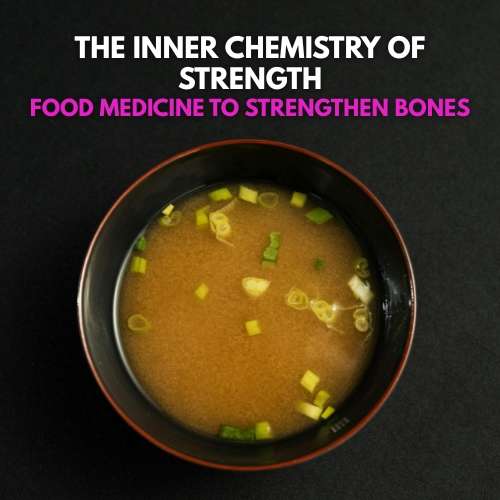
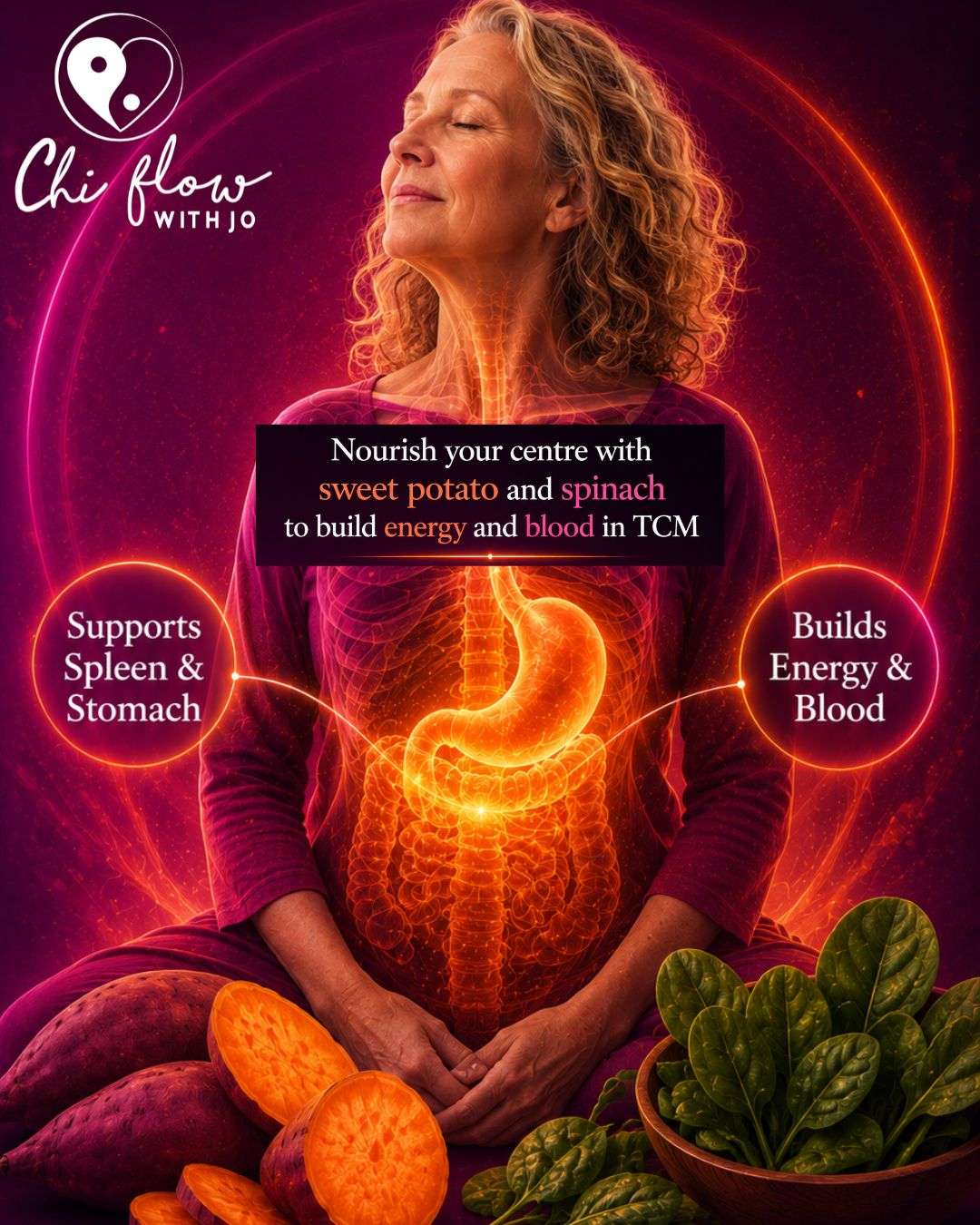
Spinach and Sweet Potato Soup
Why it works
- Sweet potato supports digestion and energy production
- Spinach nourishes the blood and tissues
- Warm, soft food helps the body move out of stress mode.Simple method
Cook chopped sweet potato in stock until soft, add spinach at the end, blend, and finish with olive oil and a pinch of salt.
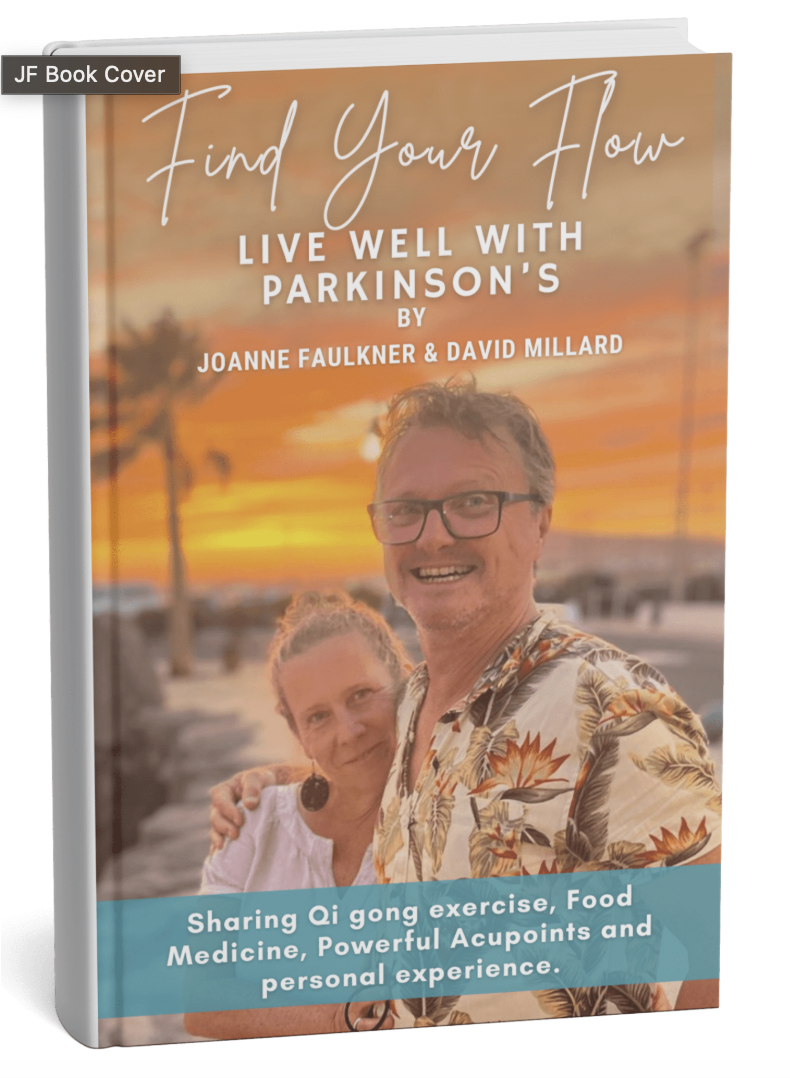
If you want to go deeper into how food connects to your body and symptoms, you will find the full Five Element system in my books and if you have Parkinson’s like my husband, Davy, take a look at the dedicated section on food in Find Your Flow, Live Well with Parkinson’s
Gentle Qi Gong for Alignment and Relief
Watch the movements demonstrated in the full podcast video below
1. Connect Heaven and Earth
This movement gently lengthens the spine and reduces pressure at the base of the skull.
It helps:
- Ease jaw tension
- Reduce head pressure
- Support posture without force
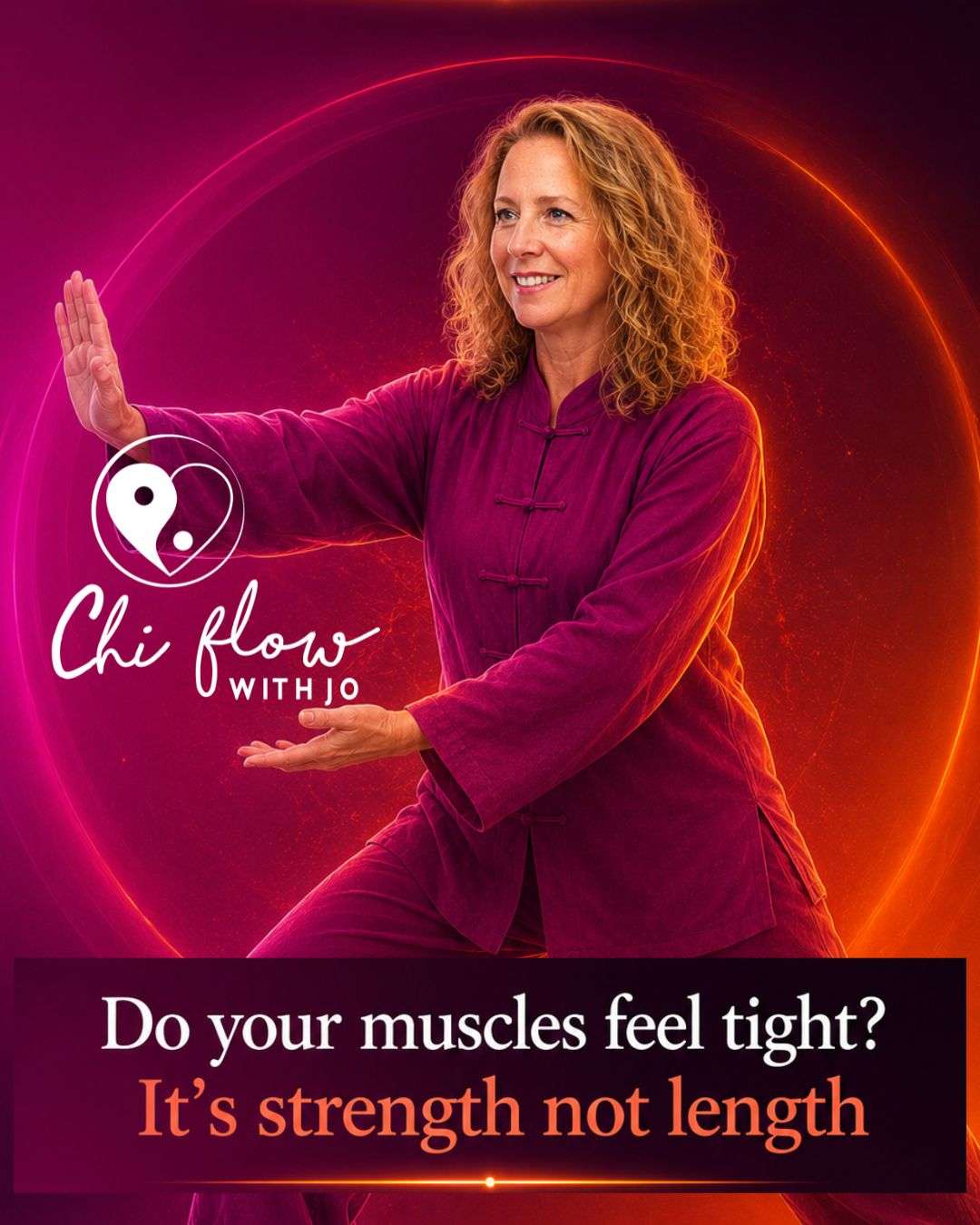
2. Embrace the Tree
This is one of the most powerful ways to feel whole-body alignment.
- The chest softens / The head lifts gently / The spine lengthens / The weight drops into the feet
Like a tree, strong yet flexible. This allows the jaw to soften, the neck to decompress, and the back and hips to share the load evenly.
Practice tip
Just 2 to 3 minutes is enough.
Stop before fatigue.
The goal is not effort, it is ease.
“A living being is tender and flexible; a corpse is hard and stiff.
It is the same with everything; leaves and grasses are tender and delicate, but when they die they become rigid and dry. Those who are hard and inflexible belong to death’s domain; but the gentle and flexible belong to life.”
What Real Alignment Feels Like
Alignment is not about forcing posture.
It is not: Shoulders back, Chest out, Belly tight
That often increases tension.
Real alignment feels like support with less effort.
- The head balances over the ribs
- The ribs soften over the pelvis
- The pelvis rests over the feet
- The breath moves freely
- The jaw lets go
This is where the body begins to feel safe again.

Practise With Me
If this resonates, come and practise with us inside Chi Flow with Jo.
A steady rhythm, simple daily LIVE classes, and a supportive community can help you reconnect with your body without overwhelm. Because healing does not come from doing more. It comes from doing the right things, gently, and consistently.
With Chi Flow with Jo, you will get:
- Weekday live classes
- Recordings you can follow anytime
- Q&A support
- Acupoints, food tips, and guidance
- A community moving with you
💛 It’s €39/month, reducing to €20 after your first 3 months.
Ready to Start?
Join Chi Flow with Jo and begin restoring your energy, and feeling more like yourself again.

Frequently Asked Questions
1. Why do my jaw, neck, back and hips all hurt at the same time?
Because the body works as one connected system. When tension builds at the top, especially around the jaw and base of the skull, it creates compensation patterns through the spine, back, and hips.
- 2. Is it better to stretch or strengthen when I feel tight but weak?
- Neither aggressively. When the body feels both tight and weak, it is often in a protective state. Gentle acupressure, soft movement, and nourishment help restore balance before stretching or strengthening becomes effective.
3. Can food really help with nerve pain and tension?
- Yes. In Chinese Medicine, food supports the internal environment of the body. Warm, nourishing foods help build blood, calm the nervous system, and reduce the “tight but weak” feeling by giving the body the resources it needs to relax and repair.
- When to Seek Medical Support
- If you are experiencing:
- High heart rate
- Persistent head pressure
- Weakness or nerve symptoms
- Changes in medication response
Please speak with your GP. These practices work beautifully alongside medical care, not instead of it.

Go Deeper with Our Books
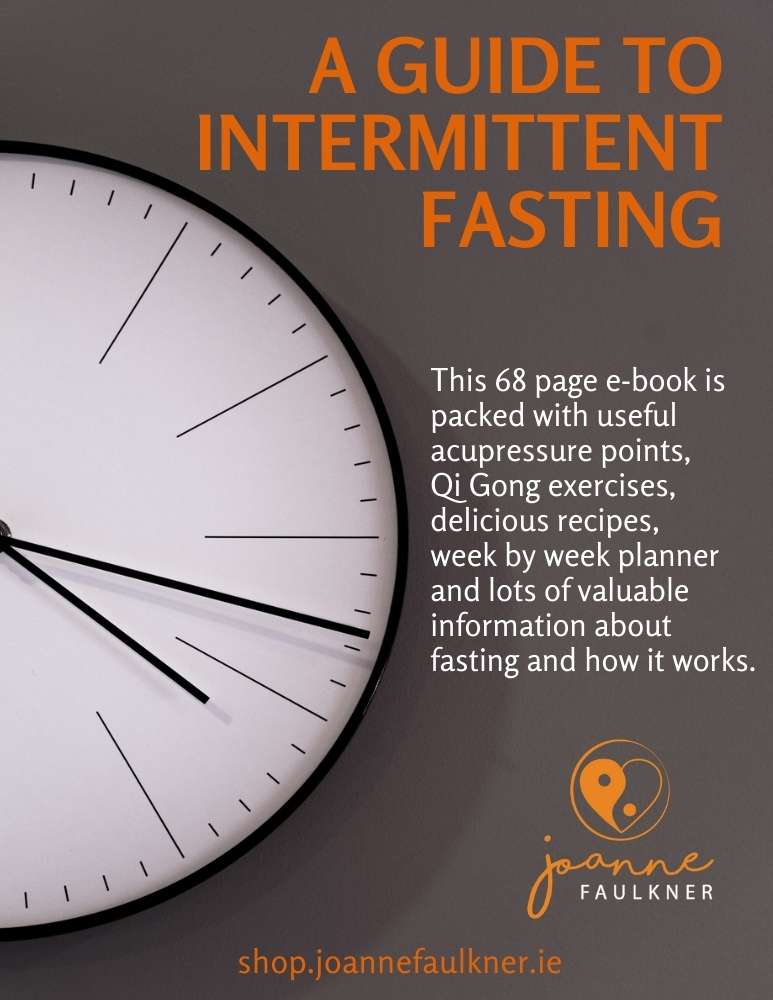
For those wanting to understand how movement, breath, and Chinese Medicine principles, Jo’s books provide practical guidance rooted in lived experience and clinical wisdom.
👉 Buy Five Element Wisdom cookbooks
Explore how to Find Your Flow and Live Well with Parkinson’s.
Movement does not need to be extreme to be powerful.
Small daily expansion reshapes the body.
Steady breath reshapes the nervous system.
Gentle repetition rebuilds confidence.
Every human body carries extraordinary capacity for renewal when given the right rhythm.
If April is asking you to soften into strength, come and practice with us.
Self-administered acupressure or Chinese Medicine is not a substitute for visits to qualified healthcare practitioners.
Knowing how to treat yourself and your loved ones with complimentary therapies like acupressure can be greatly beneficial and convenient. However, for serious and chronic conditions, you’ll want to visit an Shiatsu therapist / Acupuncturist or other qualified healthcare practitioner who can develop a treatment plan based on your unique medical history and combination of symptoms.
The information provided should not be considered medical advice.
Topics: Breathwork, Parkinson’s support, sleep practices, Qi Gong, acupressure.