HIP PAIN IN MENOPAUSE

HIP PAIN IN MENOPAUSE

How to Restore Flow Through the Hips with Qi Gong, Acupressure and Food:

Hip pain is often the body whispering that something in the centre of us has stopped moving.

Many women notice new aches appearing around the hips during midlife. Sometimes it begins after lifting something heavy or caring for children. Other times it appears gradually and doesn’t seem to go away.

In this article we explore:

  • Why hip pain can increase during menopause
  • The connection between hormones, the liver and joint health
  • How fascia and the nervous system affect hip tightness
  • Two powerful acupressure points for restoring flow
  • A simple Qi Gong movement to open the hips
  • A food that supports liver function and circulation

These approaches combine Chinese medicine, modern fascia science, and gentle Qi Gong movement to help the body return to balance.

Why Hip Pain Often Appears During Menopause

In Western medicine we are increasingly hearing about the relationship between hormonal changes and connective tissue health.

During menopause, oestrogen levels decline. Oestrogen helps regulate collagen production and tissue elasticity, so when levels drop the body can experience:

  • tendon stiffness
  • joint pain
  • reduced tissue repair
  • inflammation

At the same time, the liver plays a key role in metabolising hormones. If liver function becomes sluggish, hormones may not be processed efficiently, which can influence circulation, inflammation and tissue health.

The result can be stiffness and discomfort in areas such as the hips, shoulders and lower back.

The Chinese Medicine View: The Liver Controls the Tendons

Chinese medicine has described this connection for thousands of years.

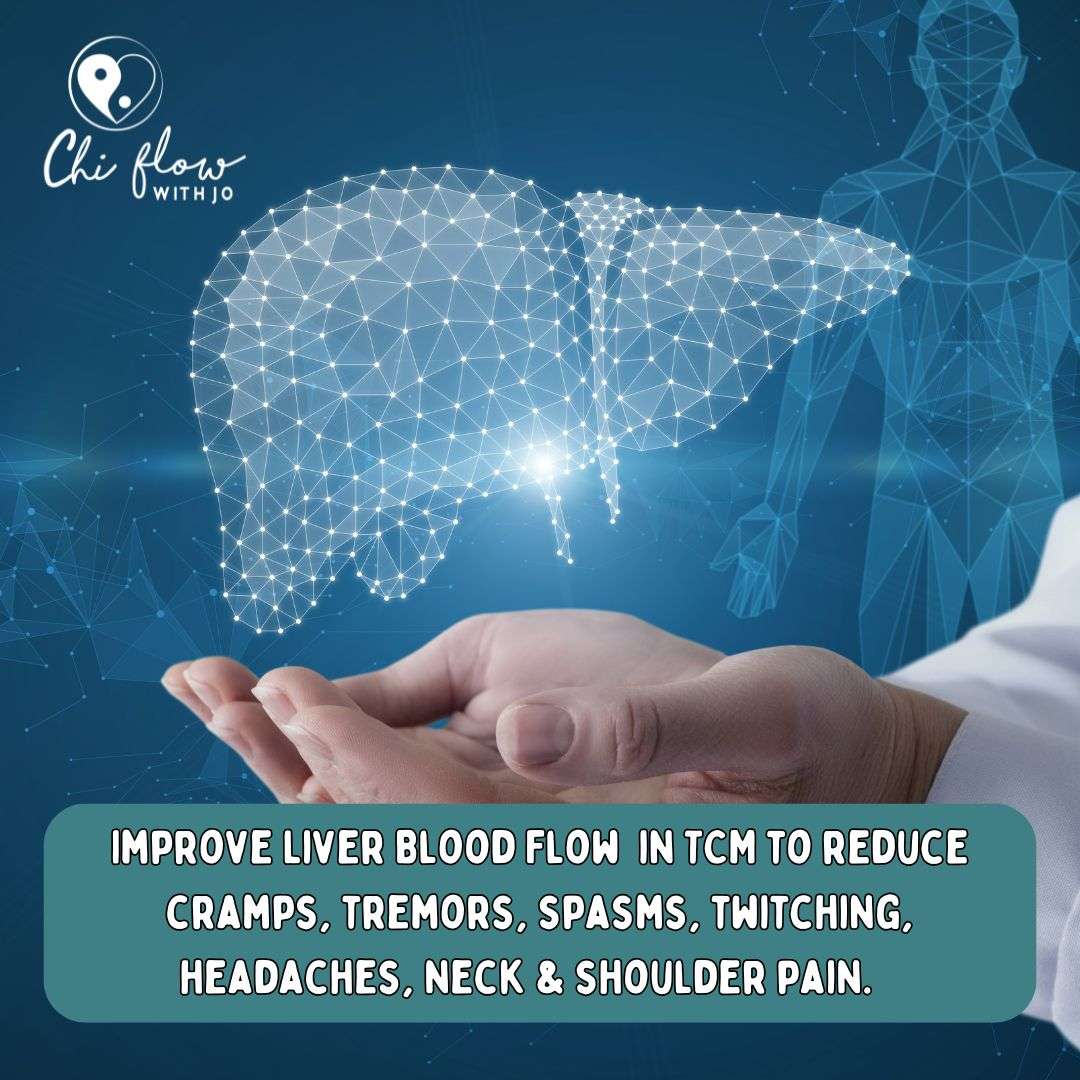
In Traditional Chinese Medicine, the Liver system governs the smooth flow of Qi (energy) and Blood throughout the body, particularly through the tendons and joints.

When Liver energy flows smoothly:

  • joints feel flexible

  • muscles move freely

  • circulation is strong

But when Liver Qi becomes stagnant:

  • muscles tighten

  • tendons lose elasticity

  • pain and stiffness appear

The hips are especially important because several major energy pathways pass through them. When the Liver system becomes sluggish, the hips often become one of the first places we feel restriction.
Fascia, Stress and Why Tight Hips Need Safety to Release

Modern research into fascia is beginning to confirm something Chinese medicine has long understood.

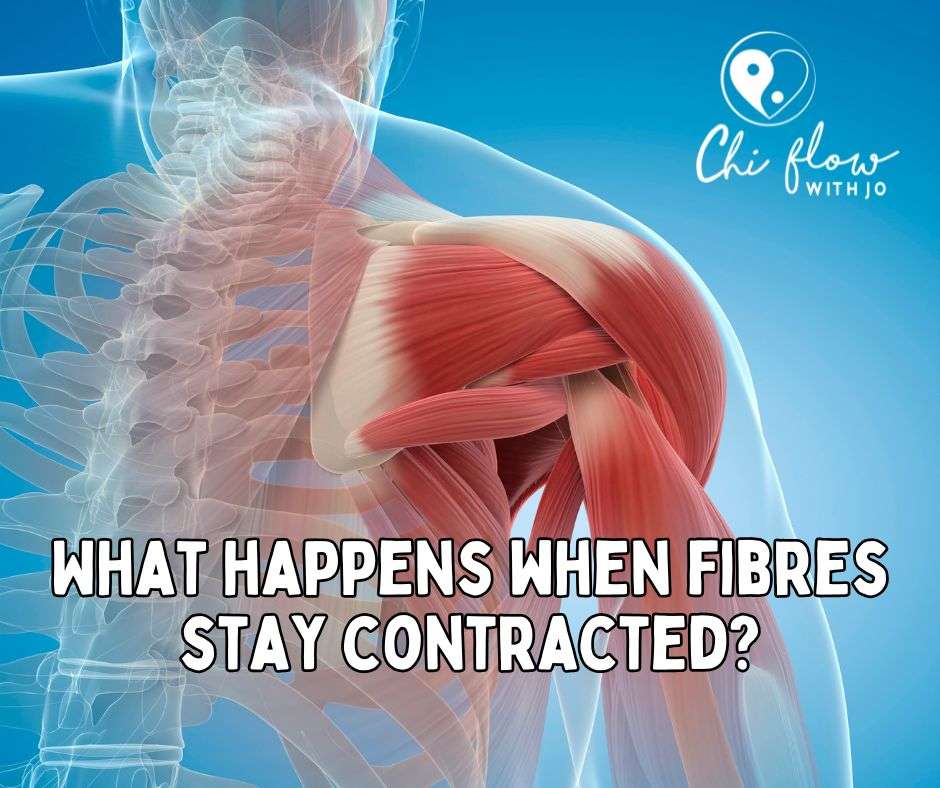
Fascia is the connective tissue web that wraps around muscles and organs throughout the body. When fascia is weak, overstretched or overloaded, it tightens as a protective response.

This can happen when:

  • lifting or carrying heavy loads
  • repetitive movements
  • long periods of fear or stress
  • Lack of movement


  • But fascia does not release when stretched or forced, as ligaments, tendons and muscles can.

    It releases when the nervous system feels safe.

    This is why gentle practices like Qi Gong are so effective. Slow, rhythmic movement combined with relaxed breathing sends signals of safety to the nervous system. Once the body feels safe, the fascia can soften and lengthen again.

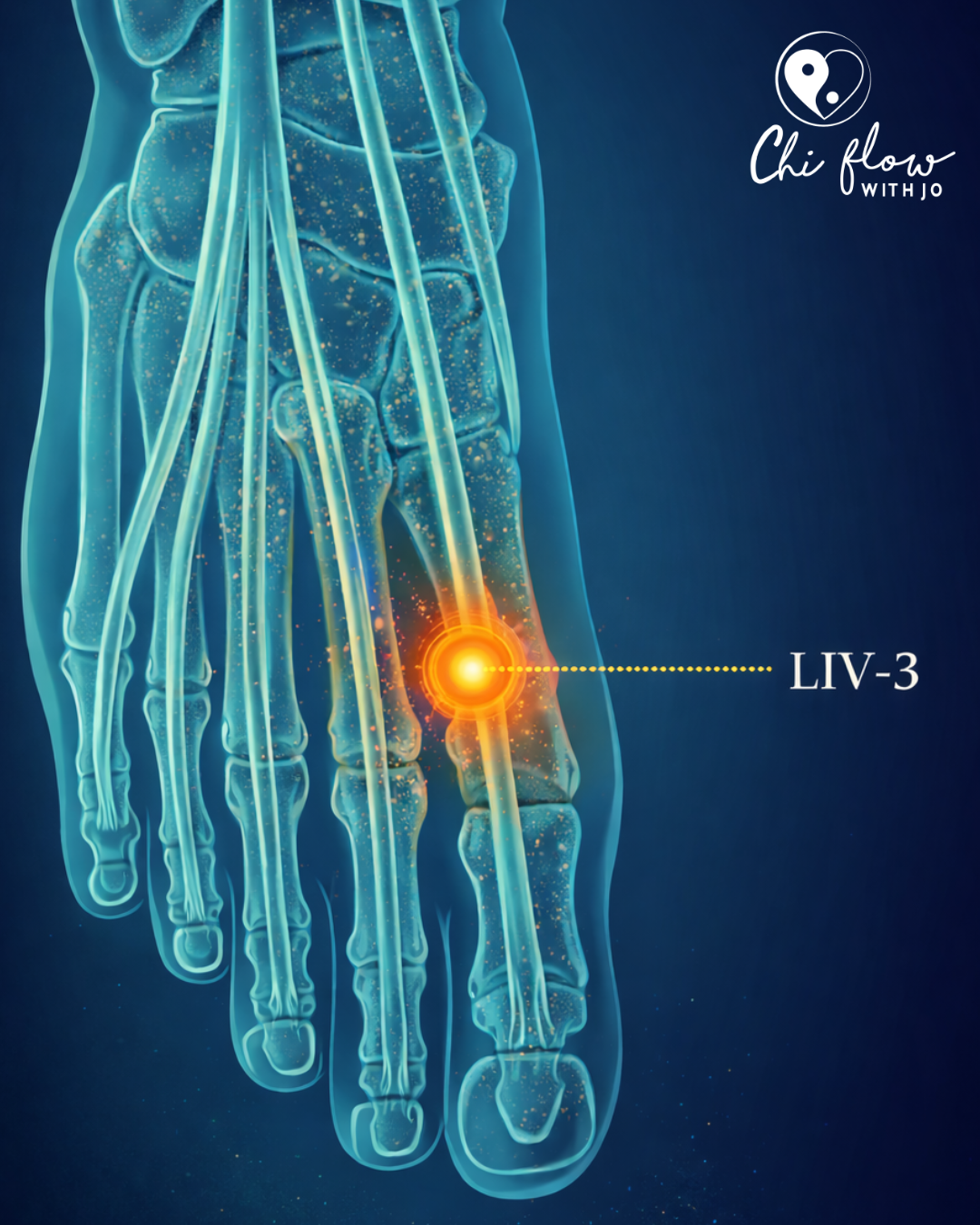
Acupressure Point: Liver 3 for Hip Pain and Stagnation

One of the most effective acupressure points for releasing stagnation in the hips is Liver 3 (Taichong).

How to find Liver 3

  1. Look at the top of the foot.
  2. Find the space between the big toe and second toe.
  3. Slide your finger up about an inch from the webbing until you feel a small dip between the bones.

How to use it

Press gently with your thumb until you feel a mild dull ache.

Hold the point while breathing slowly for 1–3 minutes.

This point is widely used in Chinese medicine to:

  • move stagnant Liver Qi

  • improve circulation to the legs and hips

  • reduce tension in the tendons

When this pathway begins to flow again, tightness through the hips often eases.
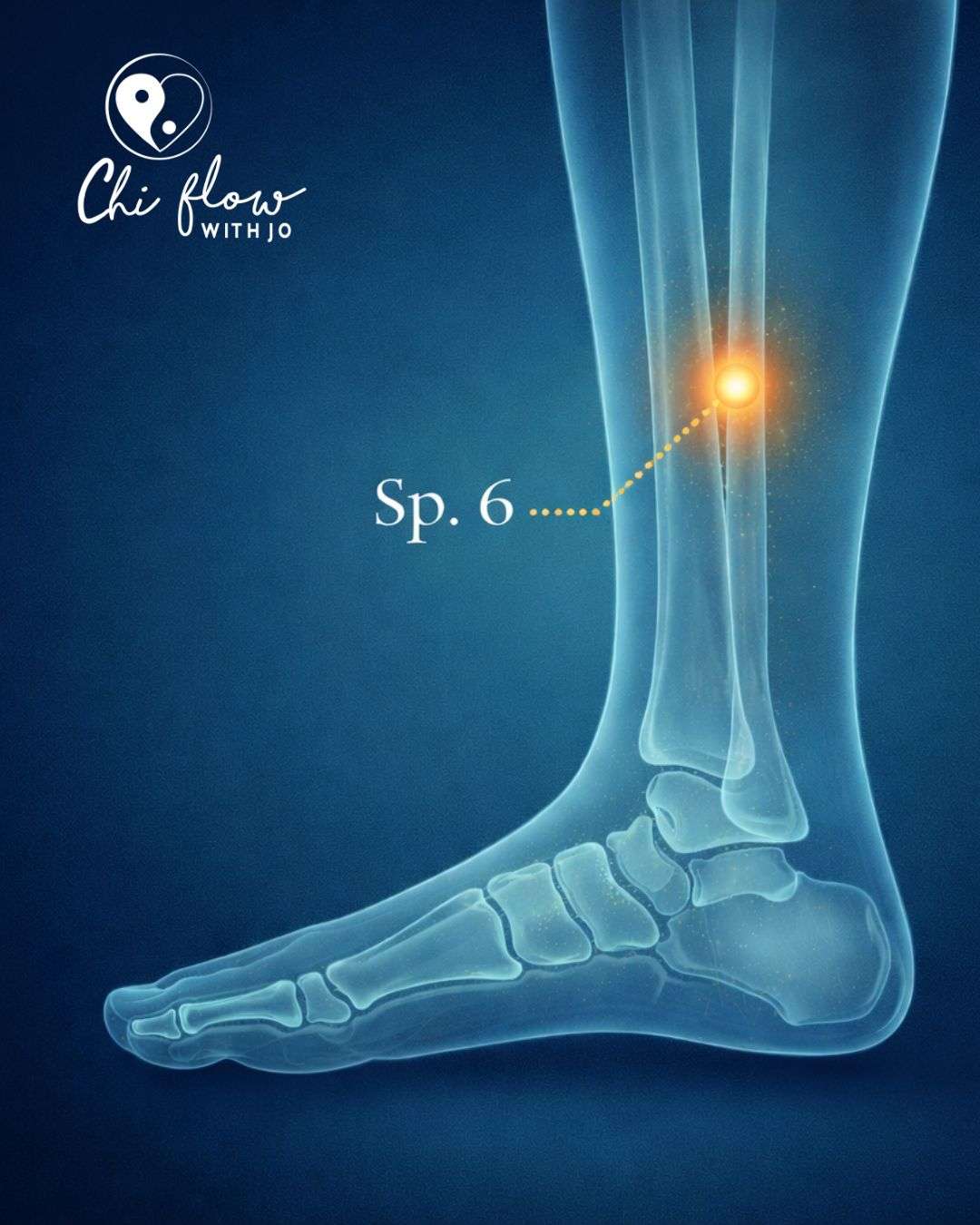
Acupressure Point: Spleen 6 to Increase Blood Flow in the Lower Abdomen

Another powerful point is Spleen 6 (Sanyinjiao).

How to find Spleen 6
Locate the inner ankle bone. 
Measure four finger widths up the leg.
Just behind the shin bone you will find a tender point.

How to use it:
Press gently for about one minute while breathing slowly.
Spleen 6 influences three major energy systems:

  • Liver
  • Spleen
  • Kidney

This point helps increase the movement of blood and energy through the lower abdomen and pelvis, nourishing the hips and lower body.

Because it strongly activates blood flow in the lower abdomen, Spleen 6 should not be used during pregnancy.

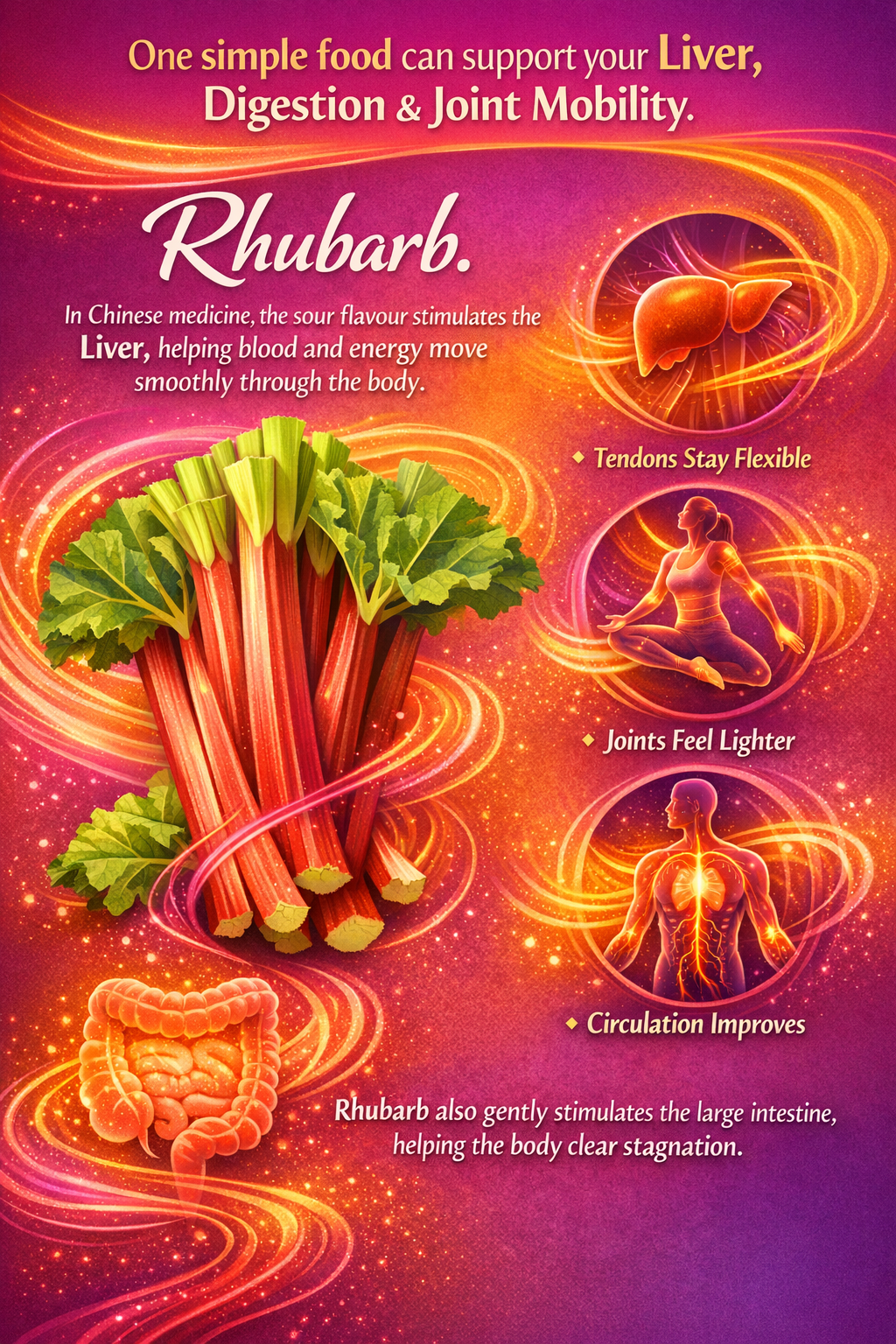
A Seasonal Food That Supports Liver Function: Rhubarb

Food can also help restore flow in the body.

In Chinese medicine the sour flavour stimulates the Liver, encouraging blood and energy to move more smoothly.

Rhubarb is a wonderful seasonal food for this purpose.

Benefits of rhubarb include:

  • supporting liver function
  • encouraging healthy elimination through the large intestine
  • reducing stagnation in the body

Simple Stewed Rhubarb Recipe

  1. Chop several stalks of rhubarb.
  2. Place in a saucepan with a small amount of water.
  3. Simmer gently until soft.
  4. Add a slice of apple if you like a little sweetness.

A small bowl a few times per week can gently support the Liver and digestion.

When digestion flows well, joints often feel lighter and more flexible.
Qi Gong for Hip Mobility: Opening the Kua

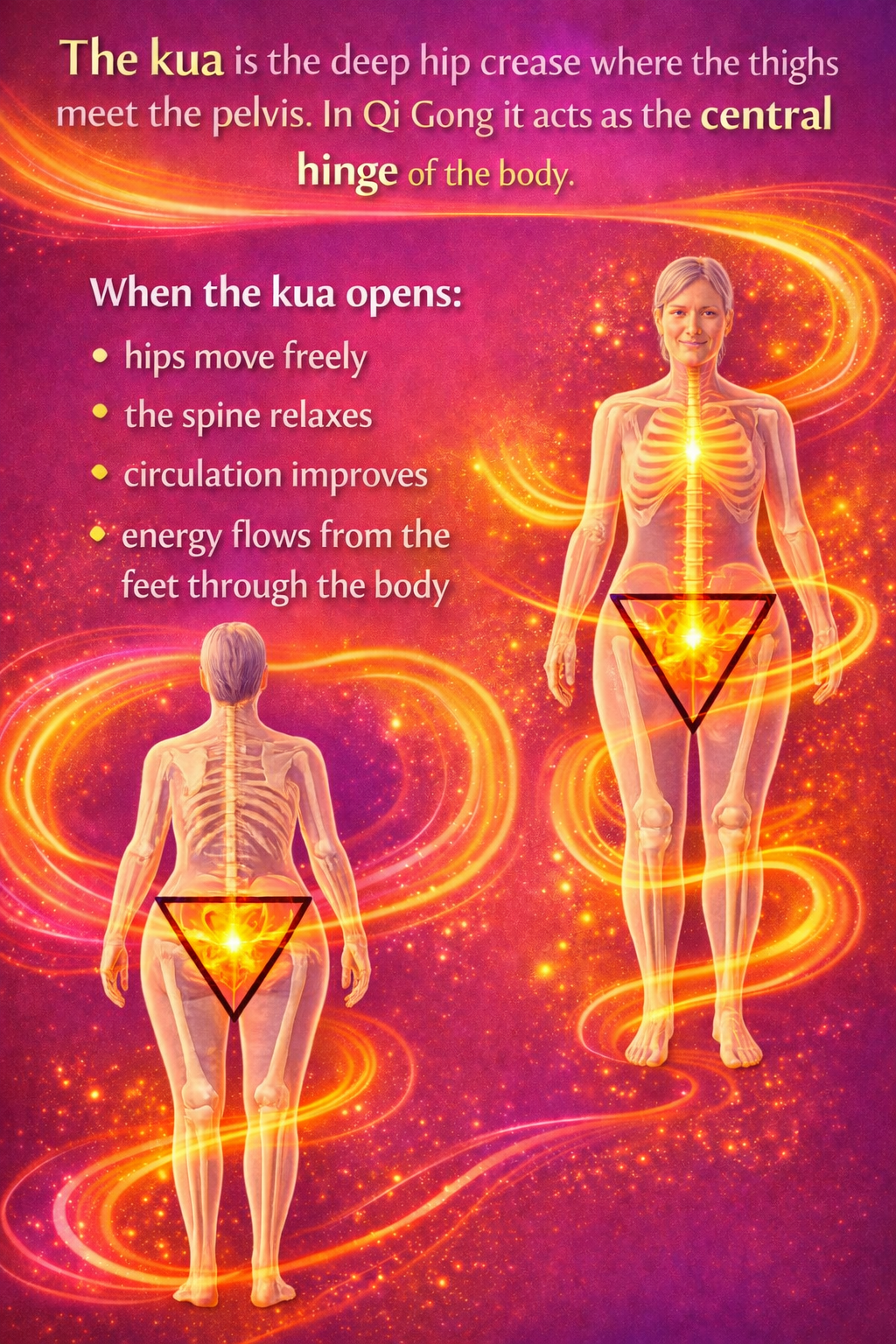
In Qi Gong we often talk about opening the kua.

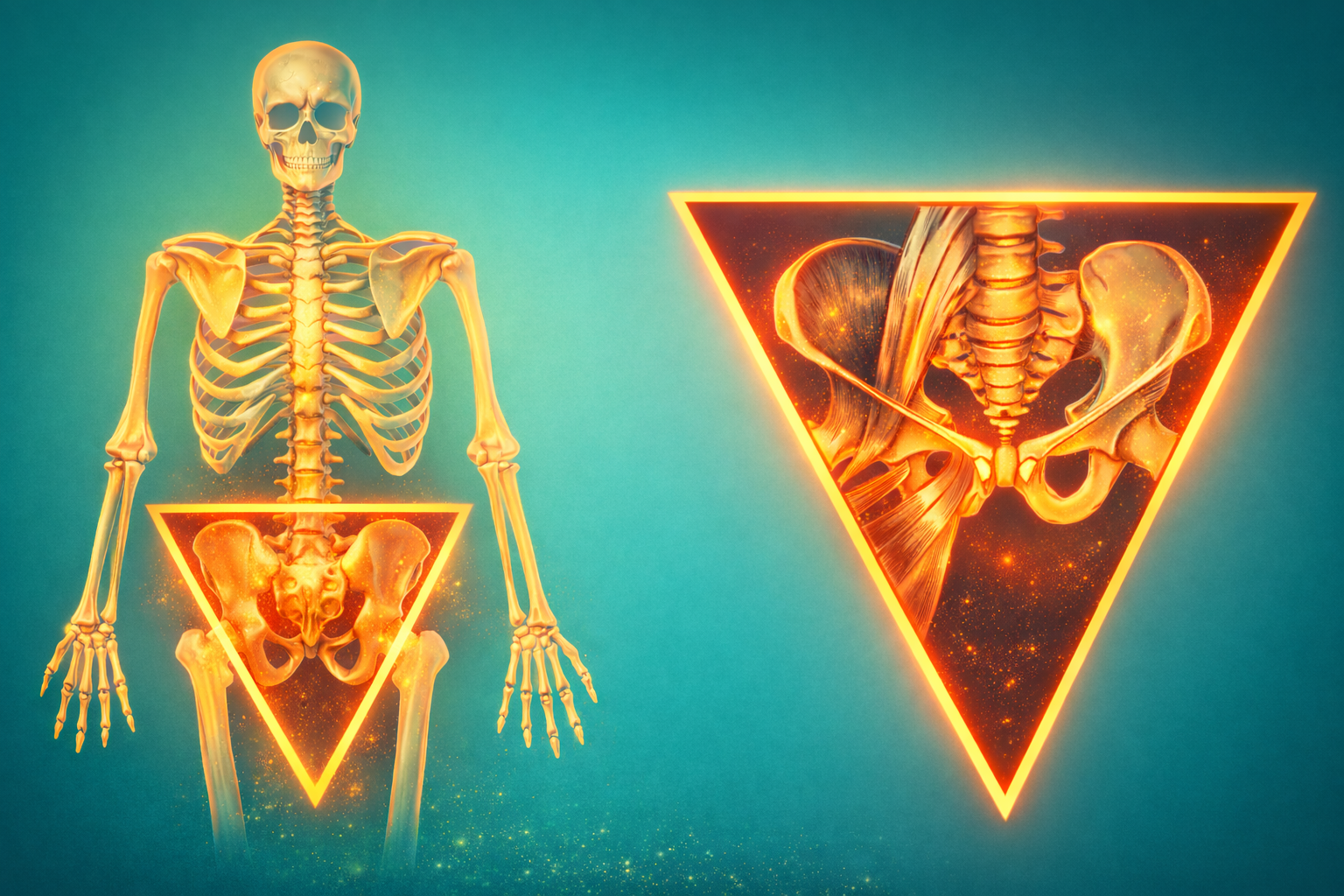
The kua refers to the deep hip crease where the thighs meet the pelvis. It encompasses the surrounding musculature, including the iliopsoas (hip flexors), adductor muscles (inner thigh), and the pelvic floor. It acts as the central hinge of the body, allowing movement to travel between the upper and lower body.

When the kua moves freely:

  • the hips open naturally 
  • walking becomes smoother 
  • the spine and legs coordinate better
  • Qi flows from the feet into the body

Interestingly, the inguinal crease also contains one of the highest concentrations of lymph nodes in the body, so opening the kua can help support lymphatic circulation.
How to Practise the Kua Opening Movement

  1. Stand with your feet wider than shoulder width.
  2. Bend the knees gently and settle into a relaxed horse stance.
  3. Keep the spine upright and the crown of the head lifting lightly upward.
  4. Allow the shoulders to relax.

Now bring awareness to the hip crease.
Turn one foot slightly outward.

As the foot turns outward, allow the waist and hips to rotate gently in the opposite direction.

This creates a spiral through the hips.
You may feel one hip crease opening while the other softly closes.
Return to centre and repeat on the other side.
Continue slowly from side to side.

Three key cues

  • Keep the knees soft so the hips can release.
  • Let the waist guide the movement rather than the shoulders.
  • Move slowly enough to feel the hip crease opening and closing.

Just one or two minutes of this gentle turning can release significant tension through the hips and pelvis.

Over time it helps:

  • soften fascia
  • improve pelvic circulation
  • increase Qi flow in the lower dantien

When Movement Isn’t Enough: Releasing Tension Through Safe Touch

Sometimes hips feel extremely tight or guarded.

This can happen because the pelvis often stores emotional memory and protective tension.

In these cases, gentle physical touch can help the nervous system relax.

Some people find practices such as yoni massage or pelvic self-massage helpful. This involves bringing respectful, loving touch to the lower abdomen and pelvic area.

Safe physical touch can:

  • reduce shame held in the pelvis
  • calm the nervous system
  • release stored tension or trauma

The goal is not forcing change but allowing the body to feel safe enough to soften.

A Simple Weekly Routine for Hip Pain Relief

Try this gentle routine for one week:

  • Press Liver 3 once daily on each foot
  • Press Spleen 6 for one minute on each leg
  • Eat stewed rhubarb a few times during the week
  • Practise kua opening Qi Gong for a few minutes daily

Small daily signals like these can gradually restore circulation and ease hip stiffness.
When to Seek Medical Advice

If hip pain:

  • worsens significantly
  • spreads down the leg
  • wakes you at night
  • causes difficulty walking

you should consult your GP or physiotherapist to rule out structural issues.

Restore Flow and Ease Through the Hips

Many cases of hip pain are not simply mechanical problems. They reflect stagnation in circulation, fascia tension, and nervous system protection.

When we nourish the liver, move gently, and help the body feel safe, the hips often begin to soften naturally.

As I often say:

When the liver flows, the hips follow.

If you’d like to learn more gentle practices like this, you can join the Chi Flow membership, where we practise Qi Gong movements for mobility, energy and longevity together each week.

Sometimes the biggest healing begins when the body finally feels safe enough to soften.

Join the Free Class

If you are curious about Qi Gong for Parkinson’s, chronic illness, fatigue, or healthy ageing, you are warmly invited to try a free class.

You do not need experience. You do not need flexibility. You simply begin where you are.

👉 Join the Free Class and experience the Eight Brocades for yourself.

Continue the Journey

If you would like ongoing support, Chi Flow with Jo offers:

  • Weekday live classes
  • Full Eight Brocades training
  • Acupressure guidance
  • Food medicine insights
  • Monthly health talks
  • Community gatherings

It is €39 per month, reducing to €20 per month after three months. Just €1 per class.

👉 Join Chi Flow with Jo HERE.

Self-administered acupressure or Chinese Medicine is not a substitute for visits to qualified healthcare practitioners.

Knowing how to treat yourself and your loved ones with complimentary therapies like acupressure can be greatly beneficial and convenient. However, for serious and chronic conditions, you’ll want to visit an Shiatsu therapist / Acupuncturist or other qualified healthcare practitioner who can develop a treatment plan based on your unique medical history and combination of symptoms.  

The information provided should not be considered medical advice.
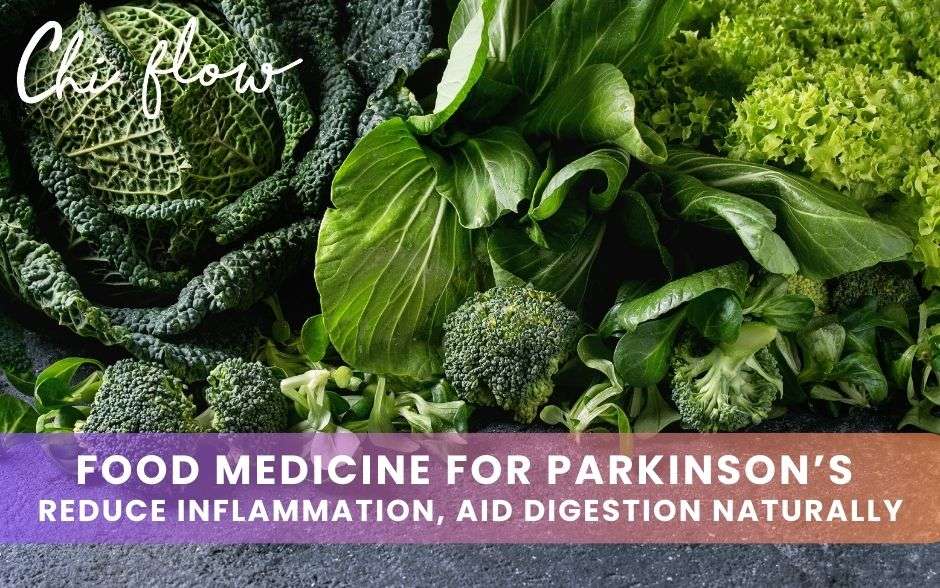
Food Medicine for Parkinsons

Food Medicine for Parkinsons

For the month of May, in Chi Flow with Jo we are going to be covering Qi Gong, Acupressure and Chinese Medicine that can help you manage Parkinson’s or caring for someone with Parkinson’s. At present there’s no known cure for Parkinson’s and there’s no pinpoint diagnosis that they can give as to why Parkinson’s occurs. 

What we’re going to do in Chi Flow with Jo is give you Qigong, acupressure and food medicine to help alleviate some of the symptoms and find ease in your body.  (find list of foods at the end of this blog and more in my five element cookbooks)  

Plus read to the end and receive the free mini ebook dedicated to living well with Parkinsons.

My husband, Davy was diagnosed with Parkinson’s nine years ago; as a Qi Gong teacher and Chinese Medicine Practitioner, he and I work together so that he sleeps well, maintains flexibility, balance and strength plus working on the emotional aspects that are not so visible. 

He practices Qi Gong every day in Chi Flow with Jo which helps him live with ease, confidence and flow, physically and emotionally.

As his partner, I find strength and support in having my own practice, which strengthens loving compassionate kindness, knowing my limits and how to stay healthy.

From a Chinese medicine point of view, Parkinson’s, stroke, and other neurological disorders such as dizziness, vertigo, bell’s palsy, and uncontrollable spasms would be a symptom of invading wind. 

Western medicine is not familiar with climates such as wind and dampness affecting the body but TCM is a holistic medicine. It considers the human body and how it interacts with its environment as a whole. Diseases are attributed to an imbalance between the five different elements found in nature and in the body. 

In Taoism and Chinese Medicine our life force energy is made manifest in this particular body for this particular lifetime. We are no different to a tree or a blade of grass.  Same life force energy, just different collection of cells and therefore manifestation.  To promote flow and even flow of energy we can use this life force energy when working with the body.

The term ‘climate’ in traditional Chinese medicine (TCM), refers to internal and external agents that can cause disease.  Each of these climatic forces has a specific action on the body, depending upon their characteristics. Balance and harmony of these climates means good emotional and physical health. 

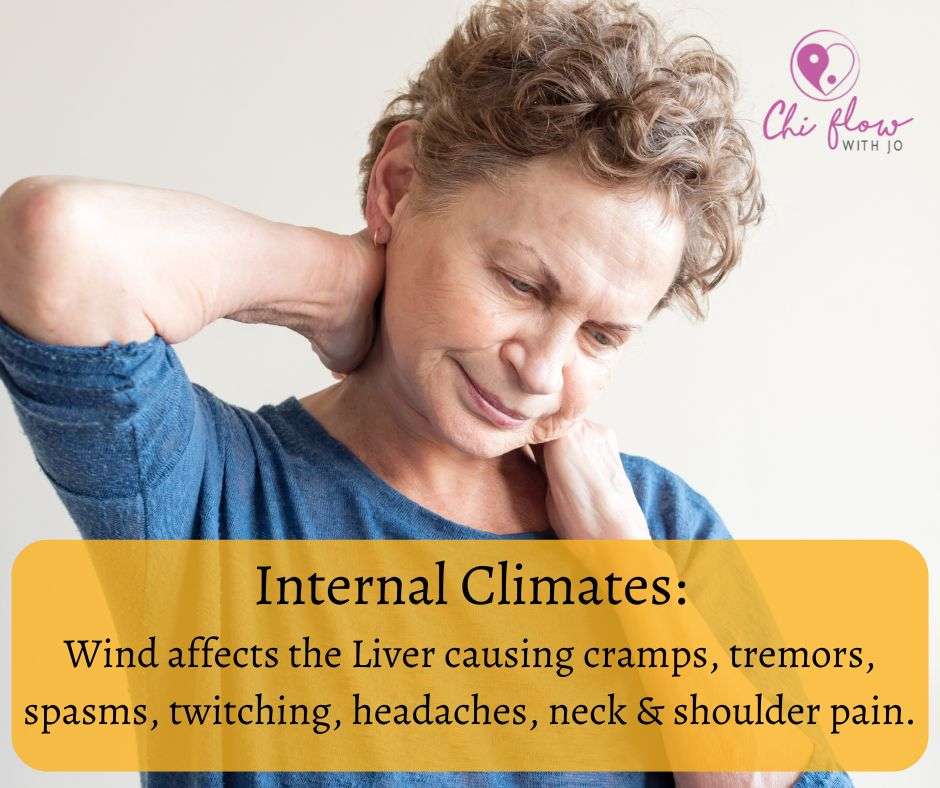
Wind affects the Liver often working with the other internal climates to invade the body, moving energy, pathogens and symptoms erratically causing tremors, spasms and twitching. 

Cold affects the Kidney creating contraction, obstructions and slow movement of Chi causing cramps and sharp pain. 

Heat affects the Heart causing erratic movement of Chi and often associated with inflammation, redness of skin, irritability and inability for the Shen/Spirit to settle. 

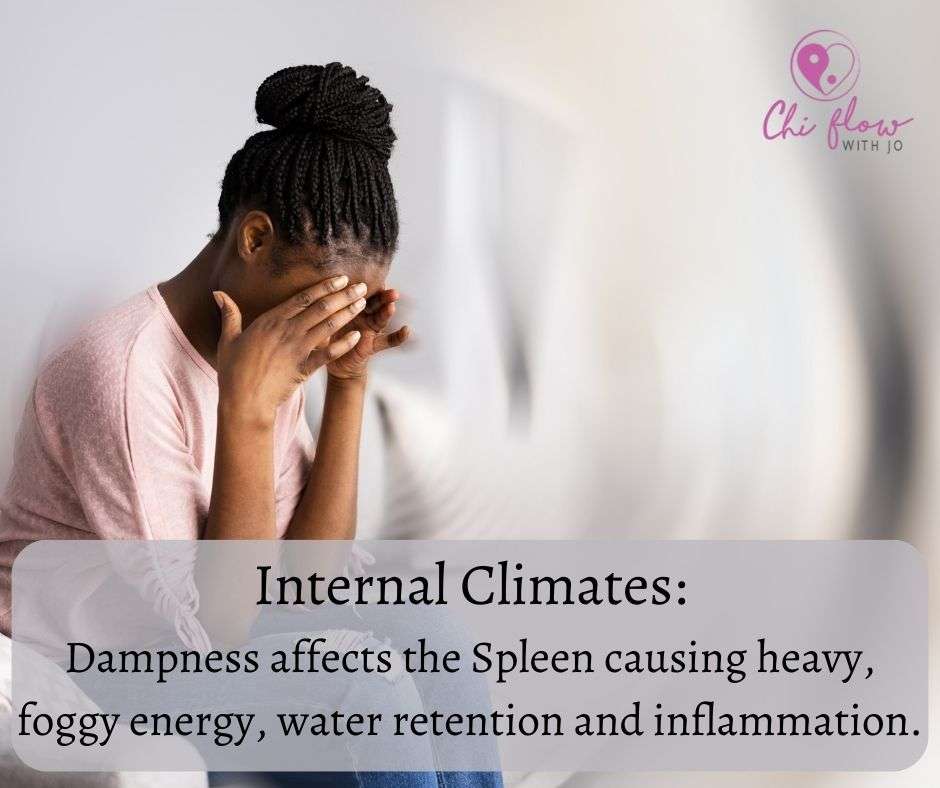
Dampness affects the Spleen causing heavy and foggy energy, generating sticky secretions and protracted, dense pain especially in the middle and lower burner, inability to transform and transport food into energy. 

Dryness affects the Lung causing dehydration and scant body fluids especially in the mucous membranes of the body including lungs, nasal cavities, digestive tract, skin, hair and nails.

Wind can bring great chaos to the body.  Symptoms come and go without warning.

If you have ever been out on a very windy day you will know it can be difficult to think straight.  Wind moves and shakes things that should be still. It produces change and acceleration in what otherwise should be steady and slow. 

With wind, things appear and disappear quickly. It causes tremors and spasms. You can’t control the muscles; the sinews contract leading to cramps and tightness and that can give you kind of vertigo. Any kind of dizziness and headaches and even a stiff neck are also included in the symptoms of wind. 

Wind is an exhilarating force.  It shows us how unpredictable and unstoppable nature can be.  You can’t trap wind in a box; it will have its flow and move where it wishes.  However, only when the Yin Yang balance is weak can this pernicious force enter and cause damage to the body.

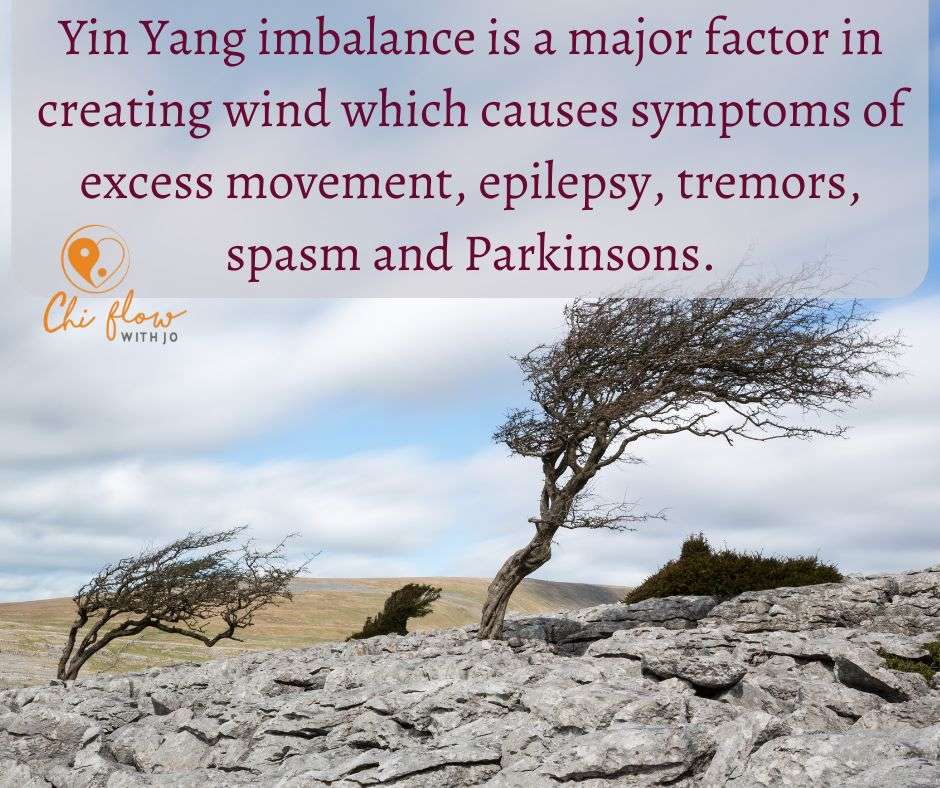
In terms of Chinese Medicine we can translate this as a yin deficiency/weakness causes a rise in excess yang.

Yang is hot and active whereas Yin is cool and calm.  This imbalance is a major factor in creating internal wind which causes symptoms of excess movement, epilepsy, tremors, spasm and Parkinson’s.

So how can we calm this crazy demon wind?  Firstly by strengthening the YIN in the body.  Blood is a YIN FLUID nourishing, cooling and calming. 

In TCM we not only focus on the functions and cellular make up of blood but the very quality of blood itself which cool and nourishes all the organs.  

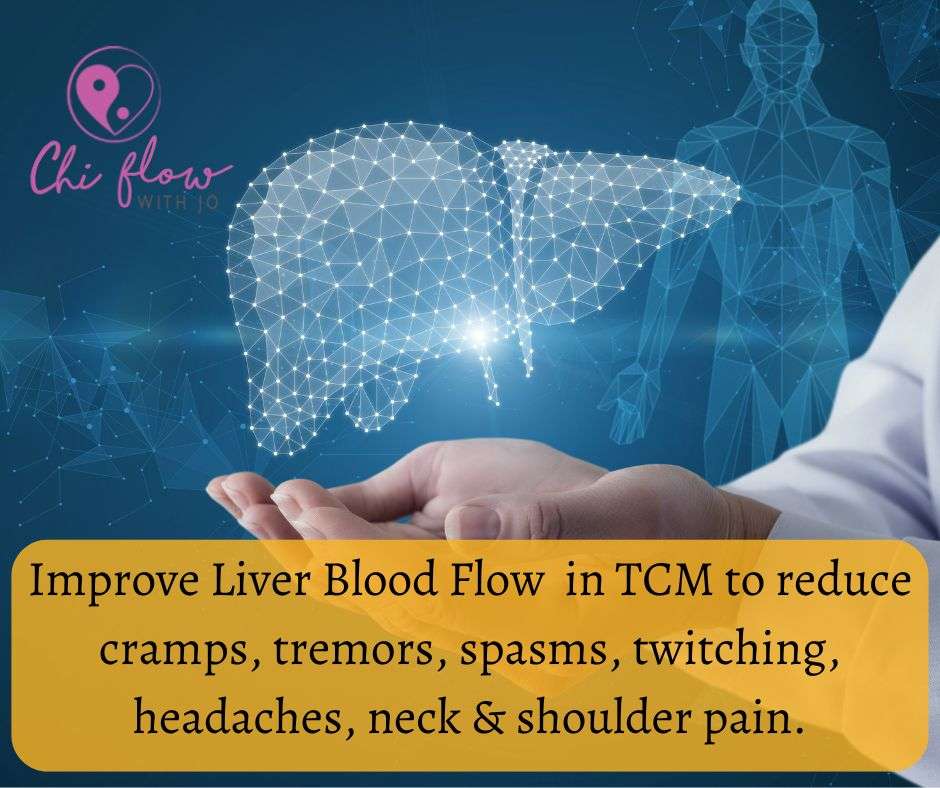
In Chinese Medicine the function of the Liver is to nourish, purify and stores the blood. It also enhances  Qi/chi(energy) which moves the blood smoothly around the body. 

THE LIVER

If the Liver is functioning properly, the blood will move around the body easily without obstruction, nourishing, cooling and calming.

However in our Western lifestyle it is very easy to overwork the Liver.

Too many saturated fats, chemical additives, alcohol, caffeine and stimulants make the Liver slow, leading to “stagnation” in the system and weakening of the blood causing symptoms of fatigue, headaches, problems concentrating, night terrors, spasms and tightness of the ligaments and tendons.

Here are some five element food medicine guides to follow and include in your diet.  Use the books to find recipes in which to use these ingredients on a daily basis:

LIVER BOOSTING FOODS

  • ☯️ Dark leafy greens including

  • ☯️ Nettles

  • ☯️ Spinach

  • ☯️ Kale

  • ☯️ Broccoli

  • ☯️ Sprouted seeds and legumes

  • ☯️ Good oils in seeds and nuts 

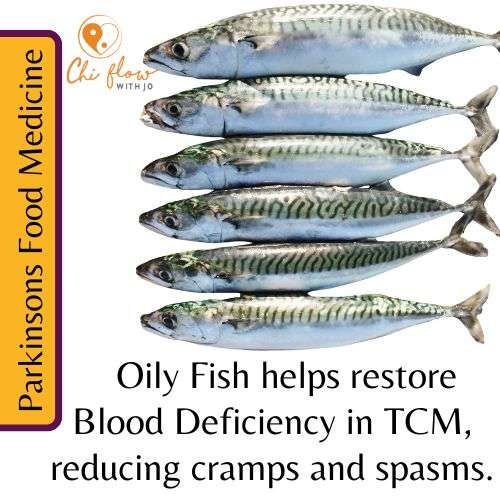
  • ☯️ Oily fish

  • ☯️ Aubergines

  • ☯️ Kimchi

  • ☯️ Fresh & raw food
  • ☯️ Lemon & limes
  • ☯️ Apple cider vinegar
  • ☯️ Plums & gooseberries
  • ☯️ Turmeric
  • ☯️ Avocado’s
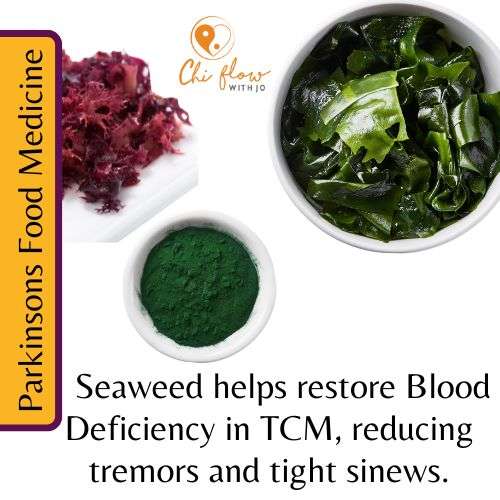
  • ☯️ Seaweed
  • ☯️ Umeboshi plum

For recipes showing you how to use these foods and the five element system, sign up for the FREE mini ebook below or take a look at the cook books.

Every day in Chi Flow with Jo you receive a recording of the Qi Gong class if you can’t make the LIVE plus a 5 element food recipe, acupressure point of Traditional Chinese Medicine Tip to set you up for the day.

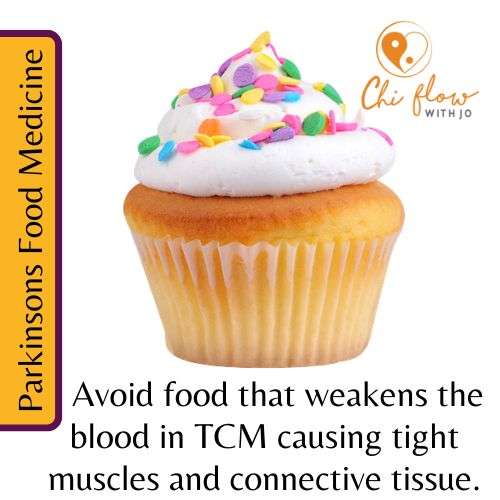
FOODS TO AVOID

  • ☯️ Ice cream

  • ☯️ Heavy cream

  • ☯️ Cheese

  • ☯️ Fried food

  • ☯️ Saturated fats

  • ☯️ Alcohol

  • ☯️ Processed meats

  • ☯️ Ready meals

  • ☯️ Refined Carbohydrates

  • ☯️ Refined Sugars

Following the 5 element system, the nourishment of blood by the liver relies on kidney jing to nourish it 

When kidney jing is weak liver energy and the strength of the blood becomes weak. 

Read more in my next blog about how to use acupressure and Qi Gong to strengthen Kidney energy helping vital blood to flow and nourish organs, ligaments, muscles and tendons, relieving spasms, cramps, twitching, improving sleep and ease of the body.

I share an Acupressure point and a Qi Gong move to help you feel at ease in your body.  It’s important to not feel isolated and alone.  There are things you can do and a whole community in Chi Flow to support your Parkinsons journey.

Chi Flow with Jo uses natural and easy Qi Gong movements, acupoints and food medicine every weekday to nourish the blood, clear the liver and calm your nervous system.  Plus daily Q&A helps you to return to deep acceptance and ease with a community full of support.

Doors open the last few days of the month so that we begin the new moves together at the beginning of the new month.

HOW CAN QI GONG HELP REVITALISE YOUR LIFE?

If you’re eager to revitalise your daily routine and prioritise self-care for both your mind and body, consider exploring Qi Gong as a transformative practice.

Qi Gong is all about being well and loving yourself with gentle exercise, and the best part is that everyone can benefit from it.

Hope to see you in the Chi Flow.

Self-administered acupressure or Chinese Medicine is not a substitute for visits to qualified healthcare practitioners.

Knowing how to treat yourself and your loved ones with complimentary therapies like acupressure can be greatly beneficial and convenient. However, for serious and chronic conditions, you’ll want to visit an Shiatsu therapist / Acupuncturist or other qualified healthcare practitioner who can develop a treatment plan based on your unique medical history and combination of symptoms.  

The information provided should not be considered medical advice.
Fibromyalgia Health & Wellbeing Summit

Fibromyalgia Health & Wellbeing Summit

During this fantastic event on 12th May, I will be giving two talks along with recipe demonstrations and taster giveaways – there’s lots of other interesting stuff on offer too such as Shiatsu, sleep advice, Tai Chi and keynote speakers – all for only €20

Fibromyalgia, a chronic disease that causes pain and swelling, is difficult to treat with western medicine “Fibromyalgia symptoms are only about 30% amenable to current pharmaceutical strategies on the market,” says Kathleen Holton, Ph.D., MPH, lead author of Potential Dietary Links in Central Sensitization in Fibromyalgia………

Why not try an alternative way of looking at the condition? Shiatsu & Conscious Cooking is based on Traditional Chinese Medicine and looks to address the cause of the condition as well as treating and alleviating symptoms.

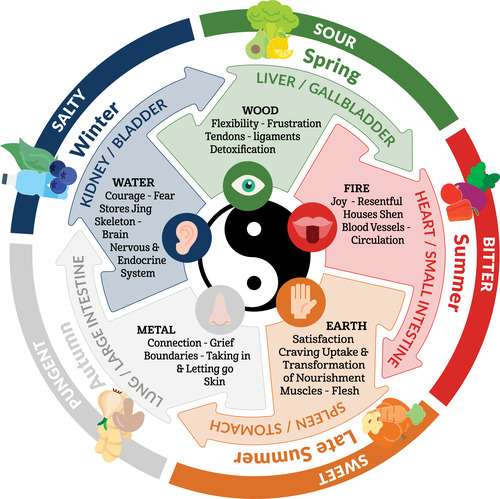
The symptoms of Fibromyalgia in Chinese Medicine can be treated as a condition of the Liver and this talk aims to give a brief overview of this aspect including flavour, colour, season and emotions that correspond to this organ in Chinese medicine.

It will also touch on the possible source of the condition within the Kidney/Bladder. It is in no way prescriptive but more about providing tools to ask “how is the body, how am I feeling and what do I need right now?”

The Liver and Gallbladder are connected to the Spring life force in our bodies which governs flexibility, regrowth, and easy flow. It is a powerful energy for effective action, enabling the unfolding of our life’s purpose. The Ligaments and Tendons are governed by these organs so too is metabolism and energy levels.

However, in our overactive society, the Liver/Gall Bladder can become overheated or blocked causing frustration, pain, and stagnation. An easy way to address this is by stimulating the Liver and decreasing its congestion. A gentle detox, which happens naturally in the Spring, will encourage and support the Liver to regenerate and cleanse.

In this talk, we will

  • Discuss effective, gentle detox for the body
  • Learn a variety of foods that increase energy and decrease pain
  • Discover which foods are best avoided
  • Understand how to alcalyze the body reducing pain and stagnation

Emotional Healing & Community Support

The weight we carry isn’t just on our hips, it’s in our hearts.
Feeling like you “want to be minded” is your body’s cry for nurture, not discipline.

When you join Chi Flow with Jo, you don’t walk alone.
We move, fast, cook and heal together. That shared energy keeps you accountable and loved through change.

You don’t need to fight your bodyjust listen to her again.
Start with small rhythms: stop eating after 8 pm, massage Liver 13, sip lemon water in the morning, and join our January program to be supported every step of the way.

💗 Ready to Join?

Click here to become a member of Chi Flow with Jo → CLICK HERE

Or drop in for a class and feel it for yourself (sign up below). Join the Chi Flow with Jo community for live sessions, practice, and support.

Self-administered acupressure or Chinese Medicine is not a substitute for visits to qualified healthcare practitioners.

Knowing how to treat yourself and your loved ones with complimentary therapies like acupressure can be greatly beneficial and convenient. However, for serious and chronic conditions, you’ll want to visit an Shiatsu therapist / Acupuncturist or other qualified healthcare practitioner who can develop a treatment plan based on your unique medical history and combination of symptoms.

The information provided should not be considered medical advice.