

Why Am I Exhausted but Can’t Sleep? Heart Blood Deficiency in Chinese Medicine
There is a particular kind of tiredness that can be very confusing. You can be absolutely exhausted, longing for sleep, doing all the right things, trying the teas, sprays, routines and relaxation techniques, and still, when your head finally hits the pillow, something inside you simply will not settle.
You are tired, but you are not restored. You want to switch off, but your body seems unable to make that final journey into deep rest.
In Chinese medicine, that makes me curious about Blood.
Not simply blood as we understand it medically, circulating through our arteries and veins, but Blood in the Chinese medicine sense: nourishment, grounding and substance.
Blood nourishes the body, but it is also understood to nourish the Heart and help give the mind, or Shen, somewhere to rest.
This is where the Chinese medicine pattern called Heart Blood Deficiency becomes interesting. It is not a medical diagnosis and it does not mean that everyone who cannot sleep has a problem with their blood. It is a traditional way of looking at a group of symptoms and asking whether the body may need more nourishment, restoration and grounding.
Why am I exhausted but unable to sleep?

This blog began with a question sent to my Ask Me Anything podcast:
“I cant sleep, been like it since birth. Been hypnotised by 2 separate people, had NLP, done sleep station through my doctor. Tried most of the teas tablets tinctures & sprays, cbd. Put on sleeping tablets for a week, still didnt sleep. Amytripyline does work though, but i dont want to have to take it.”
This is clearly not somebody who has simply had three bad nights.
When sleep difficulty has been present for years, there can be many contributing factors, and persistent insomnia deserves proper medical assessment. If you take amitriptyline or any other prescribed medication, please discuss any changes with the doctor who prescribed it. The acupressure, food and Qi Gong ideas in this article are supportive practices, not replacements for medical treatment.
But this question gives us an opportunity to look more deeply at something I have touched on in my last two articles: the relationship between the Heart, Blood, Shen, sleep and menopause.
From the Bao Mai to Heart Blood
Over the last two Ask Me Anything articles, we explored the Bao Mai, the connection between the Heart and the womb in Chinese medicine.
In Menopause on Fire? Anxiety and Chest Heat in Chinese Medicine, I looked at what can happen when the changing movement of energy during menopause becomes hot, rushed or unsettled. (Menopause on Fire: Anxiety and Chest Heat in Chinese Medicine)
Then in Anxiety & Bad Dreams from a Chinese Medicine Perspective, we went further into the relationship between Blood, the Heart and Shen, particularly when anxiety and disturbed dreams appear around the menstrual cycle. (Anxiety & Bad Dreams from a Chinese Medicine Perspective)
This time I want to stay with the Heart itself and ask:
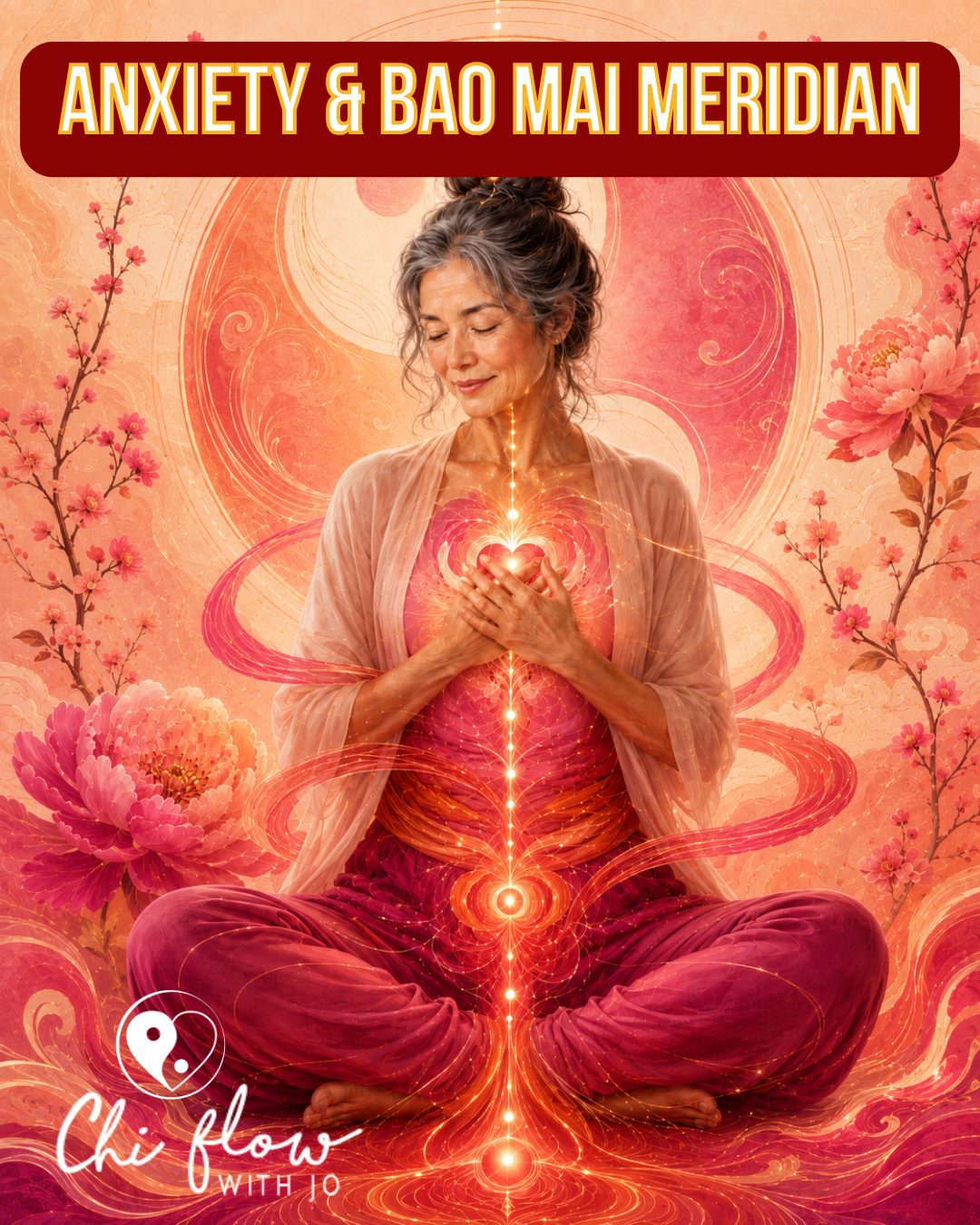
What is Heart Blood Deficiency in Chinese medicine?
In Chinese medicine, Heart Blood Deficiency describes a pattern in which the Heart is considered insufficiently nourished by Blood.
Again, this is a Chinese medicine framework rather than a Western medical diagnosis.
Someone fitting this pattern might experience a combination of:
- * feeling exhausted yet unable to settle
- * light or broken sleep
- * vivid or excessive dreaming
- * a busy mind at night
- * forgetfulness or poor concentration
- * feeling easily startled or emotionally unsettled
- * dizziness
- * palpitations
- * a general sense of being depleted or ungrounded
These symptoms can have many possible medical causes, so this list should never be used to diagnose yourself.
What is the Shen and why does it matter for sleep?
The word Shen is often translated as spirit, but that can make it sound much more mystical than it needs to be.
I think of Shen as the quality of consciousness and presence you recognise in somebody.
Are they present? Can they connect? Can they rest? Can the mind become quiet when quiet is needed? Can they experience joy?
In Chinese medicine, the Heart houses the Shen, and Blood helps to anchor and nourish it. I sometimes describe this as a bird needing a nest.
You can keep telling the bird to settle down, but if the nest is thin, uncomfortable or not properly supporting it, settling becomes much more difficult.
Why good sleep may begin with digestion
Chinese medicine maps the body through the Five Elements.
Spring relates to Wood and the Liver, movement, flexibility and flow.
Summer relates to Fire and the Heart, warmth, connection, joy and sleep.
Late summer relates to Earth, particularly the Stomach and Spleen, nourishment and digestion.
Autumn brings Metal, the Lung and Large Intestine.
Winter brings Water and the Kidney system, rest and deeper reserves.
When we talk about Heart Blood, Fire and Earth have to talk to each other.
Within Chinese medicine, the Stomach and Spleen are central to receiving food and transforming it into usable nourishment from which Qi and Blood can be supported.
That is why simply eating “healthy food” is not the entire picture.
Are you sitting down to eat? Are you rushing? Skipping meals?
Eating while standing at the kitchen counter? Eating while answering emails?
Eating dinner while simultaneously watching television, scrolling and worrying about tomorrow?
The quality of what we eat matters, but so does our ability to receive it.
I often describe Earth as the kitchen in the middle of the body.
It receives what comes in and turns it into something we can actually use.
So from a Chinese medicine point of view, good sleep does not necessarily begin at bedtime. It may begin with how well we nourish ourselves throughout the day.

ST36 for nourishment and energy
The first acupressure point I like for this conversation is Stomach 36, or ST36. Three mile point
It is one of the points I return to again and again because it connects us with the Earth element, digestion, nourishment and our ability to sustain ourselves.
To find ST36, sit comfortably and find the bottom edge of your kneecap.
Move approximately four finger-widths down the leg, then move slightly to the outside of the shin bone into the muscle.
Do not press directly onto the bone.
Explore the area gently.
When you find the point, you may notice a comfortable tenderness or a dull, satisfying ache. It should never feel sharp or make you want to pull your leg away.
Use a finger or thumb and apply gentle, steady pressure.
Thirty seconds is useful, A minute is lovely. You can remain there for up to two or three minutes if it feels pleasant.
Consistency matters much more than intensity.
In this Heart Blood conversation, I think of ST36 as asking:
Can I receive nourishment? Can I transform it? Can I make energy available?

Heart 7 to settle the Heart and Shen
Then we come to Heart 7, or HT7. Spirit Gate
Heart 7 is located at the wrist crease on the little-finger side of the wrist.
Turn your palm upwards and follow the little-finger side down towards the wrist. At the crease, beside the tendon, you will find a small soft hollow.
Explore rather than attack. The point may feel slightly tender, warm, achy or simply calming when touched. Use gentle, steady contact for around 30 seconds to a minute. You can stay a little longer if it feels comfortable.
I like ST36 and Heart 7 together because they tell the whole story beautifully.
ST36 asks: Can we build and receive nourishment? Heart 7 asks: Can the Heart settle into what is available?
One reminds us about resources. The other reminds us about rest. A simple way to remember them is to use them when you take your socks off in the evening.
ST36 first on each leg. Then Heart 7 on each wrist. Good self-care is much easier to maintain when we attach it to something we already do every day.
What foods help build Blood in Chinese medicine?
When we talk about building Blood through food, I do not want you to start searching for one magical ingredient.
I prefer to look at the wider picture of nourishment.
Foods I think about include: dark leafy green vegetables, beetroot, carrots and other root vegetables, beans and pulses, eggs, good quality animal foods for people who eat them and slow-cooked bone and marrow stocks.
These foods can form part of a nourishing diet, but the Chinese medicine emphasis is not simply on eating one particular food because somebody has labelled it a “Blood food”.
The question is also: Can the digestive system receive and transform that nourishment?

Why I particularly like beetroot
Beetroot is one of my favourite foods to work with in Five Element cooking.
There are lots of beetroot recipes in both of my cookbooks, Shiatsu & The Art of Conscious Cooking and Good Food: Better Sex.
The particular recipe I am thinking about for this Heart Blood discussion is from Good Food: Better Sex.
It combines matchsticks of beetroot with red onion, garlic, a little wakame or dillisk seaweed, balsamic vinegar, mirin, olive oil, black pepper and black and white sesame seeds.
It is colourful, nourishing and, most importantly, it is actual food that you can enjoy.

You gently soften the onion first, add the garlic, beetroot and seaweed, add a little water and allow the beetroot to cook before finishing with balsamic vinegar, mirin, olive oil, pepper and sesame seeds.
Make a batch and have a small portion alongside a meal during the week.
Rather than only asking what you need to cut out of your diet, notice what happens when you deliberately add something nourishing to the plate.
If you enjoy understanding food through the Five Elements, there are lots more beetroot dishes and other recipes in both of my cookbooks. They were written to make Chinese food medicine usable in an ordinary kitchen rather than leaving it as a theory. Explore my Five Element cookbooks
And if you are particularly interested in the beetroot recipe I have mentioned here, you will find it in Good Food: Better Sex. See Good Food: Better Sex

Why Qi needs to move Blood
Building Blood does not mean we want the body to become heavy or static.
Blood also needs to circulate. One of the simple principles we use in Chinese medicine is:
Qi moves Blood.
That is why I also want to include a very gentle Qi Gong exercise. The aim is to encourage movement without draining your reserves.
La Qi, or Pulling Qi
The Qi Gong movement I recommend here is La Qi, or Pulling Qi.
Bring your hands in front of the lower abdomen or chest with the palms facing one another, as though you are holding a soft ball.
Slowly draw the hands apart.
Then gently bring them closer together again without allowing them to touch.
Keep your shoulders relaxed, your elbows soft, the breath easy and unforced.
Continue for two or three minutes.

You may begin to notice warmth, tingling or a feeling of connection between the palms. You do not have to manufacture any particular sensation. Simply notice what is there.
In Chinese medicine terms, we are encouraging Qi to move. Because Qi moves Blood, this quiet movement gives us another way of supporting circulation while also giving the mind something calm and rhythmic to settle into.
If you practise it in the evening and tend to be sensitive to stimulation, keep the movement particularly slow and gentle.
If I am exhausted, shouldn’t I just rest?
Sometimes, absolutely. Rest is medicine. But there is also a kind of exhaustion where being completely still all day can leave us feeling more stuck.
A few minutes of gentle movement may help us feel warmer, clearer and more connected without demanding a large amount of energy.
The best guide is how you feel afterwards. Do you feel a little warmer? Are your shoulders softer? Is your breathing easier? Do you feel more settled in your body?
That is very different from finishing wiped out, shaky or needing to recover. The body gives feedback. We can learn to listen to that feedback without immediately judging ourselves or deciding that we have done something wrong.
This is also how we practise Qi Gong together in Chi Flow with Jo. The purpose is not to push the body into exhaustion. We use gentle movement, food medicine and acupressure to work with energy, mobility, balance, flexibility and everyday wellbeing. Explore Chi Flow with Jo or try the free class
When to speak to your GP
Long-term insomnia can have many causes, and persistent or changing sleep problems deserve proper medical assessment. Please speak to your GP if symptoms worsen or spread, if you develop new night waking or new symptoms, or if anything changes with your medication. Do not stop or alter amitriptyline or other prescribed medication without discussing it with your prescriber. New or significant palpitations, fainting, breathlessness or chest pain also need appropriate medical assessment rather than being assumed to be part of a Chinese medicine pattern.
Final thought
If you would like to practise this kind of work with me in a steady, supported way, come into the Chi Flow membership. It is €39 a month, and after the three-month trial it becomes €20 a month, so you can keep building these small rhythms through the seasons with guidance, community and practice.
Ready to Start?
Join Chi Flow with Jo and begin restoring your energy, and feeling more like yourself again.

Frequently Asked Questions
What is Heart Blood Deficiency in Chinese medicine?
Heart Blood Deficiency is a traditional Chinese medicine pattern describing a situation in which the Heart is considered insufficiently nourished by Blood. It may be associated with light or disturbed sleep, vivid dreams, tiredness, restlessness, poor concentration, dizziness or palpitations. It is not the same as a Western medical diagnosis or a blood-test result.
Can Heart Blood Deficiency cause insomnia?
Within Chinese medicine theory, insufficient Heart Blood may make it more difficult for the Shen, or mind/spirit, to settle at night. This can be used as one possible framework for understanding light sleep, frequent waking, vivid dreaming or feeling exhausted but restless. Persistent insomnia should still be medically assessed.
Why am I exhausted but wide awake at night?
There are many possible reasons for feeling exhausted but unable to sleep. In Chinese medicine, one pattern practitioners may explore is whether the Heart and Shen are sufficiently nourished and anchored by Blood. Stress, digestion, menopause, lifestyle and other health factors may also form part of the wider picture.
What are the signs of Heart Blood Deficiency?
Traditional Chinese medicine may associate Heart Blood Deficiency with disturbed or light sleep, vivid dreams, fatigue, restlessness, poor memory or concentration, dizziness, palpitations and a feeling of emotional fragility. These symptoms can have many causes and should not be used to self-diagnose.
What is the Shen?
Shen is commonly translated as spirit or mind in Chinese medicine. It refers to our awareness, presence and capacity to feel settled and connected. The Heart is said to house the Shen, while Blood helps nourish and anchor it.
Which acupressure points can support Heart Blood?
Two points I like to use in this context are ST36 and Heart 7. ST36 relates to the Earth system and nourishment, while Heart 7 offers gentle contact with the Heart and Shen. Use comfortable, steady pressure for around 30 seconds to three minutes. Pressure should never be sharp or painful.
Where is Stomach 36?
ST36 is found approximately four finger-widths below the bottom of the kneecap and slightly outside the shin bone in the muscle. Explore gently until you find an area that may feel comfortably tender or achy rather than sharp.
Where is Heart 7?
Heart 7 is located at the wrist crease on the little-finger side of the wrist, in a small hollow beside the tendon. Use gentle steady contact rather than digging into the point.
What foods support Blood in Chinese medicine?
Chinese food therapy often includes nourishing foods such as dark leafy greens, beetroot, carrots and other root vegetables, beans, pulses, eggs, animal foods where appropriate, and slow-cooked bone or marrow stocks. The wider emphasis is on regular nourishment and the body’s ability to receive and transform food rather than relying on one “magic” ingredient.
Is beetroot good for Heart Blood?
I use beetroot frequently in Five Element cooking because it fits beautifully into a nourishing approach to food. There are numerous beetroot recipes in both Good Food: Better Sex and Shiatsu & The Art of Conscious Cooking. It should be thought of as one part of a varied diet rather than a treatment for insomnia or a medical blood condition.
What Qi Gong exercise can I use when I am tired but restless?
La Qi, or Pulling Qi, is a simple option. Hold your palms facing one another, slowly separate them and gently bring them together again without touching. Keep the shoulders relaxed, elbows soft and breathing easy for two or three minutes. The aim is to feel gently warmer and more settled, not tired from exercise.

Go Deeper with Our Books
For those wanting to understand how movement, breath, and Chinese Medicine principles, Jo’s books provide practical guidance rooted in lived experience and clinical wisdom.
👉 Buy Five Element Wisdom cookbooks
Explore how to Find Your Flow and Live Well with Parkinson’s.
Movement does not need to be extreme to be powerful. Small daily expansion reshapes the body. Steady breath reshapes the nervous system. Gentle repetition rebuilds confidence.
Every human body carries extraordinary capacity for renewal when given the right rhythm.
If you want to soften into strength, come and practice with us.
When to seek medical help
Please speak to your GP or specialist if symptoms worsen or spread, if pain, itching, heat or anxiety starts waking you at night, if you notice new skin changes, lumps, thickening, ulceration or bleeding, if your prescribed treatment is not helping, or if there is any change in medication.
And if you ever have chest pain that feels severe, crushing, unusual, or comes with breathlessness, sweating, faintness, jaw pain or arm pain, seek urgent medical help. Chinese medicine and home practices can support the terrain of the body, but they do not replace diagnosis or medical treatment.
Self-administered acupressure or Chinese Medicine is not a substitute for visits to qualified healthcare practitioners.
Knowing how to treat yourself and your loved ones with complimentary therapies like acupressure can be greatly beneficial and convenient. However, for serious and chronic conditions, you’ll want to visit an Shiatsu therapist / Acupuncturist or other qualified healthcare practitioner who can develop a treatment plan based on your unique medical history and combination of symptoms.
The information provided should not be considered medical advice.
Topics: Breathwork, Parkinson’s support, sleep practices, Qi Gong, acupressure.
 of food in Traditional Chinese Medicine and a published Author. Her residential and day Wellness Retreats focus on Chi Gong, self-Shiatsu & Conscious Cooking Demonstrations, and are extremely popular.
Until recently, Joanne was the Irish representative to the European Shiatsu Federation and is the former Chairperson of the Shiatsu Society Ireland.
“Good Food: Better Sex” and “Shiatsu & the Art of Conscious Cooking” , both written and published by Joanne, are modern cookbooks full of delicious recipes, Traditional Chinese Medicine plus acupressure points for health and wellbeing.

INTERACTIVE
APP NOW LIVE!
Answer 2 questions to see what foods suit you today
COMPANION TO
“SHIATSU & THE ART OF
CONSCIOUS COOKING”
COOK BOOK
BUY THE BOOK!
© Joanne Faulkner 2026 | Privacy Policy | Refunds & Returns Policy | Site by WPMint