Breathwork for Better Sleep

Breathwork for Better Sleep

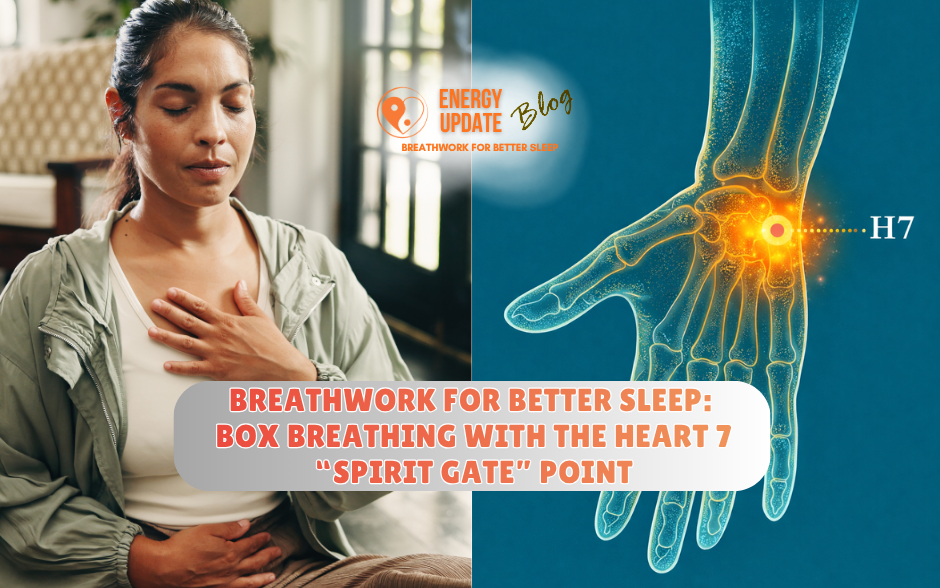
Box Breathing with the Heart 7 “Spirit Gate” Point

Many people living with Parkinson’s struggle with sleep, shallow breathing, and a racing mind at night. A simple practice combining box breathing with the Heart 7 “Spirit Gate” acupressure point can help calm the nervous system and support deeper sleep.

Sleep can become surprisingly difficult when the mind is busy and the body feels restless. Many people experience this from time to time, lying awake, tossing and turning, unable to settle. For people living with Parkinson’s, this challenge can be even greater. Breathing may become shallow, the speaking voice can weaken, and sleep can become disrupted.

One of the simplest tools we have to help settle the body and mind is something we do every moment of the day: breathing.

When we bring gentle awareness to the breath and combine it with simple acupressure, we can help calm the nervous system and prepare the body for sleep.

One particularly helpful technique is box breathing combined with the Heart 7 acupoint, also known as Spirit Gate

Why Breathwork Helps Sleep

When we feel stressed or anxious, the breath tends to become shallow and high in the chest. This signals the nervous system to stay alert.

When we slow the breath and allow it to move down into the belly, the body begins to shift into a calmer state.

Breathwork can help:

  • Calm the nervous system
  • Reduce anxiety and mental restlessness
  • Encourage deeper breathing
  • Improve oxygen flow through the body
  • Help the body settle into sleep

For people living with Parkinson’s, breathwork is especially important. Parkinson’s can affect breathing patterns, leading to shallower breaths and reduced breath support, which may also affect the strength of the voice. Gentle breathing exercises help reconnect with fuller breathing and can support relaxation and sleep.

The Heart 7 Acupoint — “Spirit Gate”

In Traditional Chinese Medicine, the Heart meridian is associated with emotional balance, calmness, and sleep. The spirit of the body, often called the Shen, is said to reside in the heart.

The Heart 7 point, known as Spirit Gate, is traditionally used to help calm the mind and settle the spirit.

When this energy is balanced, people often feel:

  • Calmer
  • Less anxious
  • More settled emotionally
  • Better able to sleep 

This point is commonly used for insomnia, restlessness, anxiety, and an overactive mind at night.

Where to find HEART 7

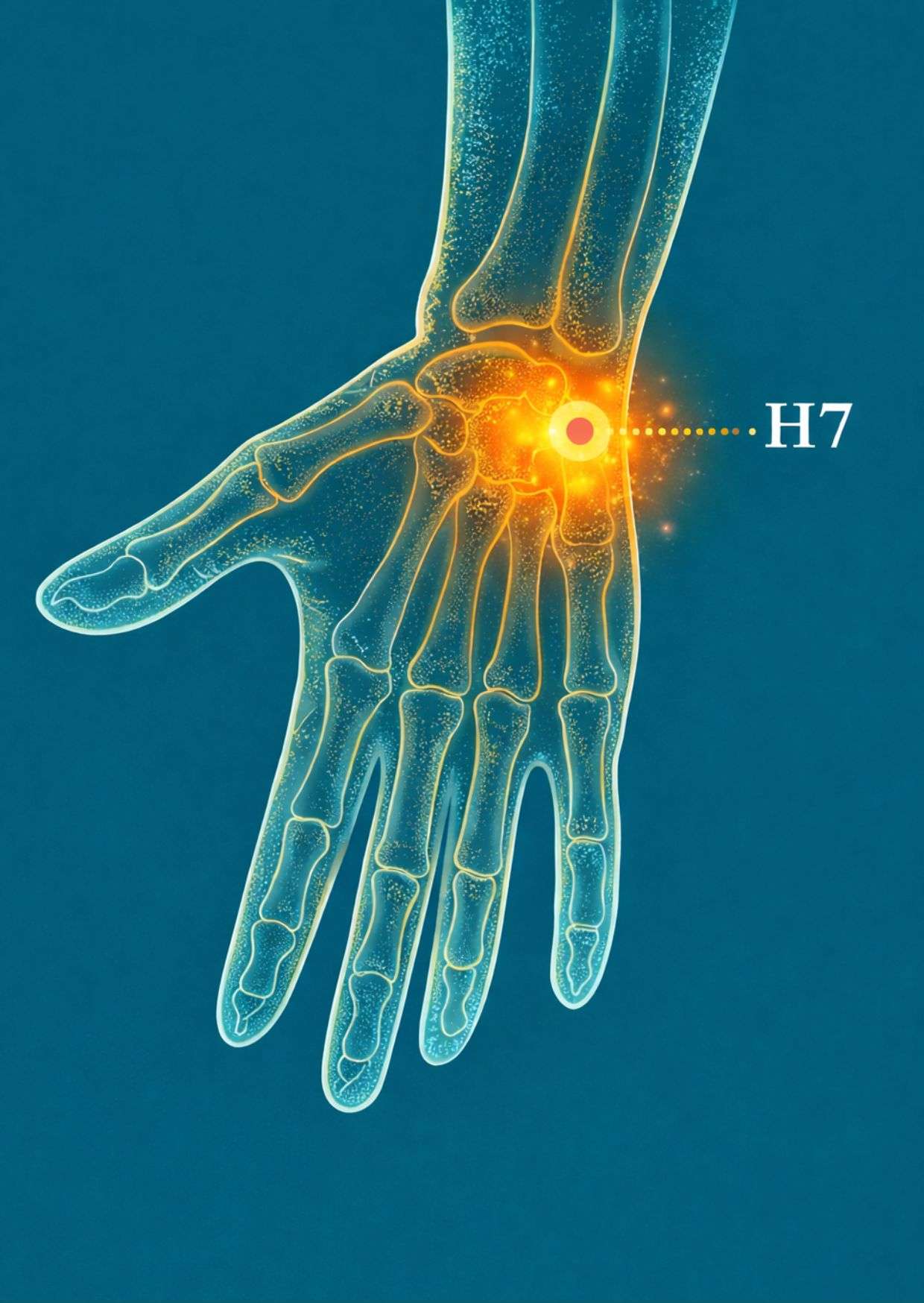
Heart 7 is located on the inside of the wrist.

To find it:

  1. Turn your palm facing upward. 
  2. Look at the crease of your wrist. 
  3. Find the line that runs down from your little finger. 
  4. At the wrist crease, you will feel a small hollow between two tendons.

That soft spot is Heart 7 — Spirit Gate.

You don’t need to press hard. Think of it as making gentle contact with the point, like a relaxed handshake with your own energy.
Box Breathing with the Heart 7 Point

This practice combines rhythmic breathing with gentle acupressure to calm the nervous system and settle the mind.

It can be used:
Before bed
When waking during the night
Anytime you feel restless or anxious


Step-by-Step Practice

  1. Sit or lie comfortably.
  2. Locate the Heart 7 point on one wrist.
  3. Rest your thumb or finger gently on the point.
Now begin box breathing.

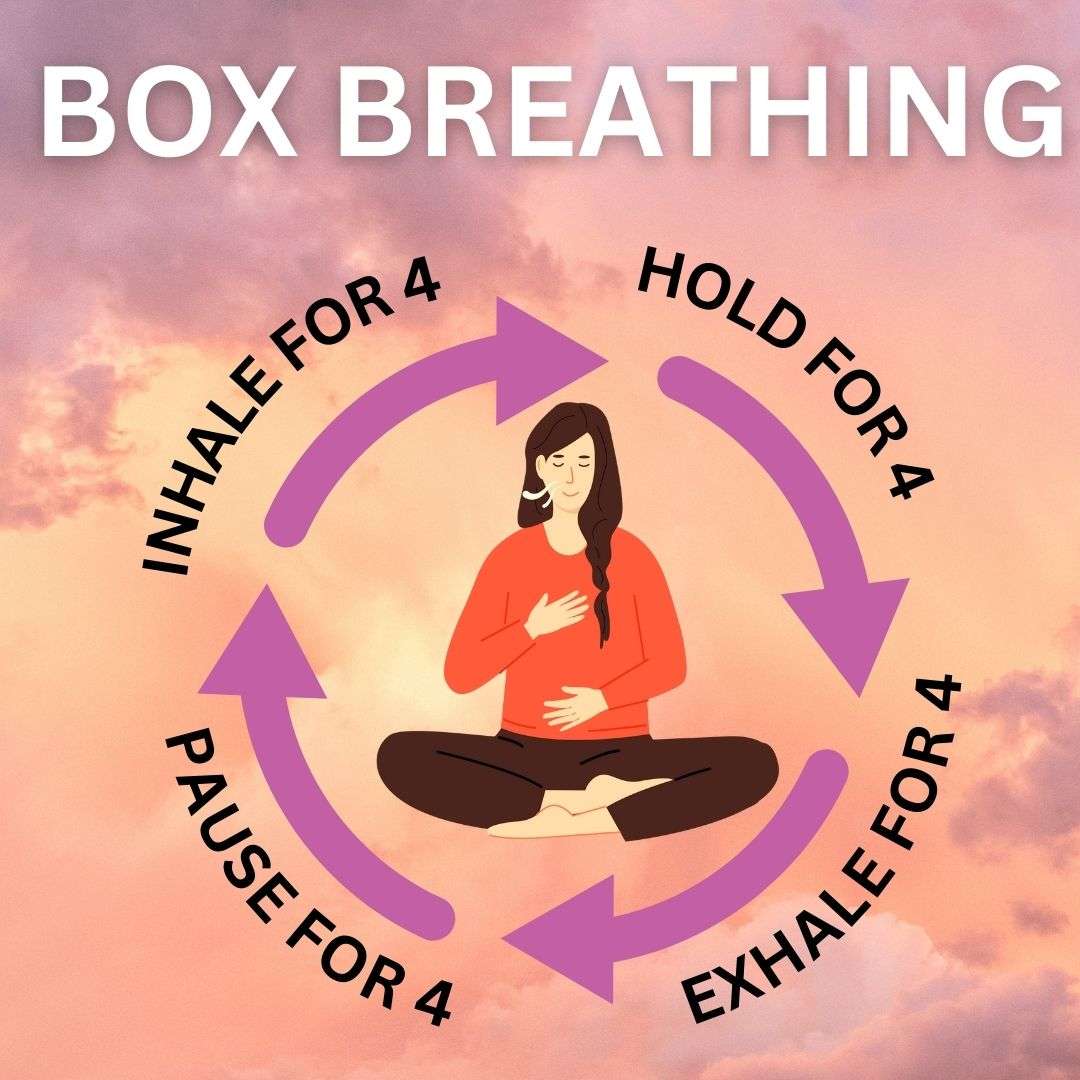
Step 1 – Inhale for 4 counts
Breathe slowly through the nose and let the belly expand.

Step 2 – Hold for 4 counts
Gently press the Heart 7 point.

Step 3 – Exhale for 4 counts
Release the pressure as you slowly breathe out.

Step 4 – Hold for 4 counts
Press the point again gently.

Then repeat the cycle.

Continue for 6–10 rounds of breathing.

After a few minutes, switch and repeat on the other wrist.

This steady rhythm of breathing helps quiet the mind while the acupressure point encourages the heart energy to settle.

When to Use This Practice

This technique is particularly useful if you:

  • struggle to fall asleep
  • wake in the middle of the night
  • feel anxious at bedtime
  • notice shallow breathing
  • experience sleep disruption with Parkinson’s

Many people find that focusing on the breath and the acupoint gives the mind something gentle to rest on, allowing the body to relax naturally.

Simple Sleep Hygiene

Breathwork works best when it becomes part of a gentle sleep routine.

You might try:
Dimming lights earlier
Slowing down activities before bed
Taking 3–5 minutes for breathing practice
Using Heart 7 with box breathing once in bed
Making space to review the day and find 3 gratitudes

Even a few minutes can help the body shift from a busy day into a calmer state that supports sleep.

A Small Practice That Makes a Difference

Breathing is something we do thousands of times every day, yet we rarely think about it.

By combining slow breathing with the Heart 7 Spirit Gate point, you create a simple practice that helps calm the nervous system, quiet the mind, and support restful sleep.

Sometimes the smallest practices, done consistently, can make the biggest difference.

Learn More

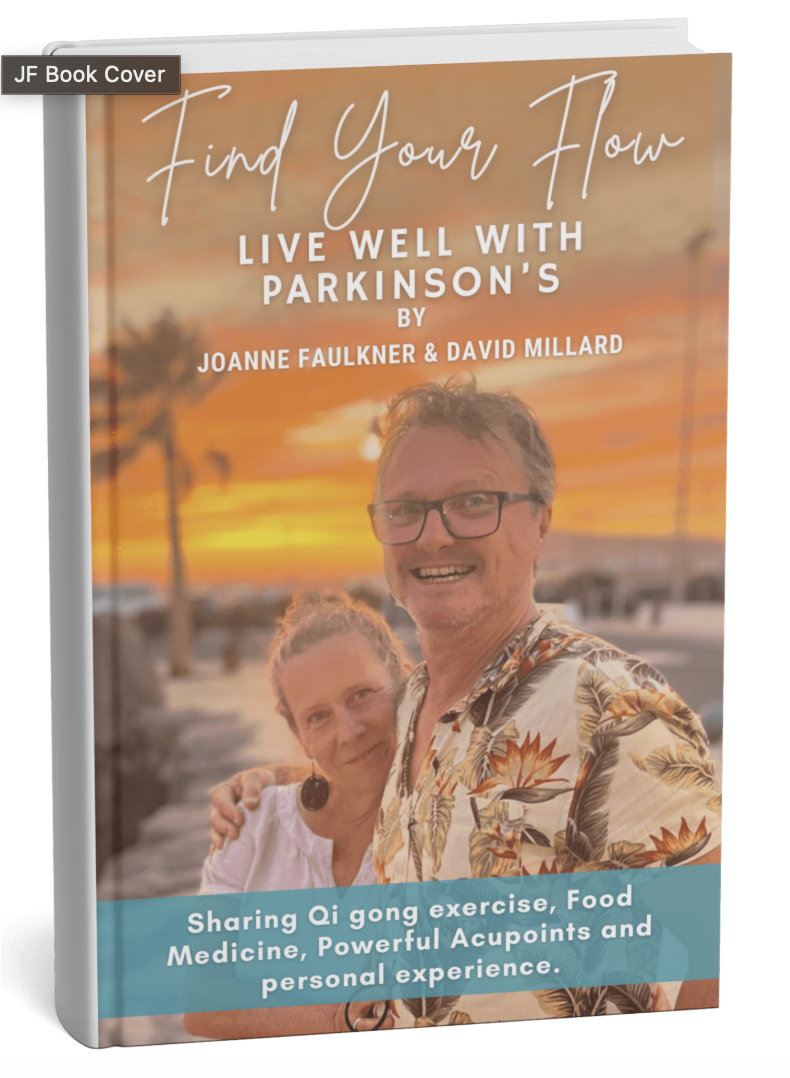
This practice is taken from our new book Find Your Flow: Live Well with Parkinson’s, where we share many more practical tools to support daily life with Parkinson’s — from breathwork and acupressure to simple Qi Gong practices that help improve energy, sleep, and wellbeing.

With May being Parkinson’s Awareness Month, it’s a wonderful opportunity to explore these practices for yourself. Why not join us for a free class and experience how these gentle techniques can help you reconnect with your breath, your body, and your sense of calm.

Join the Free Class

If you are curious about Qi Gong for Parkinson’s, chronic illness, fatigue, or healthy ageing, you are warmly invited to try a free class.

You do not need experience. You do not need flexibility. You simply begin where you are.

👉 Join the Free Class and experience the Eight Brocades for yourself.

Continue the Journey

If you would like ongoing support, Chi Flow with Jo offers:

  • Weekday live classes
  • Full Eight Brocades training
  • Acupressure guidance
  • Food medicine insights
  • Monthly health talks
  • Community gatherings

It is €39 per month, reducing to €20 per month after three months. Just €1 per class.

👉 Join Chi Flow with Jo HERE.

Go Deeper with Our Books

For those wanting to understand how movement, breath, and Chinese Medicine principles support living well with Parkinson’s, our books provide practical guidance rooted in lived experience and clinical wisdom.

👉 Buy the books and explore how to Find Your Flow and Live Well with Parkinson’s.

Movement does not need to be extreme to be powerful.
Small daily expansion reshapes the body.
Steady breath reshapes the nervous system.
Gentle repetition rebuilds confidence.

Every human body carries extraordinary capacity for renewal when given the right rhythm.

If April is asking you to soften into strength, come and practice with us.

Self-administered acupressure or Chinese Medicine is not a substitute for visits to qualified healthcare practitioners.

Knowing how to treat yourself and your loved ones with complimentary therapies like acupressure can be greatly beneficial and convenient. However, for serious and chronic conditions, you’ll want to visit an Shiatsu therapist / Acupuncturist or other qualified healthcare practitioner who can develop a treatment plan based on your unique medical history and combination of symptoms.

The information provided should not be considered medical advice.

Topics: Breathwork, Parkinson’s support, sleep practices, Qi Gong, acupressure.

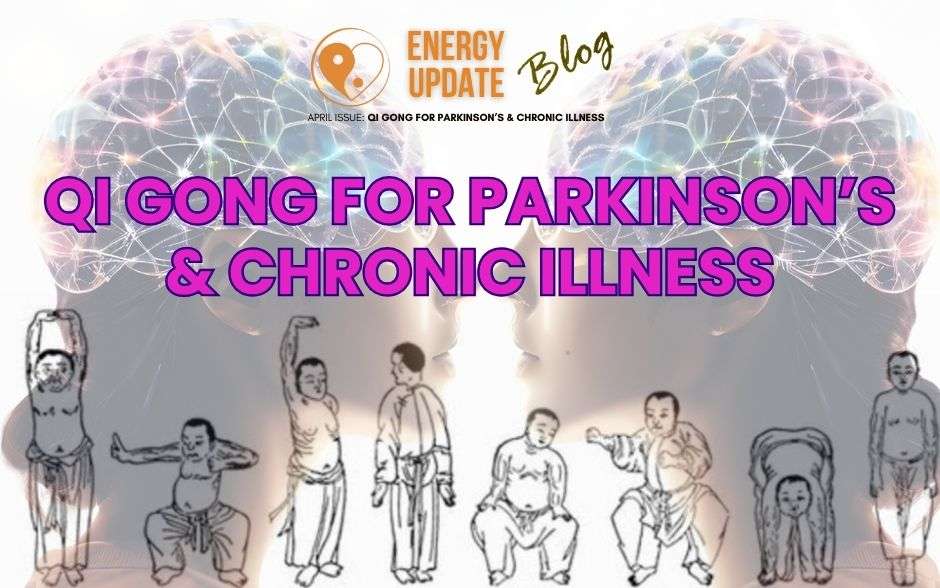
Qi Gong for Parkinson’s & Chronic Illness

Qi Gong for Parkinson’s & Chronic Illness

8 Brocades, Draw the Bow Explained

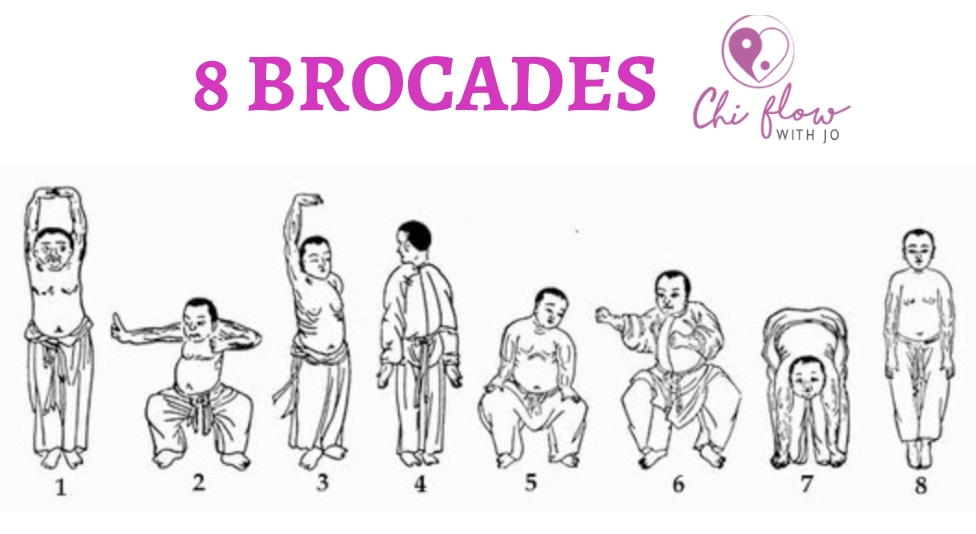
If you live with Parkinson’s, chronic illness, fatigue, stiffness, or simply feel that your body needs kind reconditioning, this is where the Eight Brocades Qi Gong practice becomes powerful.

Inside Chi Flow with Jo, April is dedicated to the classical practice known as Ba Duan Jin, the Eight Brocades, a sequence believed to be over 1000 years old

These movements are simple, accessible, and deeply restorative.

If you have ever thought, “I know I should move more, but I don’t want to exhaust myself,” you are in the right place.

Why the 8 Brocades Are Ideal for Parkinson’s and Chronic Illness

The Eight Brocades act like a daily system check for the body.

They support:

  • Circulation and joint mobility
  • Upright posture and spinal strength
  • Nervous system regulation
  • Gentle, sustainable muscle activation
  • Mental clarity and emotional steadiness

For people living with Parkinson’s, consistency is more important than intensity. Small, repeated movements retrain coordination and rebuild confidence. For those managing chronic fatigue, autoimmune conditions, or recovery phases, this practice strengthens without draining.

Over time, this shows up as:

  • Easier mornings
  • Less tension in shoulders and neck
  • Greater steadiness when standing
  • Calmer evenings
  • Feeling present in your body again

One of our members of Chi Flow with Jo recently shared that after a few weeks of steady practice, she stopped bracing herself every time she stood up. Her shoulders softened. Her breath deepened. She noticed she was less reactive at home.

That is the real medicine.

The Anchor Movement, Draw the Bow, Fire the Arrow

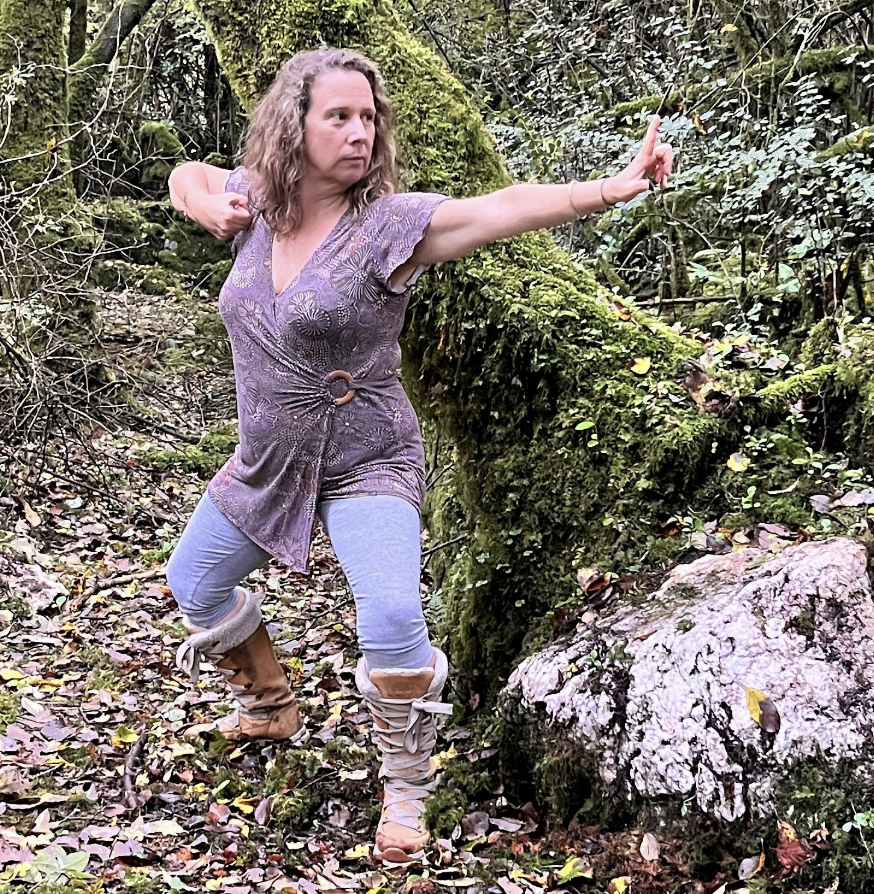
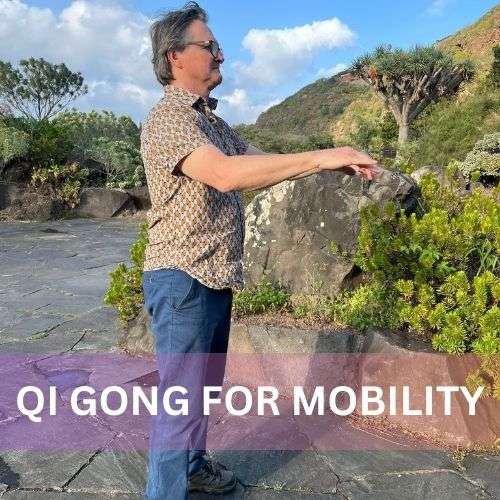
One of the most empowering movements from the Eight Brocades is called Draw the Bow.

It is simple, grounding, and deeply regulating.

You stand with feet steady and rooted.
One hand draws back as though holding a bow.
The other extends forward as if gently aiming an arrow.

You inhale as you draw back.
You exhale as you release.

It is not about range.
It is about direction.

Benefits of Draw the Bow

  • Opens the chest and shoulders
  • Improves posture
  • Strengthens upper back muscles
  • Encourages coordinated breath and movement
  • Builds focus and quiet confidence
  • Supports emotional resilience

For those feeling collapsed, protective, or mentally foggy, this movement reminds the body,
I am here. I have direction.

In Parkinson’s, posture can gradually become flexed forward. Movements that open the chest and activate the back body are essential for maintaining upright presence. In chronic stress states, the chest often tightens. This movement restores expansion without force.

For Davy, living with Parkinson’s for over a decade, the Eight Brocades have become an anchor. On low energy days, he returns to simple repetition. Familiar rhythm. Breath. One movement at a time.

Some days are small. Some days are strong. Both count.

That mindset is powerful medicine.

Why Daily Live Practice Makes the Difference

The movement itself is important. The consistency is transformational.

Inside Chi Flow with Jo, members join:

  • Weekday live Qi Gong classes

  • Replays for flexible practice

  • Monthly health talks

  • Acupressure guidance

  • Food medicine support

  • Community reflection gatherings

When you know there is a space to show up, something shifts. Structure creates energy. Connection creates purpose.

And if you miss a day, there is no guilt. Just an open door.

Can Qi Gong Help Parkinson’s Symptoms?

Research and lived experience suggest that regular Qi Gong practice may support:

  • Balance and coordination
  • Reduced rigidity
  • Improved posture
  • Nervous system regulation
  • Better sleep
  • Emotional steadiness

The key is consistency. Not intensity.


The Eight Brocades are particularly effective because they combine:

  • Breath regulation
  • Bilateral movement
  • Gentle resistance
  • Coordinated focus

This integrated approach supports both physical and neurological resilience.

Join the Free Class

If you are curious about Qi Gong for Parkinson’s, chronic illness, fatigue, or healthy ageing, you are warmly invited to try a free class.

You do not need experience. You do not need flexibility. You simply begin where you are.

👉 Join the Free Class and experience the Eight Brocades for yourself.

Continue the Journey

If you would like ongoing support, Chi Flow with Jo offers:

  • Weekday live classes
  • Full Eight Brocades training
  • Acupressure guidance
  • Food medicine insights
  • Monthly health talks
  • Community gatherings

It is €39 per month, reducing to €20 per month after three months. Just €1 per class.

👉 Join Chi Flow with Jo HERE.

Go Deeper with Our Books

For those wanting to understand how movement, breath, and Chinese Medicine principles support living well with Parkinson’s, our books provide practical guidance rooted in lived experience and clinical wisdom.

👉 Buy the books and explore how to Find Your Flow and Live Well with Parkinson’s.

Movement does not need to be extreme to be powerful.
Small daily expansion reshapes the body.
Steady breath reshapes the nervous system.
Gentle repetition rebuilds confidence.

Every human body carries extraordinary capacity for renewal when given the right rhythm.

If April is asking you to soften into strength, come and practice with us.

Self-administered acupressure or Chinese Medicine is not a substitute for visits to qualified healthcare practitioners.

Knowing how to treat yourself and your loved ones with complimentary therapies like acupressure can be greatly beneficial and convenient. However, for serious and chronic conditions, you’ll want to visit an Shiatsu therapist / Acupuncturist or other qualified healthcare practitioner who can develop a treatment plan based on your unique medical history and combination of symptoms.

The information provided should not be considered medical advice.

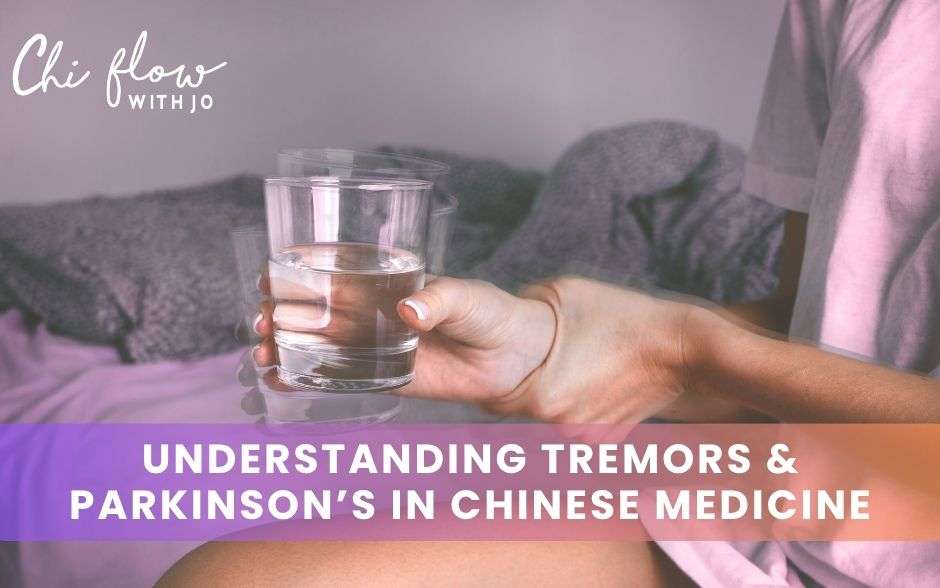
Understanding Tremors and Parkinson’s in Chinese Medicine

Understanding Tremors and Parkinson’s in Chinese Medicine

Today, we’re addressing a heartfelt question from a listener undergoing evaluation for Parkinson’s disease, seeking guidance on reducing spontaneous body tremors.  Remember, the insights I share are complementary and should harmonize with your personal health journey and any advice from your healthcare providers.

Understanding Tremors in Chinese Medicine

In Traditional Chinese Medicine (TCM), tremors are seen as manifestations of internal imbalances, particularly involving the liver and kidney energy systems. These systems are not just organs but represent a holistic network of functions. Disruptions in the smooth flow of Qi (chi), your vital energy and blood can create what is known as internal wind. This isn’t flatulence, but rather a chaotic climactic condition that can lead to spasms and tremors throughout the body.

Involuntary movements such as tremors, twitches, and spasms, including conditions like Bell’s Palsy, Dystonic tremor, Essential tremor, Parkinsons, and stroke can be addressed by nourishing the body’s yin energy and calming excessive yang. We want a smooth flow of blood, governed by the liver, and a grounded essential energy, governed by the kidneys. Supporting these systems through dietary choices is an excellent place to start.

Dietary Recommendations for Reducing Tremors

To support yin and anchor the body’s energy, incorporate foods with yin-nourishing properties:

To support yin and anchor the body’s energy, incorporate specific foods into your diet that encourage yin-nourishing properties.

Walnuts are a really great yin food. What do they look like? They look like brains, and they have such a complex range of minerals within them, making them excellent for supporting kidney energy and yin. The kidney governs the winter of the body, that still, quiet, deep time where everything is in transition, just waiting for the rising of spring. So, any foods that nourish kidney energy in Chinese medicine help to calm spasms and tremors.

Find a full outline of Kidney and Liver foods in my 5 element Cook books

Seaweed is a fantastic yin-nourishing food, packed with minerals like magnesium, manganese, copper, iron, and calcium. These nutrients help relax tense, tight, spasming muscles. Barley is another grain that cools the body, often recommended for urinary tract infections, to cool the heat and irritation, super effective for nourishing yin.

Conversely, it’s important to limit yang foods such as refined carbohydrates, refined sugars, and alcohol. These introduce heat and agitation to the body. While some warming yang foods, like ginger, garlic, and chili, can be useful when fighting infections, they may exacerbate tremors. Hydration is also essential; drinking ample water helps nourish the kidneys and support overall balance.

Qi gong for Reducing Tremors

Qi gong (Qi = energy, Gong = work) is an ancient practice that aligns the mind and body to regulate energy. Sometimes, energy rises excessively, leading to heat, anxiety, or jitteriness.

Through gentle flowing movements, Qi gong helps restore the smooth flow of qi and blood, preventing energy stagnation, excess tension and movement.

I offer a free Qi gong class at the end of each month (sign up at the bottom of this blog post), it’s a great way to experience these practices firsthand.

My husband, Davey, has Parkinson’s, and together, we use Qigong to help him manage his symptoms. While Parkinson’s currently has no cure, there are ways to live well with the condition.

Davy shared that before he began practicing Qigong, he often felt as though the tremors were overwhelming his mind, making it difficult to think clearly. Through mindful movement and breathwork, he found that while the tremors may not disappear, they no longer dominated his focus.

Qi gong Practice for Tremors

Before practicing, it’s important to acknowledge the presence of tremors rather than resist them. Fighting against them can increase stress and exacerbate symptoms. Instead, mindful practices help create a deep state of acceptance and tranquility.

Shaking Qi gong Exercise

• Find your space: You can do this sitting or standing. If standing, place your feet hip-width apart, knees slightly bent, tailbone gently tucked under.
• Amplify the shaking: If you are already shaking, lean into it! Place your hands on your lower belly and shake from your core.
• Shift the weight: Move the shaking energy down your legs:
• Inhale deeply, exhale, and shake down one leg.
• Inhale deeply again, exhale, and shake down the other leg.
• Shake through the arms one at a time: Imagine the energy flowing to your fingertips as you shake out your hands.
• Full-body shake: Ensure there is space under your armpits, as Parkinson’s can often lead to excessive tension in the upper body.
• Release into stillness: Let the shaking subside and take a deep breath in through the nose as if smelling a rose, exhaling fully pressing the belly button to the spine, allowing the energy to settle.
• Take 3 breaths: one to land in the stillness, one to integrate the sensation into the whole body and one to let the body accept being here now.

Kidney and Bladder Meridian Qigong

• Rub your kidneys: Place your hands on your lower back and gently massage the area.
• Sweep down the hamstrings/bladder channel: Let your hands glide down the back of your legs, allowing your head to drop forward.

• Inhale, drawing energy up/kidney channel: Place your hands on the inner legs and sweep them up the body, over the pubic bone, and flick the energy off.
• Exhale, descending the energy: Bring your hands down with palms facing the earth, grounding your energy.
• Repeat: Continue this cycle to smooth the qi through the kidney and bladder meridians, which are vital for nervous system regulation.

Finding Peace Within

As you conclude your practice, place your hands over your lower belly and take a moment to connect inward. You may still feel tremors, but you might also notice a newfound sense of stability. This practice isn’t just about reducing shaking, it’s about reclaiming your sense of self and balance.

You may have Parkinson’s, but Parkinson’s doesn’t have you.

May you be happy, safe, and well. May I be happy, safe, and well. May all beings everywhere be happy, safe, and well.


DO YOU HAVE A QUESTION?

The Ask Me Anything podcast series has been created to answer your questions using my knowledge of Chinese medicine, Qi Gong, Qi Food therapy and Shiatsu. 

You can ask a question by clicking on THIS LINK, or you can watch past episodes to see if your question has already been answered.

Join the Chi Flow online community today!

Also, join me in Chi Flow with Jo every weekday morning for live online Qi Gong where we will practise Qi Gong, as well as self-acupressure, delicious healthy recipes, Traditional Chinese Medicine (TCM) tips and Meridian stretches.  

You can sign up for a FREE online qi gong class with the form below.

Hope to see you in the Chi Flow!

Self-administered acupressure or Chinese Medicine is not a substitute for visits to qualified healthcare practitioners.

Knowing how to treat yourself and your loved ones with complimentary therapies like acupressure can be greatly beneficial and convenient. However, for serious and chronic conditions, you’ll want to visit an Shiatsu therapist / Acupuncturist or other qualified healthcare practitioner who can develop a treatment plan based on your unique medical history and combination of symptoms.  

The information provided should not be considered medical advice.