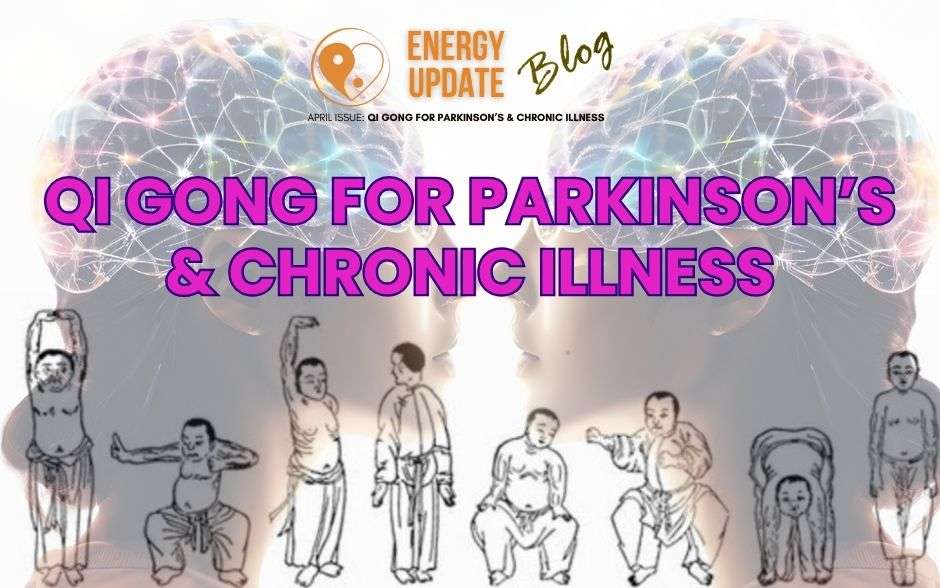
Qi Gong for Parkinson’s & Chronic Illness

Qi Gong for Parkinson’s & Chronic Illness

8 Brocades, Draw the Bow Explained

If you live with Parkinson’s, chronic illness, fatigue, stiffness, or simply feel that your body needs kind reconditioning, this is where the Eight Brocades Qi Gong practice becomes powerful.

Inside Chi Flow with Jo, April is dedicated to the classical practice known as Ba Duan Jin, the Eight Brocades, a sequence believed to be over 1000 years old

These movements are simple, accessible, and deeply restorative.

If you have ever thought, “I know I should move more, but I don’t want to exhaust myself,” you are in the right place.

Why the 8 Brocades Are Ideal for Parkinson’s and Chronic Illness

The Eight Brocades act like a daily system check for the body.

They support:

  • Circulation and joint mobility
  • Upright posture and spinal strength
  • Nervous system regulation
  • Gentle, sustainable muscle activation
  • Mental clarity and emotional steadiness

For people living with Parkinson’s, consistency is more important than intensity. Small, repeated movements retrain coordination and rebuild confidence. For those managing chronic fatigue, autoimmune conditions, or recovery phases, this practice strengthens without draining.

Over time, this shows up as:

  • Easier mornings
  • Less tension in shoulders and neck
  • Greater steadiness when standing
  • Calmer evenings
  • Feeling present in your body again

One of our members of Chi Flow with Jo recently shared that after a few weeks of steady practice, she stopped bracing herself every time she stood up. Her shoulders softened. Her breath deepened. She noticed she was less reactive at home.

That is the real medicine.

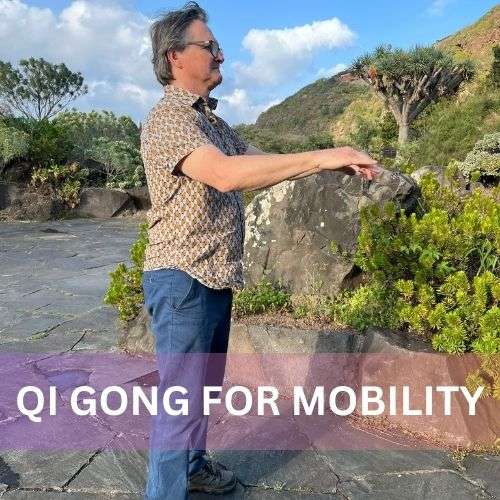
The Anchor Movement, Draw the Bow, Fire the Arrow

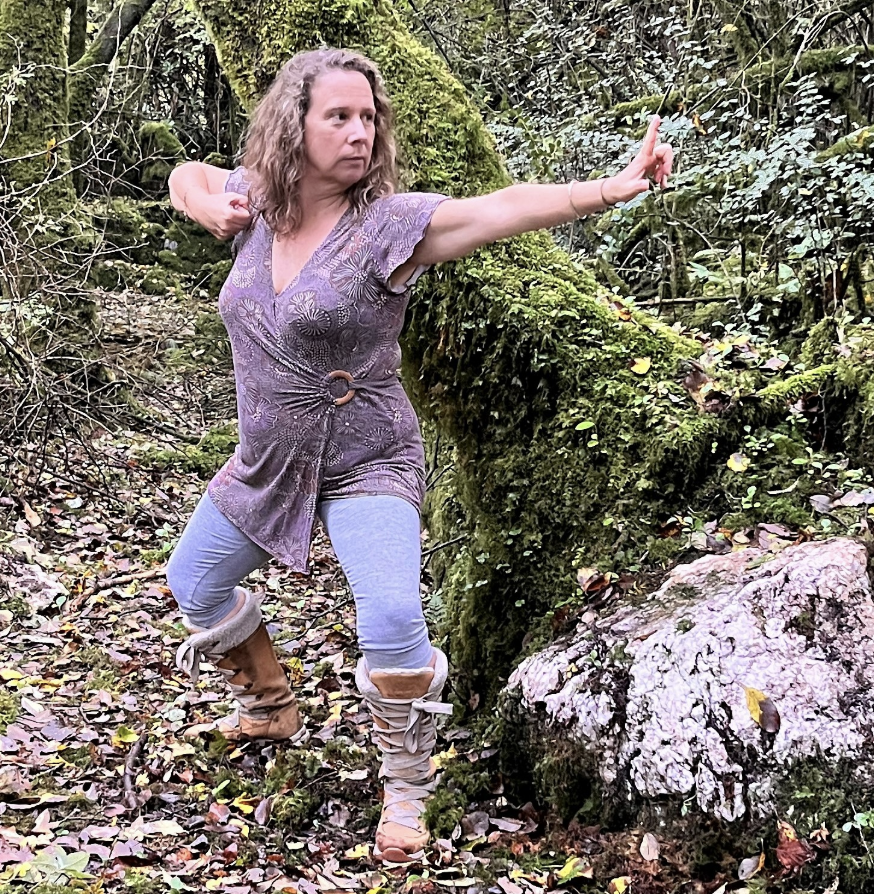
One of the most empowering movements from the Eight Brocades is called Draw the Bow.

It is simple, grounding, and deeply regulating.

You stand with feet steady and rooted.
One hand draws back as though holding a bow.
The other extends forward as if gently aiming an arrow.

You inhale as you draw back.
You exhale as you release.

It is not about range.
It is about direction.

Benefits of Draw the Bow

  • Opens the chest and shoulders
  • Improves posture
  • Strengthens upper back muscles
  • Encourages coordinated breath and movement
  • Builds focus and quiet confidence
  • Supports emotional resilience

For those feeling collapsed, protective, or mentally foggy, this movement reminds the body,
I am here. I have direction.

In Parkinson’s, posture can gradually become flexed forward. Movements that open the chest and activate the back body are essential for maintaining upright presence. In chronic stress states, the chest often tightens. This movement restores expansion without force.

For Davy, living with Parkinson’s for over a decade, the Eight Brocades have become an anchor. On low energy days, he returns to simple repetition. Familiar rhythm. Breath. One movement at a time.

Some days are small. Some days are strong. Both count.

That mindset is powerful medicine.

Why Daily Live Practice Makes the Difference

The movement itself is important. The consistency is transformational.

Inside Chi Flow with Jo, members join:

  • Weekday live Qi Gong classes

  • Replays for flexible practice

  • Monthly health talks

  • Acupressure guidance

  • Food medicine support

  • Community reflection gatherings

When you know there is a space to show up, something shifts. Structure creates energy. Connection creates purpose.

And if you miss a day, there is no guilt. Just an open door.
Can Qi Gong Help Parkinson’s Symptoms?

Research and lived experience suggest that regular Qi Gong practice may support:

  • Balance and coordination
  • Reduced rigidity
  • Improved posture
  • Nervous system regulation
  • Better sleep
  • Emotional steadiness

The key is consistency. Not intensity.
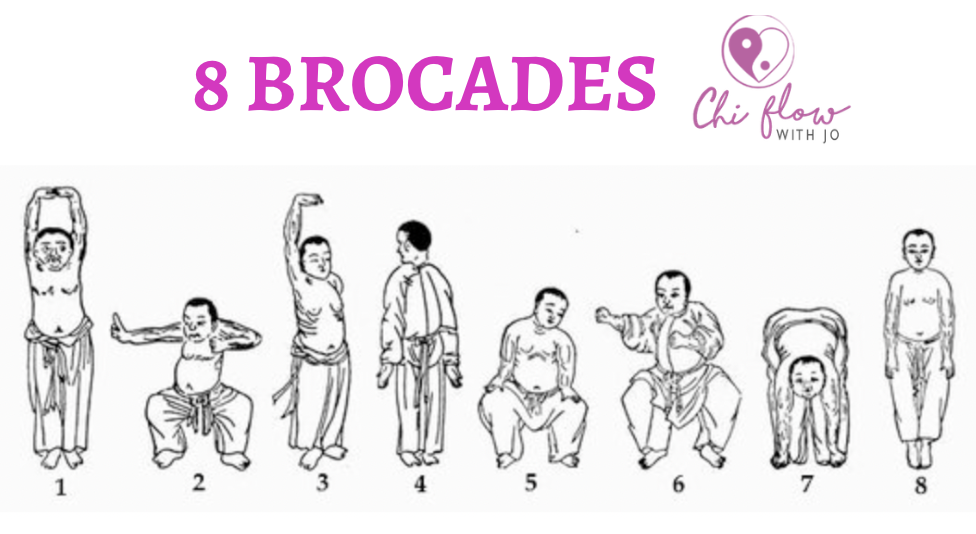
 

The Eight Brocades are particularly effective because they combine:

  • Breath regulation
  • Bilateral movement
  • Gentle resistance
  • Coordinated focus

This integrated approach supports both physical and neurological resilience.

Join the Free Class

If you are curious about Qi Gong for Parkinson’s, chronic illness, fatigue, or healthy ageing, you are warmly invited to try a free class.

You do not need experience. You do not need flexibility. You simply begin where you are.

👉 Join the Free Class and experience the Eight Brocades for yourself.

Continue the Journey

If you would like ongoing support, Chi Flow with Jo offers:

  • Weekday live classes
  • Full Eight Brocades training
  • Acupressure guidance
  • Food medicine insights
  • Monthly health talks
  • Community gatherings

It is €39 per month, reducing to €20 per month after three months. Just €1 per class.

👉 Join Chi Flow with Jo HERE.
Go Deeper with Our Books

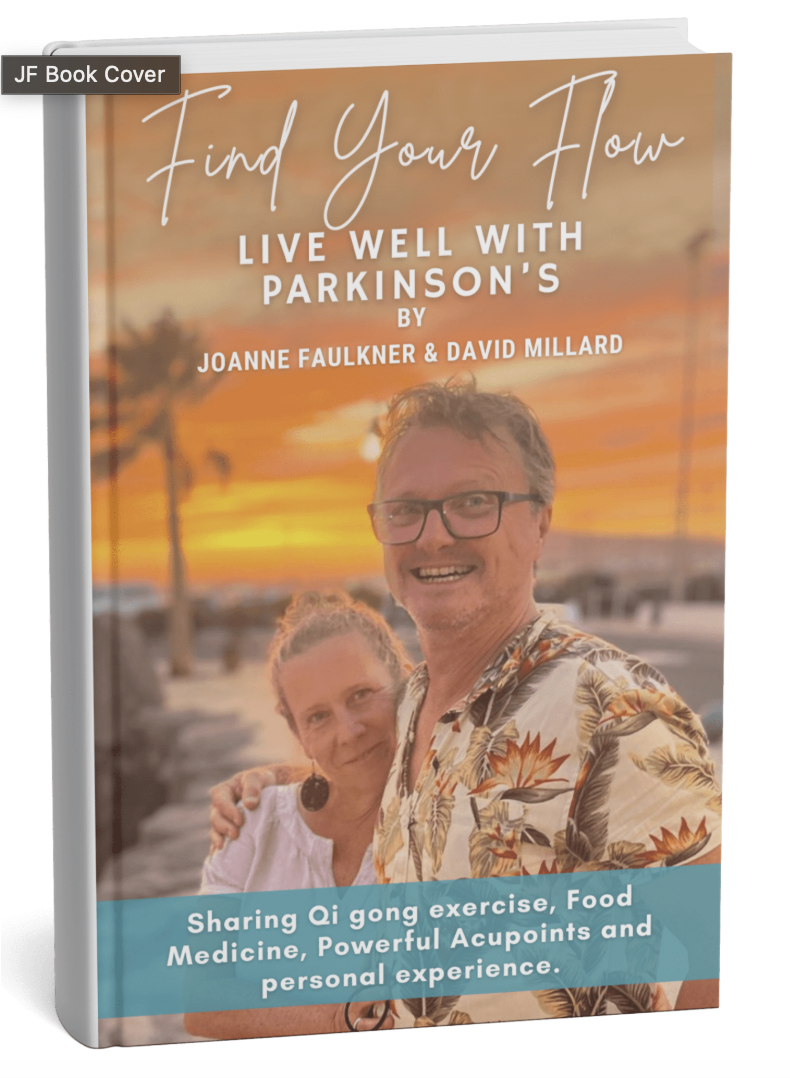
For those wanting to understand how movement, breath, and Chinese Medicine principles support living well with Parkinson’s, our books provide practical guidance rooted in lived experience and clinical wisdom.

👉 Buy the books and explore how to Find Your Flow and Live Well with Parkinson’s.

Movement does not need to be extreme to be powerful.
Small daily expansion reshapes the body.
Steady breath reshapes the nervous system.
Gentle repetition rebuilds confidence.

Every human body carries extraordinary capacity for renewal when given the right rhythm.

If April is asking you to soften into strength, come and practice with us.

Self-administered acupressure or Chinese Medicine is not a substitute for visits to qualified healthcare practitioners.

Knowing how to treat yourself and your loved ones with complimentary therapies like acupressure can be greatly beneficial and convenient. However, for serious and chronic conditions, you’ll want to visit an Shiatsu therapist / Acupuncturist or other qualified healthcare practitioner who can develop a treatment plan based on your unique medical history and combination of symptoms.

The information provided should not be considered medical advice.
Food Medicine for Parkinsons

Food Medicine for Parkinsons

For the month of May, in Chi Flow with Jo we are going to be covering Qi Gong, Acupressure and Chinese Medicine that can help you manage Parkinson’s or caring for someone with Parkinson’s. At present there’s no known cure for Parkinson’s and there’s no pinpoint diagnosis that they can give as to why Parkinson’s occurs. 

What we’re going to do in Chi Flow with Jo is give you Qigong, acupressure and food medicine to help alleviate some of the symptoms and find ease in your body.  (find list of foods at the end of this blog and more in my five element cookbooks)  

Plus read to the end and receive the free mini ebook dedicated to living well with Parkinsons.

My husband, Davy was diagnosed with Parkinson’s nine years ago; as a Qi Gong teacher and Chinese Medicine Practitioner, he and I work together so that he sleeps well, maintains flexibility, balance and strength plus working on the emotional aspects that are not so visible. 

He practices Qi Gong every day in Chi Flow with Jo which helps him live with ease, confidence and flow, physically and emotionally.

As his partner, I find strength and support in having my own practice, which strengthens loving compassionate kindness, knowing my limits and how to stay healthy.

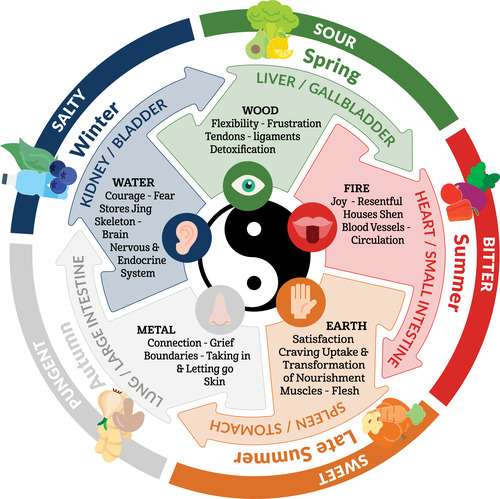
From a Chinese medicine point of view, Parkinson’s, stroke, and other neurological disorders such as dizziness, vertigo, bell’s palsy, and uncontrollable spasms would be a symptom of invading wind. 

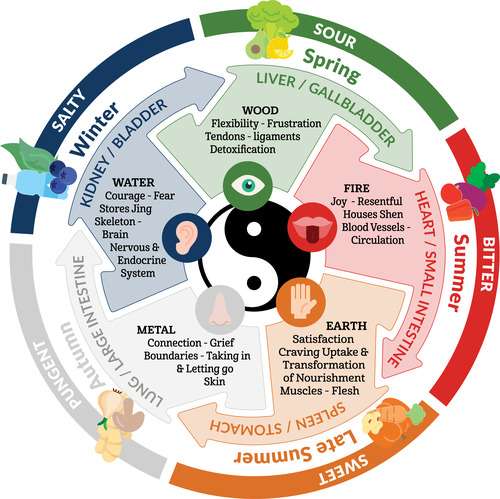
Western medicine is not familiar with climates such as wind and dampness affecting the body but TCM is a holistic medicine. It considers the human body and how it interacts with its environment as a whole. Diseases are attributed to an imbalance between the five different elements found in nature and in the body. 

In Taoism and Chinese Medicine our life force energy is made manifest in this particular body for this particular lifetime. We are no different to a tree or a blade of grass.  Same life force energy, just different collection of cells and therefore manifestation.  To promote flow and even flow of energy we can use this life force energy when working with the body.

The term ‘climate’ in traditional Chinese medicine (TCM), refers to internal and external agents that can cause disease.  Each of these climatic forces has a specific action on the body, depending upon their characteristics. Balance and harmony of these climates means good emotional and physical health. 

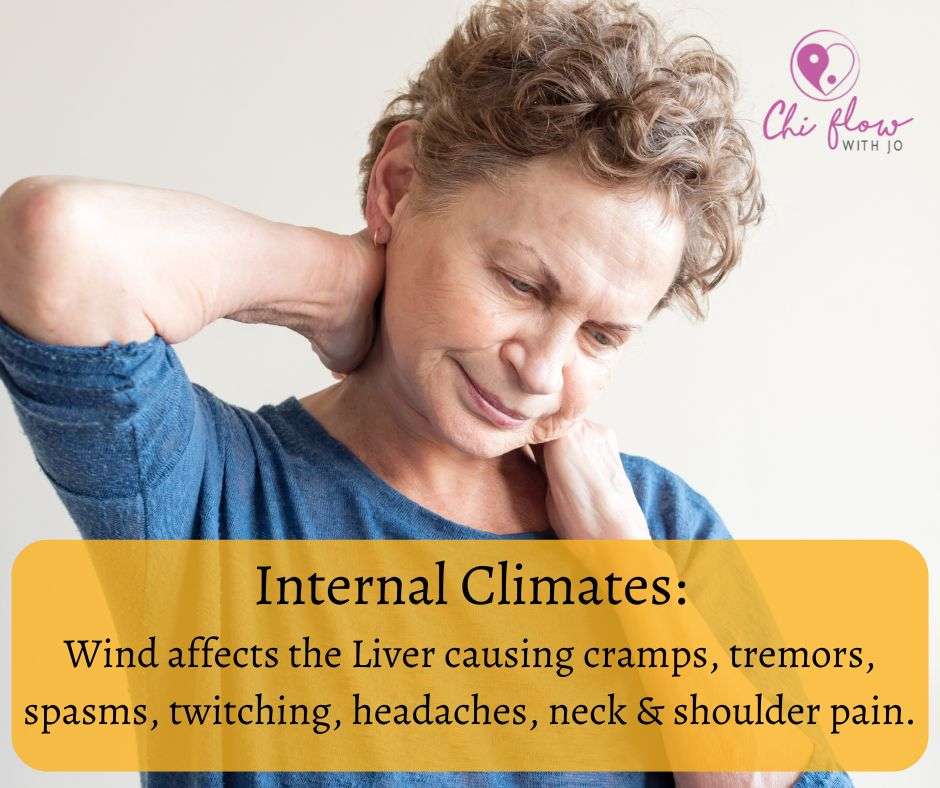
Wind affects the Liver often working with the other internal climates to invade the body, moving energy, pathogens and symptoms erratically causing tremors, spasms and twitching. 

Cold affects the Kidney creating contraction, obstructions and slow movement of Chi causing cramps and sharp pain. 

Heat affects the Heart causing erratic movement of Chi and often associated with inflammation, redness of skin, irritability and inability for the Shen/Spirit to settle. 

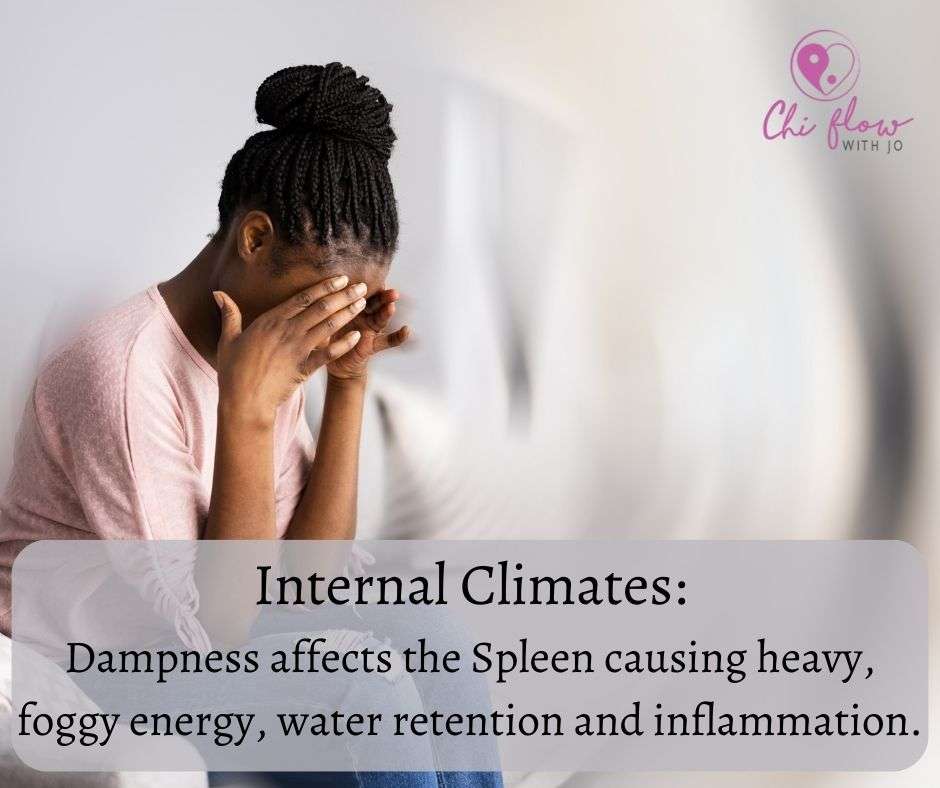
Dampness affects the Spleen causing heavy and foggy energy, generating sticky secretions and protracted, dense pain especially in the middle and lower burner, inability to transform and transport food into energy. 

Dryness affects the Lung causing dehydration and scant body fluids especially in the mucous membranes of the body including lungs, nasal cavities, digestive tract, skin, hair and nails.

Wind can bring great chaos to the body.  Symptoms come and go without warning.

If you have ever been out on a very windy day you will know it can be difficult to think straight.  Wind moves and shakes things that should be still. It produces change and acceleration in what otherwise should be steady and slow. 

With wind, things appear and disappear quickly. It causes tremors and spasms. You can’t control the muscles; the sinews contract leading to cramps and tightness and that can give you kind of vertigo. Any kind of dizziness and headaches and even a stiff neck are also included in the symptoms of wind. 

Wind is an exhilarating force.  It shows us how unpredictable and unstoppable nature can be.  You can’t trap wind in a box; it will have its flow and move where it wishes.  However, only when the Yin Yang balance is weak can this pernicious force enter and cause damage to the body.

In terms of Chinese Medicine we can translate this as a yin deficiency/weakness causes a rise in excess yang.

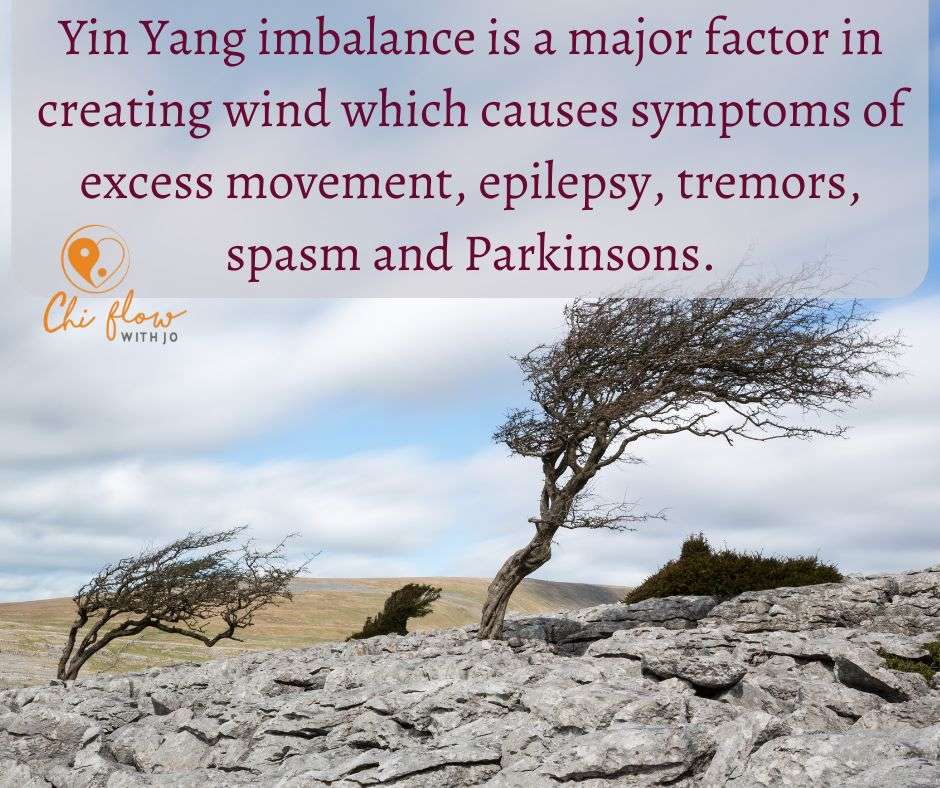
Yang is hot and active whereas Yin is cool and calm.  This imbalance is a major factor in creating internal wind which causes symptoms of excess movement, epilepsy, tremors, spasm and Parkinson’s.

So how can we calm this crazy demon wind?  Firstly by strengthening the YIN in the body.  Blood is a YIN FLUID nourishing, cooling and calming. 

In TCM we not only focus on the functions and cellular make up of blood but the very quality of blood itself which cool and nourishes all the organs.  

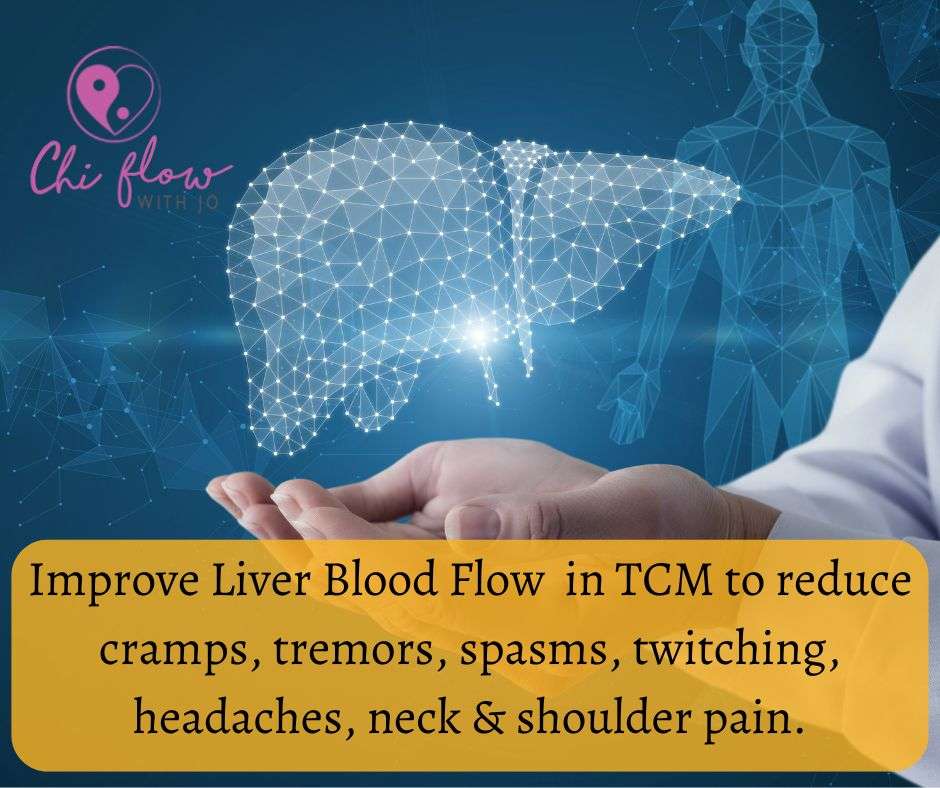
In Chinese Medicine the function of the Liver is to nourish, purify and stores the blood. It also enhances  Qi/chi(energy) which moves the blood smoothly around the body. 

THE LIVER

If the Liver is functioning properly, the blood will move around the body easily without obstruction, nourishing, cooling and calming.

However in our Western lifestyle it is very easy to overwork the Liver.

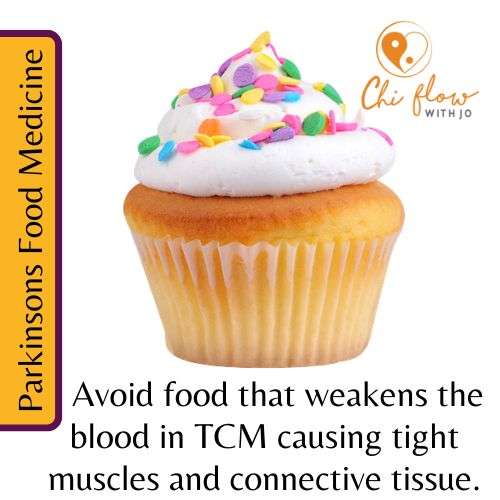
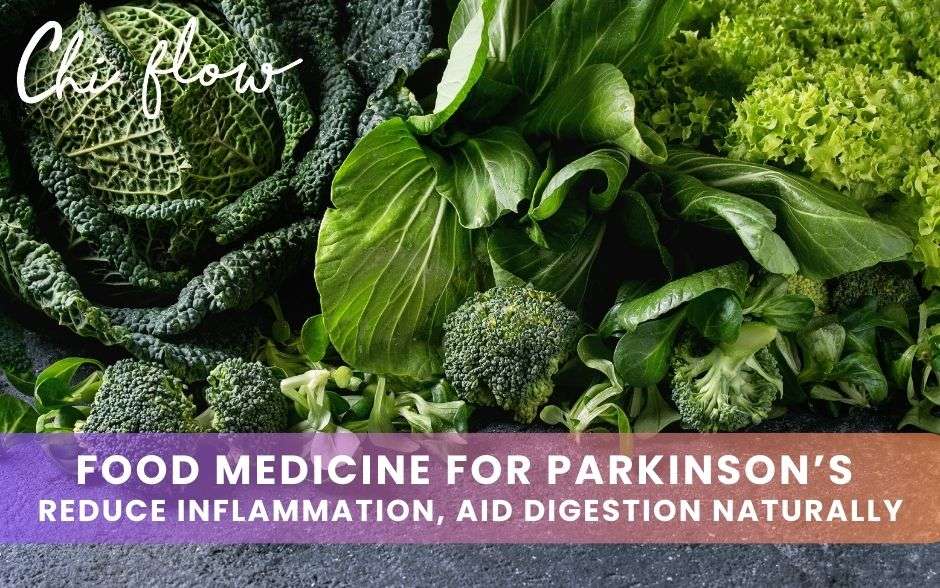
Too many saturated fats, chemical additives, alcohol, caffeine and stimulants make the Liver slow, leading to “stagnation” in the system and weakening of the blood causing symptoms of fatigue, headaches, problems concentrating, night terrors, spasms and tightness of the ligaments and tendons.

Here are some five element food medicine guides to follow and include in your diet.  Use the books to find recipes in which to use these ingredients on a daily basis:

LIVER BOOSTING FOODS

  • ☯️ Dark leafy greens including

  • ☯️ Nettles

  • ☯️ Spinach

  • ☯️ Kale

  • ☯️ Broccoli

  • ☯️ Sprouted seeds and legumes

  • ☯️ Good oils in seeds and nuts 

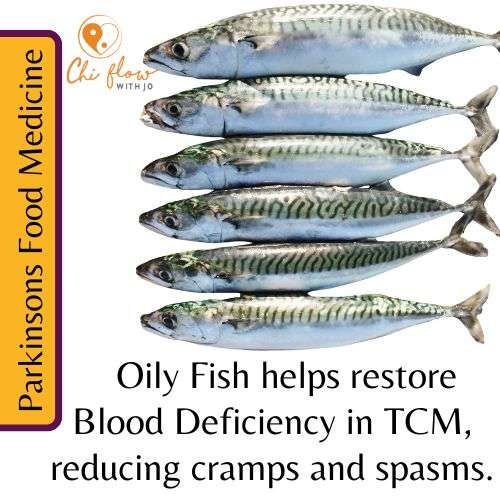
  • ☯️ Oily fish

  • ☯️ Aubergines

  • ☯️ Kimchi

  • ☯️ Fresh & raw food
  • ☯️ Lemon & limes
  • ☯️ Apple cider vinegar
  • ☯️ Plums & gooseberries
  • ☯️ Turmeric
  • ☯️ Avocado’s
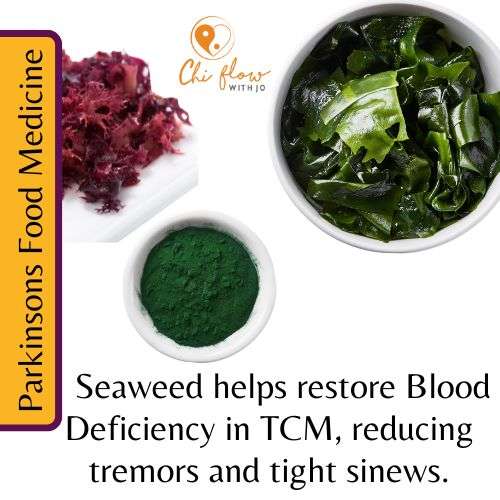
  • ☯️ Seaweed
  • ☯️ Umeboshi plum

For recipes showing you how to use these foods and the five element system, sign up for the FREE mini ebook below or take a look at the cook books.

Every day in Chi Flow with Jo you receive a recording of the Qi Gong class if you can’t make the LIVE plus a 5 element food recipe, acupressure point of Traditional Chinese Medicine Tip to set you up for the day.

FOODS TO AVOID

  • ☯️ Ice cream

  • ☯️ Heavy cream

  • ☯️ Cheese

  • ☯️ Fried food

  • ☯️ Saturated fats

  • ☯️ Alcohol

  • ☯️ Processed meats

  • ☯️ Ready meals

  • ☯️ Refined Carbohydrates

  • ☯️ Refined Sugars

Following the 5 element system, the nourishment of blood by the liver relies on kidney jing to nourish it 

When kidney jing is weak liver energy and the strength of the blood becomes weak. 

Read more in my next blog about how to use acupressure and Qi Gong to strengthen Kidney energy helping vital blood to flow and nourish organs, ligaments, muscles and tendons, relieving spasms, cramps, twitching, improving sleep and ease of the body.

I share an Acupressure point and a Qi Gong move to help you feel at ease in your body.  It’s important to not feel isolated and alone.  There are things you can do and a whole community in Chi Flow to support your Parkinsons journey.

Chi Flow with Jo uses natural and easy Qi Gong movements, acupoints and food medicine every weekday to nourish the blood, clear the liver and calm your nervous system.  Plus daily Q&A helps you to return to deep acceptance and ease with a community full of support.

Doors open the last few days of the month so that we begin the new moves together at the beginning of the new month.

HOW CAN QI GONG HELP REVITALISE YOUR LIFE?

If you’re eager to revitalise your daily routine and prioritise self-care for both your mind and body, consider exploring Qi Gong as a transformative practice.

Qi Gong is all about being well and loving yourself with gentle exercise, and the best part is that everyone can benefit from it.

Hope to see you in the Chi Flow.

Self-administered acupressure or Chinese Medicine is not a substitute for visits to qualified healthcare practitioners.

Knowing how to treat yourself and your loved ones with complimentary therapies like acupressure can be greatly beneficial and convenient. However, for serious and chronic conditions, you’ll want to visit an Shiatsu therapist / Acupuncturist or other qualified healthcare practitioner who can develop a treatment plan based on your unique medical history and combination of symptoms.  

The information provided should not be considered medical advice.
Acupoints and Qi Gong Exercise for Parkinson’s

Acupoints and Qi Gong Exercise for Parkinson’s

April is Parkinsons Awareness Month so Im going to be sharing lots of information regarding Chinese Medicine and Living Well with Parkinsons, culminating in a free Qi Gong class at the end of the month, plus a whole month of Qi Gong, Acupressure and Food Medicine during the month of May.  Sign up for the free class at the end of this blog.

Apathy and fatigue can be the nemesis of people with Parkinson’s.

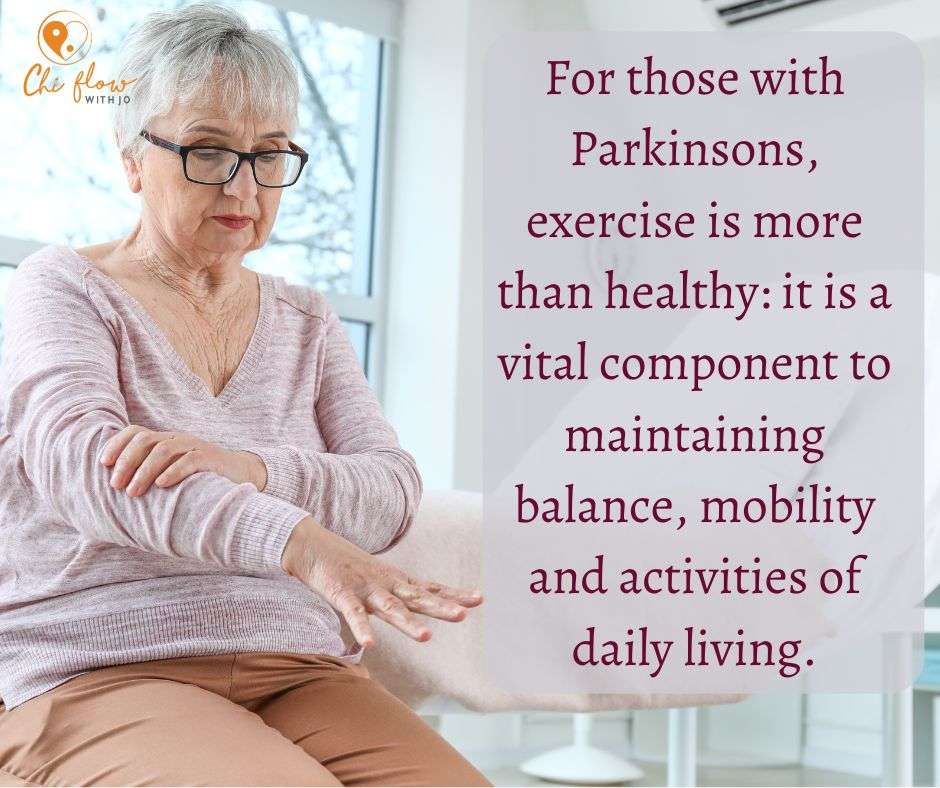
Regular physical activity can help your mood, your energy levels, your balance and your motivation, but you need to plan it. You need to make sure it works around your medication timings and be careful that it is not so intense or tiring that you get thrown off course.

Chi Flow with Jo is a gentle daily exercise class with a dedicated community full of support, when you feel like giving up.

A Partner’s Perspective: Navigating Parkinson’s with Qi Gong

My husband, Davy, was diagnosed with Parkinson’s eight years ago, and together we’ve navigated this journey with the support of Qi Gong and Chinese Medicine.

As his partner, Qi Gong teacher and Shiatsu Acupressure practitioner I’ve seen how daily Qi gong practice helps Davy sleep better, maintain flexibility, balance, and strength, and address the emotional challenges that often go unseen.

Qi Gong isn’t just for him, though. Practicing alongside him in Chi Flow with Jo helps me stay grounded, resilient, and compassionate. It strengthens my ability to show up with loving kindness while also honoring my own limits and health. Together, Qi Gong has become our shared source of strength, helping us both move through life with greater ease and flow.

Click here to watch Joanne and Davy discuss what works for them and how they work together. 

“I use Chi Flow with Jo to relax the body and helps body move in a smooth way. Even when I’m out walking, I try to think about my Qigong moves so I walk in Qigong way, not a robotic way.” says Davy.

Simple things like imagining he has little lemons under his armpits, gives Davy space so when he’s walking, his elbows don’t end up stuck to his waist, there’s more flow and less shuffle.

The Qigong practice that we do every morning helps to just bring centered ease to the body. 

Pendulum Swing: A Simple Qi Gong Practice for Strength and Ease

Research shows that exercise and physical activity can not only maintain and improve mobility, flexibility and balance but also ease non-motor PD symptoms such as depression or constipation.

“People with PD who start exercising earlier in their disease course for a minimum of 2.5 hours per week experience a slowed decline in quality of life compared to those who start later. Establishing early exercise habits is essential to overall disease management.”

Here’s a super easy exercise (video demonstration in the free mini ebook) called “The pendulum swing”

Start: Feet shoulder-width apart, relax shoulders, and bend your knees slightly. imagine a chord coming up out of the top of your head lifting and aligning your spine.

Inhale: Raise your arms loosely to shoulder height, palms facing down.

Exhale: Allow your hands and arms to drop in a smooth, pendulum-like motion.

Inhale: Returning arms back to shoulder height.

EXHALE: Repeat the pendulum-like swing, slightly bending your knees.   Coordinate your breath with the movement, and find your rhythm

Finish: Bring your hands to rest over the Lower Dan Tien, below the belly button, using them to “gather” and seal the energy.  Complete the practice with three rounds of slow, deep abdominal breathing, focusing on the warmth and vitality collected in the Dan Tien.

The Breath-Body Connection: Boosting Vitality Through Qi Gong

Breathing is often overlooked because it happens automatically, but how we breathe has profound effects on our health and well-being. For those living with Parkinson’s, the way you breathe can either support or hinder muscle function, blood flow, and overall flexibility and vitality.

A fundamental aspect of Qi Gong is learning to match your breathing with movement which in your daily life can help to reduce stress levels, improve focus and concentration, plus boosting overall physical and mental health.  

Healing Hands: The Transformative Power of Touch for Parkinson’s

In my last blog I discussed food medicine for Parkinsons where I discussed the  the 5 element system and the nourishment of blood. When Kidney and Liver energy is weak, the strength and the flow of blood also becomes weak. 

When we strengthen Kidney energy through exercise, and acupressure we help vital blood to flow and nourish organs, ligaments, muscles and tendons, relieving spasms, cramps, twitching, improving sleep and ease of the body.

If you are a caregiver, you can do this for somebody and then swap, let your partner do it for you.  It calms anxious nerves and releases excess, stagnated or agitated energy. 

Simply stroke from the top of the head, down over the spine to the small of the back, following the bladder meridians in the image.  Repeat slowly and gently from 30 seconds to 2 minutes.  Don’t worry about believing all the Chinese Medicine or knowing all the meridians simply try it and see.  

Either side of the spine is the bladder meridian which is the partnered to the kidney energy system. This simple exercise strengthens the kidney/bladder energy which governs and regulates the nervous system.

The Magic of Acupressure: Points to Calm and Rejuvenate

The Kidney energy system in Traditional Chinese Medicine would also govern the bones, the brain, the hormones, glands.  Studies have shown that using this complimentary therapy improves “Non-motor symptoms of PD include cognitive dysfunction, depression, sleep disorders, gastrointestinal, and bladder dysfunction, fatigue, sensory abnormalities, autonomic dysfunction, mentation, behavior, mood, and quality of life problems.”

☯️At the same time as stroking the bladder meridian either side of the spine try incorporating some acupressure points.

This is one you can do yourself of for someone else.

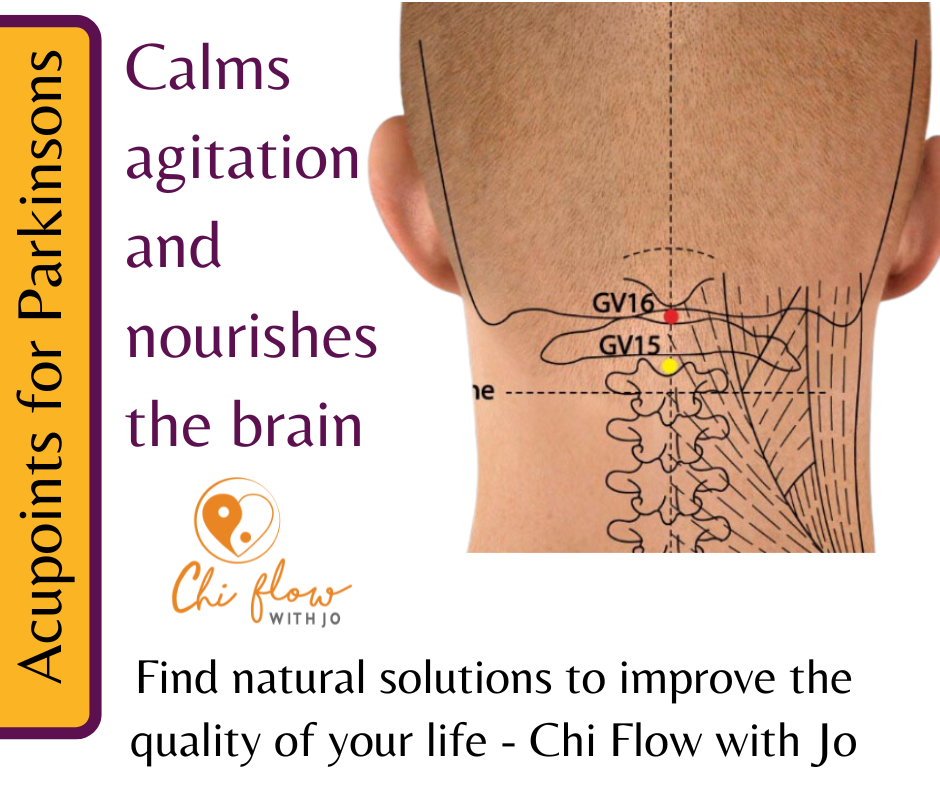
Begin by rubbing gently the occipital ridge, just where the back of the skull meets the neck.  This whole area is great for relieving neck and shoulder pain, increasing blood flow to reduce headaches and migraines caused by tightness, tension or stress.

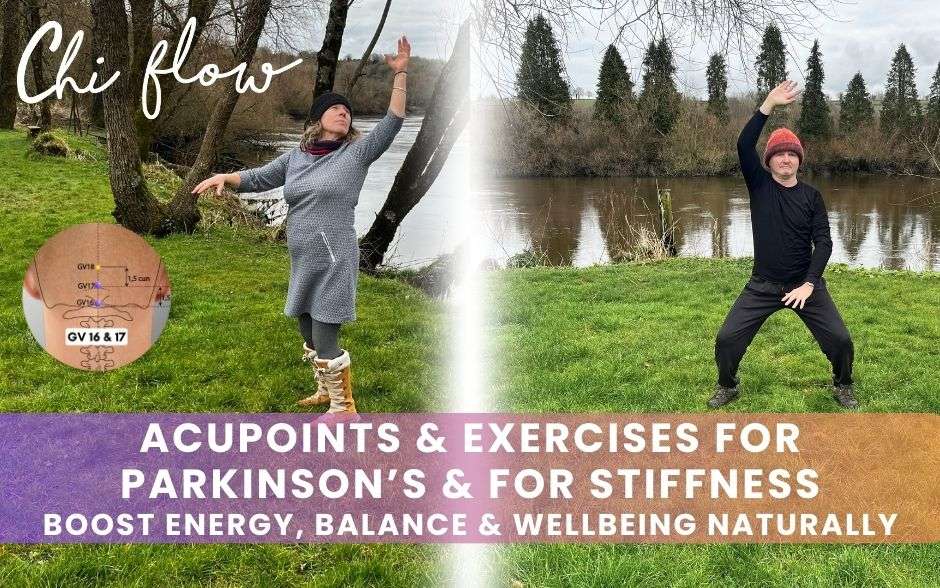
Then find the hollow area at the base of your skull, slide up until your thumb finds the bony protrusion and you have landed on Governing Vessel 16: Wind Mansion.

This point

  • ☯️ Nourishes the “sea of marrow” and the brain.
  • ☯️ Eliminates wind (not flatulance but rather an internal chaotic energy that causes tremors, spasms and dyskinesia, see previous blog for details)
  • ☯️ Calms the spirit, relieving anxiety, worry, insomnia and mania.

Traditionally we use the thumb to massage the acupoint with deep and steady pressure.

How to press a point

Massage the point in a circular motion without removing the thumb from the skin. You can also hold and gently press, imaging energy travelling from the core of your body, out of your thumb and into the point you are connecting with.

Massage the point anywhere between 30 seconds and 3 minutes until you feel a change in the energy. This might be an all over body sensation, not just in the point. Remember consistency is key so massage your favourite points daily

There are many points that benefit the body but even without knowing their location TOUCH is the most important thing.

Touch: A Path to Well-Being

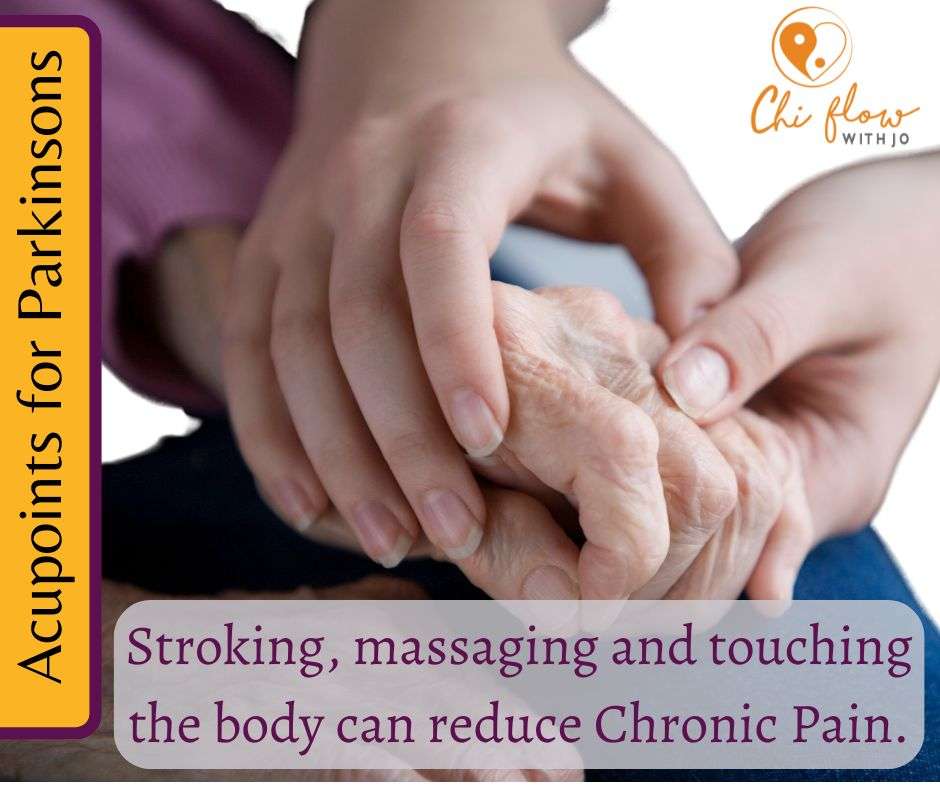
Studies show touch can reduce chronic pain and it is recommended it as part of a daily routine

Touch is one of the most profound ways we can connect with ourselves and others. It offers a bridge between the physical and emotional, soothing the nervous system, easing tension, reducing anxiety, and fostering a sense of safety and well-being.

The long-term use of levodopa and other medications for Parkinson’s commonly leads to a loss of efficacy and complications. Therefore, many people living with PD have turned to complementary therapies for support and to help relieve their symptoms.

Integrating Qi Gong and Acupressure: Thriving with Parkinson’s

Integrating Qi Gong and acupressure into daily life can be transformative for those living with Parkinson’s. Together, these practices nurture physical strength, emotional balance, and inner peace, addressing both visible symptoms and the unseen challenges like anxiety or fatigue. By embracing the gentle movements of Qi Gong and the soothing power of acupressure, individuals and caregivers alike can create a sanctuary of healing and connection. While Parkinson’s presents unique difficulties, these time-honored practices offer tools to thrive, fostering vitality, resilience, and a deeper sense of well-being.

Try the Qi Gong and Self Shiatsu acupressure and sign up for a free Qi Gong class at the end of every month. Whilst they may not cure you they will help you Live well with Parkinson.   May you be happy, safe and well.

HOW CAN QI GONG HELP REVITALISE YOUR LIFE?

If you’re eager to revitalise your daily routine and prioritise self-care for both your mind and body, consider exploring Qi Gong as a transformative practice.

Qi Gong is all about being well and loving yourself with gentle exercise, and the best part is that everyone can benefit from it.

Hope to see you in the Chi Flow.

Chi Flow with Jo uses natural and easy Qi Gong movements, self acupressure point massage, breathwork and food medicine every weekday morning to nourish the blood, clear the Liver, support the Kidney and calm your nervous system.

Plus daily Q&A helps you to return to deep acceptance and ease with a community full of support.

Enter your email to receive the FREE CLASS – where myself and Davy are live to ASK US ANYTHING

Self-administered acupressure or Chinese Medicine is not a substitute for visits to qualified healthcare practitioners.

Knowing how to treat yourself and your loved ones with complimentary therapies like acupressure can be greatly beneficial and convenient. However, for serious and chronic conditions, you’ll want to visit an Shiatsu therapist / Acupuncturist or other qualified healthcare practitioner who can develop a treatment plan based on your unique medical history and combination of symptoms.  The information provided should not be considered medical advice.
 Joanne Faulkner is a Qi Gong teacher – Chi Flow with Jo – teaching live daily online Qi Gong classes to hundreds of people; a Shiatsu practitioner specializing in the energy of food in Traditional Chinese Medicine and a published Author. Her residential and day Wellness Retreats focus on Chi Gong, self-Shiatsu & Conscious Cooking Demonstrations, and are extremely popular.

Joanne is currently the Irish representative to the European Shiatsu Federation and until recently was the Chairperson of the Shiatsu Society Ireland.

 “Good Food: Better Sex” and “Shiatsu & the Art of Conscious Cooking” , both written and published by Joanne, are modern cookbooks full of delicious recipes, Traditional Chinese Medicine plus acupressure points for health and wellbeing.

INTERACTIVE

APP NOW LIVE!

Answer 2 questions to see what foods suit you today

COMPANION TO
“SHIATSU & THE ART OF
CONSCIOUS COOKING”
COOK BOOK

BUY THE BOOK!