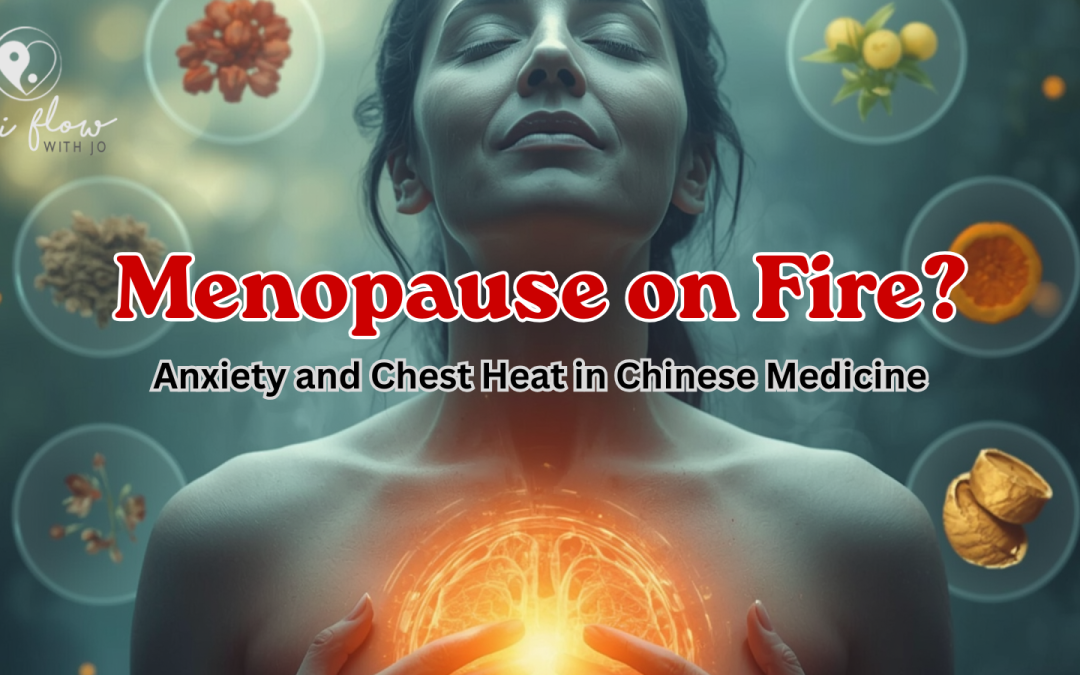
Menopause on Fire? Anxiety and Chest Heat in Chinese Medicine

Menopause on Fire? Anxiety and Chest Heat in Chinese Medicine

There is a very particular kind of heat a woman can feel in midlife.

It rises into the chest and head. It can make the heart race, the mind spin, the sleep thin, and the skin feel itchy, dry or irritated no matter how much water we drink.

A client recently asked:

“I suffer from anxiety, heat in the chest and head, and lichen sclerosus. I am post menopause. I’d like acupressure, food medicine for the autoimmune aspect and anxiety, plus a breathing exercise.”

This is such an important question because many women will recognise some version of it.

It may not be lichen sclerosus for you. It may be hot flushes, burning feet, night sweats, tightness in the chest, palpitations, itchy ears, dry skin, vaginal dryness, bladder sensitivity, brain fog, fear that comes from nowhere, or that awful feeling of being tired and wired at the same time.

This blog is for women in peri-menopause, menopause and post-menopause who feel as though the body has suddenly become louder than it used to be.

The Chinese medicine view: heat, anxiety and menopause

In Chinese medicine, the simple picture is this: energy has to flow.

Qi has to flow. Blood has to flow. Fluids have to flow. Warmth has to move through the body without getting trapped at the top.

Yin and Yang also have to keep talking to each other.

Yin is the cooling, moistening, holding quality. Yang is the warming, moving, active quality. We need both. We do not want a cold, flat life, and we do not want a blazing, restless one.

Symptoms are feedback. They are not moral failures. They are not proof that you have done something wrong. They are the body’s way of saying, “Something in here needs rebalancing.”

When a woman says, “I have heat in my chest and head,” I listen for Fire rising.

When she says, “I am anxious,” I listen for the Heart being unsettled.

When she says, “I am menopausal or post-menopausal,” I listen for Yin and fluids needing more care, especially the Kidney foundation. In Chinese medicine, the Kidneys are not only the two physical kidneys. They are the deep battery, the stored essence, the roots of water in the body.

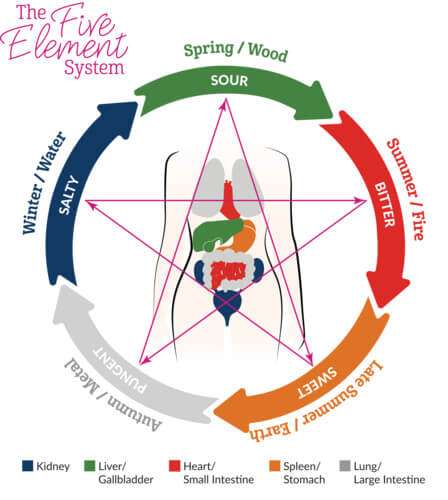
Menopause can bring all Five Elements into one body

The Five Elements help us understand why menopause can feel so confusing.

In spring, we talk about Wood and the Liver: movement, flexibility and letting things flow.

In summer, we talk about Fire and the Heart: joy, connection, heat and sleep.

In late summer, we talk about Earth and digestion: the centre that helps us digest food and life.

In autumn, we talk about Metal, the Lung and Large Intestine: grief, boundaries, skin and letting go.
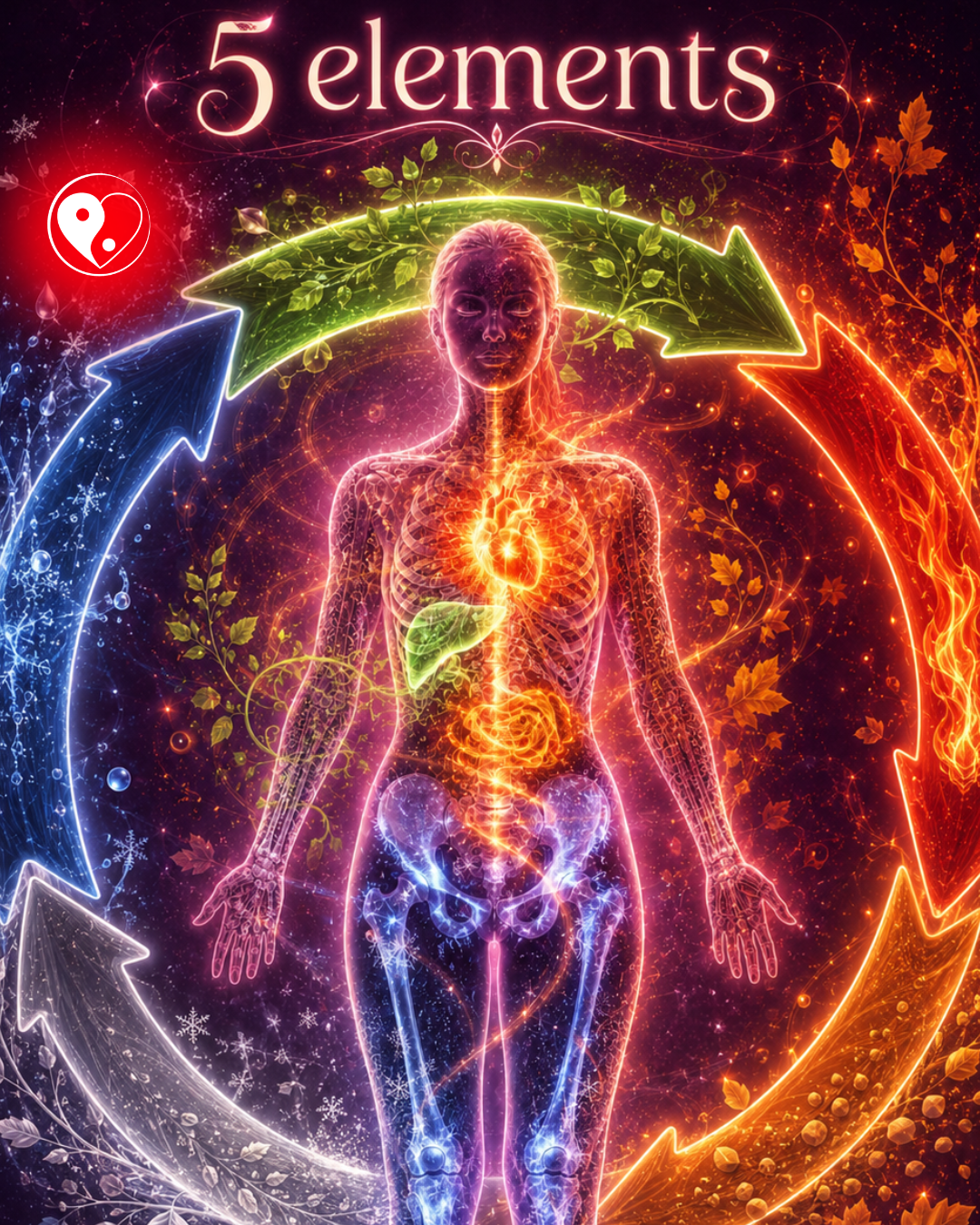
In winter, we talk about Water and the Kidneys: rest, bones, fear, deep reserves and the wisdom of not spending ourselves empty.

Menopause can bring all of these seasons into one body.

You can have summer heat in the chest, winter depletion in the bones, spring frustration in the Liver, autumn dryness in the skin, and late-summer worry in the belly.

This is why rhythm matters so much. We do not fix the whole woman by attacking one symptom. We help the whole system flow again.

See my books for full food medicine and acupressure for the complete five elements.

What is Bao Mai?

This is where Chinese medicine offers something very special.

There is a beautiful pathway in women’s health called the Bao Mai. Bao Mai means the Uterus Vessel, or more simply, the Heart and womb connection.

It is not one of the everyday meridians we talk about, like Liver or Kidney. It belongs to the deeper map of the extraordinary vessels, especially the Chong Mai, known as the Sea of Blood.

The Bao Mai is the communication line between the Heart and the uterus. It allows Heart Qi, Heart Blood and Shen, the spirit or mind, to descend and nourish the reproductive organs.
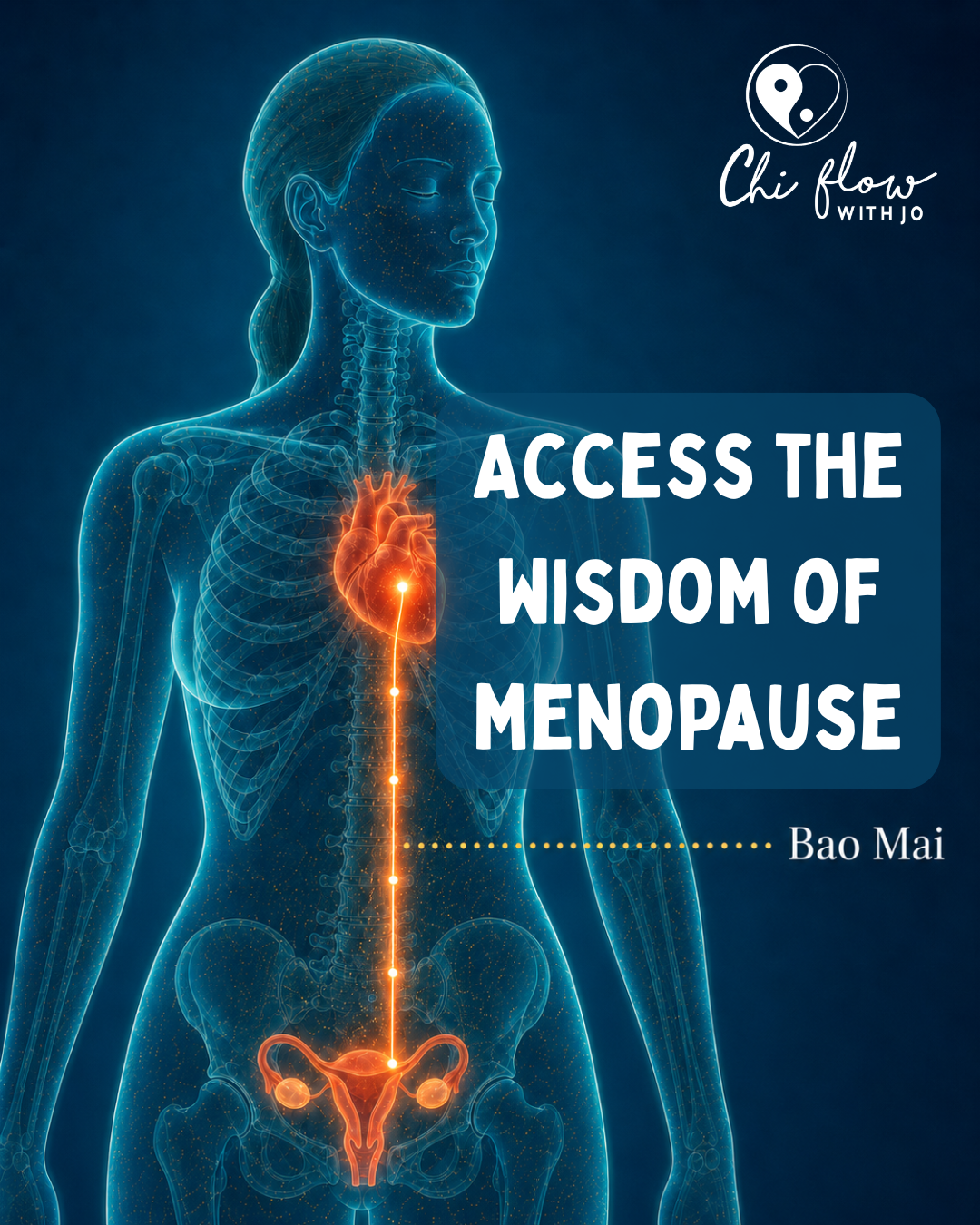
In Chinese medicine practice, the Bao Mai is used to understand ovulation, menstruation, fertility, pregnancy, PMS, irregular cycles, scanty bleeding, and the way stress and emotion can disturb hormonal rhythm.

In the fertile years, Blood and Qi move down from the Heart toward the womb. The monthly cycle opens and closes, and the body has a visible rhythm.

In peri-menopause and menopause, that rhythm begins to change.

The movement starts to return upward toward the Heart and brain. When that upward movement is smooth, it can become clarity, intuition and wisdom. It can become the woman who says, “I know what matters now, and I am not wasting my life putting others first.”

But when that upward movement is too hot, too rushed, or blocked by overwhelm, we may feel heat in the chest, pressure in the head, palpitations, anxiety, irritation, poor sleep or a sense that we cannot come down into ourselves.

Women’s seven-year cycles in Chinese medicine

Chinese medicine also describes women’s lives in seven-year cycles.

Around fourteen, the Conception Vessel, or Ren Mai, begins to flow and menstruation starts.

Around twenty-one, Kidney Qi matures.

Around twenty-eight, Qi and Blood are at their fullest.

Around thirty-five and forty-two, the Yang Ming channels begin to weaken, which may show in skin, hair and vitality.

Around forty-nine, the Conception Vessel weakens, reproductive energy declines, and menstruation begins to stop.

These ages are not rigid rules. They are broad brush strokes. But they give us a beautiful way to understand menopause.

Menopause is not a sudden failure of the body. It is a change in direction.

One acupressure point for anxiety and chest heat: CV17

The acupressure point I would use here is Conception Vessel 17, also called CV17.

It is in the centre of the chest, on the breastbone, roughly level with the nipples. Do not press breast tissue. Come to the centre line of the sternum, the flat bone in the middle of the chest.

Use two fingertips or the soft pads of your fingers.

For anxiety, heat, tightness and emotional pressure, CV17 can be a lovely place to make contact. It should not feel sharp. It should not feel like you are bruising yourself. It may feel tender, warm, achy, or as if the breath suddenly notices the space under your hand.
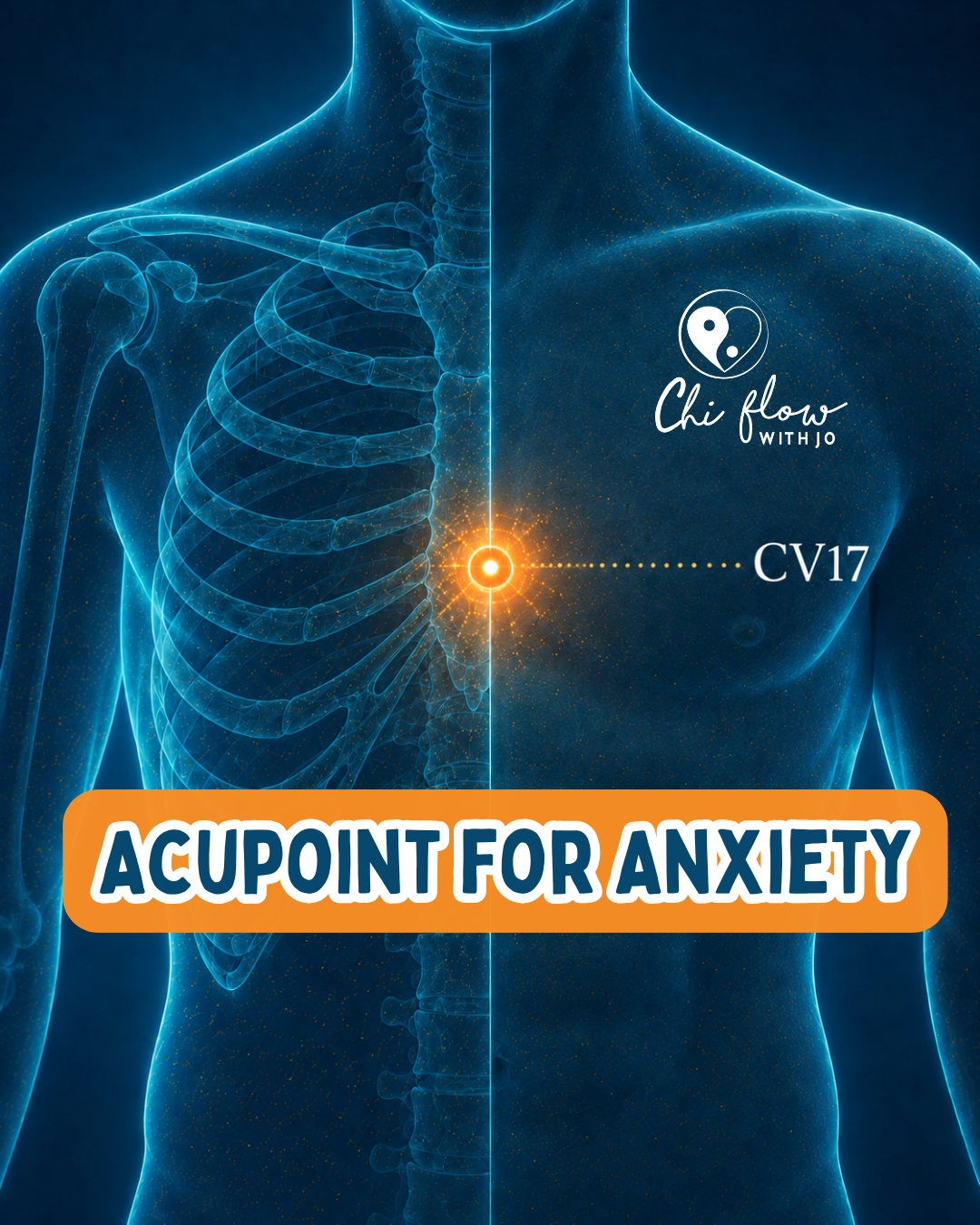
Place two fingers on the centre of the breastbone. Let your shoulders drop. Press gently and steadily. You are not digging. You are saying hello.

Stay for thirty seconds to three minutes. If you are very anxious, start with thirty seconds. Breathe slowly while you hold it. Let the exhale be a little longer than the inhale.

When you finish, smooth the hand down the centre of the chest to the upper belly, as if reminding the heat that there is a whole body below the neck.A simple daily cue is the kettle. Every time you boil the kettle, touch CV17. Tea, coffee, hot water, soup, whatever it is, let the kettle become your reminder.

Consistency matters more than intensity.

A breathing practice: Heart-Womb Breath

The breathing practice I recommend is Heart-Womb Breath.

If you have had a hysterectomy, if you do not have a uterus, or if the word womb does not feel right for you, use “lower belly” or “pelvic bowl.” The body still has a centre.

Think of anxiety as a house with all the lights on upstairs. The energy is in the head, eyes, jaw, temples, throat, chest and heart. The lower floor feels empty.

This breath helps you come downstairs again.

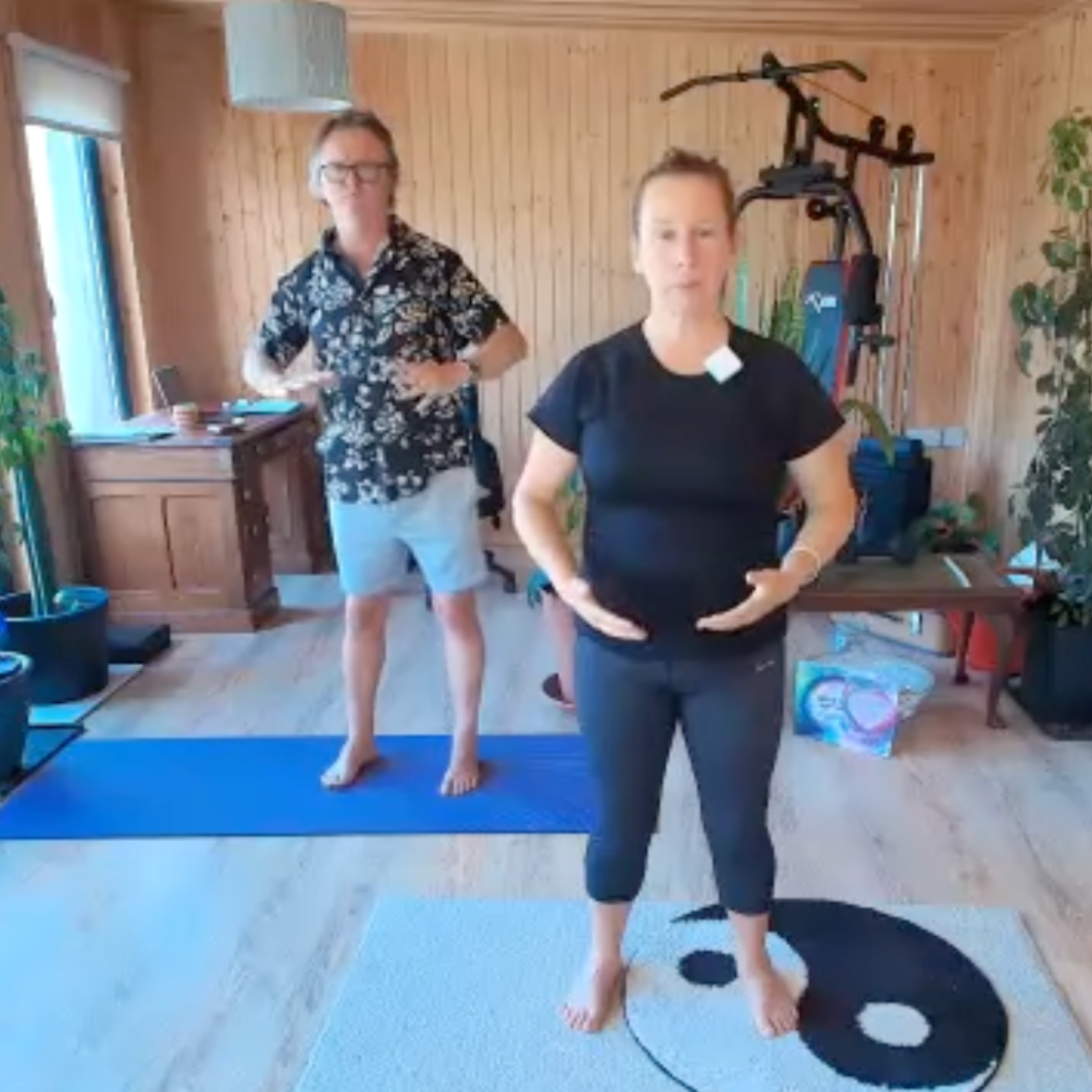
Place one hand on the centre of the chest, around CV17.
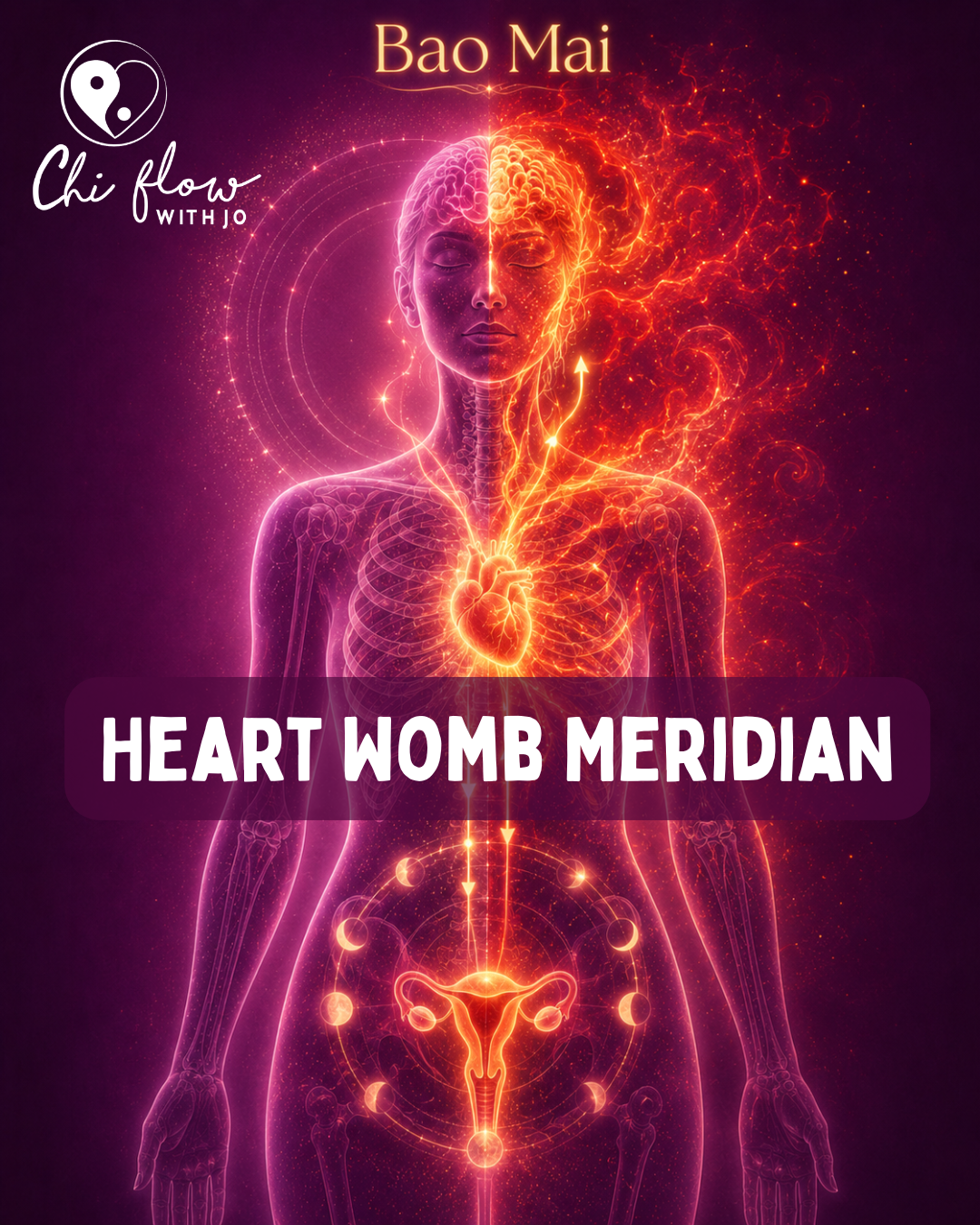
Place the other hand on the lower belly, below the navel, over the womb space or pelvic bowl.

Soften the jaw. Breathe in through the nose and out through the mouth. As you exhale, imagine warmth travelling from the chest down into the lower belly, like honey moving slowly down a spoon.

Then gently inhale and imagine Qi flowing from the womb space up to the Heart. On the exhale, let it flow back down to the perineum and pelvic bowl.  Do this for three minutes.

The aim is not to create a mystical experience. The aim is to give your nervous system proof that it is safe to come down.

The felt result may be simple: the chest a little softer, the head a little cooler, the belly a little more present, and the breath less trapped.

Food medicine for anxiety, heat and immune over-alertness

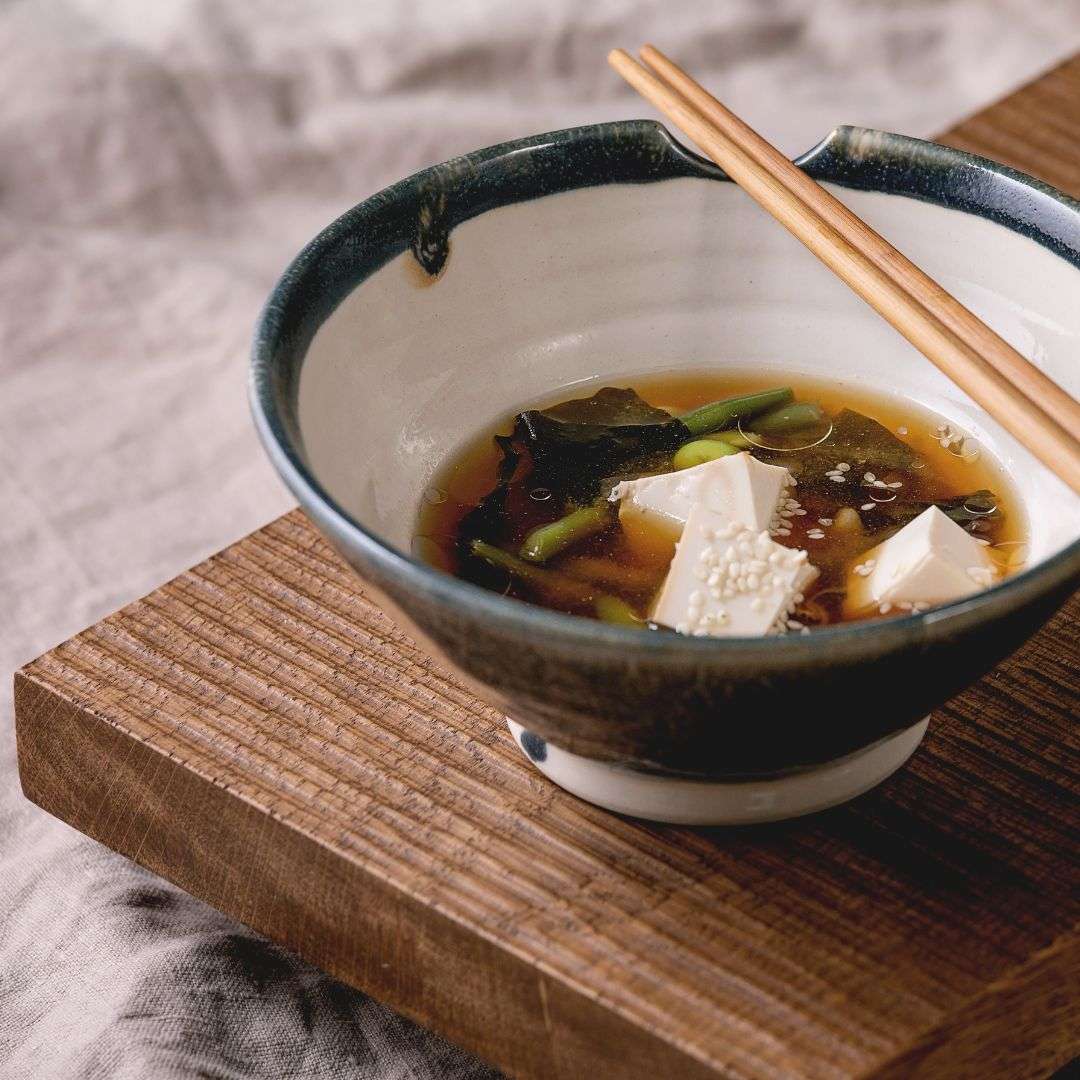
The food medicine I would choose is warm miso with wakame.

Not a complicated protocol. Not a war against the immune system.

For autoimmune patterns, I do not love the phrase “boost the immune system,” because the immune system is not always weak. Sometimes it is confused, over-alert, inflamed, reactive or exhausted from being on guard.

The intention is not to whip it harder. The intention is to steady the terrain.

Miso is fermented and supports the gut environment. Wakame brings a mineral-rich seaweed quality. The warm salty bowl can help the nervous system feel fed, held and less frantic.

The simplest recipe is this:

Boil water, then let it cool for a minute. Put one teaspoon of miso paste in a mug or small bowl. Add a small pinch of wakame. Pour the hot water over, stir, let it sit for a few minutes, and sip slowly.

You can add spring onion or a few cubes of tofu if you want to make it more like a snack, but the basic medicine is miso, wakame, warm water and a pause.

Do not boil the miso hard. Warm is enough.

Warm tells the belly, “You are safe.” Scalding tells the body, “More heat is coming.”

If you are sensitive to soy, choose a miso that suits you or skip this. If you have been told to restrict salt, if you have thyroid issues, or if seaweed has been restricted for you, check with your clinician and keep the wakame tiny.

Lichen sclerosus and the whole-body view

As with many issues around sexual organs, conditions of the vulva can carry so much silence.

Women put up with itching, burning, pain, fear around intimacy, embarrassment around examination, confusion about creams, and sometimes worry that they will not be believed.

Please do not carry that alone.

Good care matters. Clear diagnosis matters. Follow-up matters. Your comfort matters.

You are allowed to ask questions. You are allowed to ask how to use your prescribed ointment properly. You are allowed to say that sex hurts. You are allowed to say that anxiety is part of the picture. You are allowed to want both medical care and whole-body support.

In Chinese medicine, we never separate the local from the whole.

A vulval skin condition needs local medical care. Absolutely. And the whole body can still be supported through fluids, digestion, sleep, breath, stress rhythm and gentle movement of Qi.

This is not either-or. It is both-and.  See my book Good Food Better Sex for explorations of sexual conditions and MENOPAUSE through the lens of Chinese medicine

Final thought

To every woman in peri-menopause, menopause or post-menopause: your body is giving you feedback about flow, cooling, nourishment, boundaries, rest and rhythm. You do not have to decode it perfectly. You only have to begin responding more kindly.

And if you would like to practise this kind of work with me in a steady, supported way, come into the Chi Flow membership. It is €39 a month, and after the three-month trial it becomes €20 a month, so you can keep building these small rhythms through the seasons with guidance, community and practice.

Ready to Start?

Join Chi Flow with Jo and begin restoring your energy, and feeling more like yourself again.

Frequently Asked Questions 

What does heat in the chest and head mean in Chinese medicine?

In Chinese medicine, heat rising into the chest and head can suggest that warmth, Qi or emotional pressure is not moving smoothly through the body. In menopause, this may be linked with Yin and fluids needing support, the Heart being unsettled, and the body needing a calmer rhythm.

What is the Bao Mai?

The Bao Mai is the Heart-womb connection in Chinese medicine. It is linked with the extraordinary vessels, especially the Chong Mai, the Sea of Blood. It helps explain the relationship between emotions, the Heart, the uterus, menstruation, fertility, menopause, hot flushes and anxiety.

Why can menopause cause anxiety and hot flushes in Chinese medicine?

Chinese medicine sees menopause as a change in direction. In the fertile years, Blood and Qi move down toward the womb. In peri-menopause and post-menopause, this movement begins to return upward toward the Heart and brain. If the transition is too hot, rushed or blocked, symptoms may include anxiety, palpitations, poor sleep, heat in the chest and head, or hot flushes.

What acupressure point helps menopause anxiety?

CV17, or Conception Vessel 17, is a useful acupressure point for anxiety, chest tightness and emotional pressure. It is found in the centre of the breastbone. Press gently for thirty seconds to three minutes while breathing slowly.

What food medicine supports menopause anxiety and immune over-alertness?

Warm miso with wakame is a simple food medicine option. Miso is fermented and supports the gut environment. Wakame brings a mineral-rich seaweed quality. Together, they make a warm, steadying bowl that supports the body without overstimulating it.

Can Chinese medicine cure lichen sclerosus?

No. Lichen sclerosus needs medical diagnosis and care from a GP, gynaecologist, dermatologist or vulval clinic. Chinese medicine practices such as acupressure, breathwork, food medicine and Qi Gong may support the whole body alongside medical treatment, but they do not replace it.

Go Deeper with Our Books

For those wanting to understand how movement, breath, and Chinese Medicine principles, Jo’s books provide practical guidance rooted in lived experience and clinical wisdom.

👉 Buy Five Element Wisdom cookbooks

Explore how to Find Your Flow and Live Well with Parkinson’s.

Movement does not need to be extreme to be powerful.
Small daily expansion reshapes the body.
Steady breath reshapes the nervous system.
Gentle repetition rebuilds confidence.

Every human body carries extraordinary capacity for renewal when given the right rhythm.

If you want to soften into strength, come and practice with us.

When to seek medical help

Please speak to your GP or specialist if symptoms worsen or spread, if pain, itching, heat or anxiety starts waking you at night, if you notice new skin changes, lumps, thickening, ulceration or bleeding, if your prescribed treatment is not helping, or if there is any change in medication.

And if you ever have chest pain that feels severe, crushing, unusual, or comes with breathlessness, sweating, faintness, jaw pain or arm pain, seek urgent medical help.

Chinese medicine and home practices can support the terrain of the body, but they do not replace diagnosis or medical treatment.

Self-administered acupressure or Chinese Medicine is not a substitute for visits to qualified healthcare practitioners.

Knowing how to treat yourself and your loved ones with complimentary therapies like acupressure can be greatly beneficial and convenient. However, for serious and chronic conditions, you’ll want to visit an Shiatsu therapist / Acupuncturist or other qualified healthcare practitioner who can develop a treatment plan based on your unique medical history and combination of symptoms.

The information provided should not be considered medical advice.

Topics: Breathwork, Parkinson’s support, sleep practices, Qi Gong, acupressure.

Bone Health Without the Gym: What Actually Works in Post, Mid and Perimenopause

Bone Health Without the Gym: What Actually Works in Post, Mid and Perimenopause

If you’ve ever found yourself wondering “am I doing enough for my bone health?” you are not alone.

This question comes up again and again for women in their 40s and beyond. You might be active, eating well, doing your Qi Gong, listening to your body… and yet there’s that quiet voice in the background:

Should I be doing more?
Do I need weights?
Is gentle exercise enough?
Am I risking my bone health by not going to the gym?

Let’s unpack this in a way that actually makes sense for your body.

The Real Question Behind Bone Health Anxiety

Most women aren’t just asking about bones.

They’re asking:
Can I trust what I’m doing?

Especially in perimenopause, when hormones shift and the body starts giving new signals, it’s easy to lose confidence. What used to work might not feel right anymore. High-impact exercise might irritate your knees. The gym might feel overwhelming or simply not appealing.

And yet, everywhere you look, the message is the same:

“You need weight-bearing exercise for bone health.”

This is true… but incomplete.

What Does “Weight-Bearing Exercise” Actually Mean?

This is one of the most searched questions:

What is the best exercise for bone health?

Bones respond to load. They need pressure, use, and stimulation to stay strong.

But load doesn’t only come from lifting heavy weights.

Load also comes from:

  • Standing and holding your body weight
  • Slow, controlled movement
  • Balance and stability work
  • Time spent on your feet
  • Proper alignment through the joints

This is where Qi Gong becomes incredibly valuable.


Is Qi Gong Enough for Bone Health and Bone Density?

Qi Gong, when practised well, is not just “gentle waving of the arms.”

It is weight-bearing, structured, and deeply organising for the body.

When you stand, shift your weight, and move slowly with awareness:

  • Your bones receive consistent, low-level load
  • Your joints align more efficiently
  • Your muscles support the skeleton properly
  • Your nervous system relaxes, allowing better repair

And here’s the key:

Consistency beats intensity when it comes to long-term bone health.

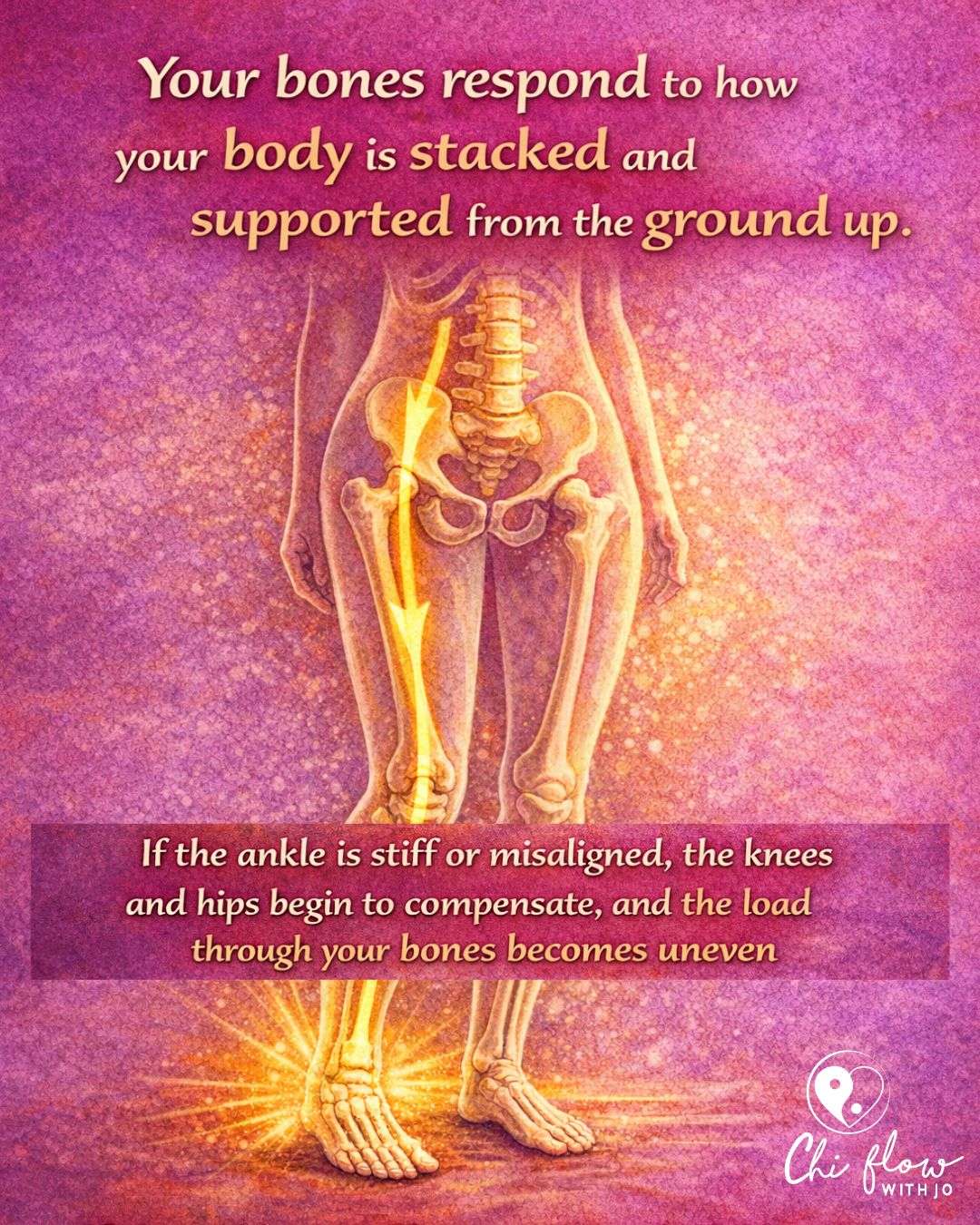
Why Alignment Matters More Than Force

The ankle is the root of the kinetic tree. When it becomes stiff or dehydrated through the fascia, every joint above begins to compensate.

The knees and hips start to rotate inward.
The lower back loses support.
The tension travels upward into the shoulders and neck.

Over time, this creates misalignment.

And misalignment matters because:

Poor posture weakens bones.

Not because bones suddenly become fragile, but because:

  • Weight is no longer evenly distributed
  • Some areas become compressed
  • Others are underused
  • The body loses its natural strength pathways

So instead of healthy, balanced load through the skeleton, you get strain.

A Simple Daily Practice to Support Bone Strength

If you’re asking:“What is the best daily routine for bone health?”

Start here.

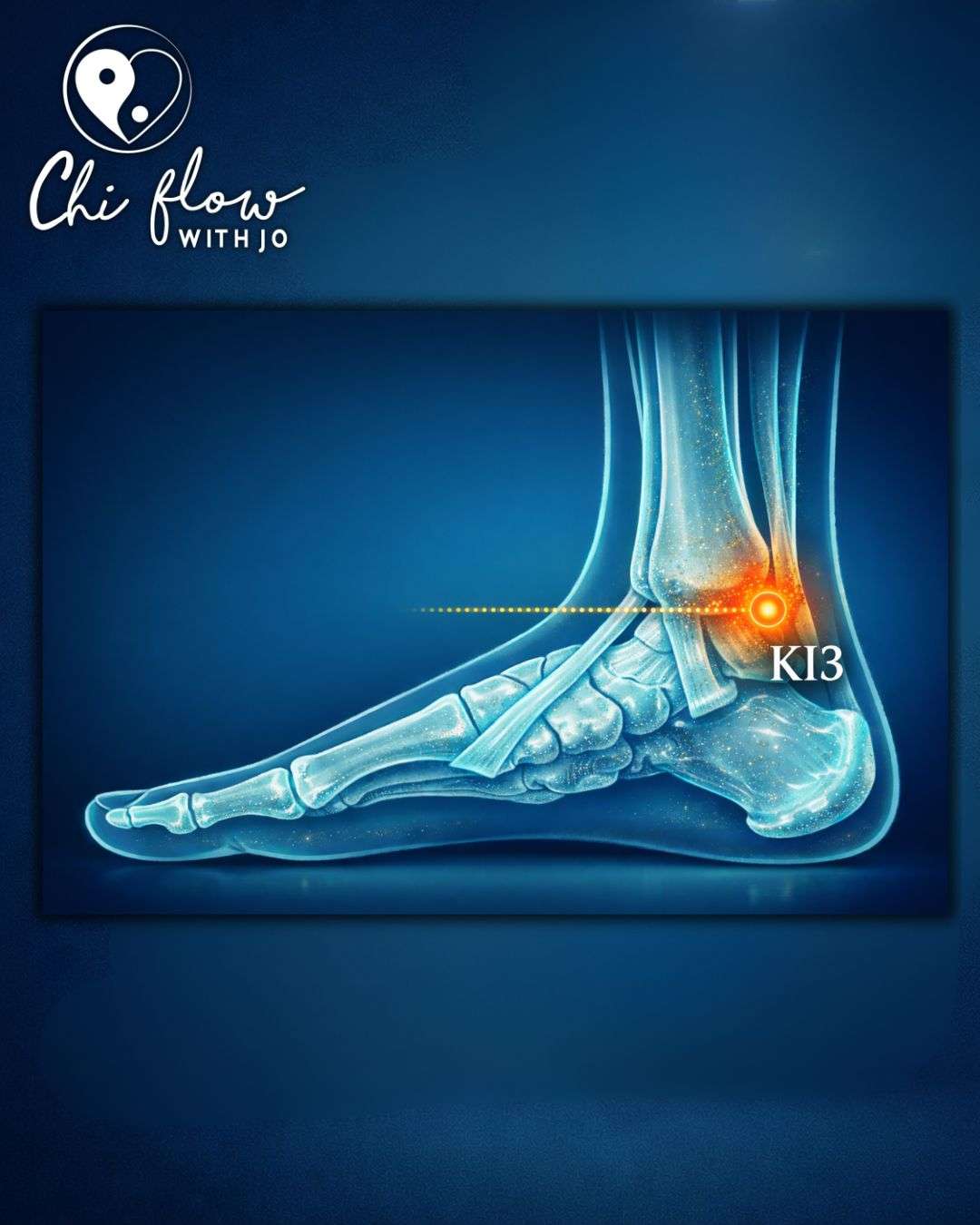
Acupressure for Foundation: Kidney 3

This point sits on the inside of the ankle, between the ankle bone and Achilles tendon.

  • Press gently until you feel a dull, comfortable ache
  • Hold for 1–3 minutes each side
  • Breathe slowly

This helps the body reconnect with its base and improves how force travels through the skeleton.

After massaging and connecting with the acupoint, rotate the ankles, drawing circles and figure 8’s with the toes

Food for Bone Nourishment (Beyond Calcium)

What foods strengthen bones naturally?

While calcium is important, bone health is about absorption, minerals, and overall nourishment.

Miso and bone broth remain foundational for Kidney energy and bone support, and you can revisit those recipes in my books and blogs.

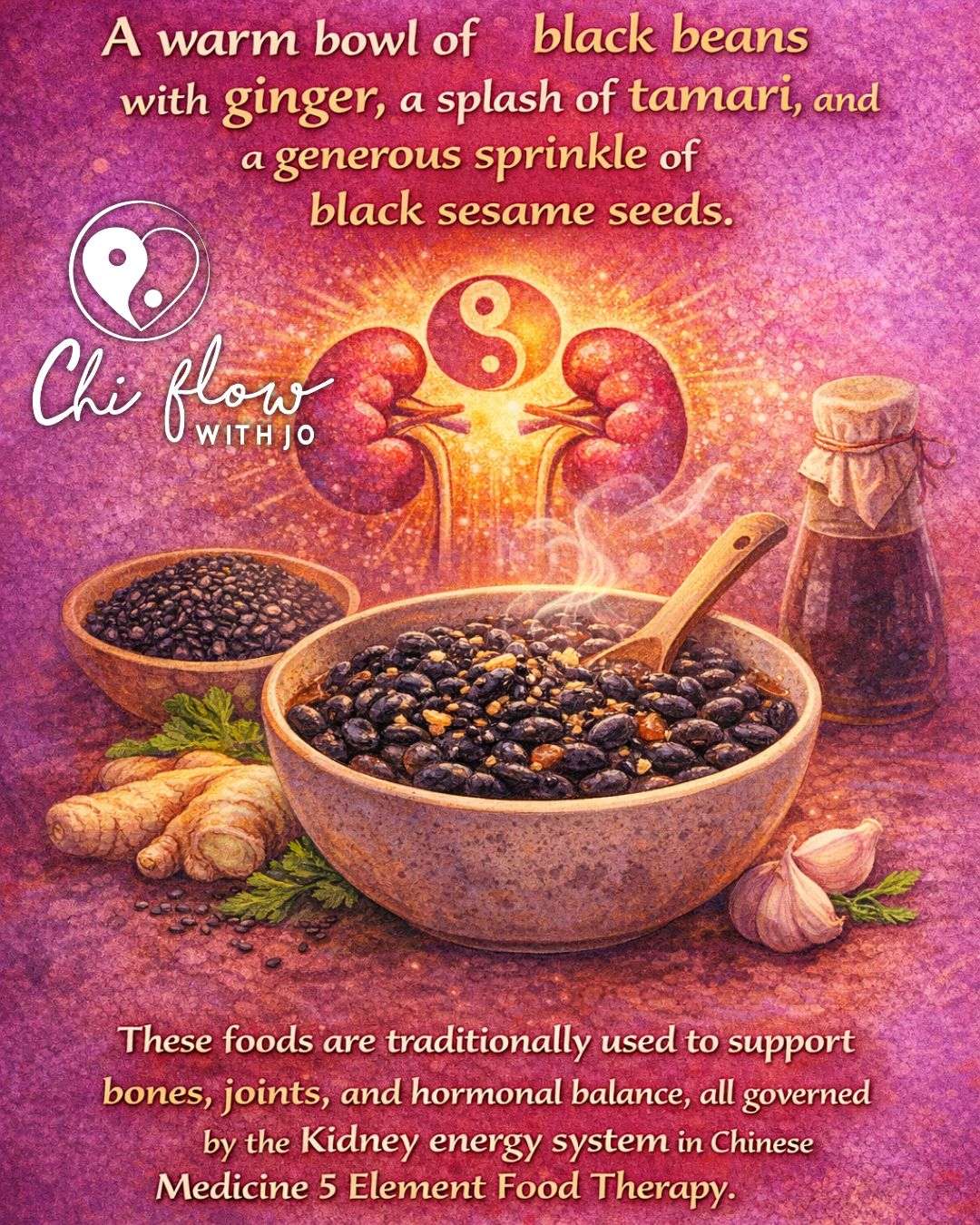
For something different, try a black bean and sesame bowl:

  • Cook your black beans or open a tin of organic black beans
  • Warm black beans with grated ginger and tamari to taste
  • Add toasted black sesame seeds
  • Finish with a drizzle of sesame oil

Why this works:

    • Black foods support the Kidney system
    • Sesame seeds are traditionally used for bones and joints in Chinese Medicine
    • Warm, savoury meals reduce cravings and support digestion

The Missing Piece: Horse Stance for Bone Strength

One of the most important questions:

Do I need weights for strong bones?

Not necessarily.

Horse stance is a powerful, often overlooked, bodyweight strength practice.

When you stand with feet wide and knees softly bent:

  • Your legs carry your full body weight
  • Your bones receive direct, steady load
  • Your joints align and stabilise together

This is true weight-bearing exercise.


Prayer Wings in Horse Stance

Now we add the upper body.

As you move through Prayer Wings:

  • The chest opens
  • The neck lengthens
  • The throat softens

This matters more than people realise.

Fascial tightness in the chest and neck:

  • Restricts breathing
  • Compresses the cervical spine
  • Pulls the head forward
  • Creates rounding and hunching

This posture reduces how effectively your skeleton carries weight.

So this movement does two things at once:

  • Strengthens the lower body and bones through load
  • Restores posture so the whole skeleton can function properly

Better posture = better bone loading = better long-term strength

So… Are You Doing Enough?

If you’re still asking:

“Am I doing enough for my bone health?” Here’s your answer.

If you are:

  • Practising regularly
  • Spending time weight-bearing (standing, not just sitting or cycling)
  • Supporting your body with nourishing food
  • Improving alignment and posture
  • Listening when your body asks for change

Then yes, you are doing enough and more importantly:

You are doing what your body can actually use.

Keep it simple. Keep it consistent.

Bone health is not built through fear or pressure.  It is built through steady, repeatable signals your body understands.

If symptoms worsen, spread, disturb sleep, or if anything changes in your health or medication, always check in with your GP.

Otherwise, stay curious. Stay consistent. And trust that strength does not always have to look intense to be effective.

If you’d like support building a simple, consistent routine with every day qi gong like this, the membership is designed to guide you month by month with practices that match your body’s needs.

Join the Free Class

If you are curious about Qi Gong for Parkinson’s, chronic illness, fatigue, or healthy ageing, you are warmly invited to try a free class.

You do not need experience. You do not need flexibility. You simply begin where you are.

👉 Join the Free Class and experience the Eight Brocades for yourself.

Continue the Journey

If you would like ongoing support, Chi Flow with Jo offers:

  • Weekday live classes
  • Full Eight Brocades training
  • Acupressure guidance
  • Food medicine insights
  • Monthly health talks
  • Community gatherings

It is €39 per month, reducing to €20 per month after three months. Just €1 per class.

👉 Join Chi Flow with Jo HERE.

Self-administered acupressure or Chinese Medicine is not a substitute for visits to qualified healthcare practitioners.

Knowing how to treat yourself and your loved ones with complimentary therapies like acupressure can be greatly beneficial and convenient. However, for serious and chronic conditions, you’ll want to visit an Shiatsu therapist / Acupuncturist or other qualified healthcare practitioner who can develop a treatment plan based on your unique medical history and combination of symptoms.  

The information provided should not be considered medical advice.

 Joanne Faulkner is a Qi Gong teacher – Chi Flow with Jo – teaching live daily online Qi Gong classes to hundreds of people; a Shiatsu practitioner specializing in the energy of food in Traditional Chinese Medicine and a published Author. Her residential and day Wellness Retreats focus on Chi Gong, self-Shiatsu & Conscious Cooking Demonstrations, and are extremely popular.

Until recently, Joanne was the Irish representative to the European Shiatsu Federation and is the former Chairperson of the Shiatsu Society Ireland.

 “Good Food: Better Sex” and “Shiatsu & the Art of Conscious Cooking” , both written and published by Joanne, are modern cookbooks full of delicious recipes, Traditional Chinese Medicine plus acupressure points for health and wellbeing.

INTERACTIVE

APP NOW LIVE!

Answer 2 questions to see what foods suit you today

COMPANION TO
“SHIATSU & THE ART OF
CONSCIOUS COOKING”
COOK BOOK

BUY THE BOOK!

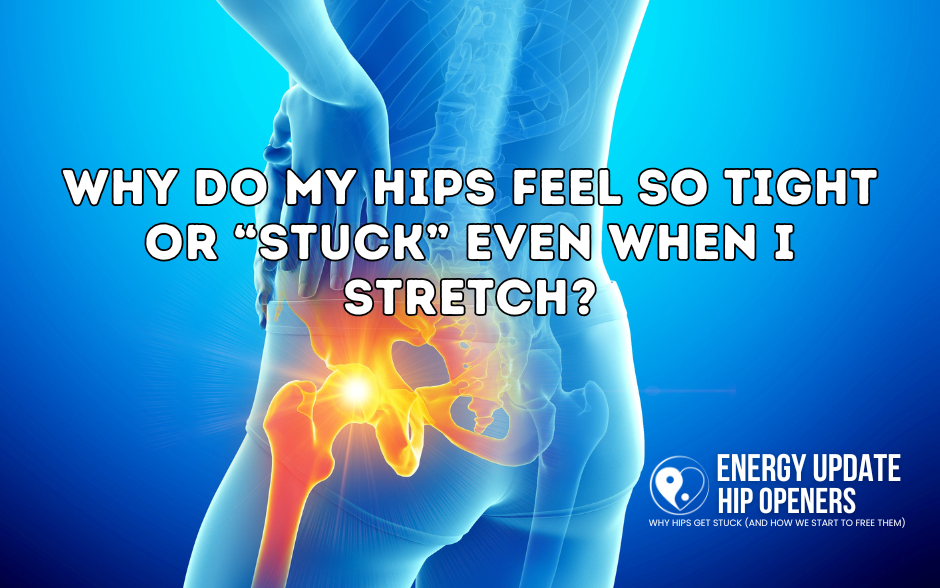
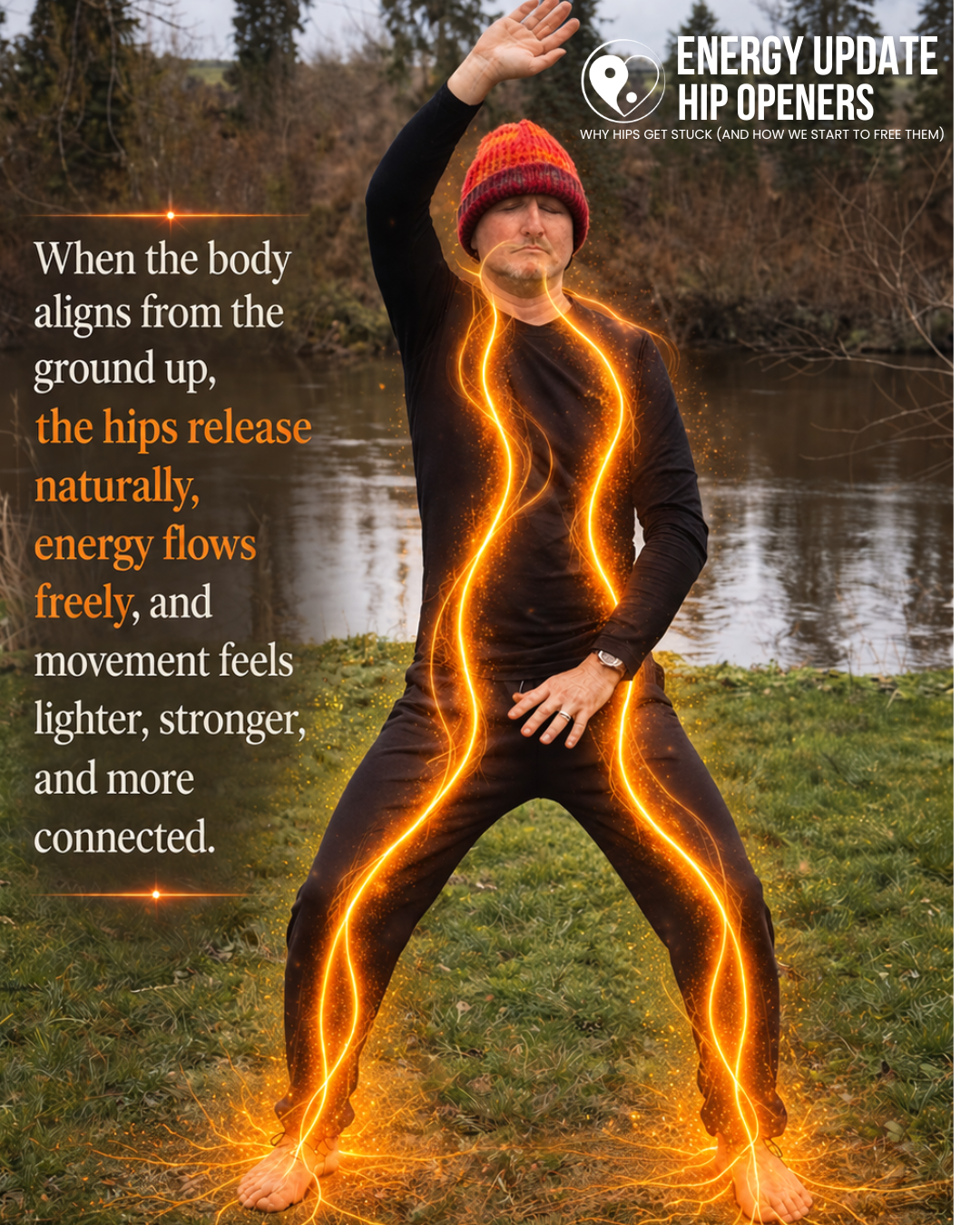
Why Do My Hips Feel Stuck?

Why Do My Hips Feel Stuck?

Understanding Hip Tension, Energy Flow & the Liver Meridian (and How to Fix It Gently)

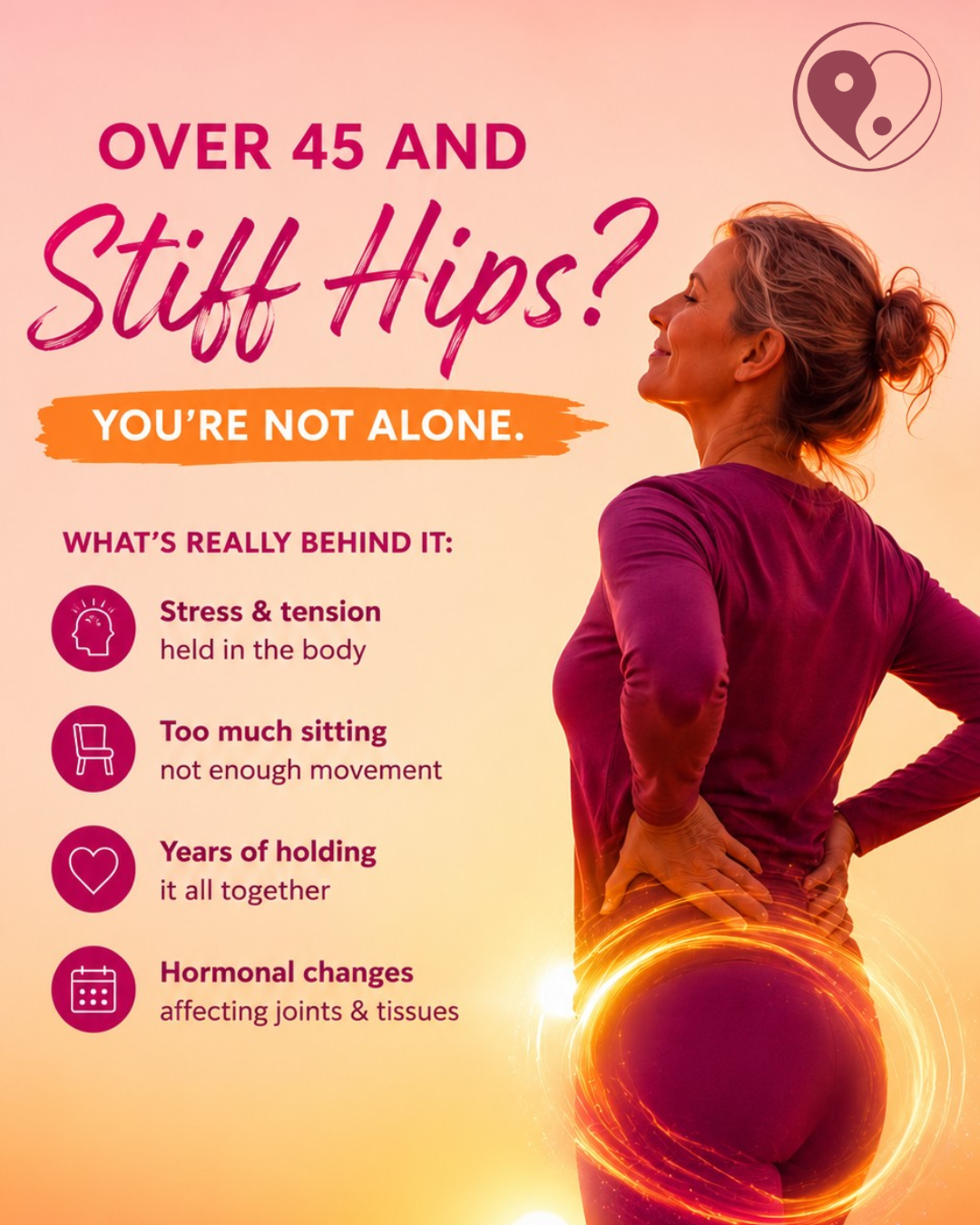
If your hips feel tight, stiff, or completely stuck — you’re not alone. This is one of the most common issues I see, especially for women over 45 and for those managing long-term conditions where movement and energy feel limited.

But here’s the thing most people don’t realise:
Hip tension isn’t just about tight muscles.

In Chinese Medicine, the hips are part of a much bigger picture — one that includes energy flow, emotional holding, posture, and how your whole body connects from the ground up.

The 3 Most Asked Questions This Blog Answers

1. Why do my hips feel so tight or “stuck” even when I stretch?
2. How are my hips connected to energy flow and emotions?
3. What can I do daily to gently release hip tension and improve movement?

The Real Reason Your Hips Feel Stuck

When people say their hips feel “stuck,” they’re usually describing something deeper than stiffness.

It’s that feeling of:

  • A fixed pelvis
  • Limited movement when walking
  • Tightness deep in the groin or lower back
  • Low or sluggish energy

In Chinese Medicine, this is often linked to the Liver system, which is responsible for the smooth flow of energy (Qi) in the body.

When that flow becomes restricted, the body tightens — and one of the first places this shows up is in the hips and groin.

The Liver Meridian & Hip Tension (Why the Groin Matters)

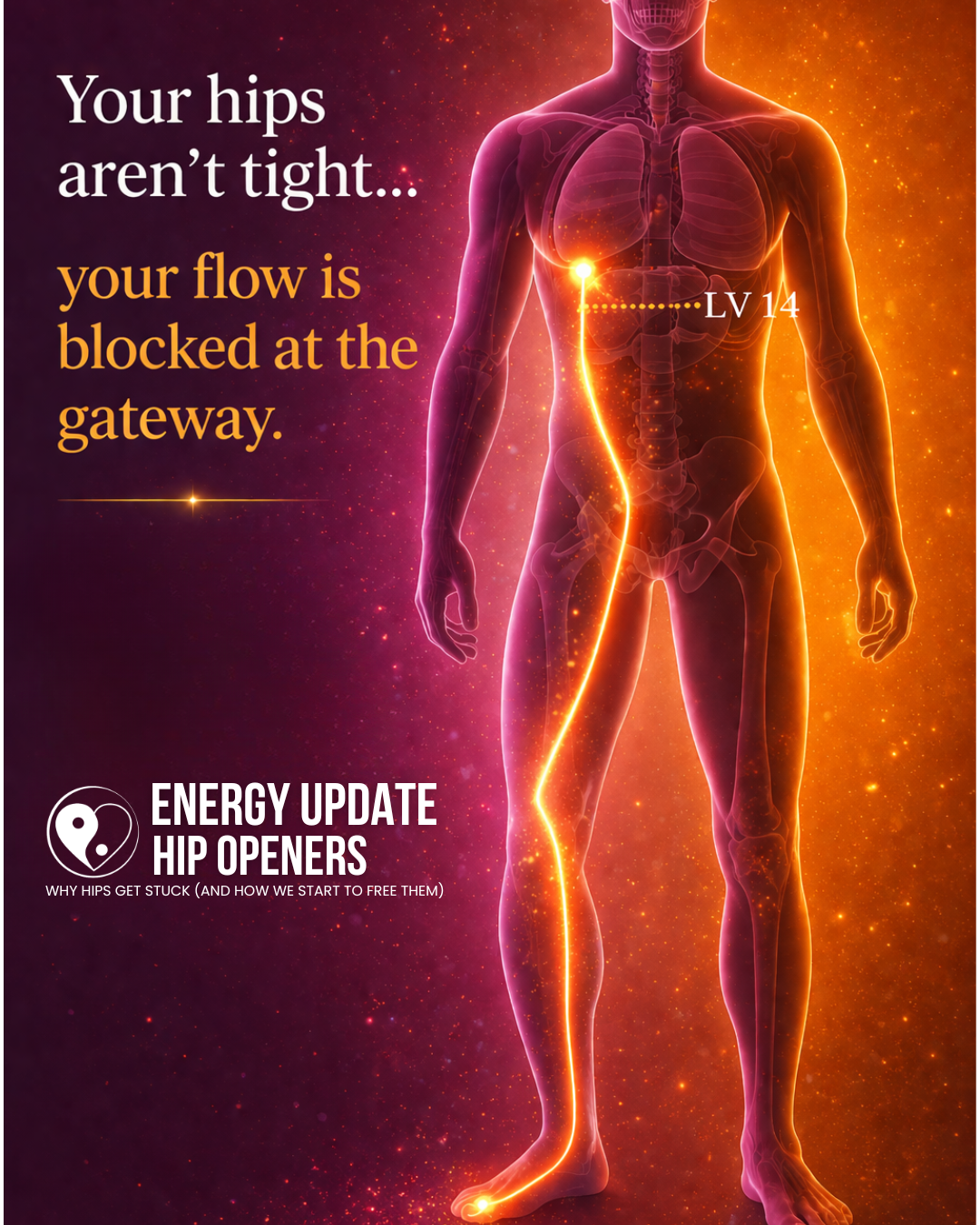
The Liver meridian runs from the foot, up the inner leg, and passes directly through the groin into the pelvis.

Think of the groin and hips as a gateway.

If that gateway is:

  • Tight | Collapsed |Misaligned

Then energy can’t move smoothly from the lower body into the centre.

  • Stretching your hamstrings doesn’t fix the problem
  • Your hips still feel tight no matter what you try
  • Movement feels restricted or disconnected

Because the issue isn’t just muscular, it’s about flow through that inner pathway. 

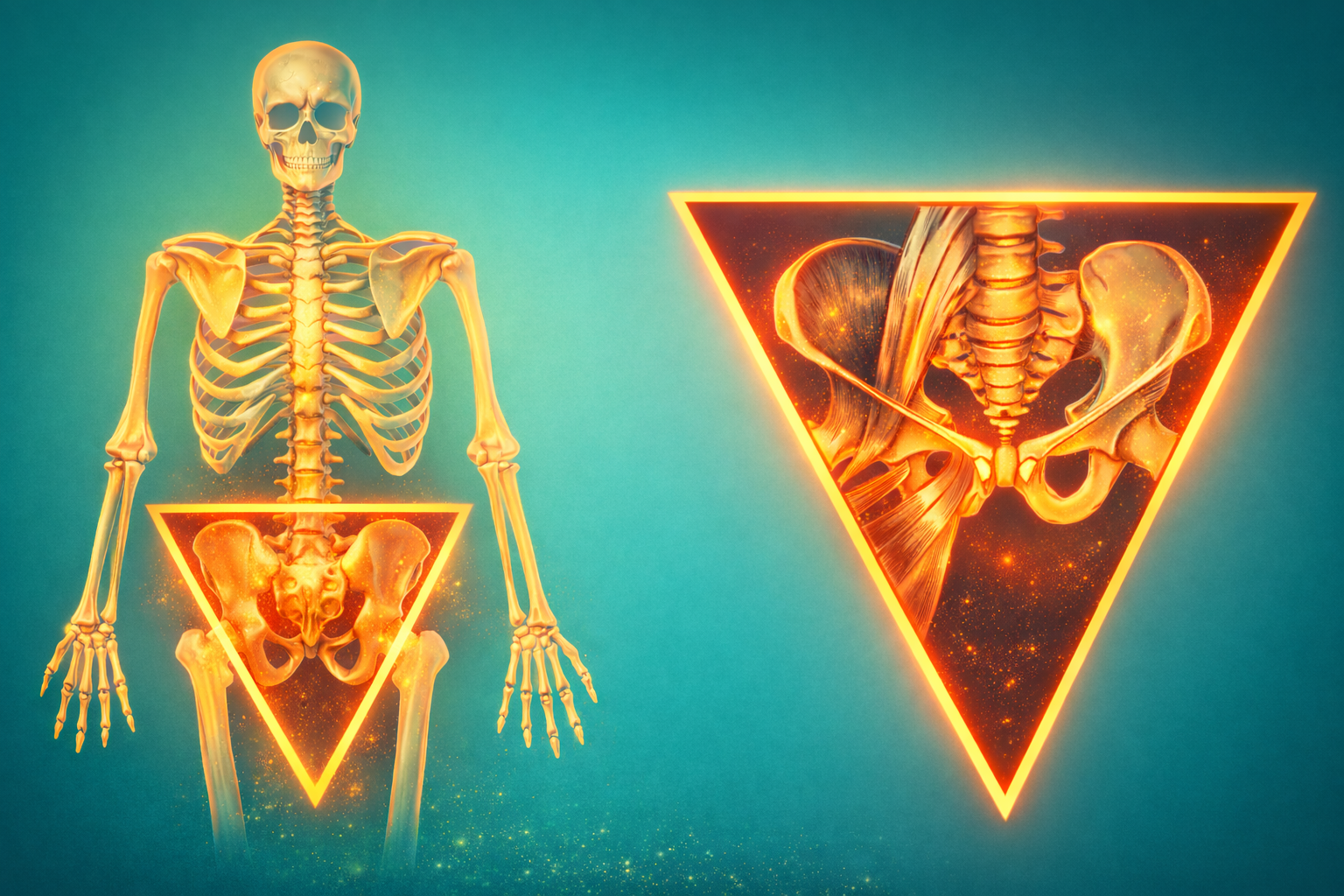
The Role of the Psoas (Your Deep “Emotional” Muscle)

Deep in the centre of your body sits the psoas muscle, connecting your spine to your legs.

This muscle:

  • Tightens with stress
  • Shortens with sitting
  • Holds emotional tension (especially fear and anxiety)

Over time, this can lead to:

  • A “fixed” pelvis
  • Lower back discomfort
  • Reduced hip mobility
  • That heavy, stuck feeling

This is why hip tension often feels both physical and emotional.

Rooting to Rise: The Missing Piece

Most people try to fix tight hips by stretching harder.   But in Chinese Medicine, we take a different approach:

👉 You don’t force the hips open — you allow them to open.

This comes from the principle of “rooting to rise.”

Instead of pulling from the top down, we build from the ground up.

Alignment from the Ground Up (Your “Gates”)

To restore flow through the hips, we guide the body through a series of “gates”:

Start with your feet — feeling the ground, weight evenly distributed.
Then soften the ankles — responsive, not rigid.
Allow the knees to bend gently and track forward.
Move into the hips (Kua) — softening the crease at the front of the pelvis.
Let the pelvis settle neutral — not gripping or tilting.
Allow the spine to rise naturally.
Soften the chest and shoulders.
Let the head float gently on top.

When these gates align, something powerful happens: 👉 Energy can rise smoothly from the ground, through the legs, through the groin, and into the whole body.   This is where real change begins.

Why Hip Pain, Sciatica & Low Energy Are Connected

When the hips are tight and the pelvis is fixed:

Circulation reduces, Movement becomes inefficient, Energy flow slows down

This can contribute to:

Hip discomfort or stiffness | Sciatica-type symptoms | Lower back tension | Fatigue or low energy

Again it’s about flow being restricted. Watch until the end of the video where Jo demonstrates OPENING THE KUA Qi Gong Movement in both seated and standing practice.

A Gentler Way to Release Hip Tension

You don’t need extreme stretching or complicated routines.

What works best is:

  • Slow, controlled movement
  • Breath-led hip opening
  • Consistent daily practice
  • Good alignment through the feet, knees, and hips

Even simple movements like:

  • Gentle hip circles | Soft knee bends | Standing weight shifts

…can begin to restore flow when done consistently. Watch the video for a demonstration of a simple hip opening Qi Gong movement (seated demo included)

Supporting Your Hips with Food & Daily Habits

In Chinese Medicine, the Five Element system teaches that different flavours support different organs and energy pathways in the body. Sour foods support the Liver, bitter supports the Heart, sweet nourishes the Spleen, pungent supports the Lungs, and salty nourishes the Kidneys.

The Liver system is especially important for the smooth flow of Qi and Blood throughout the body, particularly through the tendons, groin, and hips. When Liver energy becomes stagnant from stress, tension, poor posture, or inactivity, the hips can become tight, stiff, and heavy.

By supporting the Liver through movement, breathwork, and sour foods like cherries, lemon, or plums, we help restore circulation, improve blood flow, and encourage energy to move more freely through the hips and pelvis.

If you’d like to understand the full Five Element food system in a simple, practical way, along with how flavours, colours, and foods affect your energy, joints, emotions, and overall health, I explore this deeply in my books. They’re designed to help you bring Chinese Medicine into everyday life in a way that feels nourishing, grounded, and easy to follow.

To support smoother flow:

  • Add leafy greens (like spinach or nettle)
  • Include sour foods (lemon, lime, plums)
  • Reduce long periods of sitting
  • Move gently every day

These small shifts help reduce internal “stagnation” and support the hips naturally.

The Emotional Side of Hip Tension

The hips are often a storage area for:

  • Frustration | Stress | Unprocessed emotions

When you begin to open the hips gently, it’s not uncommon to feel:

  • Lighter | Calmer | More at ease

This is a normal part of the process.
You’re not just improving movement, you’re creating space in the body.

Where to Start (Without Overwhelm)

If your hips feel stuck, the goal isn’t to fix everything overnight.

It’s to:

  • Start gently
  • Stay consistent
  • Let the body open at its own pace

That’s exactly what we focus on inside Chi Flow with Jo — simple daily practices that build over time.

You get:

  • Weekday live classes
  • Recordings you can follow anytime
  • Q&A support
  • Acupoints, food tips, and guidance
  • A community moving with you

💛 It’s €39/month, reducing to €20 after your first 3 months.

Final Thoughts

If your hips feel tight, stuck, or disconnected, your body isn’t broken.

It’s simply asking for:

  • Better alignment
  • Better flow
  • A stronger foundation

When you start from the ground up… everything begins to change.

Ready to Start?

Join Chi Flow with Jo and begin gently opening your hips, restoring your energy, and feeling more like yourself again.

Go Deeper with Our Books

For those wanting to understand how movement, breath, and Chinese Medicine principles, Jo’s books provide practical guidance rooted in lived experience and clinical wisdom.

👉 Buy Five Element Wisdom cookbooks

Explore how to Find Your Flow and Live Well with Parkinson’s.

Movement does not need to be extreme to be powerful.
Small daily expansion reshapes the body.
Steady breath reshapes the nervous system.
Gentle repetition rebuilds confidence.

Every human body carries extraordinary capacity for renewal when given the right rhythm.

If April is asking you to soften into strength, come and practice with us.

Self-administered acupressure or Chinese Medicine is not a substitute for visits to qualified healthcare practitioners.

Knowing how to treat yourself and your loved ones with complimentary therapies like acupressure can be greatly beneficial and convenient. However, for serious and chronic conditions, you’ll want to visit an Shiatsu therapist / Acupuncturist or other qualified healthcare practitioner who can develop a treatment plan based on your unique medical history and combination of symptoms.

The information provided should not be considered medical advice.

Topics: Breathwork, Parkinson’s support, sleep practices, Qi Gong, acupressure.
 Joanne Faulkner is a Qi Gong teacher – Chi Flow with Jo – teaching live daily online Qi Gong classes to hundreds of people; a Shiatsu practitioner specializing in the energy of food in Traditional Chinese Medicine and a published Author. Her residential and day Wellness Retreats focus on Chi Gong, self-Shiatsu & Conscious Cooking Demonstrations, and are extremely popular.

Until recently, Joanne was the Irish representative to the European Shiatsu Federation and is the former Chairperson of the Shiatsu Society Ireland.

 “Good Food: Better Sex” and “Shiatsu & the Art of Conscious Cooking” , both written and published by Joanne, are modern cookbooks full of delicious recipes, Traditional Chinese Medicine plus acupressure points for health and wellbeing.

INTERACTIVE

APP NOW LIVE!

Answer 2 questions to see what foods suit you today

COMPANION TO
“SHIATSU & THE ART OF
CONSCIOUS COOKING”
COOK BOOK

BUY THE BOOK!

HIP PAIN IN MENOPAUSE

HIP PAIN IN MENOPAUSE

How to Restore Flow Through the Hips with Qi Gong, Acupressure and Food:

Hip pain is often the body whispering that something in the centre of us has stopped moving.

Many women notice new aches appearing around the hips during midlife. Sometimes it begins after lifting something heavy or caring for children. Other times it appears gradually and doesn’t seem to go away.

In this article we explore:

  • Why hip pain can increase during menopause
  • The connection between hormones, the liver and joint health
  • How fascia and the nervous system affect hip tightness
  • Two powerful acupressure points for restoring flow
  • A simple Qi Gong movement to open the hips
  • A food that supports liver function and circulation

These approaches combine Chinese medicine, modern fascia science, and gentle Qi Gong movement to help the body return to balance.

Why Hip Pain Often Appears During Menopause

In Western medicine we are increasingly hearing about the relationship between hormonal changes and connective tissue health.

During menopause, oestrogen levels decline. Oestrogen helps regulate collagen production and tissue elasticity, so when levels drop the body can experience:

  • tendon stiffness
  • joint pain
  • reduced tissue repair
  • inflammation

At the same time, the liver plays a key role in metabolising hormones. If liver function becomes sluggish, hormones may not be processed efficiently, which can influence circulation, inflammation and tissue health.

The result can be stiffness and discomfort in areas such as the hips, shoulders and lower back.

The Chinese Medicine View: The Liver Controls the Tendons

Chinese medicine has described this connection for thousands of years.

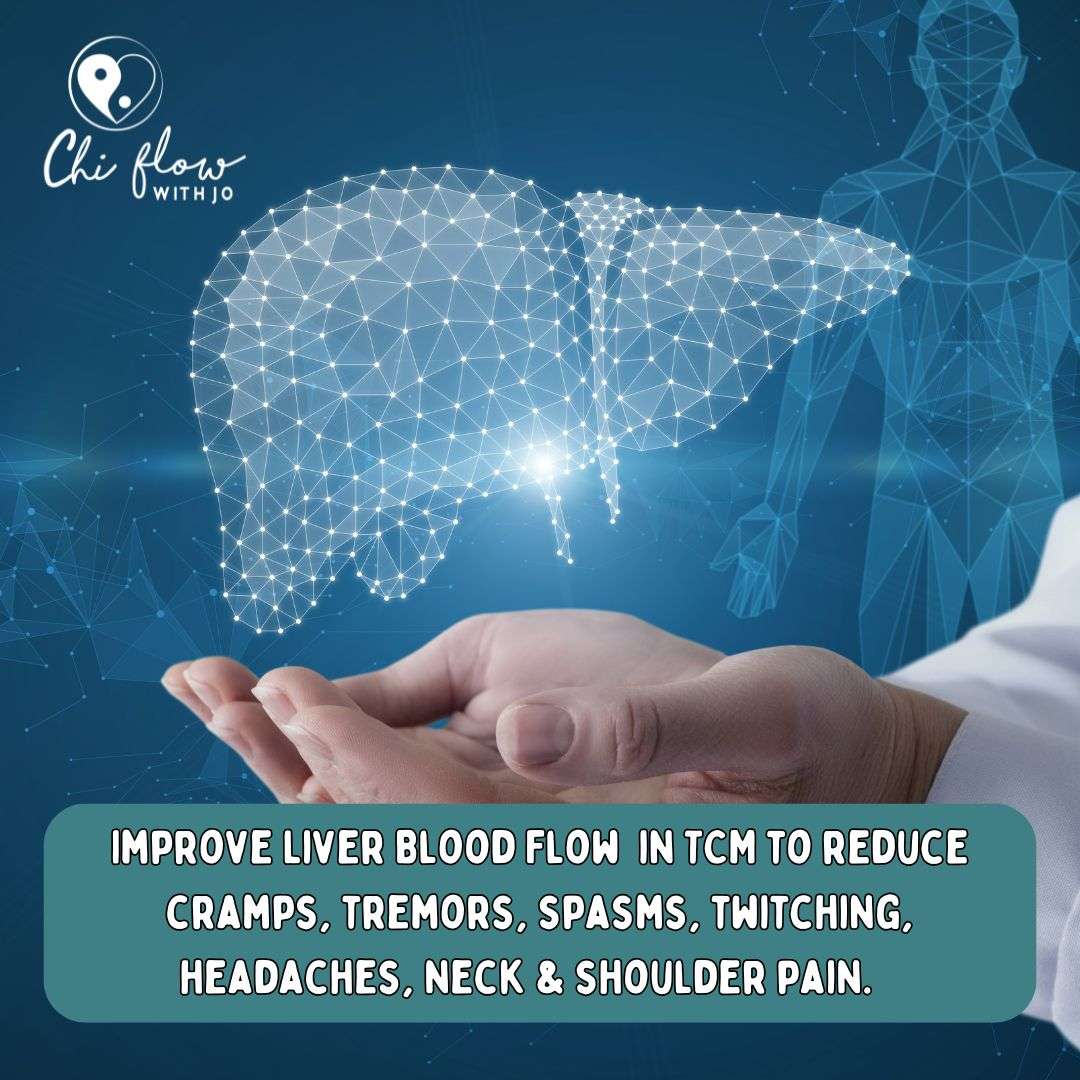
In Traditional Chinese Medicine, the Liver system governs the smooth flow of Qi (energy) and Blood throughout the body, particularly through the tendons and joints.

When Liver energy flows smoothly:

  • joints feel flexible

  • muscles move freely

  • circulation is strong

But when Liver Qi becomes stagnant:

  • muscles tighten

  • tendons lose elasticity

  • pain and stiffness appear

The hips are especially important because several major energy pathways pass through them. When the Liver system becomes sluggish, the hips often become one of the first places we feel restriction.

Fascia, Stress and Why Tight Hips Need Safety to Release

Modern research into fascia is beginning to confirm something Chinese medicine has long understood.

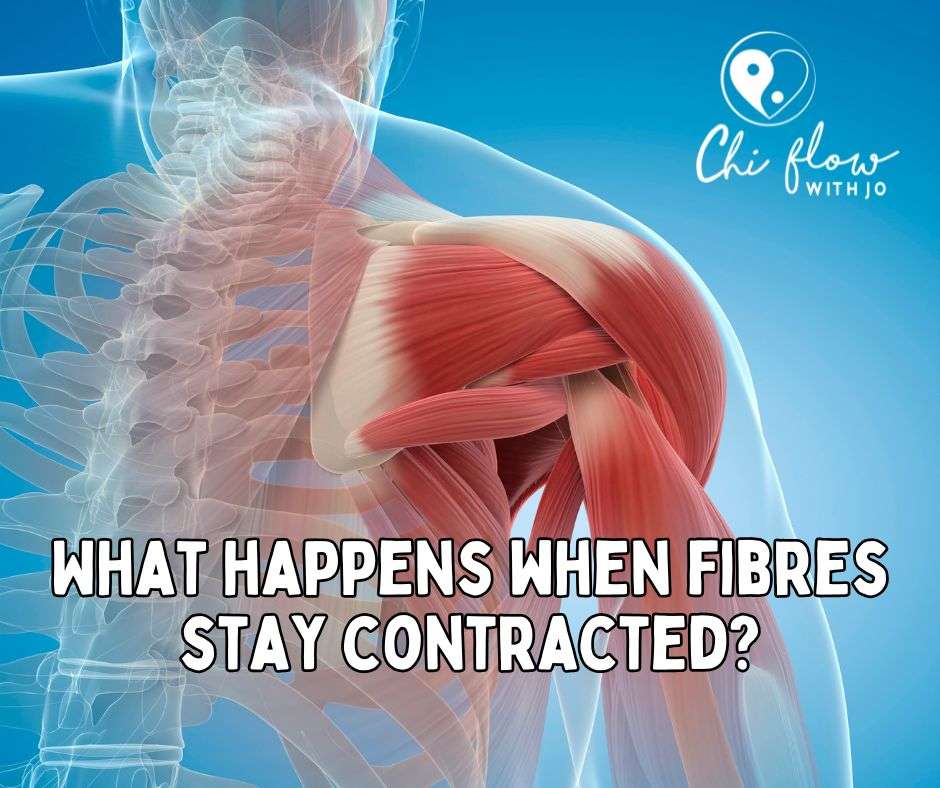
Fascia is the connective tissue web that wraps around muscles and organs throughout the body. When fascia is weak, overstretched or overloaded, it tightens as a protective response.

This can happen when:

  • lifting or carrying heavy loads
  • repetitive movements
  • long periods of fear or stress
  • Lack of movement


  • But fascia does not release when stretched or forced, as ligaments, tendons and muscles can.

    It releases when the nervous system feels safe.

    This is why gentle practices like Qi Gong are so effective. Slow, rhythmic movement combined with relaxed breathing sends signals of safety to the nervous system. Once the body feels safe, the fascia can soften and lengthen again.

Acupressure Point: Liver 3 for Hip Pain and Stagnation

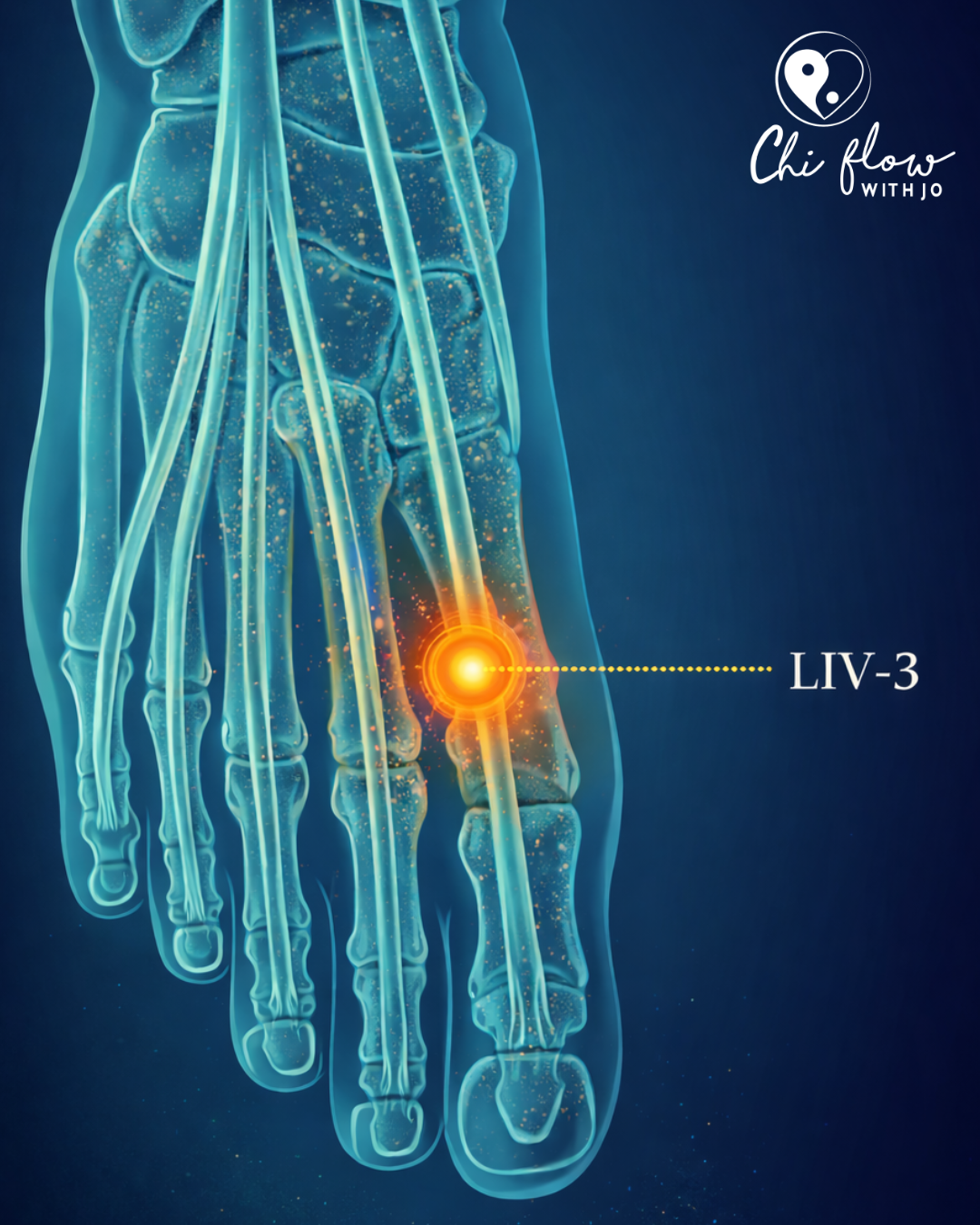
One of the most effective acupressure points for releasing stagnation in the hips is Liver 3 (Taichong).

How to find Liver 3

  1. Look at the top of the foot.
  2. Find the space between the big toe and second toe.
  3. Slide your finger up about an inch from the webbing until you feel a small dip between the bones.

How to use it

Press gently with your thumb until you feel a mild dull ache.

Hold the point while breathing slowly for 1–3 minutes.

This point is widely used in Chinese medicine to:

  • move stagnant Liver Qi

  • improve circulation to the legs and hips

  • reduce tension in the tendons

When this pathway begins to flow again, tightness through the hips often eases.

Acupressure Point: Spleen 6 to Increase Blood Flow in the Lower Abdomen

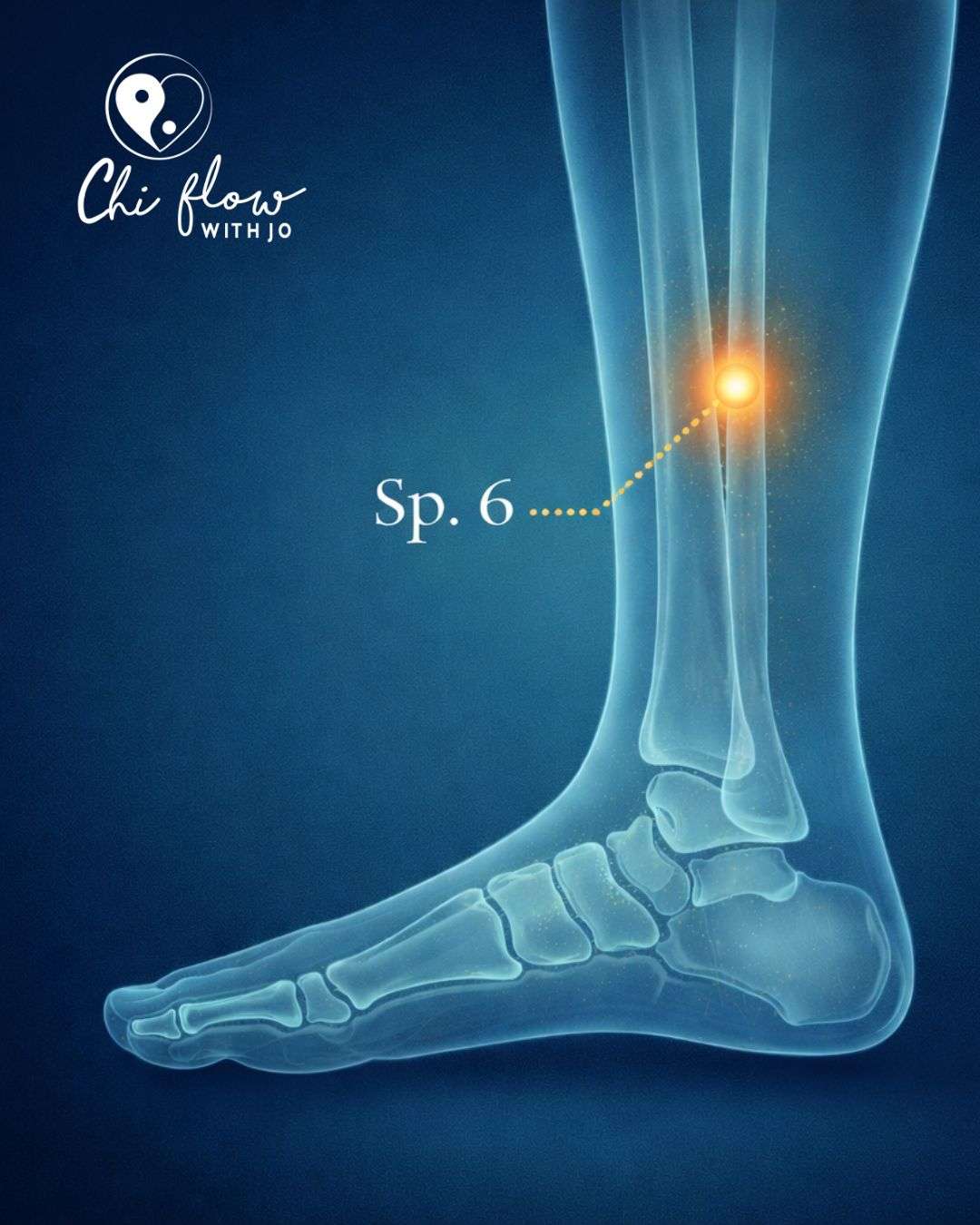
Another powerful point is Spleen 6 (Sanyinjiao).

How to find Spleen 6
Locate the inner ankle bone. 
Measure four finger widths up the leg.
Just behind the shin bone you will find a tender point.

How to use it:
Press gently for about one minute while breathing slowly.
Spleen 6 influences three major energy systems:

  • Liver
  • Spleen
  • Kidney

This point helps increase the movement of blood and energy through the lower abdomen and pelvis, nourishing the hips and lower body.

Because it strongly activates blood flow in the lower abdomen, Spleen 6 should not be used during pregnancy.

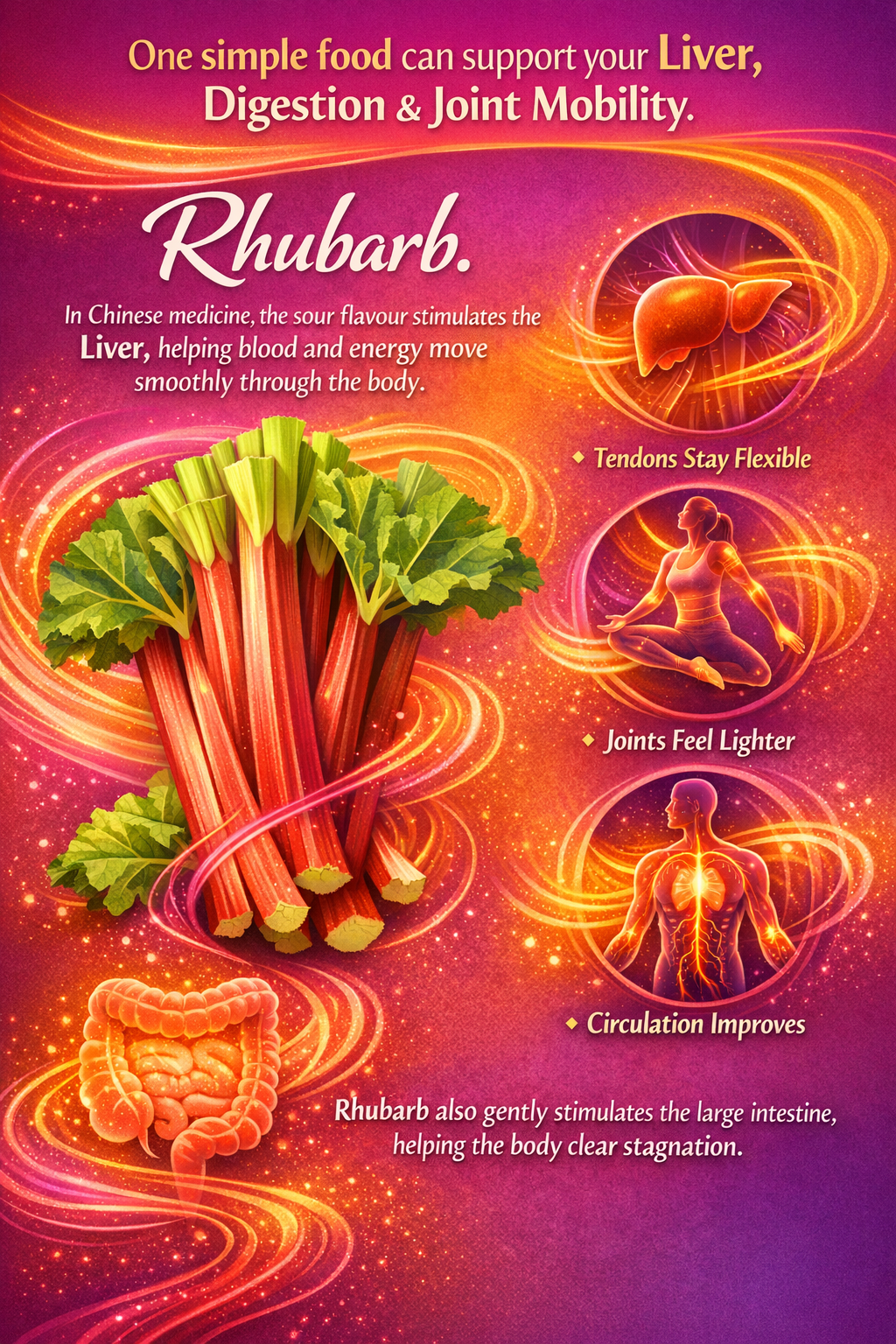
A Seasonal Food That Supports Liver Function: Rhubarb

Food can also help restore flow in the body.

In Chinese medicine the sour flavour stimulates the Liver, encouraging blood and energy to move more smoothly.

Rhubarb is a wonderful seasonal food for this purpose.

Benefits of rhubarb include:

  • supporting liver function
  • encouraging healthy elimination through the large intestine
  • reducing stagnation in the body

Simple Stewed Rhubarb Recipe

  1. Chop several stalks of rhubarb.
  2. Place in a saucepan with a small amount of water.
  3. Simmer gently until soft.
  4. Add a slice of apple if you like a little sweetness.

A small bowl a few times per week can gently support the Liver and digestion.

When digestion flows well, joints often feel lighter and more flexible.

Qi Gong for Hip Mobility: Opening the Kua

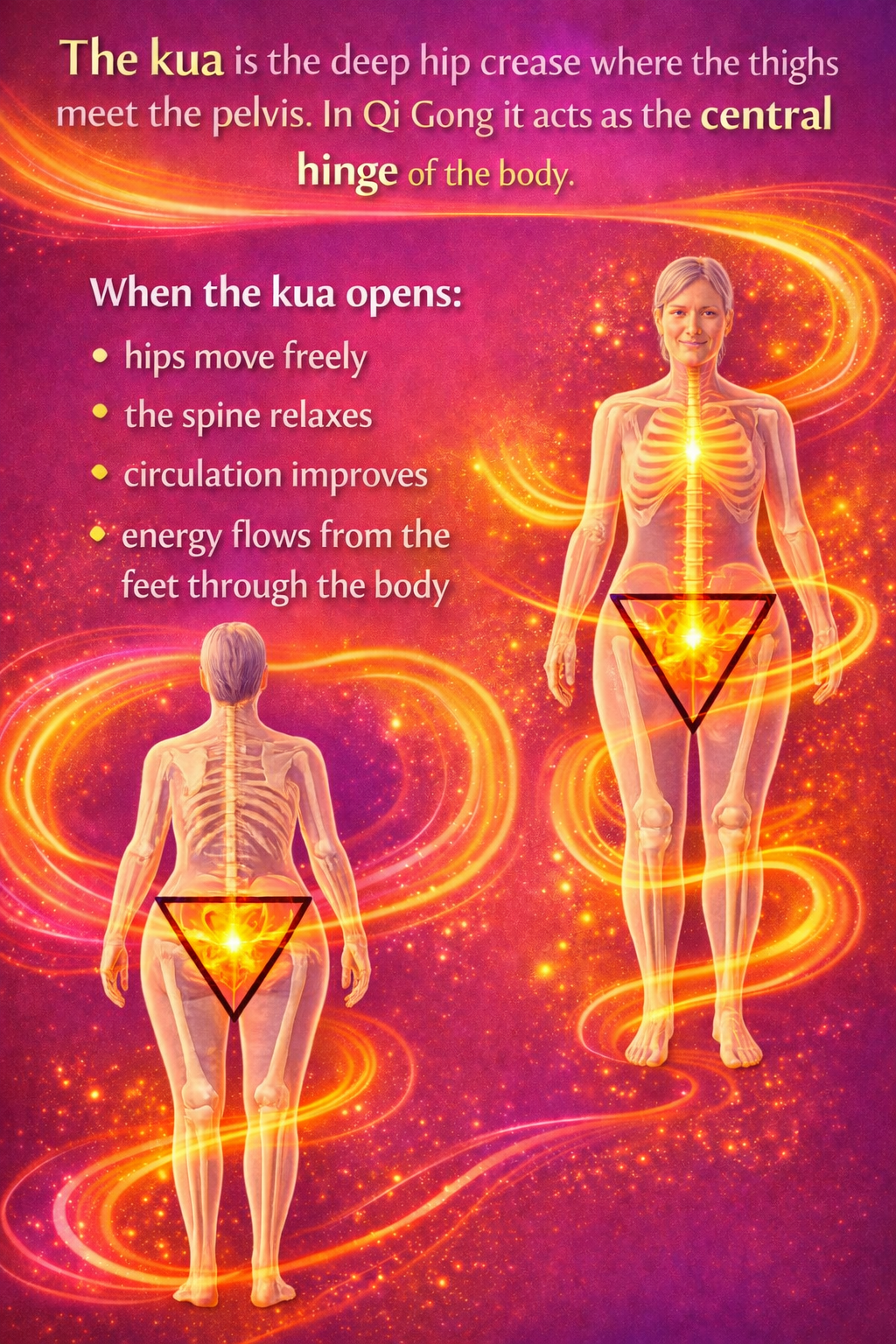
In Qi Gong we often talk about opening the kua.

The kua refers to the deep hip crease where the thighs meet the pelvis. It encompasses the surrounding musculature, including the iliopsoas (hip flexors), adductor muscles (inner thigh), and the pelvic floor. It acts as the central hinge of the body, allowing movement to travel between the upper and lower body.

When the kua moves freely:

  • the hips open naturally 
  • walking becomes smoother 
  • the spine and legs coordinate better
  • Qi flows from the feet into the body

Interestingly, the inguinal crease also contains one of the highest concentrations of lymph nodes in the body, so opening the kua can help support lymphatic circulation.

How to Practise the Kua Opening Movement

  1. Stand with your feet wider than shoulder width.
  2. Bend the knees gently and settle into a relaxed horse stance.
  3. Keep the spine upright and the crown of the head lifting lightly upward.
  4. Allow the shoulders to relax.

Now bring awareness to the hip crease.
Turn one foot slightly outward.

As the foot turns outward, allow the waist and hips to rotate gently in the opposite direction.

This creates a spiral through the hips.
You may feel one hip crease opening while the other softly closes.
Return to centre and repeat on the other side.
Continue slowly from side to side.

Three key cues

  • Keep the knees soft so the hips can release.
  • Let the waist guide the movement rather than the shoulders.
  • Move slowly enough to feel the hip crease opening and closing.

Just one or two minutes of this gentle turning can release significant tension through the hips and pelvis.

Over time it helps:

  • soften fascia
  • improve pelvic circulation
  • increase Qi flow in the lower dantien

When Movement Isn’t Enough: Releasing Tension Through Safe Touch

Sometimes hips feel extremely tight or guarded.

This can happen because the pelvis often stores emotional memory and protective tension.

In these cases, gentle physical touch can help the nervous system relax.

Some people find practices such as yoni massage or pelvic self-massage helpful. This involves bringing respectful, loving touch to the lower abdomen and pelvic area.

Safe physical touch can:

  • reduce shame held in the pelvis
  • calm the nervous system
  • release stored tension or trauma

The goal is not forcing change but allowing the body to feel safe enough to soften.

A Simple Weekly Routine for Hip Pain Relief

Try this gentle routine for one week:

  • Press Liver 3 once daily on each foot
  • Press Spleen 6 for one minute on each leg
  • Eat stewed rhubarb a few times during the week
  • Practise kua opening Qi Gong for a few minutes daily

Small daily signals like these can gradually restore circulation and ease hip stiffness.

When to Seek Medical Advice

If hip pain:

  • worsens significantly
  • spreads down the leg
  • wakes you at night
  • causes difficulty walking

you should consult your GP or physiotherapist to rule out structural issues.

Restore Flow and Ease Through the Hips

Many cases of hip pain are not simply mechanical problems. They reflect stagnation in circulation, fascia tension, and nervous system protection.

When we nourish the liver, move gently, and help the body feel safe, the hips often begin to soften naturally.

As I often say:

When the liver flows, the hips follow.

If you’d like to learn more gentle practices like this, you can join the Chi Flow membership, where we practise Qi Gong movements for mobility, energy and longevity together each week.

Sometimes the biggest healing begins when the body finally feels safe enough to soften.

Join the Free Class

If you are curious about Qi Gong for Parkinson’s, chronic illness, fatigue, or healthy ageing, you are warmly invited to try a free class.

You do not need experience. You do not need flexibility. You simply begin where you are.

👉 Join the Free Class and experience the Eight Brocades for yourself.

Continue the Journey

If you would like ongoing support, Chi Flow with Jo offers:

  • Weekday live classes
  • Full Eight Brocades training
  • Acupressure guidance
  • Food medicine insights
  • Monthly health talks
  • Community gatherings

It is €39 per month, reducing to €20 per month after three months. Just €1 per class.

👉 Join Chi Flow with Jo HERE.

Self-administered acupressure or Chinese Medicine is not a substitute for visits to qualified healthcare practitioners.

Knowing how to treat yourself and your loved ones with complimentary therapies like acupressure can be greatly beneficial and convenient. However, for serious and chronic conditions, you’ll want to visit an Shiatsu therapist / Acupuncturist or other qualified healthcare practitioner who can develop a treatment plan based on your unique medical history and combination of symptoms.  

The information provided should not be considered medical advice.

Qi Gong for Parkinson’s & Chronic Illness

Qi Gong for Parkinson’s & Chronic Illness

8 Brocades, Draw the Bow Explained

If you live with Parkinson’s, chronic illness, fatigue, stiffness, or simply feel that your body needs kind reconditioning, this is where the Eight Brocades Qi Gong practice becomes powerful.

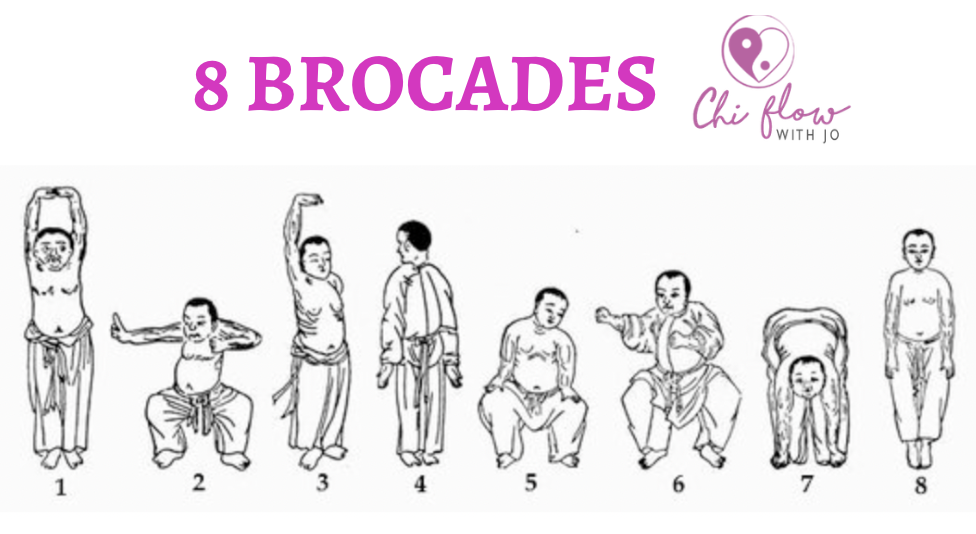
Inside Chi Flow with Jo, April is dedicated to the classical practice known as Ba Duan Jin, the Eight Brocades, a sequence believed to be over 1000 years old

These movements are simple, accessible, and deeply restorative.

If you have ever thought, “I know I should move more, but I don’t want to exhaust myself,” you are in the right place.

Why the 8 Brocades Are Ideal for Parkinson’s and Chronic Illness

The Eight Brocades act like a daily system check for the body.

They support:

  • Circulation and joint mobility
  • Upright posture and spinal strength
  • Nervous system regulation
  • Gentle, sustainable muscle activation
  • Mental clarity and emotional steadiness

For people living with Parkinson’s, consistency is more important than intensity. Small, repeated movements retrain coordination and rebuild confidence. For those managing chronic fatigue, autoimmune conditions, or recovery phases, this practice strengthens without draining.

Over time, this shows up as:

  • Easier mornings
  • Less tension in shoulders and neck
  • Greater steadiness when standing
  • Calmer evenings
  • Feeling present in your body again

One of our members of Chi Flow with Jo recently shared that after a few weeks of steady practice, she stopped bracing herself every time she stood up. Her shoulders softened. Her breath deepened. She noticed she was less reactive at home.

That is the real medicine.

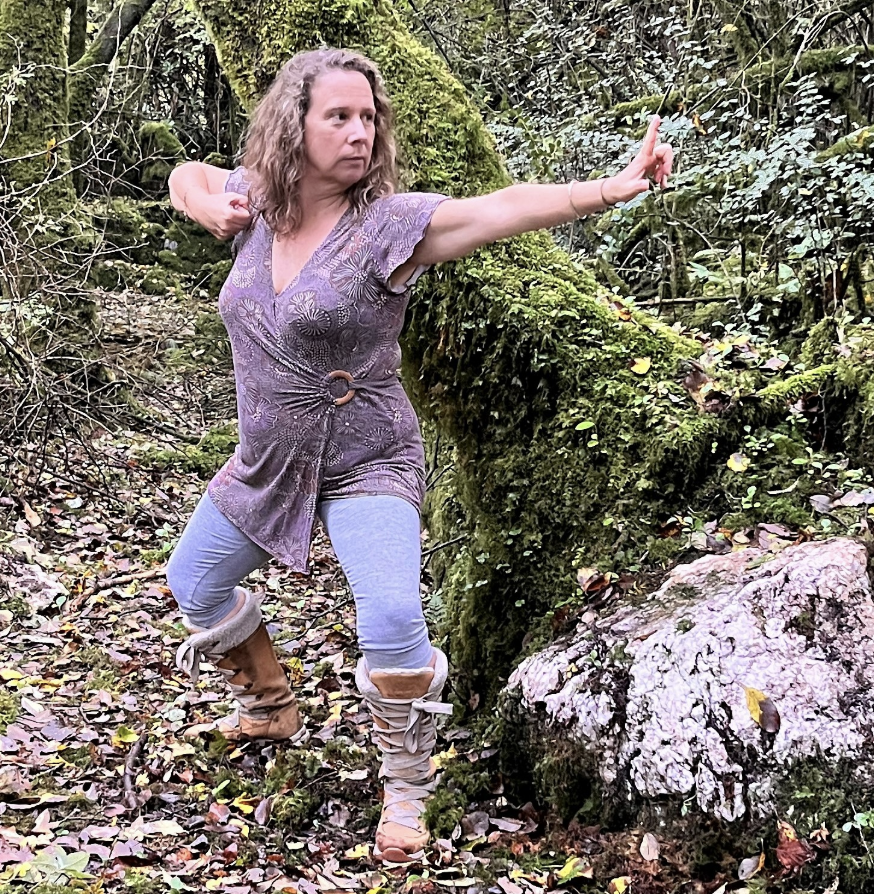
The Anchor Movement, Draw the Bow, Fire the Arrow

One of the most empowering movements from the Eight Brocades is called Draw the Bow.

It is simple, grounding, and deeply regulating.

You stand with feet steady and rooted.
One hand draws back as though holding a bow.
The other extends forward as if gently aiming an arrow.

You inhale as you draw back.
You exhale as you release.

It is not about range.
It is about direction.

Benefits of Draw the Bow

  • Opens the chest and shoulders
  • Improves posture
  • Strengthens upper back muscles
  • Encourages coordinated breath and movement
  • Builds focus and quiet confidence
  • Supports emotional resilience

For those feeling collapsed, protective, or mentally foggy, this movement reminds the body,
I am here. I have direction.

In Parkinson’s, posture can gradually become flexed forward. Movements that open the chest and activate the back body are essential for maintaining upright presence. In chronic stress states, the chest often tightens. This movement restores expansion without force.

For Davy, living with Parkinson’s for over a decade, the Eight Brocades have become an anchor. On low energy days, he returns to simple repetition. Familiar rhythm. Breath. One movement at a time.
Some days are small. Some days are strong. Both count.

That mindset is powerful medicine.

Why Daily Live Practice Makes the Difference

The movement itself is important. The consistency is transformational.

Inside Chi Flow with Jo, members join:

  • Weekday live Qi Gong classes

  • Replays for flexible practice

  • Monthly health talks

  • Acupressure guidance

  • Food medicine support

  • Community reflection gatherings

When you know there is a space to show up, something shifts. Structure creates energy. Connection creates purpose.

And if you miss a day, there is no guilt. Just an open door.

Can Qi Gong Help Parkinson’s Symptoms?

Research and lived experience suggest that regular Qi Gong practice may support:

  • Balance and coordination
  • Reduced rigidity
  • Improved posture
  • Nervous system regulation
  • Better sleep
  • Emotional steadiness

The key is consistency. Not intensity.


The Eight Brocades are particularly effective because they combine:

  • Breath regulation
  • Bilateral movement
  • Gentle resistance
  • Coordinated focus

This integrated approach supports both physical and neurological resilience.

Join the Free Class

If you are curious about Qi Gong for Parkinson’s, chronic illness, fatigue, or healthy ageing, you are warmly invited to try a free class.

You do not need experience. You do not need flexibility. You simply begin where you are.

👉 Join the Free Class and experience the Eight Brocades for yourself.

Continue the Journey

If you would like ongoing support, Chi Flow with Jo offers:

  • Weekday live classes
  • Full Eight Brocades training
  • Acupressure guidance
  • Food medicine insights
  • Monthly health talks
  • Community gatherings

It is €39 per month, reducing to €20 per month after three months. Just €1 per class.

👉 Join Chi Flow with Jo HERE.

Go Deeper with Our Books

For those wanting to understand how movement, breath, and Chinese Medicine principles support living well with Parkinson’s, our books provide practical guidance rooted in lived experience and clinical wisdom.

👉 Buy the books and explore how to Find Your Flow and Live Well with Parkinson’s.

Movement does not need to be extreme to be powerful.
Small daily expansion reshapes the body.
Steady breath reshapes the nervous system.
Gentle repetition rebuilds confidence.

Every human body carries extraordinary capacity for renewal when given the right rhythm.

If April is asking you to soften into strength, come and practice with us.

Self-administered acupressure or Chinese Medicine is not a substitute for visits to qualified healthcare practitioners.

Knowing how to treat yourself and your loved ones with complimentary therapies like acupressure can be greatly beneficial and convenient. However, for serious and chronic conditions, you’ll want to visit an Shiatsu therapist / Acupuncturist or other qualified healthcare practitioner who can develop a treatment plan based on your unique medical history and combination of symptoms.

The information provided should not be considered medical advice.

Qi Gong and Parkinson’s

Qi Gong and Parkinson’s

Living with Parkinson’s brings daily challenges: stiffness, slowness, anxiety, loss of confidence, disrupted sleep, and the struggle to feel like yourself inside a changing body. Yet there is a gentle, powerful, and accessible way to support mobility, balance, mood, and hope. Qi Gong has become a lifeline for thousands of people living with Parkinson’s, including my husband, Davy, who was diagnosed almost ten years ago.

Together we practise Qi Gong every morning in our Chi Flow community, and it continues to support us in ways that reach far beyond physical exercise. This blog explores what Qi Gong is, why it is so supportive for Parkinson’s, Davy’s lived experience, and how you can begin today.

What Is Qi Gong and Why Does It Help Parkinson’s?

If your knees ache, your feet feel inflamed, or you are struggling to lose weight no matter what you do, I want you to know one thing. Your body is not failing. It is speaking.

Qi Gong means “energy work.” It combines slow, steady movements with breath, intention, and awareness. The practice is rooted in Traditional Chinese Medicine and is designed to bring your body and mind back toward balance, without force or strain.

For example if you are feeling jittery and shaky (Yang) it encourages deep breathing and slow movements  (Yin) If you can’t move and you are frozen (Yin) it encourages warming, tapping and movement (Yang)

Qi Gong is adaptable for every body and every kind of day. You can do it seated or standing. You can move for two minutes or twenty. You can practise during a flare or on a good day.

Most importantly for Parkinson’s, Qi Gong naturally includes all six movement categories recommended by international Parkinson’s foundations to slow progression and improve function
• aerobic movement (walking-style flows)
• strength training using your body weight
• balance and stability training
• agility and multitasking
• bilateral brain stimulation
• mindful movement (similar to Tai Chi)

Qi Gong contains all of these in one gentle, accessible practice that supports the brain, nervous system, joints, and emotional wellbeing.

Davy’s Story: Qi Gong as a Lifeline in Daily Life

 When Davy was first diagnosed, he faced shock, fear, and uncertainty. His legs sometimes froze. Stiffness and anxiety were constant companions. Sleep became so disrupted he ended up in hospital.

Qi Gong didn’t cure everything at once, but it gave him something vital, something that every person with Parkinson’s deserves. It gave him agency.

“Qi Gong is something I can always do. Even on shaky days. Even for two minutes. It brings me back to myself.”

Over the years, he noticed
• steadier walking
• fewer freezes
• better balance
• calmer anxiety
• improved sleep
• increased confidence
• a sense of identity beyond the diagnosis

As he says, “It’s not about avoiding adversity. It’s about discovering who you are inside it, and having support so you don’t feel like you’re falling into a black hole you can’t get out of.”

Our daily practice together is a shared anchor. It softens the fear. It strengthens connection. It gives a shot of dopamine every morning through movement, breath, and completion of a task.
How Qi Gong Supports People Living with Parkinson’s

Qi Gong helps the whole body system, from muscles and joints to the brain and nervous system.

1. Better balance and stability

Slow weight shifting, grounded stances, and mindful stepping retrain the body to move safely.

2. Improved coordination and gait

Movements such as “Walking Through the Tall Grass” use bilateral coordination, meaning opposite arm and leg move together. This stimulates both hemispheres of the brain and supports neuroplasticity.

3. Stronger legs, core, and posture

Gentle strengthening helps walking, reduces fatigue, and improves breath and confidence.

4. Less stiffness and rigidity

Qi Gong works on the fascia. Continuous soft movement invites the muscles to release tension naturally.

5. Calmer mind and reduced anxiety

Breath-led movement regulates the nervous system. Many people notice easing anxiety within minutes.

6. More energy, less fatigue

Qi Gong improves circulation and oxygenation, building energy rather than draining it.

7. Better sleep

Evening Qi Gong, like Connecting Heaven and Earth, prepares the body to unwind and settle. Davy uses this nightly and notices huge differences in sleep quality.

Qi Gong is not a quick fix, but a gentle companion that supports every part of life with Parkinson’s. It helps you feel more like yourself in your own body.

Qi Gong Is More Than Exercise, It Is Daily Medicine

Qi Gong supports
• Digestion
• Circulation
• Posture
• Breathing
• Emotional regulation
• Mobility
• Confidence

It reconnects you to the parts of life that still work, even on hard days. When your whole world feels altered by Parkinson’s, Qi Gong helps you come home to your centre again.

As Davy says,

“Whenever I practise, I feel steadier inside myself. Something clears, and I feel more me.”

Qi Gong Program for People with Parkinson’s

Davy and I offer accessible and affordable Qi Gong support for people with Parkinson’s through Chi Flow with Jo, live every weekday morning. Every element is designed to be gentle, achievable, and supportive.

Included
• Daily live classes
• Recordings to watch anytime
• Seated and standing options
• monthly themes like balance, gait, sleep, digestion
• A warm, supportive community
• Direct access to Jo and Davy during live classes
• One of the most affordable online access programmes available

And together we’ve written Find Your Flow: Live Well with Parkinson’s, a full programme of food medicine, Qi Gong, breathwork, and acupressure. The book includes QR code videos and an audio companion to support those who struggle with screens or reading.

Practising Together Brings Hope, Strength, and Connection


Our morning routine is one of the most precious parts of our life. It grounds us, steadies us, and gets dopamine flowing before the day begins. The community moves with us, each person bringing their own story, their own body, their own bravery.

Whether you join us live or watch the replay, Qi Gong builds strength and softness in the same moment. It brings stability. It brings breath. It brings hope.

If you or someone you love is living with Parkinson’s, I want you to know this. You are not alone. There are tools that help. There is community waiting to support you. There is still joy, still movement, still connection, still possibility.

And as Davy always says,
“If I can do this, anyone can.”

Join Us and Try a Free Class


We offer a free class at the end of the month so you can try Chi Flow before you join.

Membership is only €39 per month, with over 20 classes included each month.
After three months, your subscription halves to €20, making it the most affordable Parkinson’s-friendly Qi Gong programme available online.

You are warmly welcome to practise with us and discover your own flow.


💗 Ready to Join?

Click here to become a member of Chi Flow with Jo → CLICK HERE

Or drop in for a class and feel it for yourself (sign up below). Join the Chi Flow with Jo community for live sessions, practice, and support.

Self-administered acupressure or Chinese Medicine is not a substitute for visits to qualified healthcare practitioners.

Knowing how to treat yourself and your loved ones with complimentary therapies like acupressure can be greatly beneficial and convenient. However, for serious and chronic conditions, you’ll want to visit an Shiatsu therapist / Acupuncturist or other qualified healthcare practitioner who can develop a treatment plan based on your unique medical history and combination of symptoms.

The information provided should not be considered medical advice.

5 Most Asked Questions About intermittent Fasting for Women Over 50 (Answered with Chinese Medicine Wisdom)

5 Most Asked Questions About intermittent Fasting for Women Over 50 (Answered with Chinese Medicine Wisdom)

5 Most Asked Questions About Intermittent Fasting for Women Over 50 (Answered with Chinese Medicine Wisdom)

1. Will Intermittent Fasting Help Me Lose Weight in Menopause?

Yes, but only when done gently and in rhythm with your body.
After 50, metabolism and hormone production slow, and harsh fasting or extreme diets can backfire.

In Chi Flow with Jo, intermittent fasting is a digestive rest, not deprivation.

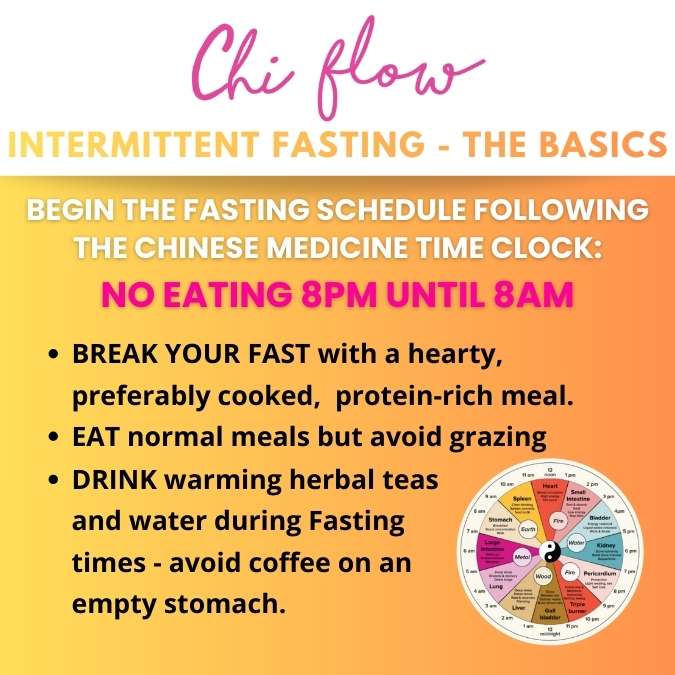
No food after 8 pm, breakfast after 8 am, allowing the Liver to detoxify and the Spleen to rebuild strength.

This rhythm stabilises blood sugar, improves sleep, clears brain fog and naturally releases weight, without shocking the system. 

We have to avoid draining Kidney Energy which harsh fasts can do.

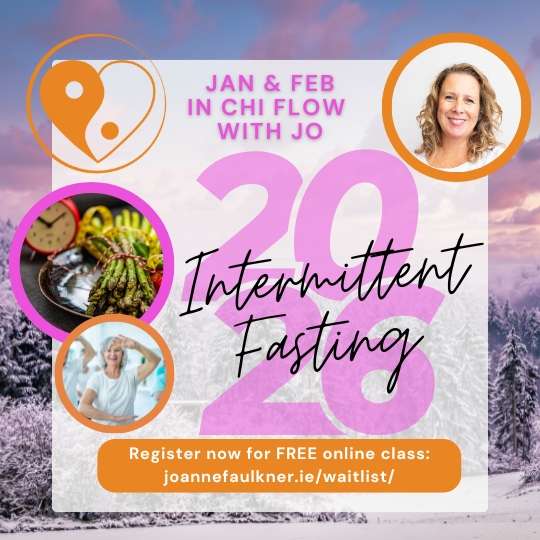
👉 Join the January 2026 Chi Flow Intermittent Fasting Programme

 2. Is Intermittent Fasting Safe for Women Over 50 or with Thyroid Issues?

For mature women, skipping breakfast or drinking coffee on an empty stomach can raise cortisol and weaken digestion.
In TCM, this drains Spleen Qi and Kidney Essence, leading to fatigue, anxiety, and insomnia.

That’s why Chi Flow fasting never removes breakfast; instead we rest overnight, eat early, and avoid late dinners.
It supports thyroid and adrenal health rather than stressing them.

3. What Fasting Window Is Best for Women Over 50?

Forget the 16 : 8 trend.

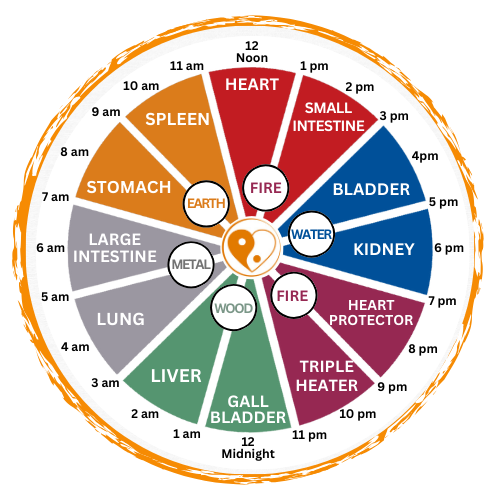
Start with 12 hours, for example, 8 pm to 8 am, then extend slowly if it feels good. TCM follows the meridian clock:

  • 7–9 am Stomach Time: best for breakfast. 
  • 9–11 am Spleen Time: transform food into energy. 
  • 1–3 am Liver Time: detox and rest.

By honouring these hours, you protect your nervous system and steady energy rather than ups and downs, highs and lows.  Find out more about the Chinese Medicine Timeclock

4. How Does Fasting Clear “Dampness” and Boost Energy?

When digestion is weak or eating is constant, the body accumulates dampness, a heavy internal moisture causing:

Belly weight and bloating

Puffy hands / feet

Foggy thinking, fatigue

Joint stiffness and swelling

Giving the Liver and Spleen time to rest allows dampness to drain.

Within weeks many women notice flatter stomachs, lighter limbs, clearer skin, calmer moods and steady energy.  This is healing from the inside out, not crash dieting.

How Qi Gong Supports the Fasting Programme

Qi Gong is the moving medicine that completes the fasting cycle. 

When we practise daily during the six-week programme, gentle breath-led movement loosens adhesions and fascia around the organs, allowing the Liver Qi to flow so detoxification and fat metabolism improve naturally.

It also builds lean muscle mass, which increases insulin sensitivity and helps regulate blood-glucose levels, crucial for preventing midlife weight gain.

 5. Will Intermittent Fasting Affect My Hormones, Mood or Sleep?

Absolutely, but in the right way.  Gentle fasting resets circadian rhythm and stabilises blood sugar, easing night sweats and restless sleep.
But harsh fasting spikes cortisol, which steals progesterone and worsens hot flushes, anxiety and insomnia.

Fasting rests the organs; Qi Gong nourishes them. Together they restore balance, strength, and vitality.

The Chi Flow method uses Qi Gong, acupressure and daily support to calm the nervous system so the body feels safe enough to release weight and restore hormone harmony.

Im 57 now and you can read my menopause story here: https://joannefaulkner.ie/2023/11/17/my-menopause-story/

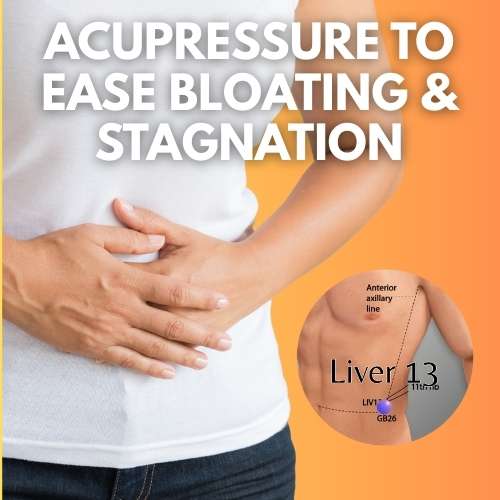
Acupressure for Metabolism & Emotional Ease – Liver 13 (Zhang Men)

Find the soft spot beneath your right ribs—Liver 13, the “Camphorwood Gate.”

Massage or tap gently.

It harmonises the Liver and Spleen, releases emotional tension and wakes up metabolism.

Nourishing Foods to Support Gentle Fasting

  • Sour foods (lemon, lime, apple-cider vinegar) stimulate the Liver.

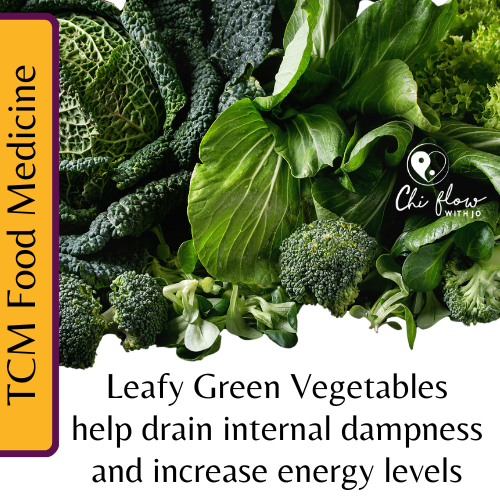
  • Green & bitter vegetables (kale, watercress, rocket) drain dampness.

  • Warm, cooked meals (porridge, soups, stews) nurture the Spleen.

  • Avoid raw salads and cold smoothies when digestion feels weak.

WATCH THE PODCAST

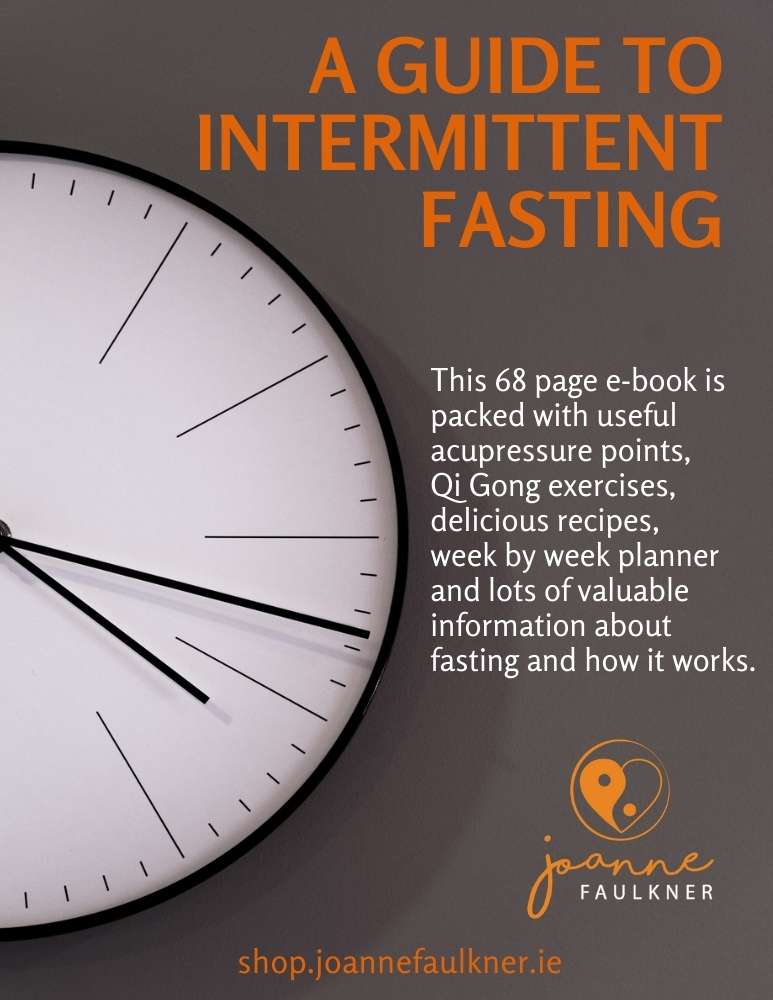
👉 Learn More about Fasting and Food as Medicine for Menopause in my eBOOK

Final Thoughts

After 50, your body doesn’t need stricter rules, it needs rhythm, compassion and community.
Chi Flow with Jo offers fasting as a form of love: resting the organs, clearing dampness, and awakening vitality.

If you have struggled before to commit to a programme – Chi Flow with Jo with its LIVE classes every weekday morning will keep you on track.  We do this TOGETHER every January because it works: Join us

💗 Ready to Join?

Click here to become a member of Chi Flow with Jo → CLICK HERE

Or drop in for a class and feel it for yourself (sign up below). Join the Chi Flow with Jo community for live sessions, practice, and support.

Self-administered acupressure or Chinese Medicine is not a substitute for visits to qualified healthcare practitioners.

Knowing how to treat yourself and your loved ones with complimentary therapies like acupressure can be greatly beneficial and convenient. However, for serious and chronic conditions, you’ll want to visit an Shiatsu therapist / Acupuncturist or other qualified healthcare practitioner who can develop a treatment plan based on your unique medical history and combination of symptoms.  The information provided should not be considered medical advice.

Gentle Weight Loss for Women Over 45 with Qi Gong, Acupressure & Intermittent Fasting

Gentle Weight Loss for Women Over 45 with Qi Gong, Acupressure & Intermittent Fasting

Gentle Weight Loss for Women Over 45 with Qi Gong, Acupressure & Intermittent Fasting

“I Just Want to Feel Like Myself Again…”

One woman wrote to Ask Me Anything and said:

“How can I lose weight that’s been increasing for years?  I’ve never come back to centre post-birth, I have an underactive thyroid, went straight into menopause, and I feel I’ve given up on myself.”

Her story touches so many of us. After years of holding everything together—children, relationships, work—our bodies hold on too.
In Traditional Chinese Medicine (TCM), this “holding” shows up as Liver stagnation and Spleen dampness, the perfect storm for midlife weight gain.

Why Weight Gain After 40 Isn’t Just About Calories

When stress, grief, or over-care stretches and overwhelms us, the Liver can’t move energy smoothly. 

Emotions get stuck; digestion slows. 

The Spleen, our digestive powerhouse, tires from worry and irregular meals, creating an internal climate known as “dampness” in Chinese Medicine, that heavy, foggy feeling, bloating, fatigue, and belly weight.

When we give the Liver time to rest by not eating in the evening, the body can finally process and drain excess dampness, the sticky, heavy internal moisture that leads to puffiness, bloating, joint pain, brain fog, and fatigue.

Instead of constantly digesting food, the Liver can detoxify and mobilise stored fat, while eating at the correct Spleen time can strengthen and transform fluids properly.

Within weeks of gentle intermittent fasting, people notice less swelling in the belly, clearer thinking, better sleep, reduced joint pain, and improved energy.

As dampness clears, inflammation subsides, the metabolism rekindles, and weight begins to drop naturally, without force or punishment.

This is the beauty of fasting with Chi Flow: we rest to restore, not restrict.

Acupressure Point – Liver 13 (Zhang Men)

Find the soft point under your right ribs—where the ribcage ends before the waist begins.

This is Liver 13, the “Camphorwood Gate.”

Massage or tap gently here using loose fists 

It connects the Liver and Spleen, clears stagnation, boosts metabolism, and soothes emotional tension. 

If it’s tender, that’s a sign the Liver is stagnant; go gently and breathe warmth into the area. 

Repeat daily and feel digestion and mood begin to flow again.

Intermittent Fasting the Chi Flow with Jo Way

Every January, hundreds join the Chi Flow with Jo Intermittent Fasting programme, a six-week reset rooted in TCM, not restriction.
We follow nature’s rhythm:

♥ Eat during daylight, rest digestion at night.

♥ 7–9 am Stomach Time / 9–11 am Spleen Time: best window for breakfast and nourishment.

♥ 1–3 am Liver Time: when the body detoxes, so avoid eating after dinner especially the late-night snacks.

Start simply: no food after 8 pm, breakfast after 8 am.
Each week we lengthen the fasting window gently, giving the organs time to cleanse and reset.  It’s a lifestyle of rhythm, not willpower, perfect for sensitive thyroids and tired nervous systems.

👉 Find out more and Join the January 2026 Chi Flow with Jo: Intermittent Fasting Programme 

It’s easier when you do it together.

Food as Medicine: Drain Dampness, Fuel Your Fire

Choose foods that support the Liver and Spleen:

For the Liver (flow & fat metabolism):

Sour foods: lemon, lime, apple cider vinegar, sauerkraut, kimchi.
Green & bitter vegetables: kale, watercress, rocket, radish, turnip.

For the Spleen (digestion & sweet cravings):

Warm, cooked meals; porridge, soups, stews.

Avoid cold salads and sugary snacks, especially when stressed.

Traditional TCM Remedy; Adzuki Bean Tea:

Bring soaked Adzuki beans to the boil for 5 minutes and then simmer for 30 minutes, strain, and sip the liquid through the day.
It gently drains dampness, balances blood sugar, and steadies emotions.

👉 Read more on food as medicine and how to make this tea https://joannefaulkner.ie/2022/04/18/clear-cold-damp-fat/

WATCH THE PODCAST

Emotional Healing & Community Support

The weight we carry isn’t just on our hips, it’s in our hearts.
Feeling like you “want to be minded” is your body’s cry for nurture, not discipline.

When you join Chi Flow with Jo, you don’t walk alone.
We move, fast, cook and heal together. That shared energy keeps you accountable and loved through change.

You don’t need to fight your bodyjust listen to her again.
Start with small rhythms: stop eating after 8 pm, massage Liver 13, sip lemon water in the morning, and join our January program to be supported every step of the way.

💗 Ready to Join?

Click here to become a member of Chi Flow with Jo → CLICK HERE

Or drop in for a class and feel it for yourself (sign up below). Join the Chi Flow with Jo community for live sessions, practice, and support.

Self-administered acupressure or Chinese Medicine is not a substitute for visits to qualified healthcare practitioners.

Knowing how to treat yourself and your loved ones with complimentary therapies like acupressure can be greatly beneficial and convenient. However, for serious and chronic conditions, you’ll want to visit an Shiatsu therapist / Acupuncturist or other qualified healthcare practitioner who can develop a treatment plan based on your unique medical history and combination of symptoms.  The information provided should not be considered medical advice.

.
Bone Health and Balance with Thérèse Cosgrove

Bone Health and Balance with Thérèse Cosgrove

Bone Health and Balance with
Thérèse Cosgrove

As the year folds into its quietest season, the energy of Bone Health rises to the surface.

In Traditional Chinese Medicine, winter and the kidneys are linked to our bones, balance, and nervous system.

This is the perfect time to nourish our structure and inner stillness — and that’s exactly what this month’s Energy Update explores with Thérèse Cosgrove, homeopath, nutritional therapist, and Feldenkrais practitioner.

Listening to the Body through Movement

Thérèse describes Feldenkrais as a way of using small, subtle movements to awaken the nervous system’s awareness. Through this awareness, we uncover patterns of tension and rediscover new, more efficient ways of moving.

“Rather than me telling you how to move,” she says, “your nervous system is intelligent enough to find the best way itself.”

These gentle explorations improve skeletal alignment, balance, and joint integrity, helping us move with ease and confidence — vital for bone health, especially in menopause, post-menopause, and chronic conditions such as Parkinson’s.

Even the pauses between movements matter:

“That’s when the nervous system learns and integrates — the same way we rest between breaths.”

When the brain stops bracing and begins organising the skeleton more efficiently, three bone-loving things happen:

Better load through bone: Bones remodel when they’re loaded. Efficient alignment means forces travel through the skeleton (not just muscles), stimulating bone.

Joint integrity & balance: Micro-adjustments reduce “overwork” in hips, knees, spine and shoulder girdle, improving confidence and decreasing fear of falling.

Down-regulated pain: When the nervous system feels safe, pain signals calm and movement becomes possible again — the virtuous cycle for recovery.

Feldenkrais is exploration, not achievement. Curiosity and playfulness are the fastest way to teach your bones and brain new options.

Yin, Stillness, and the Bone Season

As Joanne points out, the yin energy of winter invites quietness and grounding.

Just as the earth rests before spring, we too can pause, aligning our bones, slowing our breath, and reconnecting to what truly supports us.

Yet, in the rush toward Christmas, that stillness is often lost. Feldenkrais offers a way back into the body, a return to inner listening and calm.

Use the space between Christmas and New Year to be still of mind and quiet movements of body.

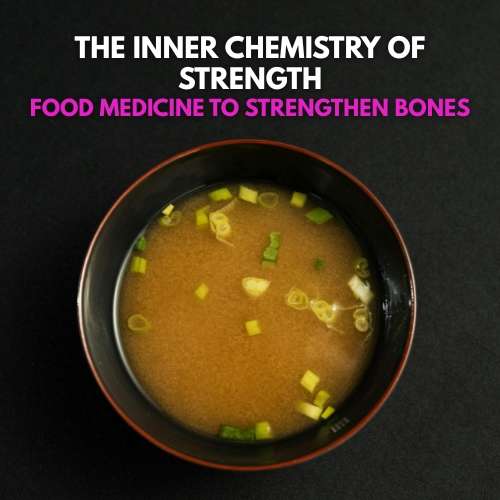
The Inner Chemistry of Strength

In her homeopathic and nutritional work, Thérèse looks at bone density not just as a matter of calcium, but of hormonal balance, mineral status, and heavy-metal detoxification.

Using gentle testing and homeopathic supports, she tailors treatment to each person:

“We might look at supporting estrogen, the parathyroid, or trace minerals like boron, all essential for strong, flexible bones.”

Joanne draws the parallel in Chinese Medicine: seaweeds in small amounts can help clear heavy metals and nourish the kidneys — though, as she reminds us, not everyone should take them.

What matters most is listening to your own body and finding what nourishes your unique system.

In Traditional Chinese Medicine, winter belongs to the Kidney system, which governs bones, marrow, ears (balance/vestibular), and the nervous system. Practical Kidney-nourishing ideas:

Flavours & foods: the salty flavour in moderation supports Kidney, think miso, mineral broths, black sesame, adzuki/black beans, and small amounts of seaweeds if appropriate.
Caveat: Seaweeds are iodine-rich; avoid or use cautiously if you have thyroid issues or are on certain meds.

Gentle, consistent practice: slow standing, breath-led spirals, and ankle-calf work “pump” fluids and stabilise balance, perfect winter medicine.

Stillness as medicine: quiet, warm, early nights rebuild Yin (think lubrication and reserves), the foundation for hormone balance post-menopause.

A Morning of Yin and Gratitude

When asked how she begins her day, Thérèse shares a simple ritual that reflects the essence of Chi Flow:

Hydrate with structured, living water to awaken the body. “Structured water”: what we mean (and what to do about it) Thérèse will expand on this in her Mid-Monthly Health Talk, but here’s the practical, controversy-free middle ground: Structured Water inside the body doesn’t behave like plain tap water. Near proteins, fascia, and cell membranes it forms ordered layers that help signaling and flow.

Step outside into morning light, facing east to reset circadian rhythm and hormones. Move gently, perhaps Chi Flow with Jo, Feldenkrais, or a mindful walk. Gentle vibration & movement (walking, bouncing, fascia spirals) appear to improve fluid distribution in connective tissue, exactly what we do in Chi Flow.

“These practices really helped me through difficult times,” she says. “My morning Chi Flow with Jo was one of the things that carried me.”

For Parkinson’s & chronic conditions

Hydration and gentle nervous-system work are especially helpful when autonomic regulation or muscle stiffness makes dehydration and bracing more likely. Short, frequent “micro-moves,” mineral-aware hydration, and morning light can noticeably improve steadiness and energy without fatigue.

WATCH THE PODCAST

In the full podcast, learn more about sound healing and how it affects our hormonal balance below: 

Join us inside Chi Flow (and get Thérèse’s talk free)

Thérèse’s Mid-Monthly Health Talk will go hands-on with Feldenkrais explorations, hydration you can feel, and a deeper look at “structured water” in everyday practice. It’s free for Chi Flow members.

👉 Join Chi Flow with Jo to access:

  • Daily live morning classes (with replays)

  • Seasonal recipes & self-acupressure

  • This month’s Mid-Monthly Health Talk with Thérèse Cosgrove — free for members

Start here: Join Chi Flow with Jo — Build strength, balance, and deep yin this winter.

💗 Ready to Join?

Click here to become a member of Chi Flow with Jo → CLICK HERE

Or drop in for a class and feel it for yourself (sign up below).


Join the Chi Flow with Jo community for live sessions, practice, and support on your journey to an emotionally healthy heart and attend Caroline’s live talk and sound bath for FREE.
To work with Caroline click HERE

Self-administered acupressure or Chinese Medicine is not a substitute for visits to qualified healthcare practitioners.

Knowing how to treat yourself and your loved ones with complimentary therapies like acupressure can be greatly beneficial and convenient. However, for serious and chronic conditions, you’ll want to visit an Shiatsu therapist / Acupuncturist or other qualified healthcare practitioner who can develop a treatment plan based on your unique medical history and combination of symptoms.  The information provided should not be considered medical advice.

.
Frozen Shoulder Relief: Acupressure, Tendon Breathing & Food Medicine

Frozen Shoulder Relief: Acupressure, Tendon Breathing & Food Medicine

Frozen Shoulder Relief: Acupressure (LI14 & LI15), Tendon Breathing & Food Medicine

Why this matters

If your shoulder feels painful, tight, and stubborn, like it’s glued in place, or there is pain when your hand reaches out to open a window or put something on a shelf, you’re not alone. Frozen shoulder can take months (sometimes longer) to ease.

The good news? With gentle, consistent practice you can reduce pain, restore mobility, and feel more like yourself again.

Why daily Qi Gong helps (big picture):

Think of it as compound interest for your joints. Slow, breath-led movement:

♥ calms the nervous system so pain perception drops,
♥ nourishes fascia and tendons with circulation and warmth,
♥ retrains your body to move without bracing, it’s how we “age-proof” shoulders.

When you join Chi Flow with Jo, you don’t just get classes, you get the power of the group live every weekday morning plus a daily chat with me right after class to ask questions, celebrate wins, and keep momentum. It’s such a supportive way to heal.

Safety first

If you’ve had a recent fall, can’t lift the arm at all, have fever, redness, severe night pain that doesn’t change with position, numbness in the hand, or sudden swelling—please see a clinician. Everything here is gentle; keep pain at 2–3/10. Choose ease over force.

Acupressure You Can Do Today: LI15 & LI14

We’ll open two shoulder “gates” on the Large Intestine channel to move stagnation through the arm and shoulder.

LI15 — Jianyu / Shoulder Bone

Benefits:

♥ Eases pain and stiffness,
♥ Supports abduction (lifting the arm to the side),
♥ Warms the joint capsule.

Find it:

♥ Feel the acromion (bony shoulder tip) at the top of the shoulder, find the front groove of the deltoid muscle.
♥ Slide a fingertip just in front and slightly below into a soft hollow often tender.

Work it:

♥ Rest the arm by your side.
♥ With the opposite thumb or middle finger, press and melt into the hollow for 8 slow breaths.
♥ Make tiny circles—like polishing a pearl—for 30–45 seconds.
♥ Repeat 3 rounds; switch sides.

LI14 — Binao / Upper Arm

Benefits:

releases upper-arm/shoulder tension; helps lifting and reaching—perfect for that “stuck sleeve” feeling.

Find it:

From the outer elbow crease (LI11), draw an imaginary line toward LI15. LI14 sits about 7 finger-widths above the elbow on that line, at/just above the deltoid slope, usually a ropey, tender spot.

Work it:

♥ Pin the point with your thumb; wrap the other fingers around the arm.
♥ Breathe 4 in / 6 out—soften on the inhale, sink slightly on the exhale.
♥ Hold 60–90 seconds, up to 3 passes; switch sides.

Food Medicine for Stiff Neck & Shoulders

From a TCM lens we want to move Blood, dispel Wind-Cold, transform Damp, and nourish Liver & Kidney (Liver governs sinews; Kidney governs bones).

Add more of (little, daily amounts):

♥ Warming pungents: fresh ginger, spring onion (white part), garlic, a pinch of white pepper
♥ Sinew-friendly foods: dark leafy greens, black sesame, walnuts, goji berries, bone broth/gelatin (or mineral-rich seaweed broth if plant-based)
♥ Oils for glide: extra-virgin olive oil, small oily fish (if eaten)
♥ Hydration: warm water or ginger-lemon sips through the day

Dial down for many people: cold raw salads, excess sugar/dairy, heavy fried foods.

Damp-forming foods can worsen stiffness.

A quick word on Dampness

Dampness is like a heavy, sticky fog settling in the body, slowing everything and making tissues feel puffy and waterlogged. Imagine moving in wet, clinging clothes: range shrinks, effort rises, glide disappears. In shoulders, that fog can thicken fluids around tendons and the capsule, impairing Qi & Blood flow, so repair and lubrication lag. Result: stiffness, dull ache, and a “stuck” feel, often worse with cold, humidity, or rich foods.

Shoulder-Soother Broth (serves 2)

♥ 1 thumb fresh ginger (sliced)
♥ 2 spring onions (white parts)
♥ handful greens (spinach or pak choi)
♥ 1 tsp black sesame
♥ 1 tsp miso (stir in off the boil)

Optional: 1 cup bone broth or a strip of kombu simmered then removed

Method:

♥ Simmer ginger & spring onion 10 min.
♥ Add greens 2 min.
♥ Remove from heat,
♥ whisk in miso,
♥ sprinkle sesame.
Sip warm.

Qi Gong: Tendon Nei Gong (gentle & joint-saving)

In Tendon Nei Gong we breathe into the joint space, then expand softly as if the shoulder, elbow, and wrist were balloons inflating in all directions. This pumps fluids, clears metabolic stagnation, poetically called “poisonous acids” and lets fresh Qi & Blood bathe the tissues. No strain, no pinching.

Set-up: Stand hip-width or sit tall. Feet grounded, crown lifting, jaw soft.

1) Shake & Melt — 1 min
Arms hang; micro-shake wrists → elbows → shoulders, like dust falling off your tendons.

2) Tendon Breathing — 2–3 min
Align & breathe: Tongue to palate. Inhale 4 / Exhale 6 through the nose.

Tensile reach: With elbows low, imagine micro-lines of length sternum → shoulders → elbows → wrists → fingertips (no visible stretch).

Inhale: feel the joint expand front/back/sides; keep traps soft.
Exhale: condense and melt—like wringing a sponge.
Optional tiny spirals: 3–5 breaths, a whisper of outward rotation on inhale, return on exhale.

3) Finish: Shake Out — 30 sec
Wrists → elbows → shoulders.

Why it works: low load, nervous-system down-regulating, improves joint space and tendon hydration—ideal for frozen shoulder because it avoids impingement while boosting circulation.
Common pitfalls: shrugging/over-bracing, breath-holding (Valsalva), forcing range. If anything pinches, shrink the movement and keep the elbow below shoulder height.

Frozen-shoulder tips:

♥ If pain >3/10, reduce imagined expansion; shorten breath to 3–4.
♥ Try a pendulum assist first (arm dangling, tiny circles), then tendon breathing.
♥ Pair with LI14 & LI15 beforehand to open the shoulder gates, then breathe into that new space.
♥ Quick self-check (what “good” feels like):
♥ Breath smooth, jaw soft, no shrugging.
♥ Warmth or spreading into the deltoid/upper arm within 3–6 breaths.

After 1–2 minutes, the arm often lifts a few centimeters easier and the neck feels looser, not tighter.


WATCH THE PODCAST

Your next step (with support)

Frozen shoulder responds to kindness + consistency. We don’t force change, we invite it. If you’d love support, join Chi Flow with Jo: we meet live every weekday morning, and we always have a chat together after class so you can ask questions in real time, get tweaks for your body, and feel the momentum of a community that cares. I’m cheering for your first easy reach to the top shelf again. Until then, move gently, breathe deeply, and keep your Chi flowing.

💗 Ready to Join?

Click here to become a member of Chi Flow with Jo → CLICK HERE

Or drop in for a class and feel it for yourself (sign up below). Join the Chi Flow with Jo community for live sessions, practice, and support.

Self-administered acupressure or Chinese Medicine is not a substitute for visits to qualified healthcare practitioners.

Knowing how to treat yourself and your loved ones with complimentary therapies like acupressure can be greatly beneficial and convenient. However, for serious and chronic conditions, you’ll want to visit an Shiatsu therapist / Acupuncturist or other qualified healthcare practitioner who can develop a treatment plan based on your unique medical history and combination of symptoms.  The information provided should not be considered medical advice.

.
How Sound Healing Supports Hormonal Balance & Slows Ageing After Menopause

How Sound Healing Supports Hormonal Balance & Slows Ageing After Menopause

How Sound Healing Supports Hormonal Balance & Slows Ageing After Menopause

As we step into November in Chi Flow with Jo, our focus turns to hormonal balance and longevity. For many women, especially post-menopause, the question becomes: how can I stay strong, flexible, and emotionally balanced as I age?

One powerful answer lies in sound healing.

Recently, I spoke with Caroline Flavin of Alchemy of Sound, who has been working with sound and vibration for over 20 years. She shared how crystal bowls, tuning forks, and even simple humming can profoundly support women through hormonal transitions.

Sound Healing & Hormonal Shifts

Menopause and post-menopause often bring stress, anxiety, temperature fluctuations, and disrupted sleep. These challenges are closely linked with elevated cortisol and a nervous system under strain.

Caroline explained that sound baths, through the resonance of crystal bowls, guide the brain into slower wave states, alpha and theta, similar to deep relaxation or meditation.

This shift activates the parasympathetic nervous system, helping the body to lower stress hormones, reduce blood pressure, and find a state where true healing and restoration can occur.

For women navigating hormonal changes, this is more than relaxation, it’s a pathway to balance, calm, and longevity.

Vibration, Energy & Flow

Chi Flow with Jo uses breath and movement to circulate qi, the vital energy of life. Sound works in harmony with this: instead of moving energy with the body, the vibration moves through the waters of the body, blood, lymph, and cellular fluids, carrying resonance deep into our tissues.

Just as we feel music reverberate in our bones at a concert, sound healing allows us to literally vibrate into balance. For women post-menopause, this offers a gentle yet powerful way to stay connected, flexible, and resilient, physically and emotionally.

Tuning Forks & Hormonal Points

Caroline also works with planetary tuning forks, rooted in both ancient and modern traditions.

Applied to specific meridian points, these vibrations can support symptoms of peri- and post-menopause, helping restore balance to the body’s internal rhythms.

It’s a reminder that healing doesn’t always have to come from doing—sometimes, it comes from allowing the body to receive.

Everyday Sound Rituals for Longevity

Caroline suggests simple practices for daily life:

  • Hum or chant “Om” first thing in the morning or before bed to soothe your nervous system.

  • Pay attention to the soundscape around you, swap doom-scrolling and digital noise for birdsong, leaves rustling, or calming music.

  • Try sound baths online or in person, where vibration can ripple through your whole being.

These small rituals, especially when paired with Chi Flow, become longevity practices, keeping you emotionally balanced, physically strong, and connected to life’s natural rhythm.

Experience Sound Healing in November

I’m delighted that Caroline Flavin of Alchemy of Sound will join us for November’s Chi Flow mid-monthly health talk, offering an online sound bath and discussion on hormonal balance and longevity.

✨ This talk is free for all Chi Flow members.


✨Non-members can buy a ticket, and if you later decide to join Chi Flow, we’ll refund your ticket price. https://joannefaulkner.ie/online-talk/

WATCH THE PODCAST

In the full podcast, learn more about sound healing and how it affects our hormonal balance below: 

Join Us This Month in Chi Flow with Jo to balance hormones & boost energy and longevity

Why not join Chi Flow today, so you can experience Caroline’s sound bath, our daily morning Qi Gong practice, and a supportive community of women navigating midlife and beyond?

💗 Ready to Join?

Click here to become a member of Chi Flow with Jo → CLICK HERE

Or drop in for a class and feel it for yourself (sign up below).


Join the Chi Flow with Jo community for live sessions, practice, and support on your journey to an emotionally healthy heart and attend Caroline’s live talk and sound bath for FREE.
To work with Caroline click HERE

Self-administered acupressure or Chinese Medicine is not a substitute for visits to qualified healthcare practitioners.

Knowing how to treat yourself and your loved ones with complimentary therapies like acupressure can be greatly beneficial and convenient. However, for serious and chronic conditions, you’ll want to visit an Shiatsu therapist / Acupuncturist or other qualified healthcare practitioner who can develop a treatment plan based on your unique medical history and combination of symptoms.  The information provided should not be considered medical advice.

.
Salty Taste in Your Mouth? What It Could Mean for Women Over 40

Salty Taste in Your Mouth? What It Could Mean for Women Over 40

Salty Taste in Your Mouth? What It Could Mean for Women Over 40

Have you ever noticed a salty taste in your mouth that just won’t go away, even when you’re not eating salty food? For many women over 40, changes in taste, thirst, or cravings can be subtle signs that the body is asking for support.

In Western medicine, your GP might check for dehydration, mineral imbalances, or underlying illness, and sometimes tests come back normal. In Traditional Chinese Medicine (TCM), we look at the body through a different lens: one that connects your tastebuds, emotions, and energy systems.

In TCM, a persistent salty taste is linked to the Water element and the Kidneys, the powerhouse of your vitality, longevity, and hormonal health. November in Chi Flow with Jo, our focus is on the Kidneys and Jing, the deep essence that governs everything from bone strength to hormonal transitions in peri- and post-menopause.

Before we begin, a gentle reminder: this information is for complementary self-care and should be used alongside medical advice, not as a replacement.

The Five Element Framework & Food Medicine

In Traditional Chinese Medicine, Five Element Food Medicine teaches us that each organ and its meridian system is linked to one of nature’s elements: Wood, Fire, Earth, Metal, or Water. Each element has a season, time of day, emotion, colour, and sensory organ, clues that help us understand our bodies and the signals they send.

For example, the Water element relates to the Kidneys and Bladder, the season of winter, the emotion of fear, the colour black, and the sensory organ of the ears.

By noticing patterns, such as craving salty foods, changes in hearing, or feeling more fearful or anxious, we can identify which element needs nourishment and use food, flavour, and cooking methods to restore balance.

Why Salty Taste Points to Kidney Imbalance

In TCM, the salty flavour is the taste of the Water element. If you’re noticing a salty taste when you haven’t eaten anything salty, it can mean the Kidney system is out of balance, either overworked or needing deeper support.

The Kidneys store Jing, your essence, which is like your lifetime battery. Jing powers your growth, fertility, hormonal cycles, and how you age. As we enter peri, mid and post-menopause, Jing naturally declines, which is why it’s so important to protect and nourish it.

There’s also a fascinating connection between the Kidneys and the Heart. In the destructive cycle of the Five Elements, Water (Kidneys) controls Fire (Heart). If Water is weak, Fire can flare, leading to high blood pressure, palpitations, anxiety, and restlessness. For our listener with a salty taste and high blood pressure, this connection is especially relevant.

Acupressure for Kidney & Heart Balance: Kidney 3 (Taixi)

One of my go-to points for restoring Kidney strength and calming the Heart is Kidney 3, known as Taixi; the Great Ravine

Location:
You’ll find it in the hollow between your inner ankle bone and your Achilles tendon. Slide your finger accross from the ankle bone until you feel a soft dip before the tendon, that’s Kidney 3.

Benefits:

  • Nourishes Kidney Yin and Yang
  • Supports Jing (vital essence)
  • Calms the mind and reduces anxiety
  • Helps regulate blood pressure via the Kidney–Heart connection

How to use it:

  1. Sit comfortably with one ankle crossed over the opposite knee.
  2. Press gently but firmly with your thumb into the hollow.
  3. Breathe slowly and deeply for 1–2 minutes.
  4. Repeat on the other side.

Practise twice a day for best results.

This isn’t about forcing change, it’s about steady, consistent support for your body’s own balancing mechanisms.

Food Medicine: Corn Silk Tea & Kidney-Nourishing Foods

Corn silk tea is a gentle, traditional remedy in TCM for supporting the Kidneys and Bladder. It’s mildly diuretic, helps clear dampness and heat, and supports healthy fluid balance without overstimulating the system.

To make from fresh corn:

  • Peel back the husks and collect the silky threads from 2–3 corn cobs.
  • Rinse well.
  • Simmer in 1 litre of water for 10–15 minutes.
  • Strain and sip warm.

To make from dried corn silk:

  • Available loose or in teabags from health food shops.
  • Steep in hot water for 5–10 minutes.

The tea has a naturally sweet, grassy taste and can be enjoyed warm or at room temperature.

Other Kidney–Jing supporting foods:

  • Black beans and adzuki beans
  • Black sesame seeds
  • Walnuts
  • Seaweed
  • Dark leafy greens
    Bone broth
  • Miso
  • Berries

Hormonal tip for women over 40:


As Jing declines, we may notice hot flushes, poor sleep, low mood, or bone loss. Supporting Kidney Jing through food medicine can help ease these changes and improve energy, mood, and resilience.

You’ll find many more recipes for Kidney health and hormonal balance in my books, Shiatsu & the Art of Conscious Cooking and Good Food: Better Sex.

Qi Gong for Kidney & Hormonal Support

Qi Gong is a beautiful way to move energy through the Kidney and Bladder meridians, strengthen the lower back, and support hormonal balance. One of my favourites is the Kidney–Bladder Stretch and I’ll be teaching it in the free class at the end of the month. It’s great for encouraging flow of cranio-sacral fluid up and down the spine, massaging and supporting the kidneys

This combination of stretch and spiral massages the fascia, stimulates meridian flow, and harmonises the body during hormonal transitions.

If you’ve been experiencing a persistent salty taste, TCM reminds us to look deeper, to listen to what the body is telling us about our Kidneys, Jing, and hormonal balance.

You now have three simple tools to try:

  • Kidney 3 acupressure for Kidney–Heart harmony
  • Corn silk tea and Kidney-nourishing foods for deep vitality
  • Kidney–Bladder Qi Gong stretch to keep your energy flowing

WATCH THE PODCAST

Boost your Jing with Qi Gong, Acupressure & Food Medicine

In November Chi Flow with Jo, we’ll spend the whole month focusing on Kidney and Jing energy, with daily live Qi Gong, acupressure guidance, and seasonal food medicine to support you through hormonal changes.

Join us and give your Kidneys the love they deserve.

💗 Ready to Join?

Click here to become a member of Chi Flow with Jo → CLICK HERE

Or drop in for a class and feel it for yourself (sign up below). Join the Chi Flow with Jo community for live sessions, practice, and support.

Self-administered acupressure or Chinese Medicine is not a substitute for visits to qualified healthcare practitioners.

Knowing how to treat yourself and your loved ones with complimentary therapies like acupressure can be greatly beneficial and convenient. However, for serious and chronic conditions, you’ll want to visit an Shiatsu therapist / Acupuncturist or other qualified healthcare practitioner who can develop a treatment plan based on your unique medical history and combination of symptoms.  The information provided should not be considered medical advice.

.