Why Shingles Pain Can Linger: What Helps Calm the Burning Naturally

Why Shingles Pain Can Linger: What Helps Calm the Burning Naturally

If you’ve had shingles, you may have been told that once the rash clears, the problem is over. Yet many people find that the pain doesn’t simply disappear. Instead, it can linger as a burning, sensitive, wrap-around sensation, long after the skin looks healed.

This ongoing discomfort can be worrying and exhausting. The good news is that lingering shingles pain is often less about ongoing damage and more about the nervous system staying on high alert. With the right kind of gentle support, the body can begin to settle and recover.

Lingering Shingles Pain Isn’t Random – The Body Leaves Clues

Post-shingles pain is often described as burning, electric, or band-like. It may travel from the belly button area, across one side of the abdomen, and around into the back. This “wrap-around” pattern is important.

In Chinese medicine, we pay close attention not just to where pain shows up, but how it moves. Energy in the body flows along specific pathways. Some move straight up and down, while others spiral and wrap around the sides of the body.

Pain that moves sideways, around the waist, ribs, or flank, often follows one of these side pathways. Shingles can inflame and overstimulate this line of communication. Even after the virus has settled, the nerves along that pathway may remain sensitive, continuing to send pain signals.

This is why post-shingles pain can feel surface-level, fiery, and persistent rather than deep and dull.

Why Shingles Pain Can Last Longer in Midlife

As we move through midlife, menopause, and the natural ageing process, the body can become drier and more sensitive. Nerves may take longer to calm after illness, and recovery can be slower than it once was.

From a Chinese medicine perspective, this stage of life calls for more soothing, moistening, and calming support rather than strong stimulation. When it comes to nerve pain, trying to push through or aggressively “treat” symptoms often makes things worse. Gentle, consistent care is usually far more effective.

Gall Bladder 34: A Key Acupressure Point for Lingering Shingles Pain

Within weeks many women notice flatter stomachs, lighter limbs, clearer skin, calmer moods and steady energy.  This is healing from the inside out, not crash dieting.

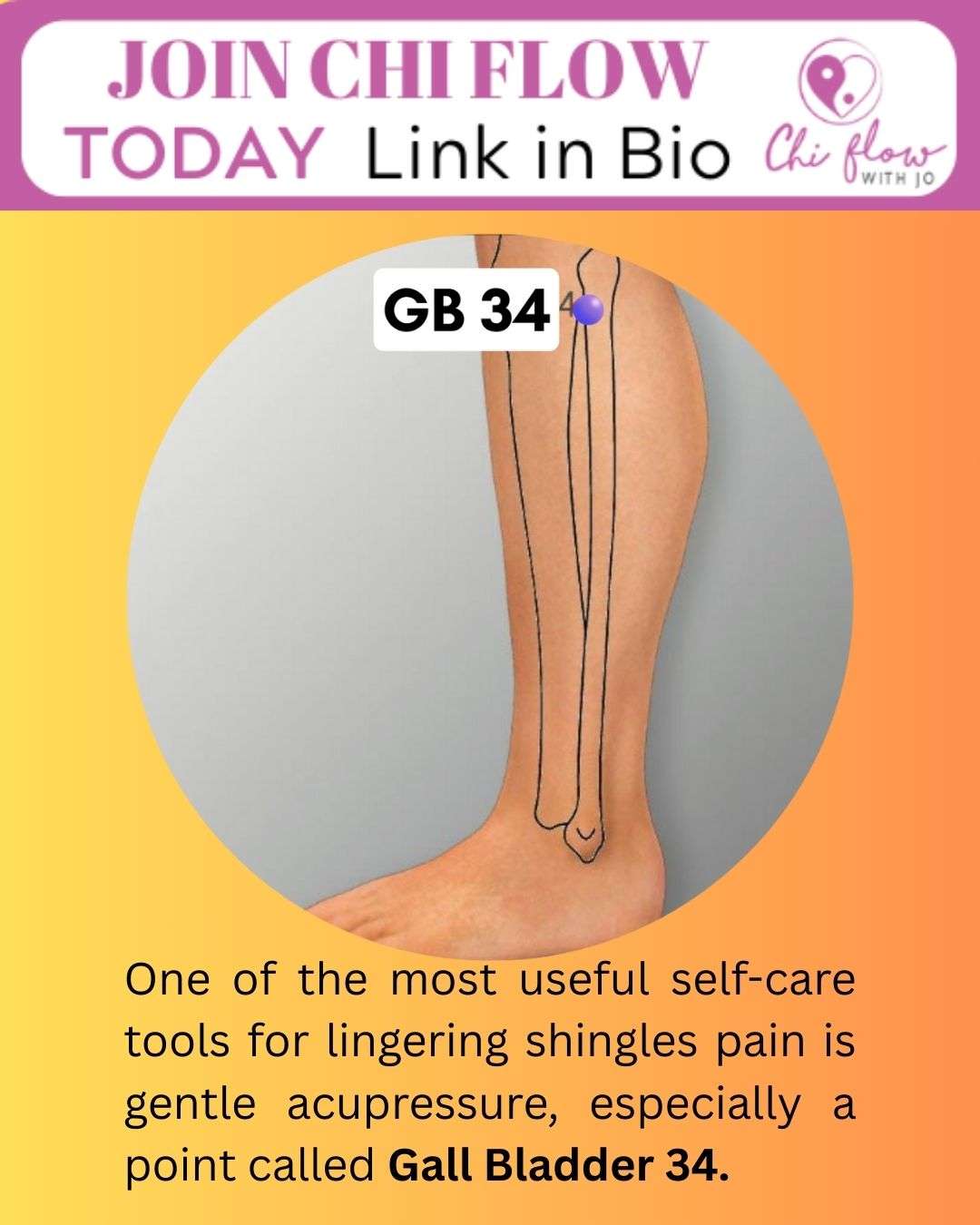
One of the most useful self-care tools for lingering shingles pain is gentle acupressure, especially a point called Gall Bladder 34.

This point works on the same pathway that wraps around the side of the body, which is why it can influence pain around the waist, ribs, and back even though it’s located on the leg.

How to find Gall Bladder 34
Sit comfortably and place your hand on the outside of your knee. Slide your fingers down just below the knee joint, along the outer edge of the leg. You’ll feel a small hollow or dip between the bone and the muscle. That tender dip is Gall Bladder 34.

What it should feel like
When you press the point, it should feel achy, tender, or slightly sore, but comfortable. It should not feel sharp, stabbing, or electric. That gentle ache is a sign you’re in the right place.

How to press it
Use your thumb or knuckle and apply steady, gentle pressure. Breathe slowly and stay there for about one minute, or up to three minutes if it feels soothing. There’s no need to press hard. With nerve-related pain, softer pressure is usually more effective than force.

Using this point once daily is enough. Many people find it helpful to link it with a daily habit, such as brushing teeth or boiling the kettle, so it becomes easy and consistent.
Burning sensations are often a sign that the body needs more moisture and steadiness. One of the simplest food supports during shingles recovery is a small bowl of warm miso with wakame seaweed.

Why this helps:

  • Miso gently nourishes and steadies the system 
  • Wakame supports fluids and minerals 
  • Warmth soothes without adding heat

How to prepare it:

Stir a teaspoon of good quality miso into warm (not boiling) water and add a small amount of soaked wakame and allow it to rehydrate. Once a day is plenty.

Gentle Movement That Helps the Body Let Go

When pain wraps and lingers, the body often responds better to rhythm than effort.

Simple arm swinging is a gentle way to release held tension after shingles. Stand with your feet hip-width apart and knees soft. Let your arms swing freely from the shoulders, like pendulums.

A few helpful cues:

  • Keep the knees soft

     Let the jaw relax

  • Breathe naturally

Two to five minutes is enough. Stop before fatigue. Many people notice warmth, a sense of spreading, and a calming of the chest and belly, signs that the nervous system is beginning to stand down.

What to Expect as the Body Settles

Lingering shingles pain rarely disappears overnight. It often fades gradually, like a dimmer switch turning down rather than a light switching off.

With daily gentle acupressure on Gall Bladder 34, soothing food, and easy Qi Gong movement, people often notice:

  • Reduced burning intensity

     Shorter flare-ups

  •  Improved sleep

  •  A greater sense of ease in the body

If pain worsens, spreads, begins waking you at night, or if medications change, it’s important to check in with your GP. These practices are supportive and complementary, not a replacement for medical care.

WATCH THE PODCAST

Final Thoughts

 Persistent shingles pain doesn’t mean your body has failed. It usually means the system is still protecting itself.

With patience, gentle support, and consistency, the body can continue to heal long after the rash has gone. Listening to the signals rather than fighting them is often what allows real change to happen.

Your body knows how to find its way back to balance, sometimes it just needs the right conditions.

💗 Ready to Join?

Click here to become a member of Chi Flow with Jo → CLICK HERE

Or drop in for a class and feel it for yourself (sign up below). Join the Chi Flow with Jo community for live sessions, practice, and support.

Self-administered acupressure or Chinese Medicine is not a substitute for visits to qualified healthcare practitioners.

Knowing how to treat yourself and your loved ones with complimentary therapies like acupressure can be greatly beneficial and convenient. However, for serious and chronic conditions, you’ll want to visit an Shiatsu therapist / Acupuncturist or other qualified healthcare practitioner who can develop a treatment plan based on your unique medical history and combination of symptoms.  

The information provided should not be considered medical advice.
Building an Emotionally Healthy Heart

Building an Emotionally Healthy Heart

Building an Emotionally Healthy Heart: Tools for Connection and Resilience

In our fast-paced, often disconnected world, creating a healthy heart goes beyond physical well-being, it involves nurturing our emotional and spiritual energy. Cultivating emotional resilience, understanding our triggers, and fostering healthy relationships with others are all key components of heart health. In the Chi Flow with Jo Podcast, we dive deep into these concepts, discussing practical tools and transformative practices to build an emotionally healthy heart.

This blog explores the key challenges many face in creating emotionally healthy relationships, both with ourselves and others, and provides actionable solutions for moving forward.

1. Navigating Emotional Sensitivity with Resilience

Emotional sensitivity can be a gift, but it can also be overwhelming, especially when we absorb the emotions of those around us. Many people, particularly those who are highly empathetic, feel deeply, which can lead to emotional burnout if not managed properly. Without the right tools, this sensitivity can feel like a burden rather than a gift.

Solution:

The key to emotional resilience lies in developing practices that help you remain grounded, without shutting down or distancing yourself from the world around you. Practices like mindfulness, energy movement, such as Qi Gong, and emotional self-regulation are essential for building this resilience. These tools help you stay present to your feelings while avoiding being overwhelmed by them, allowing you to embrace your sensitivity as a strength rather than a vulnerability.  To learn more about staying emotionally resilient, listen to the full podcast, where Maya and I explore tools for staying open, grounded, and sensitive in a complex world.

2. Overcoming Childhood Beliefs and Trauma

Many women carry deep-rooted beliefs formed in childhood that continue to influence their adult lives. One such belief that many struggle with is the feeling of unworthiness, especially if their early experiences involved abuse or trauma. These beliefs often show up in relationships, causing defensiveness, self-doubt, and difficulty accepting love.

Solution:

A powerful tool for transforming limiting beliefs is The Work of Byron Katie, which involves questioning the assumptions we make about ourselves and others. This method is incredibly effective for reframing negative thought patterns and replacing them with empowering beliefs.

For instance, in my own personal journey, I carried beliefs formed from childhood sexual abuse that made me believe I was unsafe when I was visible or attractive. This belief stayed with me for years, influencing my relationships and self-worth. Through working with Maya and using tools like Byron Katie’s method, I was able to challenge this belief and transform it. 

This deep healing allowed me to step into my power and publish my book, Good Food, Better Sex a guide that not only explores physical health but also highlights the importance of healthy relationships with ourselves and others. If you’re struggling with deeply ingrained beliefs from the past, the upcoming mid monthly health talk, Maya will demonstrate a session which will offer insights on how to confront and heal them, making space for a more empowered and fulfilling life. 

Reflective Listening for Healthier Relationships

In our relationships, we often fall into the pattern of wanting to be heard before we truly listen. This is especially true when emotional triggers arise. However, when we rush to defend our point of view or assert that we are “right,” we miss the opportunity to connect and understand the other person’s perspective.

Solution:
One transformative tool for improving communication is Reflective Listening, which involves listening attentively to the other person’s point of view, reflecting it back, and showing empathy before sharing your own perspective. This method fosters a sense of safety, allowing both parties to feel heard and valued. Reflective listening not only improves relationships but also creates a deeper emotional bond built on trust and mutual respect.

4. Building Emotional Resilience in Community Living

Living in an intentional community presents unique challenges but also provides powerful opportunities for growth. Maya lives in a sustainable community in Portugal, where collective living requires constant emotional regulation and conflict resolution. Unlike the typical individualistic mindset, community living demands a deep commitment to listening, empathy, and understanding, especially when difficult situations arise.

Solution:

In Maya’s community, the tools for conflict resolution and emotional regulation include techniques like Nonviolent Communication (NVC) and social harmonizing, which foster open, honest dialogue without blame or defensiveness. These tools are designed to help individuals express their feelings and needs in a way that invites cooperation rather than conflict. By practicing vulnerability and accepting feedback, community members

5.  Transforming Reactive Patterns into Proactive Communication

In relationships, it’s easy to fall into a cycle of reactivity, where both people defend their position rather than listen and understand the other’s perspective. This often leads to unnecessary conflict and emotional disconnect.

Solution:

Imago Dialogue is a powerful method that encourages partners to listen actively and reflectively, fostering a deeper connection and resolving conflicts in a healthy way.

By focusing on curiosity and empathy rather than asserting our own needs first, we create space for mutual understanding and healing.

This process helps us move from a reactive state to a more proactive and compassionate way of communicating.

6. Living in Community: The Power of Connection

While emotional self-regulation and healthy communication are vital for an emotionally healthy heart, there’s also great value in living in community. Maya’s experience living in a sustainable community has shown her the power of collective healing and emotional support. In this type of environment, there are multiple opportunities for growth and self-discovery, as everyone’s personal challenges and triggers come to the forefront.

Solution:

For those seeking a deeper connection to others, living in community can provide a fast track to emotional growth. In Maya’s community, the focus is on self-responsibility, vulnerability, and creating safe spaces for honest communication. This kind of environment encourages individuals to step into their authenticity, accept feedback, and use conflict as a tool for personal and collective evolution.

🌕 Join Us This Month in Chi Flow with Jo

If you’re intrigued by the idea of intentional living and community building, listen to the full podcast where Maya shares her experiences and the challenges of living in a group setting. This conversation will inspire those looking for ways to build deeper connections and create resilient communities.

Creating an emotionally healthy heart requires a commitment to understanding and healing ourselves and our relationships. Whether you’re working on transforming limiting beliefs, improving communication with your partner, or learning how to live more harmoniously in a community, the tools shared in this blog can help you create stronger connections and greater emotional resilience.
Ready to transform your heart and relationships?

Watch Healthy Heart, Mind and Body with Maya Benharroch HERE.

You can also listen to the Chi Flow with Jo Podcast for more in-depth discussions on these practices.

💗 Ready to Join?

Click here to become a member of Chi Flow with Jo → CLICK HERE

Or drop in for a class and feel it for yourself (sign up below).


Join the Chi Flow with Jo community for live sessions, practice, and support on your journey.

Self-administered acupressure or Chinese Medicine is not a substitute for visits to qualified healthcare practitioners.

Knowing how to treat yourself and your loved ones with complimentary therapies like acupressure can be greatly beneficial and convenient. However, for serious and chronic conditions, you’ll want to visit an Shiatsu therapist / Acupuncturist or other qualified healthcare practitioner who can develop a treatment plan based on your unique medical history and combination of symptoms.  

The information provided should not be considered medical advice.
Struggling with Sleep? Try Shiatsu, Acupressure, and Qi Gong

Struggling with Sleep? Try Shiatsu, Acupressure, and Qi Gong

 Understanding Sleep Disruptions Through Chinese Medicine

I’m excited to share some amazing insights from a recent podcast interview, where we dived deep into sleep issues, Chinese medicine, and the impact of Menopause and COVID-19 . If you’ve ever struggled with sleep, especially post-COVID, this blog and the video podcast is for you!

A Personal Story: From Sleepless Nights to Sweet Dreams

One of our lovely community members shared her personal journey of battling insomnia after recovering from COVID-19. Before COVID, she never had trouble sleeping, but post-recovery, she found herself waking up soon after falling asleep. The frustration of lying awake at night became a constant struggle.

She also her experience of a traumatic childbirth with her second child, which resulted in septicaemia and a highly stressful period. This past shock, combined with her recent Covid experience, seems to be affecting her sleep.

She tried magnesium supplements, which helped a bit, but her sleep remained fragmented. She practiced Yoga Nidra, a form of guided meditation, which worked wonders initially, but she still woke up frequently. Sound familiar?

Menopause and Sleep: A Roller Coaster Ride

Our conversation also touched upon the challenges of menopause. Many women, including our guest, experience mood swings and sleep disturbances during this phase. It’s not just about the hormones but also how our mind and body process these changes.

Chinese medicine offers a unique perspective, emphasizing the interconnectedness of our organs and emotions. The heart and small intestine, for instance, plays a crucial role in how we experience, integrate and transform shock and trauma. These experiences can ripple through our system, affecting our sleep and overall well-being.

Embracing Chinese Medicine: Building a Home for the Heart

In Chinese medicine, insomnia is often seen as a problem of the blood and the heart. Our spirit, (Shen in Chinese Medicine) needs a peaceful home in the heart to settle in for the night. If the heart is unsettled, sleep becomes elusive. Here are some tips we discussed in the Podcast to help calm the heart and promote better sleep:

Qi Gong: Incorporating these practices into your bedtime routine can be very beneficial. They help calm the nervous system and create a sense of inner peace. (sign up for the free class at the end of this blog/plus there’s a special qi gong move at the end of the podcast.)

Winding Down Before Bed

To improve sleep, it’s important to wind down properly before bed. Qi gong is an excellent ways to relax, but you can also try adding some mantra or humming.

Including an “ohm” chant can help stimulate the Vagus nerve, located on either side of the neck, which will deeply relax your body and prepare you for sleep.

  • ☯️ Sit comfortably and take a deep belly breath.
  • ☯️ On the exhale begin humming or chanting “OHM.”
  • ☯️ Feeling the vibration begin from your belly, push it up through your chest and experience the resonance through the head.
  • ☯️ On the inhalation imagine the energy falling back down to the lower belly.
  • ☯️ Begin the circuit agail
  • ☯️ Practice at least 9 times for the benefit to become rooted in your body.

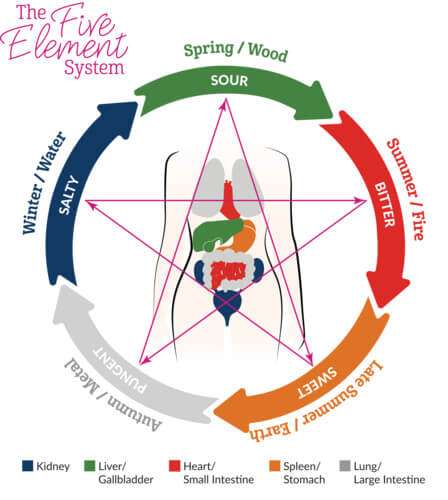
Dietary Adjustments: Each of the organs is linked to a flavour.  The heart is supported by the bitter flavour, often found growing in the height of summer.  Bitter greens like dandelion leaves, nettles, spinach, and chard can improve blood circulation and support heart health. Mung beans, in particular, are fantastic for the heart in Chinese Medicine.  Find out which organ likes which flavour in my books.

Foods for Sleep

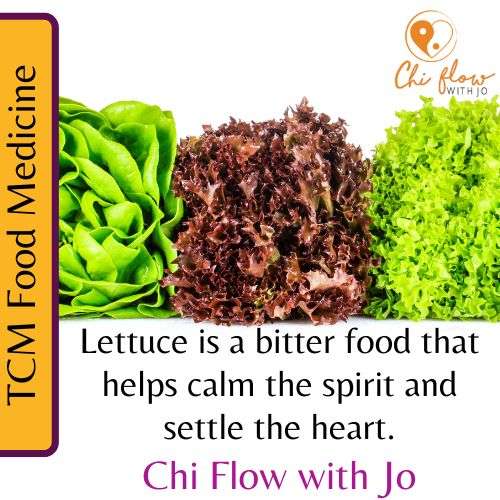
Drinking plenty of water and herbal teas like chamomile, valerian, and even a special lettuce tea can support your kidneys and heart.

Making barley water and drinking it throughout the week is another great way to stay hydrated and support your kidneys.

Ensuring the Kidney Meridian system and its management of water element is strong will help calm heart fire which causes hot flushes, anxiety and insomnia.

Additionally, try drinking lettuce tea before bed—it’s delicious, easy to make, and helps relax your body for sleep. You can find the recipe [HERE]

Acupressure helps promote restful sleep by stimulating specific points on the body that regulate the nervous system, reduce stress, and balance the flow of energy (chi). By releasing tension and enhancing relaxation, acupressure can improve the quality of sleep and support the body’s natural sleep-wake cycle.

This massage benefits the kidney meridian, which is related to water and helps balance fire and water in the body, especially around the heart and chest.

Kidney 27 Acupressure for Calming Heart Fire

Place your fingers either side of the sternum, in line with the nipples, and massage into the spaces between the ribs. Press, hold, and tap as you move down either side of the sternum, feeling the connection. This area, which contains the intercostal muscles, can hold a lot of tension. Gently massage these spaces, imagining energy flowing, guiding it with your intention rather than force.

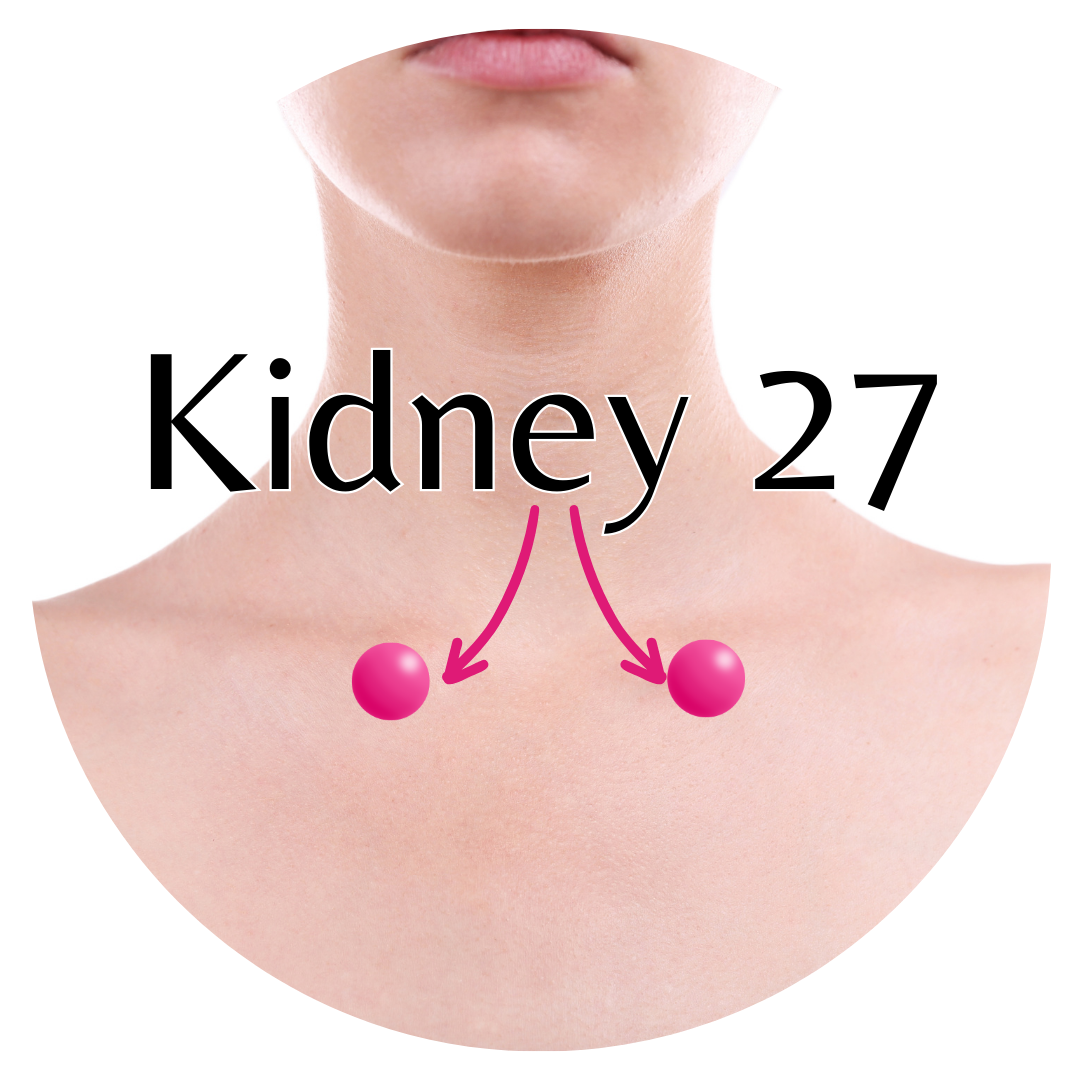
Finally, find Kidney 27: locate the knobbly parts of the collarbone and slide off diagonally into a small divot. Massage this point by pressing, holding, and releasing.

Kidney 27 is excellent for rebalancing the yin and yang and is particularly helpful if you feel burnt out or exhausted.

Consistently massaging Kidney 27 helps maintain balance and flow in your energy. Remember, you’re not just pressing a button; you’re connecting with your own energy source.

Watch the full video in the Podcast below for exact location and practice.

Conclusion: Your Path to Restful Sleep

Remember, every small change can make a big difference. By nurturing your heart, supporting your kidneys, and incorporating calming practices into your routine, you can create a peaceful environment for your spirit to rest. Let’s embrace the wisdom of Chinese medicine and Qi Gong to transform our sleep and overall well-being.

Join us in our daily live Qi Gong classes at Chi Flow with Jo, and let’s embark on this journey together. Here’s to nights filled with peaceful sleep and days brimming with energy and joy!

Join Us for a FREE Online Qi Gong Class (scroll down to enter your email)

Ready to experience the benefits of Qi Gong for yourself? We invite you to join us for a free online Qi Gong class. Together, we will explore these easy flowing movements, stretching and releasing to cultivate mindfulness, relaxation, and focus.  Just fill in your details below and you’ll get a link to the FREE class.

Discover how the gentle practice of qi gong can transform your health and well-being, bringing balance and harmony to your life. Whether you’re new to Qi Gong or looking to deepen your practice, our classes are designed to support you every step of the way.

Join us today and take the first step towards a healthier, more balanced you.  Scroll down to sign up!

WATCH THE FULL VIDEO BELOW INCLUDING  A SLEEP QI GONG SEQUENCE AFTER THE CONVERSATION:

Cultivating Mindfulness, Relaxation, and Focus

One of the most profound benefits of Qi Gong is its ability to cultivate mindfulness, relaxation, and focus. Each movement is performed with intention and awareness, allowing practitioners to connect deeply with their bodies and breath. This mindful approach not only enhances the physical benefits of the practice but also translates into everyday life, leading to:

– Better Mobility: Improved flexibility and strength make it easier to perform daily activities with ease and confidence.

– Less Anxiety: The calming effects of mindful movement help to reduce stress and anxiety, promoting a sense of inner peace.

– Sound Sleep: The relaxation induced by Qi Gong supports better sleep patterns, helping you to wake up refreshed and rejuvenated.

By integrating these practices and dietary changes, you can help calm your mind, relax your body, and improve the quality of your sleep. Shiatsu, acupressure, and qi gong are powerful tools to support your well-being, especially as you age.

If you have specific concerns, always consult with a healthcare provider familiar with these practices to tailor a plan that’s right for you.


Are you ready to find your flow?

If you’re ready to reduce anxiety, ground your energy, and ease those uncomfortable menopause symptoms, join me in Chi Flow with Jo. Together, we’ll explore Qi Gong, food medicine, and acupressure in a way that supports your unique journey through menopause.

Sign up today  (scroll down) and take the first step toward feeling more balanced, calm, and connected to your body.

Until next time, stay balanced and be well.


Self-administered acupressure or Chinese Medicine is not a substitute for visits to qualified healthcare practitioners.

Knowing how to treat yourself and your loved ones with complimentary therapies like acupressure can be greatly beneficial and convenient. However, for serious and chronic conditions, you’ll want to visit an Shiatsu therapist / Acupuncturist or other qualified healthcare practitioner who can develop a treatment plan based on your unique medical history and combination of symptoms.  

The information provided should not be considered medical advice.

Natural Sweet Tea for Immunity

Natural Sweet Tea for Immunity

NATURALLY SWEET TEA FOR IMMUNITY

Our Chi Gong practice  focuses on the Increasing Energy and Reducing Pain – especially important if you are suffering from Fibromyalgia, Chronic Fatigue or even symptoms following Covid.

So how can we reduce inflammation, reduce pain and increase energy?  Chinese Medicine may have some answers for you.
In Chi Flow with Jo we practice Qi Gong, which gently opens and releases the fascia so that trapped virus’s can be released.  This can help stop an autoimmune response which exhausts the body, and can be the cause of fibromyalgia and chronic fatigue.
The Qi gong uses breath and movement plus we also use Qi Food Medicine and Acupressure to support the body further.  So that you can step into spring and shake of the hibernation of winter.

Constant inflammation, as an immune response, is exhausting mentally and physically  so let’s look at the Immune system from a Chinese Medicine perspective to see how we can support the body from the inside out finishing with a nourishing tea made with a traditional ingredient give at Chinese New Year.

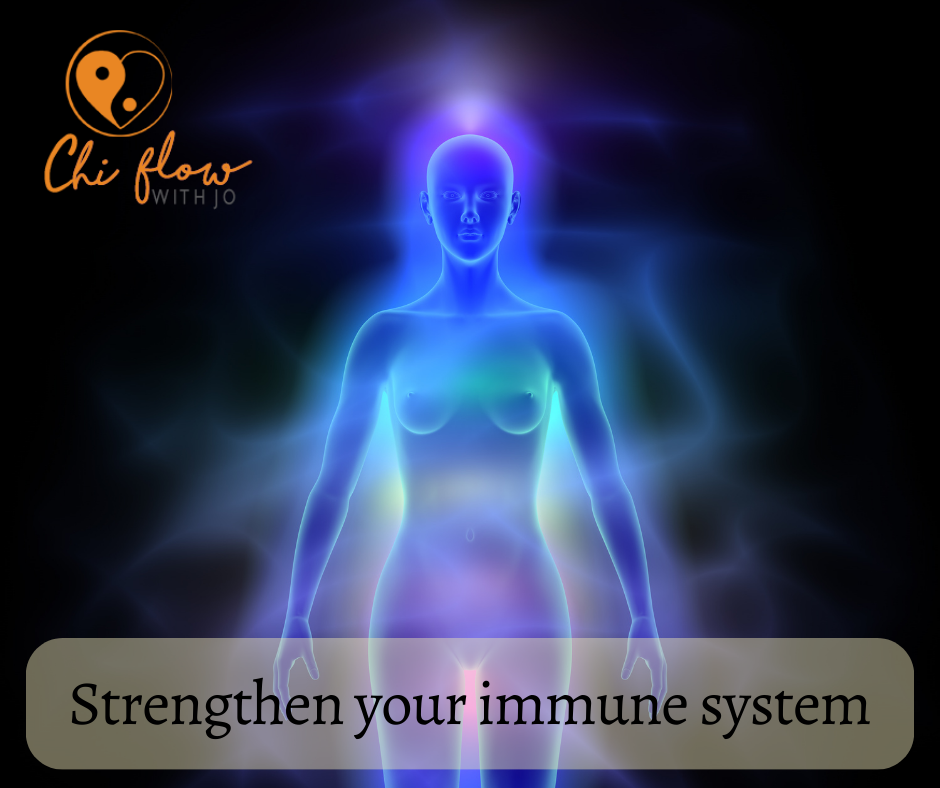
The Lung, which draws in the Chi of Heaven through our breath. and the Spleen which draws energy from food, control and support the Wei Chi. (simplified to Immune System)

The Wei Chi, like a Ready Brek glow or energy protection field, guards the surface of the body and the mucous membranes from external pathogens entering the body.

It controls the opening and closing of pores, moistens the skin and hair, regulates body temperature, and warms up the inner organs.

It is considered the prime minister of the body, in control of the protective energy field but not solely responsible for creating it; this is where the Spleen supports……. Food (Chi of Earth) is received by the stomach and then passed to the Spleen.

The Spleen in Chinese medicine uses that power from food to make blood. Part of the Spleens energy,  together with your constitutional energy stored in your kidneys, is sent back to the lung for Wei Chi to be sent around your body to protect it.

As we sleep the Wei Chi is not needed as strongly, so the energy re-enters the body and nourishes the organs so that we feel refreshed upon waking, ready for the day.

This picture Chinese Medicine paints of the Immune system, might be new to you and it’s a very different way at looking at the body. There are similarities to Western medicine as the spleen creates white blood cells which are the fighter of infection and viruses.

But when we talk of the Spleen here we talk of it’s whole energetic system – physical, emotional and even spiritual.

Way before modern medicine, 1000’s of years ago Chinese Medicine understood lung and spleen strength in fighting viruses and staying healthy.

This system of preventing sickness is very ancient – the Nei Jing – The Yellow Emperor’s Classic of Internal Medicine was thought to be written around 2600BC.  – and here is a quote from the Nei Jing (chapter 36) 


“the heart is the sovereign…the lung is the prime minister, the liver is in charge of planning, the spleen is in charge of defending (wei), the kidney is in charge of supporting.” 

To receive the benefits of the 5-element dietary system that links the organs to flavours and seasons or to practice powerful yet gentle chi gong movements, it’s not essential to know or believe all this, you can simply enjoy the advantages.

I like to share this knowledge so that if you like, you can have a different language with which to communicate and understand your body.

This fantastic tea recipe supports both the lung with its pungent spiciness and the spleen with its soft sweetness.

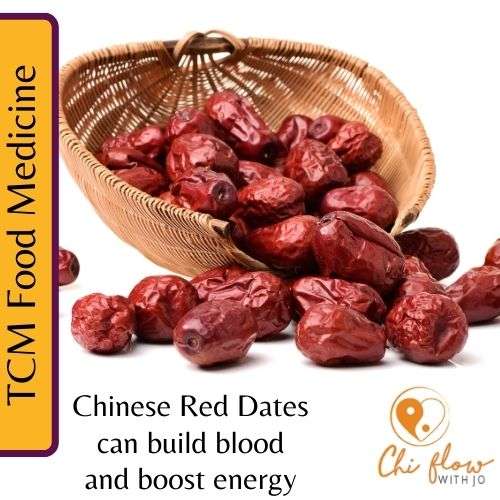
Red dates have long been used in Chinese Medicine for strengthening the spleen energy. Specifically, they help build strength and energy following chronic illness, exhaution, anemia or post partum recovery.

Red dates specifically nourish the blood and balance the Qi energy in Traditional Chinese Medicine. They are not as sweet as palm dates but they are packed full of antioxidants and vitamin C which strengthen the immune system.

Traditionally they are given at Chinese New Year as a symbol of health and longevity. 

Red is a lucky color in China, meaning booming and prosperous. Dates (枣 zǎo) have the same pronunciation as “early” (早 zǎo), meaning a head start.

If you don’t have any Red Dates, don’t worry, (as that is the emotion that weakens the spleen) – use 1 tablespoon of Goji Berries instead.

Red Date Tea 

  • • 1 inch Ginger
  • • 6-8 Red Dates (1 tbsp Goji berries also work if you don’t have red dates)
  • • 1 Cinnamon stick
  • • 4 medium Pears
  • • 2 litres of Water

METHOD:

Bring ingredients to boil and simmer for 10 mins, the pears will probably fall apart which is great as you can eat them together with the red dates.

 Pears are wonderfully soothing for the lungs and don’t forget if you would like more recipes with pears, red dates, goji berries and much more besides you can find them in the Cookbooks.


CLICK HERE for another Tea recipe for Immunity

Red is a lucky color in China, meaning booming and prosperous. Dates (枣 zǎo) have the same pronunciation as “early” (早 zǎo), meaning a head start.

If you don’t have any Red Dates, don’t worry, (as that is the emotion that weakens the spleen) – use 1 tablespoon of Goji Berries instead.

JOIN US FOR A FREE ONLINE QI GONG CLASS

Don’t forget to sign up for free intro Qi Gong class with diet tips and powerful acupressure points.  Enter your details below:

Self-administered acupressure or Chinese Medicine is not a substitute for visits to qualified healthcare practitioners.

Knowing how to treat yourself and your loved ones with complimentary therapies like acupressure can be greatly beneficial and convenient. However, for serious and chronic conditions, you’ll want to visit an Shiatsu therapist / Acupuncturist or other qualified healthcare practitioner who can develop a treatment plan based on your unique medical history and combination of symptoms.  

The information provided should not be considered medical advice.
 Joanne Faulkner is a Qi Gong teacher – Chi Flow with Jo – teaching live daily online Qi Gong classes to hundreds of people; a Shiatsu practitioner specializing in the energy of food in Traditional Chinese Medicine and a published Author. Her residential and day Wellness Retreats focus on Chi Gong, self-Shiatsu & Conscious Cooking Demonstrations, and are extremely popular.

Joanne is currently the Irish representative to the European Shiatsu Federation and until recently was the Chairperson of the Shiatsu Society Ireland.

 “Good Food: Better Sex” and “Shiatsu & the Art of Conscious Cooking” , both written and published by Joanne, are modern cookbooks full of delicious recipes, Traditional Chinese Medicine plus acupressure points for health and wellbeing.

INTERACTIVE

APP NOW LIVE!

Answer 2 questions to see what foods suit you today

COMPANION TO
“SHIATSU & THE ART OF
CONSCIOUS COOKING”
COOK BOOK

BUY THE BOOK!

© Joanne Faulkner 2024 | Privacy Policy |  Created with 💗 by SME Web Design | Development