Why Shingles Pain Can Linger: What Helps Calm the Burning Naturally

Why Shingles Pain Can Linger: What Helps Calm the Burning Naturally

If you’ve had shingles, you may have been told that once the rash clears, the problem is over. Yet many people find that the pain doesn’t simply disappear. Instead, it can linger as a burning, sensitive, wrap-around sensation, long after the skin looks healed.

This ongoing discomfort can be worrying and exhausting. The good news is that lingering shingles pain is often less about ongoing damage and more about the nervous system staying on high alert. With the right kind of gentle support, the body can begin to settle and recover.

Lingering Shingles Pain Isn’t Random – The Body Leaves Clues

Post-shingles pain is often described as burning, electric, or band-like. It may travel from the belly button area, across one side of the abdomen, and around into the back. This “wrap-around” pattern is important.

In Chinese medicine, we pay close attention not just to where pain shows up, but how it moves. Energy in the body flows along specific pathways. Some move straight up and down, while others spiral and wrap around the sides of the body.

Pain that moves sideways, around the waist, ribs, or flank, often follows one of these side pathways. Shingles can inflame and overstimulate this line of communication. Even after the virus has settled, the nerves along that pathway may remain sensitive, continuing to send pain signals.

This is why post-shingles pain can feel surface-level, fiery, and persistent rather than deep and dull.

Why Shingles Pain Can Last Longer in Midlife

As we move through midlife, menopause, and the natural ageing process, the body can become drier and more sensitive. Nerves may take longer to calm after illness, and recovery can be slower than it once was.

From a Chinese medicine perspective, this stage of life calls for more soothing, moistening, and calming support rather than strong stimulation. When it comes to nerve pain, trying to push through or aggressively “treat” symptoms often makes things worse. Gentle, consistent care is usually far more effective.

Gall Bladder 34: A Key Acupressure Point for Lingering Shingles Pain

Within weeks many women notice flatter stomachs, lighter limbs, clearer skin, calmer moods and steady energy.  This is healing from the inside out, not crash dieting.

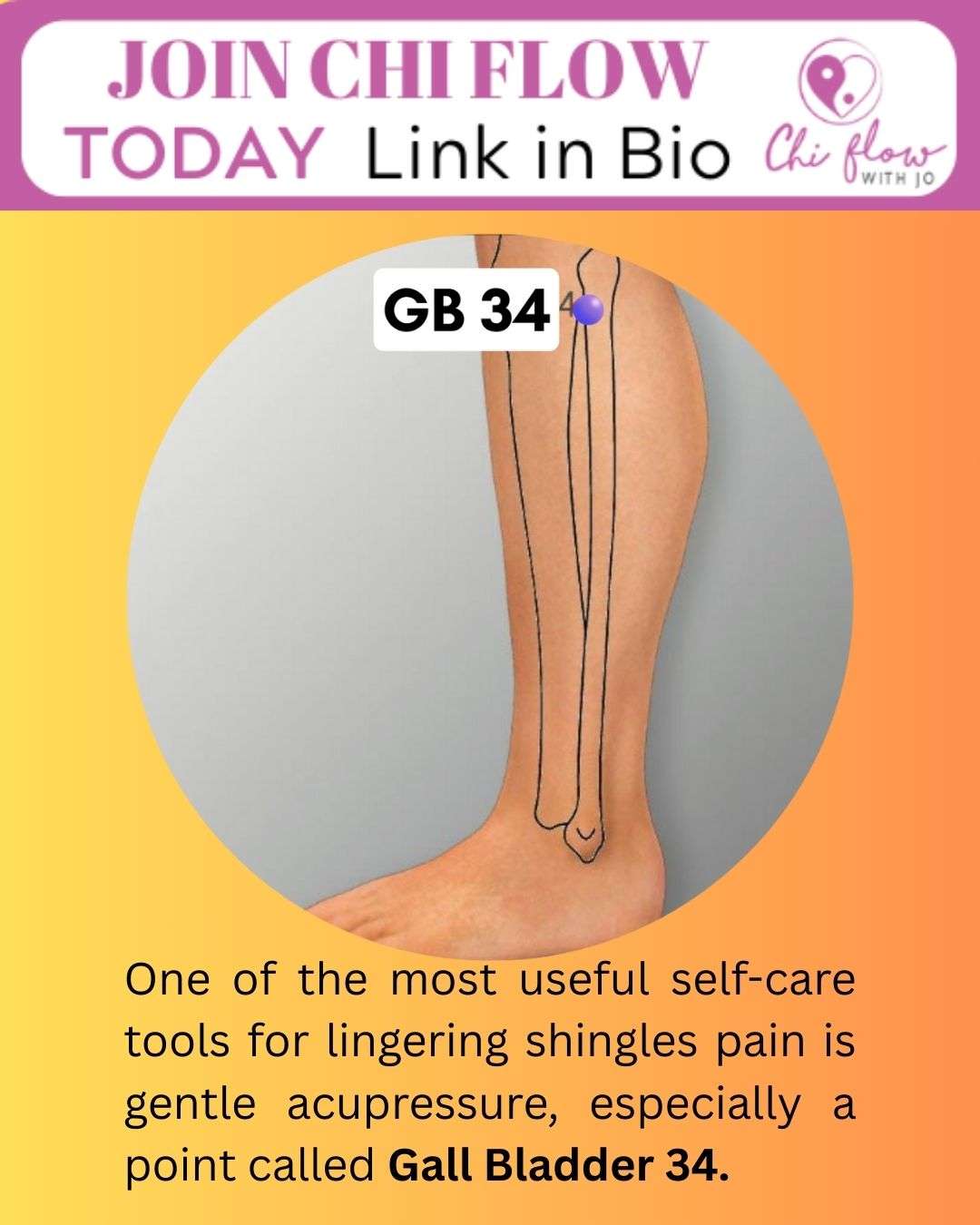
One of the most useful self-care tools for lingering shingles pain is gentle acupressure, especially a point called Gall Bladder 34.

This point works on the same pathway that wraps around the side of the body, which is why it can influence pain around the waist, ribs, and back even though it’s located on the leg.

How to find Gall Bladder 34
Sit comfortably and place your hand on the outside of your knee. Slide your fingers down just below the knee joint, along the outer edge of the leg. You’ll feel a small hollow or dip between the bone and the muscle. That tender dip is Gall Bladder 34.

What it should feel like
When you press the point, it should feel achy, tender, or slightly sore, but comfortable. It should not feel sharp, stabbing, or electric. That gentle ache is a sign you’re in the right place.

How to press it
Use your thumb or knuckle and apply steady, gentle pressure. Breathe slowly and stay there for about one minute, or up to three minutes if it feels soothing. There’s no need to press hard. With nerve-related pain, softer pressure is usually more effective than force.

Using this point once daily is enough. Many people find it helpful to link it with a daily habit, such as brushing teeth or boiling the kettle, so it becomes easy and consistent.
Burning sensations are often a sign that the body needs more moisture and steadiness. One of the simplest food supports during shingles recovery is a small bowl of warm miso with wakame seaweed.

Why this helps:

  • Miso gently nourishes and steadies the system 
  • Wakame supports fluids and minerals 
  • Warmth soothes without adding heat

How to prepare it:

Stir a teaspoon of good quality miso into warm (not boiling) water and add a small amount of soaked wakame and allow it to rehydrate. Once a day is plenty.

Gentle Movement That Helps the Body Let Go

When pain wraps and lingers, the body often responds better to rhythm than effort.

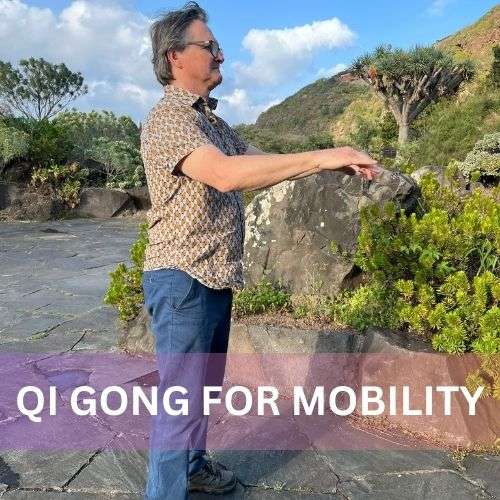
Simple arm swinging is a gentle way to release held tension after shingles. Stand with your feet hip-width apart and knees soft. Let your arms swing freely from the shoulders, like pendulums.

A few helpful cues:

  • Keep the knees soft

     Let the jaw relax

  • Breathe naturally

Two to five minutes is enough. Stop before fatigue. Many people notice warmth, a sense of spreading, and a calming of the chest and belly, signs that the nervous system is beginning to stand down.

What to Expect as the Body Settles

Lingering shingles pain rarely disappears overnight. It often fades gradually, like a dimmer switch turning down rather than a light switching off.

With daily gentle acupressure on Gall Bladder 34, soothing food, and easy Qi Gong movement, people often notice:

  • Reduced burning intensity

     Shorter flare-ups

  •  Improved sleep

  •  A greater sense of ease in the body

If pain worsens, spreads, begins waking you at night, or if medications change, it’s important to check in with your GP. These practices are supportive and complementary, not a replacement for medical care.

WATCH THE PODCAST

Final Thoughts

 Persistent shingles pain doesn’t mean your body has failed. It usually means the system is still protecting itself.

With patience, gentle support, and consistency, the body can continue to heal long after the rash has gone. Listening to the signals rather than fighting them is often what allows real change to happen.

Your body knows how to find its way back to balance, sometimes it just needs the right conditions.

💗 Ready to Join?

Click here to become a member of Chi Flow with Jo → CLICK HERE

Or drop in for a class and feel it for yourself (sign up below). Join the Chi Flow with Jo community for live sessions, practice, and support.

Self-administered acupressure or Chinese Medicine is not a substitute for visits to qualified healthcare practitioners.

Knowing how to treat yourself and your loved ones with complimentary therapies like acupressure can be greatly beneficial and convenient. However, for serious and chronic conditions, you’ll want to visit an Shiatsu therapist / Acupuncturist or other qualified healthcare practitioner who can develop a treatment plan based on your unique medical history and combination of symptoms.  

The information provided should not be considered medical advice.

Strengthening Immunity with Chinese Medicine

Strengthening Immunity with Chinese Medicine

Strengthening Immunity with Chinese Medicine

In Traditional Chinese Medicine (TCM), immunity is not just about fighting off colds and flu, it’s about maintaining balance, resilience, and a strong energetic boundary that protects body and mind. This protective energy is called Wei Qi, and it surrounds us like a shield, just like the glowing Ready Brek adverts from the 70s.

Wei Qi is built from the food we eat and the air we breathe, combined with our inherited energy. If digestion is sluggish or breathing is shallow, our immunity weakens. When both are strong, our body creates a radiant protective force field.

In this blog, I’ll share three simple ways to strengthen immunity every day, through food medicine, acupressure, and Qigong, so you can support your health naturally.

Food Medicine for Immunity

The immune system in TCM belongs to the Metal element, governed by the Lung and Large Intestine. These organs thrive on the pungent flavour and are nourished by white foods.  (See my books for full 5 element outline of which foods for which organs)

Pungent Foods: Garlic, onions, leeks, scallions, ginger, cinnamon, cloves, and chilli. These help disperse phlegm, open the lungs, and push pathogens out of the body.

White Foods: Mushrooms (especially shiitake and reishi), radish, cauliflower, and pears all support the Lung and Large Intestine.

Fermented Foods: Sauerkraut, kimchi, kefir, and miso restore the microbiome of the gut, where 70% of immunity resides.

Balance tip: Too much dairy, sugar, or refined carbs weakens the Spleen, creating dampness that suppresses immunity.

If you crave sweets, try a squeeze of lemon or a little sauerkraut, the sour flavour balances sugar cravings and helps keep the Spleen strong.

👉 Try this warming tea: simmer sliced ginger, lemon, cinnamon, and turmeric with water. It clears the lungs, supports digestion, and boosts Wei Qi. https://joannefaulkner.ie/2020/03/26/store-cupboard-tea-for-immunity/


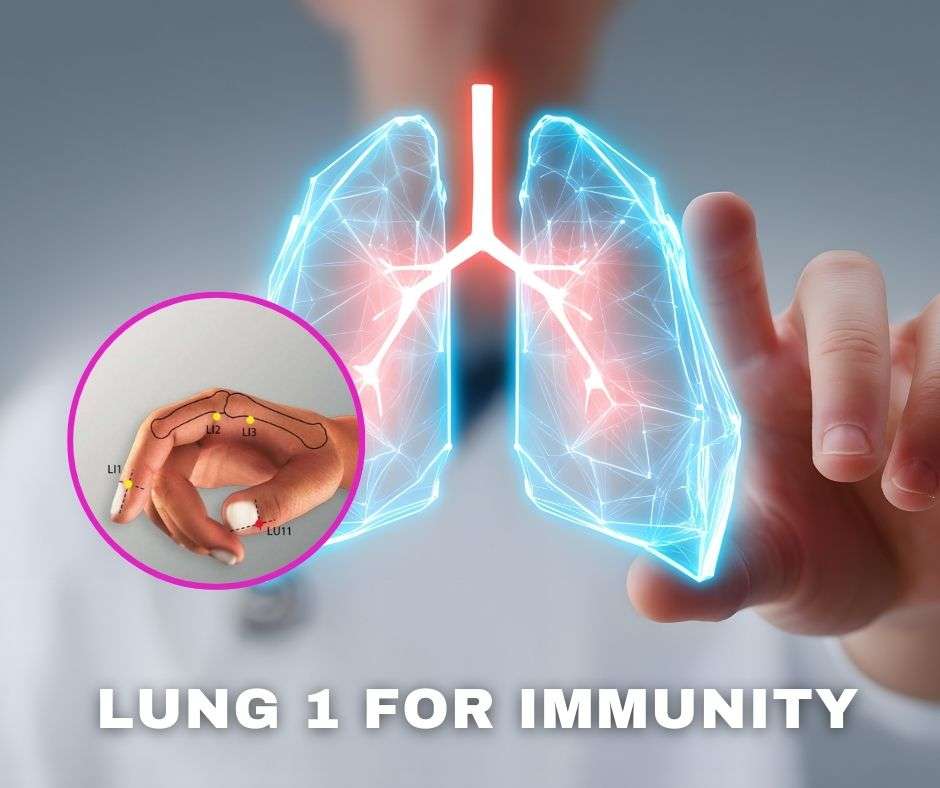
Acupressure for Immunity: Spotlight on Lung 1

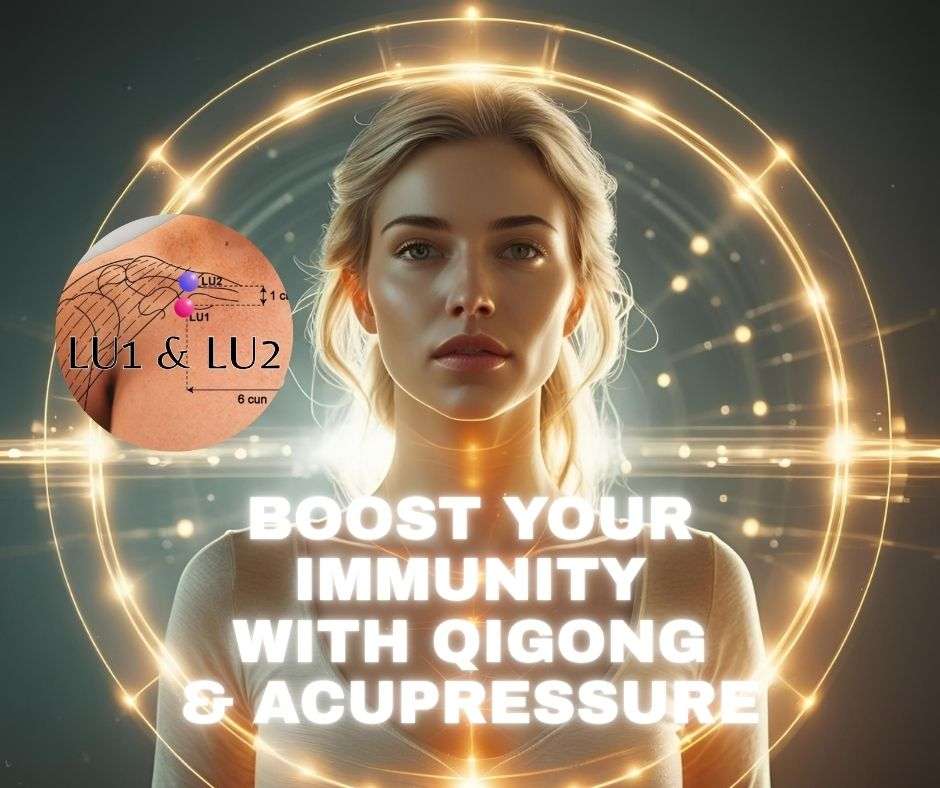
One of the most powerful acupressure points for immunity is Lung 1 (Zhongfu – Central Treasury).

Location

Find your collarbone and trace outward to the outer chest near the shoulder.

About three finger-widths below the collarbone, in the small hollow before the upper arm muscle, you’ll find Lung 1.


Benefits in TCM

  • Opens the chest: Helps release congestion, phlegm, or shallow breathing.
  • Regulates Lung Qi: Supports immune function by strengthening Wei Qi.
  • Releases grief: The Lung is associated with sadness and letting go. Massaging Lung 1 can help process emotional heaviness.
  • Relieves pain: Useful for tight shoulders, chest heaviness, or difficulty taking a deep breath.

How to Use It

  • Gently massage or press into Lung 1 for 30–60 seconds while breathing slowly and deeply.

  • If the point feels tender, that’s a sign your lungs may be under strain—keep massaging until it eases.

For extra benefit, place your hand in a “crane’s beak” shape (fingers together touching the thumb) and circle your elbows forward and back. This combines acupressure with movement, encouraging Qi to flow freely.

Qigong for Immunity

Qigong combines movement, breath, and intention to circulate energy. A simple exercise for the lungs and immune system is:

  • Form “crane’s beaks” with your hands.

  • Place them so that they are tapping into Lung 1 on each side of the chest.

  • Gently circle the elbows forward and back, opening the chest.

  • Breathe in through the nose, drawing breath deep into the lower lungs; breathe out, softening the shoulders.

This movement clears congestion, releases emotional heaviness, and strengthens the protective Wei Qi boundary.

Emotional Balance & Immunity

In TCM, the emotion linked with the Lung is grief. Prolonged sadness constricts breathing and lowers immunity. Practices like singing, humming, or even chanting vibrate the chest, stimulate the vagus nerve, and release stuck emotion, helping the lungs expand again.

When you feel low, bring awareness to your breath. Open the chest, massage Lung 1, and let Qi flow again.

WATCH THE PODCAST

In the full podcast, we explore how you can use reflective listening to transform your relationships, whether with a partner, family member, or friend. 

Join Us This Month in Chi Flow with Jo to Build Your Immunity

Chinese medicine doctors were traditionally paid to keep people well, not to treat illness once it arrived. That’s also the philosophy behind Chi Flow with Jo.

Through daily Qigong practice, food medicine recipes, and acupressure routines, we create a strong immune system that protects us physically and emotionally.

✨ If you’d like to strengthen your immunity, balance your energy, and feel supported by a vibrant community, join us in Chi Flow with Jo. Doors are open now, and we’d love to welcome you.

💗 Ready to Join?

Click here to become a member of Chi Flow with Jo → CLICK HERE

Or drop in for a class and feel it for yourself (sign up below).


Join the Chi Flow with Jo community for live sessions, practice, and support on your journey to an emotionally healthy heart and attend Maya’s live talk for FREE.
To work with Maya visit https://mayabenharroch.com/

Self-administered acupressure or Chinese Medicine is not a substitute for visits to qualified healthcare practitioners.

Knowing how to treat yourself and your loved ones with complimentary therapies like acupressure can be greatly beneficial and convenient. However, for serious and chronic conditions, you’ll want to visit an Shiatsu therapist / Acupuncturist or other qualified healthcare practitioner who can develop a treatment plan based on your unique medical history and combination of symptoms.  The information provided should not be considered medical advice.

.
Understanding Tremors and Parkinson’s in Chinese Medicine

Understanding Tremors and Parkinson’s in Chinese Medicine

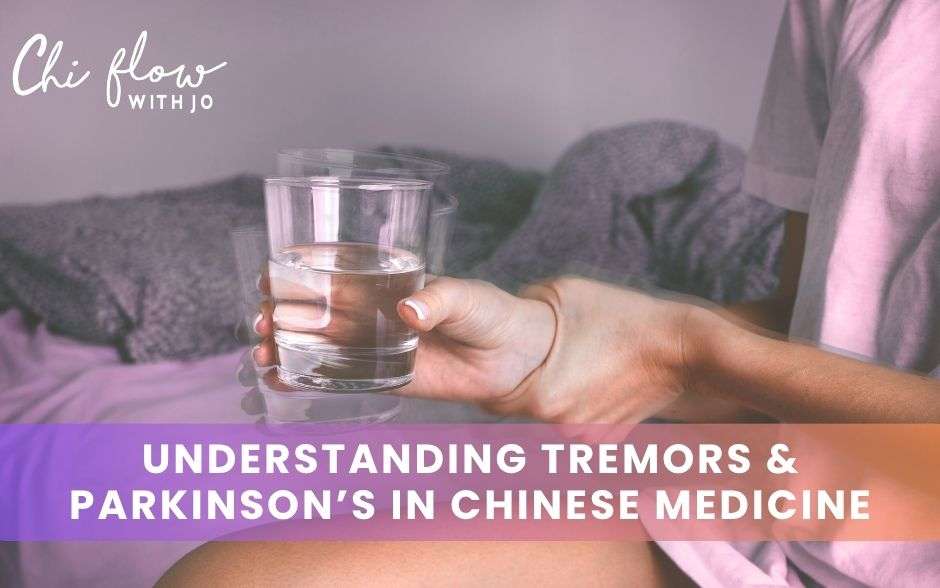
Today, we’re addressing a heartfelt question from a listener undergoing evaluation for Parkinson’s disease, seeking guidance on reducing spontaneous body tremors.  Remember, the insights I share are complementary and should harmonize with your personal health journey and any advice from your healthcare providers.

Understanding Tremors in Chinese Medicine

In Traditional Chinese Medicine (TCM), tremors are seen as manifestations of internal imbalances, particularly involving the liver and kidney energy systems. These systems are not just organs but represent a holistic network of functions. Disruptions in the smooth flow of Qi (chi), your vital energy and blood can create what is known as internal wind. This isn’t flatulence, but rather a chaotic climactic condition that can lead to spasms and tremors throughout the body.

Involuntary movements such as tremors, twitches, and spasms, including conditions like Bell’s Palsy, Dystonic tremor, Essential tremor, Parkinsons, and stroke can be addressed by nourishing the body’s yin energy and calming excessive yang. We want a smooth flow of blood, governed by the liver, and a grounded essential energy, governed by the kidneys. Supporting these systems through dietary choices is an excellent place to start.

Dietary Recommendations for Reducing Tremors

To support yin and anchor the body’s energy, incorporate foods with yin-nourishing properties:

To support yin and anchor the body’s energy, incorporate specific foods into your diet that encourage yin-nourishing properties.

Walnuts are a really great yin food. What do they look like? They look like brains, and they have such a complex range of minerals within them, making them excellent for supporting kidney energy and yin. The kidney governs the winter of the body, that still, quiet, deep time where everything is in transition, just waiting for the rising of spring. So, any foods that nourish kidney energy in Chinese medicine help to calm spasms and tremors.

Find a full outline of Kidney and Liver foods in my 5 element Cook books

Seaweed is a fantastic yin-nourishing food, packed with minerals like magnesium, manganese, copper, iron, and calcium. These nutrients help relax tense, tight, spasming muscles. Barley is another grain that cools the body, often recommended for urinary tract infections, to cool the heat and irritation, super effective for nourishing yin.

Conversely, it’s important to limit yang foods such as refined carbohydrates, refined sugars, and alcohol. These introduce heat and agitation to the body. While some warming yang foods, like ginger, garlic, and chili, can be useful when fighting infections, they may exacerbate tremors. Hydration is also essential; drinking ample water helps nourish the kidneys and support overall balance.

Qi gong for Reducing Tremors

Qi gong (Qi = energy, Gong = work) is an ancient practice that aligns the mind and body to regulate energy. Sometimes, energy rises excessively, leading to heat, anxiety, or jitteriness.

Through gentle flowing movements, Qi gong helps restore the smooth flow of qi and blood, preventing energy stagnation, excess tension and movement.

I offer a free Qi gong class at the end of each month (sign up at the bottom of this blog post), it’s a great way to experience these practices firsthand.

My husband, Davey, has Parkinson’s, and together, we use Qigong to help him manage his symptoms. While Parkinson’s currently has no cure, there are ways to live well with the condition.

Davy shared that before he began practicing Qigong, he often felt as though the tremors were overwhelming his mind, making it difficult to think clearly. Through mindful movement and breathwork, he found that while the tremors may not disappear, they no longer dominated his focus.

Qi gong Practice for Tremors

Before practicing, it’s important to acknowledge the presence of tremors rather than resist them. Fighting against them can increase stress and exacerbate symptoms. Instead, mindful practices help create a deep state of acceptance and tranquility.

Shaking Qi gong Exercise

• Find your space: You can do this sitting or standing. If standing, place your feet hip-width apart, knees slightly bent, tailbone gently tucked under.
• Amplify the shaking: If you are already shaking, lean into it! Place your hands on your lower belly and shake from your core.
• Shift the weight: Move the shaking energy down your legs:
• Inhale deeply, exhale, and shake down one leg.
• Inhale deeply again, exhale, and shake down the other leg.
• Shake through the arms one at a time: Imagine the energy flowing to your fingertips as you shake out your hands.
• Full-body shake: Ensure there is space under your armpits, as Parkinson’s can often lead to excessive tension in the upper body.
• Release into stillness: Let the shaking subside and take a deep breath in through the nose as if smelling a rose, exhaling fully pressing the belly button to the spine, allowing the energy to settle.
• Take 3 breaths: one to land in the stillness, one to integrate the sensation into the whole body and one to let the body accept being here now.

Kidney and Bladder Meridian Qigong

• Rub your kidneys: Place your hands on your lower back and gently massage the area.
• Sweep down the hamstrings/bladder channel: Let your hands glide down the back of your legs, allowing your head to drop forward.

• Inhale, drawing energy up/kidney channel: Place your hands on the inner legs and sweep them up the body, over the pubic bone, and flick the energy off.
• Exhale, descending the energy: Bring your hands down with palms facing the earth, grounding your energy.
• Repeat: Continue this cycle to smooth the qi through the kidney and bladder meridians, which are vital for nervous system regulation.

Finding Peace Within

As you conclude your practice, place your hands over your lower belly and take a moment to connect inward. You may still feel tremors, but you might also notice a newfound sense of stability. This practice isn’t just about reducing shaking, it’s about reclaiming your sense of self and balance.

You may have Parkinson’s, but Parkinson’s doesn’t have you.

May you be happy, safe, and well. May I be happy, safe, and well. May all beings everywhere be happy, safe, and well.


DO YOU HAVE A QUESTION?

The Ask Me Anything podcast series has been created to answer your questions using my knowledge of Chinese medicine, Qi Gong, Qi Food therapy and Shiatsu. 

You can ask a question by clicking on THIS LINK, or you can watch past episodes to see if your question has already been answered.

Join the Chi Flow online community today!

Also, join me in Chi Flow with Jo every weekday morning for live online Qi Gong where we will practise Qi Gong, as well as self-acupressure, delicious healthy recipes, Traditional Chinese Medicine (TCM) tips and Meridian stretches.  

You can sign up for a FREE online qi gong class with the form below.

Hope to see you in the Chi Flow!

Self-administered acupressure or Chinese Medicine is not a substitute for visits to qualified healthcare practitioners.

Knowing how to treat yourself and your loved ones with complimentary therapies like acupressure can be greatly beneficial and convenient. However, for serious and chronic conditions, you’ll want to visit an Shiatsu therapist / Acupuncturist or other qualified healthcare practitioner who can develop a treatment plan based on your unique medical history and combination of symptoms.  

The information provided should not be considered medical advice.
Sharing my Heartbreak with Stuffed Squash

Sharing my Heartbreak with Stuffed Squash

The following excerpt is from my book Good Food Better Sex. It is possible to misunderstand the title of this book and think that it is about the physical act of intercourse but it’s not. It’s about being human, about being healthy, and about being in love with life. This month in Chi Flow with Jo, we have been practicing Chi Gong and acupressure for the heart. In these times of returning lockdowns, loss of friends, family, job and even a way of life it is possible to lose heart and to feel heartbroken.

I share with you the thing that broke my heart, it was my father dying. I was 17 and in the midst of a life that didn’t fit me. I was a rebellious, confused, obnoxious, drunk, little girl − lost, terrified and desperately sad. That was before he died. After he died I had an excuse to carry on being all those things. People just looked, they watched, they said, “ahh poor girl, her father just died.”

I remember the night my mum told my brother and I how he died, I felt the pain in my chest, like my heart was being ripped open, slashed apart, as if my chest was cracking and splitting from a large quake inside. That pain, the grief was like nothing I have ever felt since. I howled and I screamed. My cries let fly in an unstoppable, keening flood. He was my idol and I adored him. He wouldn’t be there anymore and I was out of my mind and out of my body, with grief.

“When my father died we put him
in the ground
.  When my father died it was like a whole library burned down” – Laurie Anderson

For over 30 years that grief stayed with me. I learned to function on a day to day basis but it was always there, just beneath the surface. It took a lot
 of organization to keep the grief hidden so I could function. As I grew up, I took on too much work, ran too many projects, all to divert my mind and emotions from the maelstrom swelling beneath the surface. I had it in a box, wrapped up at the back of my mind but if a memory unexpectedly cropped up with a smell or a song, I would be instantly inconsolable. Even as the years passed if someone asked about him, tears welled up and I became a vulnerable mess, unable to function, unable to run a busy house as a single mum. So, I didn’t allow the pain and the grief, they were too uncontrollable and I didn’t have space for them in my busy life.

Finally, I had had enough of being alone, of choosing thoroughly inappropriate and incompatible boyfriends. I chose men who weren’t available or capable of supporting me, physically, emotionally, or financially. I chose partners with whom I was never going to be able to completely let go. To be seen and supported in all my incapable, messy, debilitating sadness. I remained safe if I picked partners who were thoroughly inappropriate. More often than not, I was attracted to people who needed a bottomless pit of emotional, financial or physical support themselves. Their needs distracted me from my own which meant I was never vulnerable, I was in control.

In my 40’s I decided to seek a professional therapist
 to help me open up to the grief of losing my father so that I could fall in love again. I explored my relationship with him, warts and all, but most of all I began to let go. I gave in to the swelling waves of deep emotional agony, smashed down the boulders that I had put up as protection. I was raw, vulnerable and broken but I also felt soft and lovable. Slowly and gently I picked myself up and nurtured that delicate, fluid, new me. I learned that I was able to cope, I went shopping, cooked dinner, put the kids to bed, gave Shiatsu treatments but now I knew that no matter how much I experienced grief, I would survive. I could now access the deep love I felt for my father without the terror of the grief. I felt tender, loveable and his presence all around me.

This realization brought about freedom to love without defenses or fear. When we deeply connect with another it is inevitable we will lose them. There is no stopping death and loss. I know one day I will lose my present lover and one day my children will lose me. Touching that deep pain and catastrophic loss of my father broke down my defenses, now I feel more able to love without armour or superficiality. I can show vulnerability and sadness without the terror of loss overwhelming me.

“Grief and love are forever intertwined. Grief is the terrible reminder of the depths of our love and like love, grief is non-negotiable.”   – Nick Cave

The world can be desperately unfair. tsunamis, war, drought, famine, lockdowns, death all bring grief on a daily basis. Through the sorrow, and the injustice, keep your heart open, circulating, and in connection with the possibility of change and love. Be tender with your soft loving self, stay in contact with your emotions, checking in, finding a healthy outlet, and expressing yourself. This recipe from the book Good Food Better Sex can’t right the wrongs in the world but it can support you so that you don’t harden your heart to the grief and sadness of loss.

This blog is taken from Good Food Better Sex: my books are full of personal stories and experiences as to how I’ve used food as medicine for greater love in my life.  Learn to create a compassionate dialogue with your body together with me and the food you choose.

Stuffed Squash (Serves 3)

• Base of 3 medium butternut squash
• 250g cooked rice
• 2 tbsp. sunflower oil
• 2 or 3 leeks
• 4 tbsp. crème fraiche
• 2 tsp. Dijon mustard
• 1⁄2 tsp. cayenne pepper
• 150g strong hard cheese, (mature cheddar, pecorino or manchego)
• 2 tbsp. of thyme leaves
• 2 large handfuls of chopped flat-leaf parsley
• Salt and black pepper to taste.
• 1 mozzarella ball

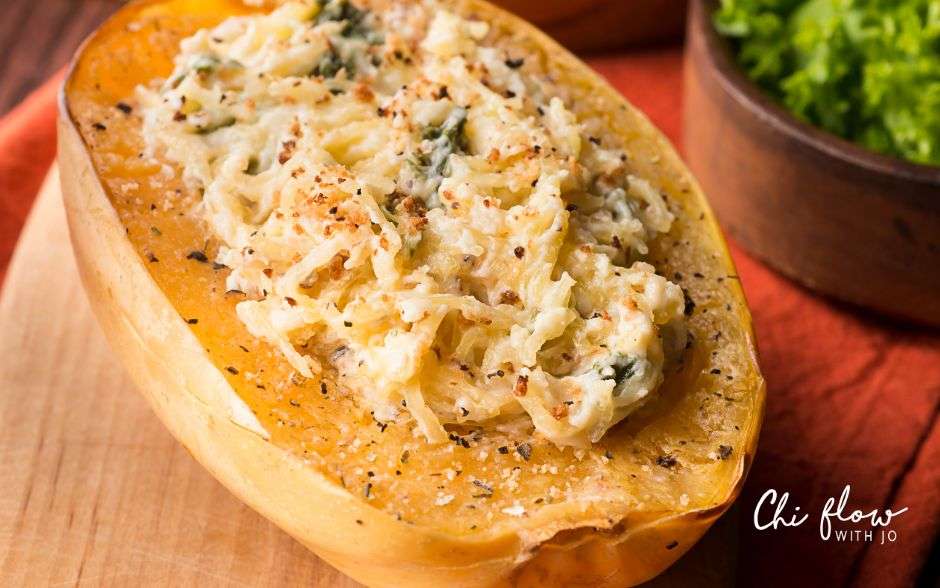
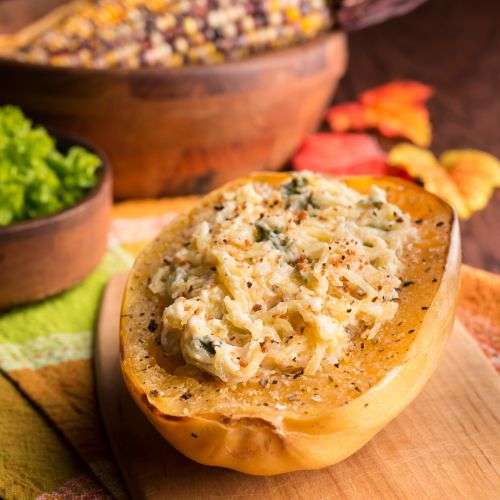
Cut the top off the butternut squash leaving the bulbous base. Scoop out the seeds and set aside. Prepare the filling by gently frying the leeks in oil until they are soft and transparent. Take off the heat and mix the cooked leeks with cooked rice, crème fraiche, Dijon mustard, hard cheese, herbs, salt and pepper. Stuff the mixture into the cavity of the squashes, place on a baking tray, top with a mozzarella disk and bake for 40-50 minutes at 180oC. To test if thoroughly cooked, slide a knife through the side of the squash. It should slide in and out like butter when ready.
Butternut squash and rice will assist the stomach and spleen meridians, giving the body comfort and support. The cheese and crème fraiche can put the lung and large intestine meridians under pressure meaning they may clog with mucus but the mustard and cayenne pepper are warming and clearing so this should balance things out. The herbs will benefit all areas of the body but especially the heart and the heart’s protective meridians, making sure we do not lose the capacity for connection by overprotection.

You can’t buy my books in Shops, only here. CLICK HERE Have them delivered straight to your door and if you pop a delivery note when purchasing I can sign and dedicate them personally for you.  What a gift to yourself and any loved one.

💗 Ready to Join?

Click here to become a member of Chi Flow with Jo → CLICK HERE

Or drop in for a class and feel it for yourself (sign up below). Join the Chi Flow with Jo community for live sessions, practice, and support.

Self-administered acupressure or Chinese Medicine is not a substitute for visits to qualified healthcare practitioners.

Knowing how to treat yourself and your loved ones with complimentary therapies like acupressure can be greatly beneficial and convenient. However, for serious and chronic conditions, you’ll want to visit an Shiatsu therapist / Acupuncturist or other qualified healthcare practitioner who can develop a treatment plan based on your unique medical history and combination of symptoms.  

The information provided should not be considered medical advice.